


In This Blog
Learn what digital clinic software can do for you with every point backed by solid, quantifiable outcomes:
- Exactly what is different at your front desk when your documents go electronic
- Which sources of lost revenue are costing you the most and what data is behind their successful correction
- Why your no-show ratio, claim denial rate, and billing process all have one common denominator
- How the tracking of referrals and compliance logging ensures your safety in more ways than one
- The things your financial dashboard shows that you never knew from your past month’s spreadsheets
Eliminating Front-Desk Delays Caused By Manual Intake Work
Operational Metric: Hours of direct labor utilized in the completion of a single data entry cycle by hand. This measure records the entire duration of effort undertaken to complete each manual cycle of data entry. The monitoring of such hours will assist in determining improvements in productivity post-process optimization.
The Benchmark: The clinic reduces manual intake processing time by 30% within 90 days. This milestone proves improved operational efficiency and successful workflow automation. It also shortens completion time, reduces manpower dependency, and improves scalability.
No more clipboards and no need to strain your eyes deciphering handwriting. One of the first and foremost benefits of digital clinic software is that patients can enter all the relevant details themselves, right from their phones, before even stepping inside the clinic. This reduces front-desk workload, minimizes manual data-entry errors, speeds up patient check-ins, and creates a smoother experience for both staff and patients from the very first interaction.
The bottom line: Your front-desk staff gains 12 to 15 hours each week. It’s not a typo; it’s literally two days recovered from pointless typing and refocused back on patients. Several industry reports and vendor case studies suggest that clinic management software can significantly reduce front-office administrative workload, with some implementations reporting reductions of up to 60–70% depending on workflow digitization.
 NOTE
NOTE
Preventing Revenue Loss From No-Shows And Empty Schedules
Operational Metric: Percentage of total unassigned or abandoned appointments. The measurement represents the portion of the appointment slots that end up going to waste because of cancellations, no-shows, or inefficiencies. Monitoring unassigned calendar inventory enables clinics to pinpoint deficiencies in patient involvement and boost their schedule utilization.
The Benchmark: Many well-optimized clinics aim to reduce no-show rates to below 5–10%, depending on specialty and patient demographics. Achieving this level means higher adherence rates and better follow-up procedures to confirm appointments. Ensuring lower percentages will also boost productivity and revenues while giving patients better access to medical services.
The software automatically handles appointment confirmations. It sends SMS and WhatsApp messages with one-tap confirmation links, so staff no longer spend time on phone calls. With automated scheduling, your patient receives reminders via SMS and WhatsApp, helping ensure higher confirmation rates and significantly reducing no-shows.
Statistics collected by the Medical Group Management Association (MGMA) show that without management, clinic patient no-show rates range from 6% to 15%. This is definitely a problem to fix, which can be done through automation. One practice run by three providers in Ohio reduced their no-show rates by 11% by adopting automated SMS and WhatsApp messaging. They recovered the losses of eight full appointment slots each week. Two missed appointments each day amount to significant lost revenues.
| NO-SHOW RATE | REVENUE STATUS | RECOMMENDED ACTION |
| Below 5% | Safe range – under benchmark | Retain automated reminder system |
| 6% – 10% | Significant leak – raise flag | Implement automated waitlist process |
| Above 10% | Red Flag – Revenue Emergency | Conduct full schedule analysis |
Accelerating Patient Billing And Payment Collection Workflows
Operational Metric: Days Sales Outstanding (DSO) for Practice-wide. This performance indicator reflects the average number of days it takes for the practice to receive outstanding payment after the delivery of its services. DSO monitoring allows for identifying the weaknesses of billing, claim processing, and payment collection procedures.
The Benchmark: Reconcile any out-of-pocket obligations from patients within 30 days after the point of service. Achieving this goal would mean that the revenue cycle is effective, which contributes to stability in the business. This also serves to minimize aging receivables, eliminate problems with collections, and make sure that billing goes well for the patient.
As patients are already present during appointments, it is important to collect copayments seamlessly at the point of care. You don’t have to worry about sending paper statements or playing phone tag. In line with modern clinic software trends, the software will send a secure pay link via text message at the time of consultation.
Practices using manual billing workflows typically experience significantly slower payment collection compared to those using automated digital payment links, especially when reminders and real-time payment options are enabled.
Reducing Insurance Claim Errors To Improve Cash Collection
Operational Metric: First-Pass Clean Claims Ratio (CCR). This ratio calculates the percentage of insurance claims submitted that are error-free and processed on the first try by either the payer or the clearinghouse. First-pass clean claims ratio can be used to find out any problems with documentation, coding, or billing processes.
The Benchmark: Maintain an average acceptance rate from the clearinghouse of 95% or higher. Meeting this goal is an indication that there is excellent billing accuracy and effective claim management practices in place. A high acceptance rate also ensures faster payments and minimizes processing expenses.
You accept patient payments while the backend prepares insurance files for submission. Claim scrubbers built into the software check every file for coding errors or missing information before submission. The cost of fixing even one rejected insurance claim can reach nearly ₹2,000. One of the key benefits of digital clinic software is preventing these avoidable losses.
First-time accuracy in claims ensures quick, reliable payments from the insurer. It simply needs to be stated clearly that first pass accuracy equals money.
Expanding Daily Patient Capacity Without Staff Burnout
Operational Metric: Appointment capacity limits by clinical staff members. This is an assessment of the largest number of appointments that a single staff member can handle effectively, given the current schedule. Staff member capacity limits are useful in helping to balance workloads and improve scheduling efficiency.
The Benchmark: Add an additional 2 to 3 patient visits per day for each provider without changing current operating hours. Achievement of this target implies increased efficiency and effective use of available time without increasing stress among employees and extended waiting times for patients. This will further enhance access to care and generate more income.
When the process is working well, it’s easier to scale volumes. The platform links your billing grid to the automated waitlist, which uses clinic workflow automation to alert the next available client when there is a cancellation. When calendars are not optimized, it leads to a waste of 20 minutes every day for each provider.
Unfilled spots result in missed income. Filling them with automated solutions increases the top-line income for your practice.
Shortening Patient Wait Times Through Faster Room Turnover
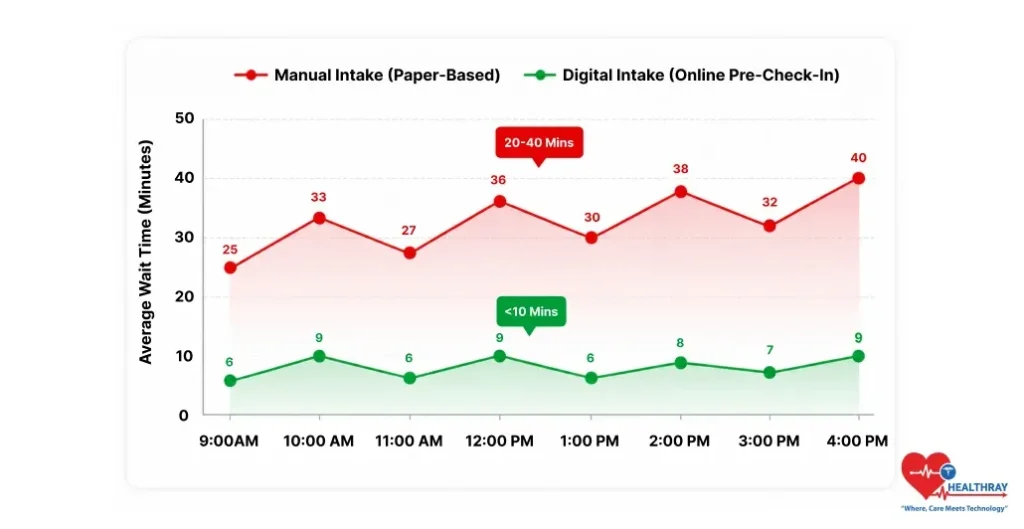
Operational Metric: Patients wait from arrival until staff assigns them a room for their procedure or exam. This KPI tracks waiting time and helps identify scheduling gaps and staffing shortages in the clinic.
The Benchmark: Keep patients waiting in the clinic waiting room for less than 10 minutes in total. This shows that the clinic has met the benchmark for effective patient flow management. It also demonstrates efficient coordination between the front desk and clinical operations.
Filling more patient slots within the day seems like chaos, but not if the software stops the cluttering. Patients fill out their intake forms online before arrival. The software then moves patients smoothly from the entrance to empty exam rooms.
Unreasonably long waits have been identified as the primary cause of negative feedback from patients on local clinics. Addressing this issue not only increases revenue but also builds a positive reputation.
 PRO TIP
Strengthening Patient Retention Through Consistent Follow-Up
Operational Metric: Patient Retention Rate (PRR). This ratio determines the proportion of patients who continue returning to the dental practice for further treatment over a specific period. Monitoring patient retention helps evaluate patient satisfaction and the effectiveness of long-term engagement strategies.
The Benchmark: Maintain a consistent 15% year-over-year increase in returning patient volume. Achieving this benchmark reflects strong patient loyalty and growing demand for recurring care services within the practice.
A fast, no-waiting lobby creates a lasting impression, but the relationship should not stop there. One of the major benefits of digital clinic software is that patients can securely message their doctor, check test results, and request prescription refills at 2 a.m. through an online portal.
It takes five times more effort to attract a new patient than to retain an existing one. Digital access builds trust that turns occasional visitors into lifelong patients – without increasing marketing spend.
Learn more: Mobile Apps for Clinic Software: What Works for Patients and What Works for Staff, designed to simplify communication, scheduling, and follow-ups for both patients and clinic teams.
Preventing Specialist Referral Drop-Offs Across Care Pipelines
Operational Metric: Percent Referral Pipeline Conversion Efficiency. This is an indicator that determines the percentage of successful completion of the referral pipeline based on referrals. It shows what percentage of referrals are successfully processed through scheduling to completion of the patient visit.
The Benchmark: Convert at least 80% of all specialist referral inquiries into completed encounters. This level is a marker that there is success with referral intake processes and patient involvement through the appointment process. Keeping referral inquiries converting will help with care coordination, provider relationship building, and maximizing clinical revenue potential.
Loyalty also means coordinating appropriate care for patients with specialists outside their primary healthcare institution. Earlier, staff wrote notes on paper or relied on fax machines to manage these referrals. With clinic software, this coordination is now streamlined and digital, replacing manual processes with faster communication and tracking.
Shocking to think that almost 50% of medical specialty referrals never lead to an appointment because of lost documentation. Not only is this a huge concern for the safety of patients, but this also represents a significant loss of revenue. According to the Office of the National Coordinator for Health Information Technology, interoperable electronic health IT solutions actually have the ability to improve the diagnosis and outcomes of patient care by bridging this gap.
Protecting Patient Records With Secure Digital Clinic Software
Operational Metric: Accuracy rating of the internal mock audit documentation. This is a measure that assesses the accuracy of clinical, operational, and compliance documentation concerning the standards of internal audit procedures and regulatory requirements. Monitoring compliance accuracy is essential since it helps to detect any documentation issues that may exist.
The Benchmark: Ensure there is a documented 100% pass rate for all data privacy security benchmarks. This demonstrates your commitment to data protection, regulatory compliance, and proper handling of patient information. It will go a long way towards reducing legal liability.
Each instance of shared or acquired data remains safeguarded in encrypted, cloud-hosted storage that creates an irreversible digital record of precisely who accessed which medical record and at what time.
An incident involving either a data security breach or a non-compliance fine alone is capable of driving such a business out of business. The HIPAA Security Rule requires particular safeguards for protecting the electronic patient health information. These include physical, administrative and technical measures for data protection. Automated audit logs represent the surest way through which compliance will be maintained constantly.
Healthcare security threats result in millions of dollars of damage on a global scale, in addition to harsh punishments from local regulatory agencies. It cannot be overlooked by any contemporary healthcare facility.
Replacing Manual Reporting With Real-Time Clinic Dashboards
Operational Metric: The period required to aggregate operational data and build analytics. This measures the time required to aggregate and analyze data from multiple departments and generate performance insights. Analytical build time tracking assists in the identification of any report inefficiency issues.
The Benchmark: Create detailed and multi-departmental operational performance reviews in seconds. This delivers real-time insights into business performance through highly optimized reporting. Additionally, your team is able to react more swiftly to operational developments, develop better strategies, and increase organizational agility.
Since you have everything digital from your clinical ecosystem, from your compliance logs to your referrals, scheduling, and billing, you have everything logged.
Operating your clinic based on last month’s data is always going to be an act of reacting to the situation. Real-time data gives you real-time information on areas where you are losing your bottom line, enabling you to make adjustments immediately to prevent loss. Clinic administrators who spend days creating end-of-month reports are basing their crucial business decisions on outdated data – a major avoidable error in healthcare administration.
Final Verdict: 10 Metrics That Prove Digital Clinic Software Works
Inefficiency, and not the lack of physicians, is what silently destroys many independent clinics. Each manual form, each rejected insurance claim, each skipped appointment, and each referral buried in faxes becomes not a one-off problem but a vicious cycle that sucks money, energy, and goodwill from independent clinics weekly.
The use of digital clinic management software stops the vicious circle by integrating all operations in a clinic into a single and coherent process. From patient intake to appointment booking, to billing, insurance claims processing, referrals coordination, and reporting, all improvements reinforce each other, resulting in better flows, patient experience, and financial results.
The benefits of digital clinic software are backed by proven metrics, not empty promises. A 95% clean claims rate. A no-show rate below 5%. A 15% year-over-year increase in patient retention. These are not industry ambitions – they are real outcomes already being achieved by efficient digital clinics.
However, those that will define the market space in the coming five years will not necessarily be the ones who will spend the most money. Instead, they will be the ones who refused to tolerate inefficiencies and structured their organizations around reliable, connected data in real time. Healthcare clinics that embrace this change earlier will have a strategic advantage in building patient loyalty, financial resilience, and sustainable growth.