


In This Blog,
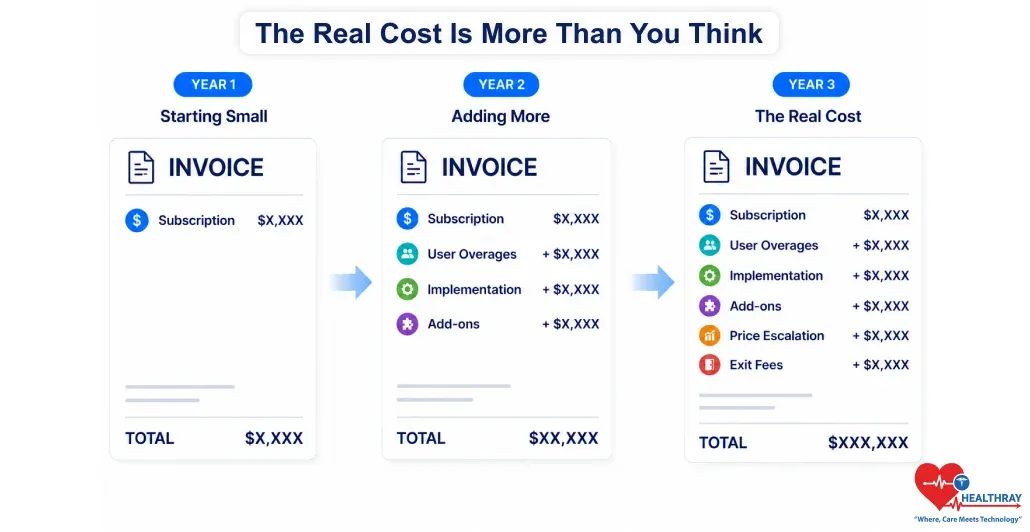
When calculating clinic software total cost, it is not just about its subscription price that the company wants you to pay. Six hidden layers slowly increase your 3-year total without you even noticing:
- Base subscription: the advertised price, rarely the real one
- Per-user overages: costs that scale with growth, often invisibly
- Onboarding and implementation fees: frequently excluded from the headline price
- The Add-on modules: features marketed as core that are billed separately
- Price escalation clauses: built-in annual increases buried in the fine print
- Exit fees: the cost of leaving, which determines your actual negotiating power
The price listed on the clinic software pricing page is rarely the amount that you finally pay. When you include user overages, onboarding add-on modules, and annual price increases over three years, costs will most likely end up way beyond your initial budget. Use this breakdown to understand the true clinic software total cost before you sign, not after your invoices start increasing.
What Clinic Software Really Costs Over 3 Years, Not Just Year One
Most clinics compare software the same way. They open a few pricing pages, look at the monthly costs, and choose the cheapest option. Comparing clinic management software purely by subscription price means you are looking at the wrong figure, and that discrepancy will be revealed very quickly after signing the agreement.
Where the Comparison Breaks Down
By the fourth month, the comparison usually breaks down: a few newbies require logins, the data-tool dashboard demo is actually a paid feature, and the bill is different from the quote.
Why It Happens
This isn’t a pricing error. It’s how clinic software is sold. Sellers price the main product to look appealing, then recover margin through parts buyers rarely ask about upfront, onboarding, user growth, premium features, and renewal terms. None of it is hidden in a legal sense; it’s all in the contract. However, It’s just rarely mentioned during the sales call.
The Number That Actually Matters
The clinic software total cost consists of the basic subscription and all six extensions, calculated per your clinic’s anticipated growth in users, locations, and patient volume for a period of three years. Here is a detailed explanation of each layer so that you understand the total fee on your first day rather than discovering it bit by bit through three years of billing.
The 6 Cost Layers: What Each One Actually Adds
Clinic software costs go far beyond the subscription fee listed on the pricing page. Before evaluating different software, identify all six cost layers to know the actual three-year expenditure, not just the first year.
1. Base Subscription
This is the figure that you will find on the pricing section of the website. Usually, the invoice will be a clinic, user, or provider per month or on a per-year basis. Most buyers use this figure to compare vendors and negotiate pricing. However, the base subscription contributes the least to the real cost difference for most mid-sized clinics over 3 years.
2. Per-User Overages
Most clinic software pricing comes with a specified number of users, for example, 5 staff logins, and the extra users will be charged per seat, so a clinic that grows from 5 to 12 staff over three years is not paying the advertised price but the base rate plus 7 extra seats, often at a higher per-seat rate. This type of tier is the one that is felt most intensely by clinic chains, mainly with multi-location clinic centralized software, where per-user pricing can increase unpredictably as new branches add staff, and without caps or volume discounts, it becomes quite a bit more expensive than the original quote suggested.
3. Onboarding and Implementation Fees
Talking about pricing through subscriptions or advertising, onboarding might top the list of the last agenda-raised topics. Though it is an essential part of the entire process, which, first and foremost, includes data migration, personnel training, software installation, and, if the clinic takes it, customization of the clinic software EMR integration. Generally, vendors charge separately for EMR integration. Depending on the complexity and the number of systems involved, the work may require a one-time setup fee or a larger implementation project.
 NOTE
NOTE
4. Add-On Modules
A lot of vendors advertise many features to make a sale, but then during contract review, they disclose that several of those features come as separate paid modules. The dashboard and reporting features shown during the demo that seemed to be part of the clinic software analytics suite actually need a separate analytics add-on when the contract is being reviewed line by line. Telehealth, advanced inventory management, multi-location reporting, and patient engagement tools are other modules that are often unbundled.
5. Price Escalation Clauses
Most multi-year contracts come with a yearly price increase provision; generally, it’s 5 to 10% per year, at times linked to an index, other times fixed. Moreover, these provisions are standard in SaaS contracts, and clinic software is no exception. However, buyers often overlook them during evaluation because they compare only first-year pricing.
 PRO TIP
6. Exit Fees
Leaving a clinic software platform is a big deal, but few clinics discuss it before signing, even though it shapes your leverage for the whole contract. Exit costs include data export fees, early termination penalties, a second data migration, and, during a rebrand, website updates, signage, and healthcare logo design. Vendors that charge high export fees or require long termination notice periods severely limit your ability to negotiate at renewal, because leaving is expensive no matter how the relationship is going.
Building Your Real 3-Year Cost Estimate
Add up all these six layers and then estimate the real cost of ownership based on the future growth of your clinic and not its current size. But the most common mistake that many buyers make is that they correctly calculate only the first-year cost. Then, they assume that the costs in years two and three will remain unchanged.
| Cost Layer | 1st Year | 2nd Year | 3rd Year |
| Base Subscription | ✓ | ✓ | ✓ |
| Per-User Overages | Minimal | Moderate | Significant |
| Implementation Fee | Paid once | – | – |
| Optional Modules | When needed | As needed | Based on usage |
| Price Escalation | – | +5-10% | +10-20% cumulative |
| Exit Fee | N/A unless leaving | N/A unless leaving | Relevant at renewal |
Ask each shortlisted vendor for a written three-year cost forecast. Base it on your planned user counts and locations, not the vendor’s assumptions. Conversely, a vendor that refuses to provide this in writing may have a pricing model that will not stand up to scrutiny.
Learn more: Clinic Inventory Module Setup: 5 Settings Most Teams Configure Wrong – This guide maps your 3-year software cost; the inventory piece shows how setup choices quietly inflate add-on spend.
Conclusion
Most of the time, the clinic software total cost is much more complicated than the number listed on the pricing page. It includes the price for the base subscription, per-user charges if any, installation fees, additional modules, price increases, and exit-related costs. All of these factors will be considered over the years your clinic will actually be using the platform.
Those who ask for a written 3-year projection before making a purchase are more capable of making a better decision than people who just compare subscription prices. The price that really counts is not the price of the software at the moment. It is what the price will be in three years based on how your clinic will have grown by then.