




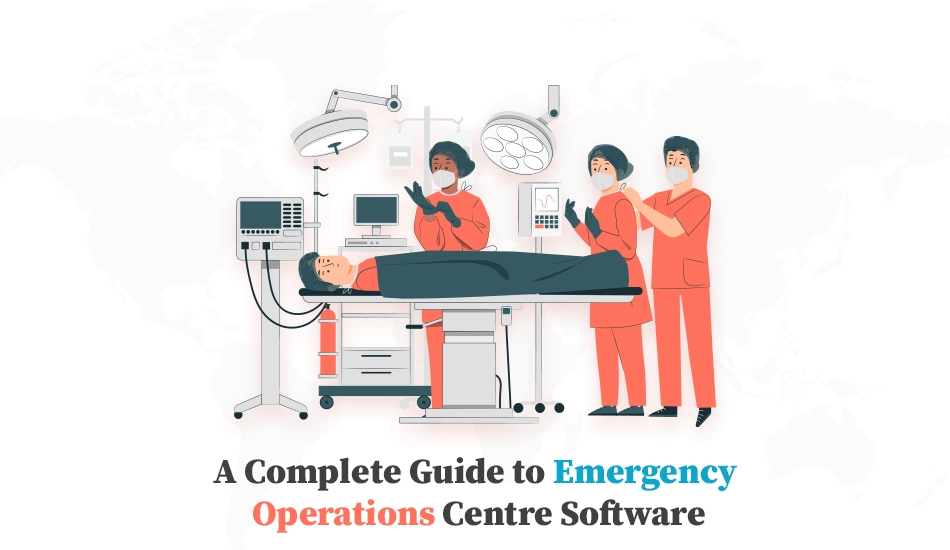
Quick Summary: In this guide, discover the ins and outs of Emergency Operations Center software. Know the salient features and tactics for putting this program into practice, and how it improves readiness emergency communications, preparedness training and responsiveness for effective extremity operation.
Introduction
Emergencies are unavoidable for any institution, whether it is a medical institution or some other professional support. Imagine a scenario where a fire breaks out in the building, and someone is in the midst of it. Now, you could quickly deal with this problem if you knew about it in advance. Well, keeping these heroic thoughts aside, it is never possible to predict any hazardous or Emergency. Thankfully, it is possible to get emergency management software or operations center software or EOC software. It can help you prepare well for risk and mitigate risks from it.
An emergency management system or software is one of the essential parts of the response to any incident in any industry. If you compare it with the military, it is at the post of commander of the unit. This five year equipment management system enters the situation to seek awareness whenever needed and then execute the plan to reduce any kind of adverse effect possible.
The number of emergencies and unexpected events that occur has tripled over the past fifty years. And still, the world has not been out of the pandemic trauma that hit hard. Therefore, emergency crisis management platform and software development can be successful on cards. Actual Hospital Management Softwareprovides features that enhance efficiency of hospital processes.
Keep reading to improve risk management and jump on to having a prompt response when any emergency strikes your door. While emergency operations centre software might seem a complex task, let’s simplify its concept and market for better understanding.
What is emergency operations centre software?
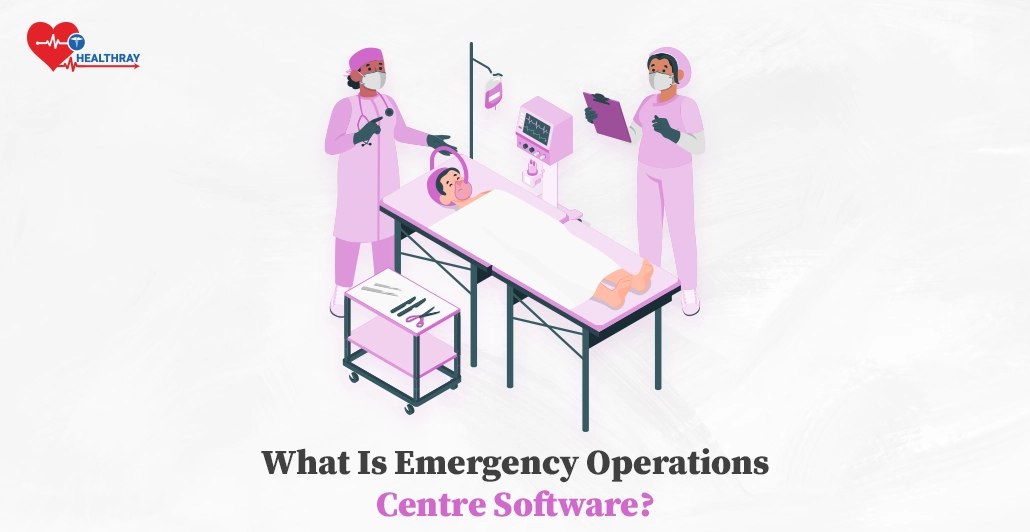
Emergency management software or emergency operations center or software provider is responsible for providing professionals with the tools that help prepare, respond effectively to, and recover from different emergencies or incidents. The government now uses these solutions.
Emergency response specialists can plan for, respond to, and recover from a variety of situations security threats or natural disasters, with the help of emergency management software. Although these solutions have been developed to fulfill the needs of many enterprises aiming to protect people and assets, they are used mainly by government agencies for public safety, particularly with disaster response, risk mitigation, and public threat neutralization.
Users of these emergency management systems and software can organize notifications and messaging, get emergency alerts, make emergency plans, operationalize procedures, and simulate potential emergency scenarios. To keep an eye on the media, the weather, and other indications that point to an upcoming emergency, event, or disaster, they establish connections with external data sources.
By covering rosters, exertion records, and dispatches during an emergency response, druggies can fleetly estimate the emergency response and team member’s success. These tools help track medication and response charges, assess emergency response team’ efficacy, conduct checkups and compliance conditioning, and perfect unborn disaster operation action plans in order to support exigency recovery.
The mass announcement and waking features of exigency announcement software are less complete than those of exigency operation systems. Also, incident operation software — which gives IT brigades the means to proactively look into, address, and resolve IT issues as opposed to public safety extremities — differs from emergency operation software. Critical event operation( CEM) results, on the other hand, combine the capabilities of exigency operation software with redundant features to support business continuity, durability, cybersecurity, and a wider diapason of incident medication and response.
How can Emergency operations center software enhance your incident response?
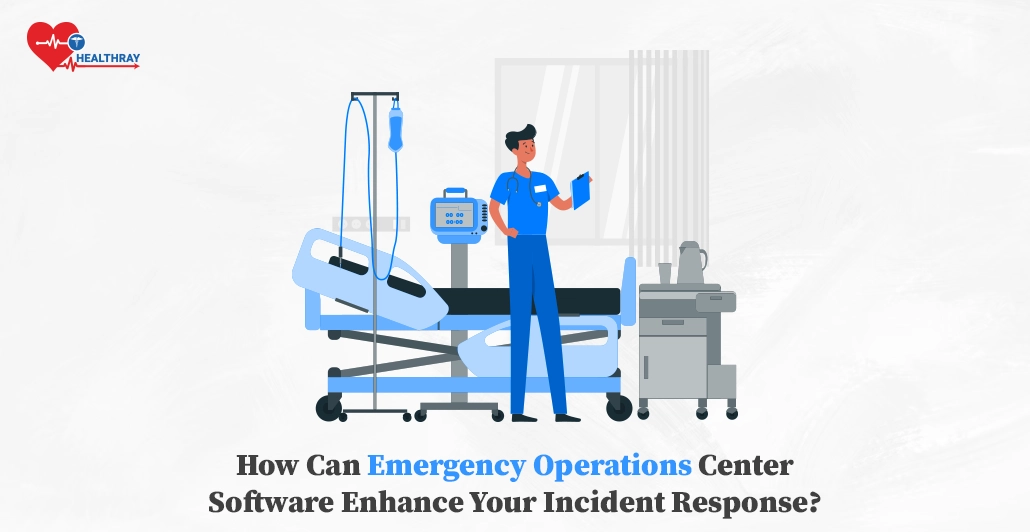
You can only afford to continue operating your business or public service with a plan in place for what to do in the unlikely event that the unimaginable occurs. At this point, the price of ignorance is equal to the price of lack of preparation.
Rather than creating crisis response strategies just in time, you should always be prepared to act. Additionally, for emergency preparedness, you need to know how to handle an emergency such that the least amount of damage to property human resources, people, and the environment is done.
Disconnected physical systems and disorganized response to emergency management plans can be solved with EOC software. It has several benefits to you and tilts the general emergency management statistics scale in your favor:
Stay aware of how severe an emergency is
While a minor-scale incident should not minimize the need for a suitable response, understanding the extent of an impact might help in carrying out the most effective action plan. Real-time command and control software keeps you informed of everything going on around you. To further situational awareness and increase your alertness, it can also be linked to external data sources like GPS shadowing bias and systems from a reliable CCTV installation company.
Avoid divided incident response teams.
A virtual room that can hold all the people involved in handling an emergency is called an EOC platform. When making choices, police officers, tactical teams, rescue squads, the police and fire commanders and other emergency services can collaborate because they have access to the same critical information. An EOC system generates a comparable environment for enterprises. It enables your operators and first responders to work together to handle a crisis virtually.
Respond to incidents faster.
All emergency operations center software features, and emergency management strategy in general, are designed to dock the time it takes for you to reply and recover in critical situations. In the event of an emergency, you can pierce an EOC system, get emergency notification, call in the applicable brigades and emergency services, and delegate tasks while on the go without demanding to interact with decision-makers; all the bases are covered.
Keep people out of danger.
Fear can sweep over your workers or the raiders of the area where an incident has taken place. As you get down to managing it, you can use a virtual EOC to calm down people with announcements. You can also shoot them to your stakeholders to join sweat or guide your workers as they make their way to exigency exits.
Protect those on the front lines.
In an emergency where askers’ lives are at peril, Hospital Management Software Solutions can reduce the potential hazards that they face. Indeed, when several emergency management agencies are involved, you may still coordinate professionals in the field with a virtual EOC. Askers and emergency managers can handle an emergency more fluently and safely with the help of custom emergency operation center software, which can include mapping and visualization features.
Get back in the business saddle.
With EOC software, you can snappily put your company’s recovery plan into action once an incident is under control. You can estimate damage and be apprehensive of losses with the use of an EOC system. You can also make plans to recover them and resume your company’s operations.
Top-7 features of custom Emergency operations centre software
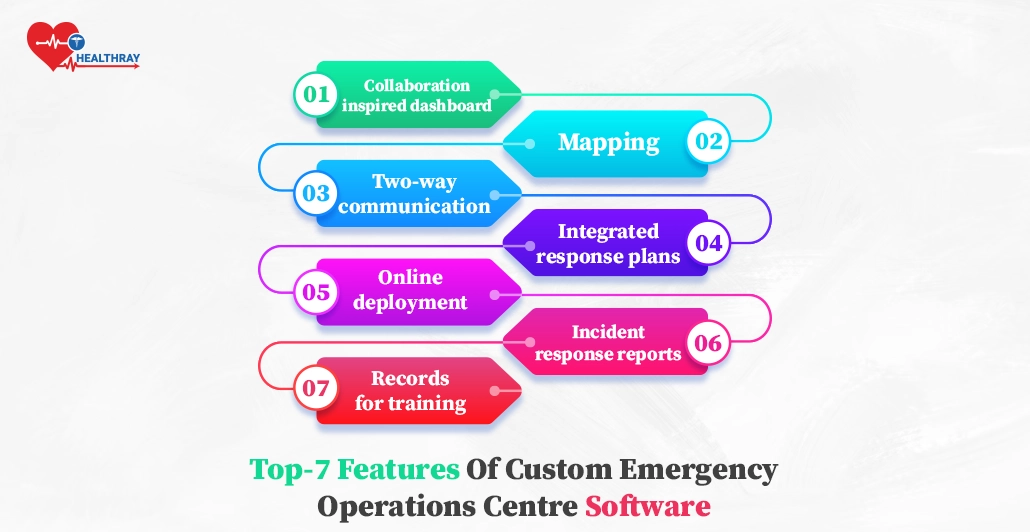
Collaboration-inspired dashboard
A digital command center is an EOC dashboard. It’s a place where response brigades and public exigency services can get together to confirm the most recent details regarding an extreme situation, ensuring that there are no disputes over its inflexibility, losses, coffers available, or precedences. With improved situational awareness and mindfulness handed by an EOC dashboard, you can take charge and spark askers, including police, ambulance, and fire departments.
Mapping
Your EOC system gains a fresh subcaste of visualization with integrated charts and real-time prints. A fluently observable functional picture allows you to identify the exact position of an incident, follow the progress of brigades to vital spots, and keep an eye on when trouble becomes too great to handle. It is also the use case for detectors and GPS bias. You may also plan and display the routes of your emergency responders’ vehicles on the precise incident information in your dashboard and that they’re in connectionto your EOC software.
Two-way communication
In an emergency, field teams must always be connected to the decision-making unit. Using real-time alerts and push notifications to their mobile devices, it is your responsibility as an operator to coordinate their actions. Thankfully, an app that functions as a two-way communication channel can use a virtual EOC. So that field professionals can get in touch with you again for confirmation when they receive updates. Sharing on-scene information with a central EOC is also a breeze with this.
Integrated response plans
Indeed, though they’re changeable, heads bear well-allowed-out end-to-end-to-end plans with defined places. They can help you respond to extreme situations without having to start from scratch. It is by incorporating into your five year incident management and operation software. In the event of a necessity, you can relate to the event type plan and give field specialists or staff members precise instructions. For a more effective response, these plans may include duties, precedences, rosters, and other relevant information.
Online deployment
One of the main features of a virtual exigency operations center system is rapid-fire resource deployment. You can use your EOC result’s capabilities to ever shoot vehicles and workers to the scene of an emergency. An EOC platform must be interactive and straightforward to use. It must especially for drivers who need to be tech-extensive, in order to emplace coffers in this manner.
Incident response reports
When using Hospital Risk Management Software, It is not necessary to keep records. When you use it in confluence with the bus logging tool, it automatically records all of your strategies. Later dispatches, and makes choices during an extreme event. You can recoup your emergency management software and response records with timestamps. One can do it by resolving an emergency. It might help you in reporting to your stakeholders or advanced authorities and helping you achieve compliance requirements.
Records for training
In addition to the incident reporting process, a virtual EOC can record conduct and show it on training charts as response moves. With the help of real-world scripts, you may use this function to educate emergency professionals on practical chops or run drills. One can give practical training by demonstrating the conduct after incident. You can also take help of field specialists and EOC drivers. Emergency Operations Centre Software helps organizations coordinate resources, streamline communication, and respond effectively during critical incidents and emergencies. Just as Personal Injury attorneys rely on accurate information and efficient case management to support clients after accidents, emergency management teams depend on advanced software to make informed decisions and improve response outcomes.
Why is Healthray the best choice for Emergency operations centre software?
Healthray’s unmatched capabilities and responsibility make it the top option for Emergency Operations Centre( EOC) software. During emergencies, our platform’s flawless integration of real-time data facilitates quick decision-timers.
Healthray’s intuitive interface guarantees stoner- benevolence and facilitates effective emergency response collaboration. Effective strategizing is made possible by great data and robust communication technologies.
Security is critical, and Healthray uses state-of-the-art safeguards to cover private data. Our EOC software is exemplary and innovative to keep up with the ever-changing requirements of emergency operations. In times of need, choose Healthray for a reliable, flexible, and all-inclusive result.
Conclusion
This in-depth primer explores the vital field of Emergency Operations Center(EOC) software. Hence it furnishes an in-depth analysis of its key features and significance. After going over the main attributes, advantages, and factors to take into account, professionals have great knowledge of EOC software. It is an essential instrument for extremity operation. The significance of data integration, decision support, and real-time communication protocols is high. Hence emphasizing its critical part in perfecting exigency response effectiveness.
Organizations are placing a greater emphasis on response time and readiness. Hence decision-makers may choose EOC software with confidence, thanks to the information in this guide. Emergency management is a dynamic field that requires flexible, feature-rich solutions. This book helps readers understand the intricacies of selecting the best incident management software for their particular operational requirements. Adopting EOC software becomes strategically necessary in the face of uncertainty. It is to guarantee prompt, well, and efficient responses to emergencies of various sizes.