


Summary
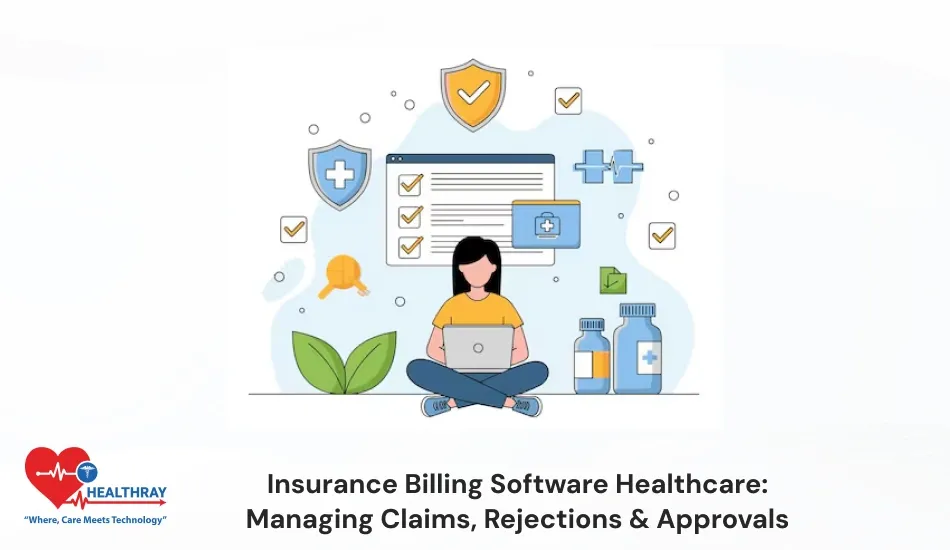
All healthcare practices lose revenue without realizing it – not because they fail to provide services, but because delays, denials, or abandoned claims occur within a process that lacks visibility. Throughout this blog post, the entire claim lifecycle will be discussed, starting from the initial validation process prior to claim submission up until payment is received, as well as the ways that Insurance Billing Software Healthcare can minimize losses for each phase.
Introduction
Consider another figure that often goes unnoticed: the healthcare sector in the United States spends more than $42 billion annually on billing processes. A significant portion of this spending does not support the delivery of healthcare services. Instead, organizations use it to pursue, correct, and resubmit claims that should have been processed successfully the first time. This is not necessarily an issue of carelessness – it is an issue of visibility. To better understand how modern systems address this challenge, explore Medical Billing Software. Once a claim leaves your office, it often becomes invisible, effectively disappearing into a void.
This is precisely where Insurance Billing Software Healthcare solutions play a significant role. Instead of handling claims in a transactional manner, modern billing systems treat every dollar as part of a continuous cycle that starts before the patient enters the healthcare facility and ends only when the final payment is processed.
In the following guide, we will take you through each phase of the cycle and explain what transpires at each step along the way and why manual management may cause problems.
Pre-Submission: Eliminating Errors at the Source
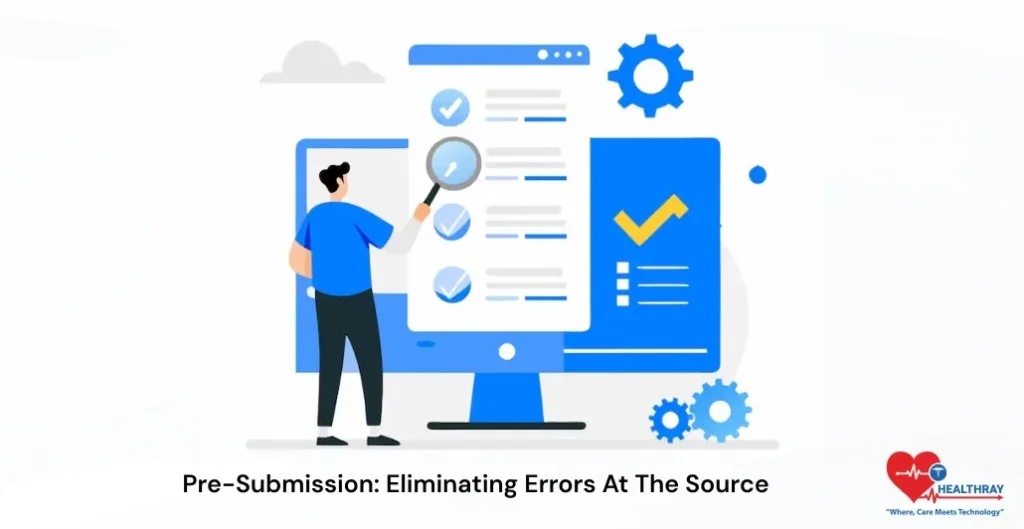
Claim rejections can often be avoided. Research studies show that most medical billing errors occur during registration or before claim submission, rather than during medical documentation. A recent study reports an overall rejection rate of 3.85%, with key denials linked to uncovered services and insufficient clinical justification. The system performs multiple rounds of checks before it sends the claim to payers.
Eligibility Verification: It checks in real-time whether the patient is eligible to receive services based on their insurance coverage and any other information that the payer has on them. Instead of calling the insurer and waiting on hold, the system immediately shows whether the patient is eligible, what the deductible is, and whether any prior authorizations are required.
Claim Scrubbing: If billing is writing, then scrubbing is like its spell check process. Many healthcare providers rely on an efficient Medical Billing Process to ensure billing details are structured correctly before claims are generated. The system reviews every claim against hundreds of payer-specific rules to detect incorrect procedure codes (CPT), improper diagnostic codes (ICD-10), wrong modifiers, and other errors that may lead to rejection.
Why This Stage Matters: The cost of correcting something during pre-submission is next to nothing. After rejection, practices incur higher costs due to increased labor and additional administrative effort.
 NOTE
NOTE
The “Black Box” Problem: Tracking Claims in Transit
After the submission of a claim, the wait begins. However, in most cases, this wait occurs without any visibility. The traditional billing model depends on manual chasing, where someone calls insurers regularly or visits their websites to check the status of claims. The problem with such an approach is that it is not only slow but also unpredictable.This is where advanced hospital billing software help improve visibility and efficiency.
Real-time claim management capabilities available in modern Insurance Billing Software Healthcare resolve the above issue. Below are the key elements of a real-time claim management system:
- Real-time status reporting – Instantaneous status notifications indicating receipt of a claim, status of claim processing, need for more information, or approval of the claim.
- Automatic payer notifications – Notifications generated by the software regarding payer responses with no need for manual monitoring.
- Aging claim reporting – Automatic notification of any claim that hasn’t shown any progress for some time.
- Claim priority notification – Early identification of high-value claims or those that require urgent processing.
This isn’t a simple matter of one being more efficient than the other. This is the difference between discovering an issue in Week 1 rather than Week 6. In the revenue cycle management process, timing truly is everything.
 PRO TIP
Revenue Recovery: Turning Rejections into Approvals
Claim denials are not as unusual as many billing departments might have you believe. Claim denial percentages can range anywhere from 5% to 10%, with some specialties experiencing much higher denial percentages industry wide. The real question isn’t whether or not you will receive claim denials; it’s what you do about them.
Common Rejection Triggers
However, the reasons behind the denial of claims in health care are rarely accidental; instead, they have a set pattern. Problems such as inappropriate coding, lack of authorization, and discrepancies between eligibility play a prominent role in the denial of claims in hospitals and clinics within India. While solving the problem at hand may seem easy, the real challenge is to recognize the underlying reasons that cause claims to be denied.
| REJECTION REASON | FREQUENCY | PREVENTION STRATEGY |
| Wrong codes | Very High | Scrubbing claims before submitting |
| Eligibility problems | High | Insurance verification during real-time |
| Lack of pre-authorizationsHigh | High | Checklist for pre-auth incorporated in workflow |
| Duplicate claim submissions | Medium | Automated detection of duplicates |
| Missed deadline to file claims | Medium | Automated follow-up scheduling |
The Resubmission Workflow
Upon rejection of claims, the biggest mistake that the billing team can make is to input all the revised data again by hand. It not only deprives the process of context but also creates further mistakes.The properly designed insurance billing software system takes care of the following processes automatically:
- Acknowledges the rejection and codes the rejection code
- Forwards the claim to the designated personnel with relevant information attached
- The system marks the exact field or requirement causing the claim to be rejected.
- Produces an amended claim for submission again
- Maintains the process of resubmission independently to avoid aging out
It is the difference between practices that recover their lost money through such processes and practices that passively accept claim denials as an inevitable reality. There is an economic benefit to this distinction. With just 500 claims filed monthly and a 7% denial rate, a mere 60% recovery on those denied payments adds up to tens of thousands of dollars in revenue lost every year.
Financial Reconciliation: Closing the Loop
Approval is just the beginning; the actual posting of the payment and the reconciliation of the account comes next. At this stage, hospital billing system plays a key role in ensuring accurate payment processing and reconciliation. The final step is often where visibility is lost. This is especially true when the practice is handling all its accounts manually.
Automated Payment Posting
As the payer transmits the ERA, the billing software automatically ties each payment to its matching claim, makes any necessary contractual deductions, and pinpoints any underpayment compared to what is due per the contract terms. This process that once took hours by manual input takes only minutes now. AI agents for payment posting are largely responsible for this shift, matching ERAs to claims and flagging discrepancies without staff intervention.
Managing Patient Balances
After processing insurance, the billing team determines the outstanding amount owed by the patient. This ensures accurate billing and helps maintain a smooth payment collection process.
- Generate patient bills using simple language to explain each charge
- Send out automatic reminders for payments via SMS or email notifications
- Provide secure payment gateways directly linked to the billing database
Catching Underpayments
Not all claims that are approved end up being paid right. Errors by the payer and misuse of the agreement happen far more often than practices may be aware. The Insurance Billing Software Healthcare program matches each payment to the negotiated fee schedule and alerts you when there are discrepancies. This helps recoup money that would otherwise be overlooked in a manual system.
If everything works as designed, it won’t just be a billing operation. An entire revenue cycle management system will account for and recover every dollar coming in.
Conclusion
The age when billing was merely an administrative process occurring in the background has ended. In the current era of changing reimbursement regulations, increasing denial rates, and shrinking profit margins, healthcare institutions face growing financial pressure. As a result, they must consider their revenue cycle as a key business process.
The Insurance Billing Software Healthcare that your medical institution chooses today not only helps automate processes but creates the visibility necessary to transform billing into a proactive approach that relies on data. If you can identify eligibility problems prior to the visit, follow your claims in real-time, recover denied claims systematically, and reconcile payments automatically, then you are not just processing bills. You have built an effective financial machine. Claim lifecycle is where your revenue exists or fails to exist.