


Summary
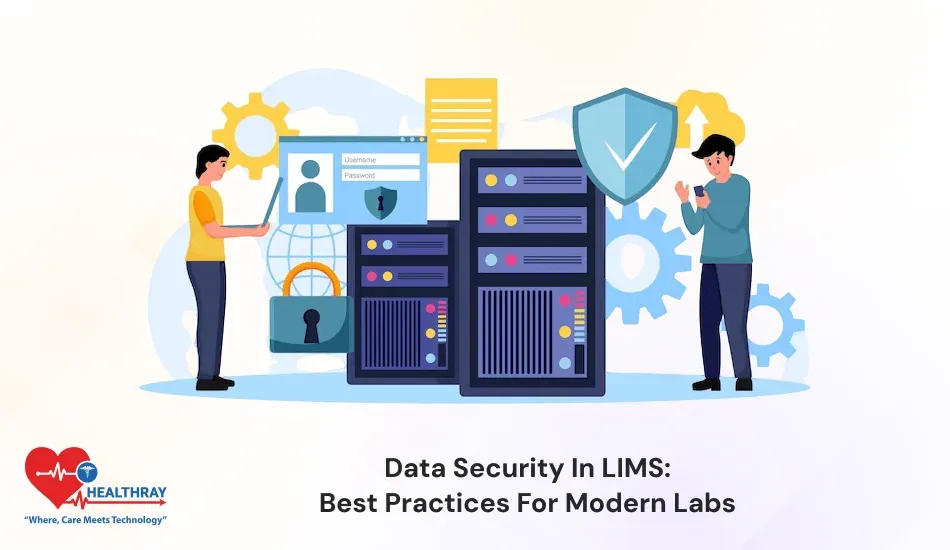
LIMS data security is not just about protecting the sensitive information. The concept of data security in 2026 encompasses more than just security management. Data security has become a strategic approach and helps clinics simplify their complex operation along with that, it protects patient privacy, preserves regulatory conformity, and cultivates long-term trust with patients. Labs that are adopting robust security practices can confidently embrace digital transformation without stress about data breaches. In this blog, I will discuss some best practices of maintaining security in lab operations and how clinics can effortlessly build a secure culture along with conducting their mundane operations. Let’s begin!!!
Introduction
Modern laboratories are no longer just test processing centers. It has become a highly LIMS data security digital ecosystem. Every sample carries sensitive patient information. In a traditional paper-based system, data is physically secure but there is a limitation in efficiency and accessibility.
A secure laboratory information management system relies on the practices of multiple protective layers such as strong user identification, role-based access management, encrypted data transmission, and continuous activity evaluation. Lims provide an efficient platform for the lab division to check all the activities under a single roof. They can seamlessly collaborate with other departments and share all the specific reports of patients without worrying about cyber attacks.
Why LIMS Data Security Matters
Strict Regulations Makes the Data compliance Highly Risky
Modern regulations such as HIPAA, GDPR, and India’s DPDP Act are creating pressure on labs to follow stringent rules. In conventional systems, there is a lack of appropriate access control, encryption, or monitoring procedures. This increases the risk of data breaches. Further, if sensitive data get leaked, then the lab has to pay heavy prices for penalties, legal difficulties, or compliance suspension. In a few situations, fines can reach a large percentage of global revenues. This can adversely damage lab financial viability and credibility. Additionally, a strong security control and deploying lab software have become indispensable for laboratories. This helps clinics ensure secure operations and regulatory approval. And help them maintain long-term economic viability.
AI-Driven Cyber Threats are Ruling
In 2026, cyber threats are increasing more as ai tools are ruling the ecosystem. Furthermore, these ai tools detect vulnerabilities in just a few seconds and launch automated attacks if an uncertainty reaches the system. If your lab system lacks security, then attackers can silently access the system, steal the data, modify it and lock the data with ransomware. Additionally, proactive observation, encryption, or access supervision is imperative to keep the system away from hackers’ hands.
How can a Single Breach Completely Disrupt the Operations?
A single data breach is not just limited to an information leak. It can severely impact the lab operation. In a conventional system, clinics face challenges with proper security monitoring and threat detection. Hackers can silently inject code to manipulate and access the sensitive information. They can even block, delete or modify the record.
In this situation, laboratories lose control over their own data and disrupt the daily workflows. Additionally, repeated disruption can even ruin the lab credibility and eventually patients will lose trust. That’s the reason for implementing a strong security-enabled LIMS. LIMS compliance and standards ensure laboratories remain always safe. Operations remain smooth and clinics can seamlessly deliver quality services.
How Does LIMS Data Security Become a Prime Target?
LIMS is Main Target
LIMS is a digitally centralized backbone that securely holds patient documentation, diagnostic history, sample tracking details, and research paperwork. Further, this centralized approach simplifies all the hectic operations of maintaining records manually and allows staff members to instantly access the data from a single dashboard. That’s the reason cybercriminals’ foremost focus is on targeting LIMS.
Prone to Virus Attacks
LIMS contains sensitive patient financial details. Moreover, a ransomware attack can lock the entire data and can enable phishing and unauthorized accessibility. Malicious viruses can steal the information and can even manipulate it. Without implementing proper security, even a single breach can impact the entire system.
Key Threats to LIMS Data Security
Unencrypted Data Transmission
When data without any proper encrypted system gets transferred to other departments, attackers can easily capture it. It is highly risky when labs share reports, sample details, or patient information through networks. In a conventional setup, clinics face difficulties with protecting patient information, as systems lack secure protocols. This can expose the sensitive information easily. Further, proper encryption ensures data remain readable and protected when teams share data among different platforms of departments.
Ransomware Attacks
Ransomware attack is a dangerous cyber threat where hackers can block the lab data and steal the sensitive information. In a traditional setup, the system lacks intelligent tools to detect such unethical activities. Laboratories face huge challenges to unblock such attacks and hire professionals to avoid such harmful threats. Furthermore, without secure backups and protection, systems can permanently lose their critical data. Moreover, this halts the operations, slows down the reporting and increases financial loss in the system.
Weak Access Control
In traditional systems, users often face challenges with unauthorized logins, weak passwords and shared login credentials. Sometimes an insider approaches the system and accidentally accesses the information. Further, without proper role-specific access, clinics can lose control of all the actions performed. They can’t even determine which user is accessing the system and implementing changes without any approval from a senior. Thus, a disorganized system can hamper patient data privacy and increase the risk of compliance violation. Attacks
Insider Errors and Phishing Attacks
Every security breach is not intentional; sometimes it happens because of human errors. Further, several times staff accidentally open the phishing emails. They are unaware of any virus. Additionally, staff open fake links. And unconsciously configure any wrong system settings. These small actions provide an entry point for attackers to slowly inject code and steal the system. Once they get access, they can access the financial information, take patient emails or phone numbers, and even block the system. Therefore, it is crucial for clinics to provide a Proper staff training and awareness programs so that staff can understand any types of risks beforehand and inform the IT department immediately.
Cloud-Based LIMS increase Risk
Cloud-based LIMS provides remote connectivity, flexibility, and operational versatility to lab centers. This is a highly important parameter in modern lab practices. However, if your cloud system lacks proper security, it increases the possibilities of unauthorized hacking. Unauthorized access, data leakage, and cyberattacks can negatively impact your day-to-day operations. Further, Public Wi-Fi usage, weak passwords, or unsecured devices open possibilities for more uncertainties. Therefore, clinics should take help from vendors regularly to keep the cloud architecture secure and prevent any third-party platforms from stealing the data.
 PRO TIP
Core Pillars of LIMS Data Security
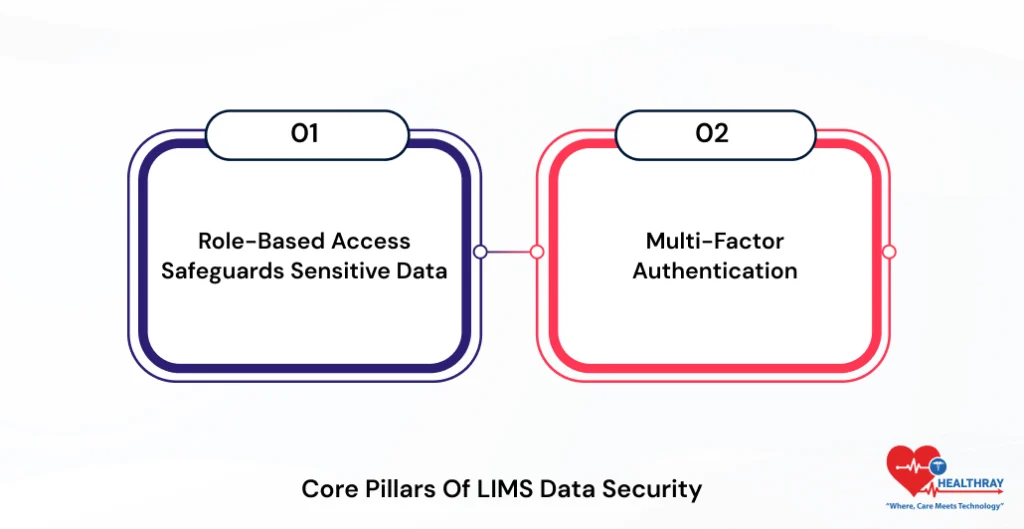
Role-Based Access safeguards Sensitive Data
Role-Based Access Control provides a secure and structured framework to the lab department. Here every employee, as per their designation, gets LIMS system access. For example, a junior lab assistant can check sample details but can’t approve the reports. Only senior pathologists and management can approve the reports. Further, this helps clinics to expose data to certain limits; only authorized recipients get full access. Read our blog role of LIMS in healthcare to know more.
Multi-Factor Authentication
Is your lab system vulnerable to hackers if they manage to crack the password? This is the biggest challenge lab departments face with traditional software. However, multi-factor authentication of LIMS software has completely reformed the system authentication process.
Further, when MFA is enabled at the time of login, the LIMS system asks for extra verification such as OTP on mobile, fingerprint, or email verification. With multiple verification processes, hackers can’t break the system even if the password gets leaked. They can’t steal the data without having OTP and biometric access. This helps clinics to protect patient data even if a password accidentally gets divulged. Moreover, laboratories get a formidable security shield where only permitted users will get access; no outsider can access the system. Labe will get:
- A complete secure environment
- Able to maintain strong compliance at every stage
- No hassles
Best Practices Implementation
Regular Security Assessment
Regular security scans and penetration testing deeply analyze every single piece of information in the system and identify any weak points that hackers can exploit. Further, this proactive approach can help laboratories to prevent attackers and viruses from stealing the patient data. Ensure complete security, regulations and operational safety in the system. Learn how Digital Transformation in Labs can help you more effectively maintain compliance.
Timely Software Updates
Are you updating your software regularly? Outdated software is an easy target for attackers to extract sensitive data. Further, regular updates and security patches can instantly fix the vulnerabilities in the system. Additionally, they strengthen the system protection. Regularly update your software and keep your system free from viruses and hackers’ attacks.
Third-Party Audits
Internal checks are not enough; taking external expert validation is highly crucial. Further, third-party security audits allow the team to thoroughly evaluate all LIMS, EHR, and RIS integrations. Experts can effortlessly identify any hidden gaps, configuration errors, or compliance uncertainties in the system. It provides strong security and improved compliance readiness.
Disaster Recovery Planning
In traditional software, it is impossible to recover the system from a sudden system crash, cyber attack, or server failure. Furthermore, disaster recovery planning is crucial to circumvent unavoidable circumstances. Proper recovery approaches, automated backups, or predefined restoration processes help clinics to restore the data, and clinics can quickly resume the work with minimum downtime.
 NOTE
NOTE
Conclusion
Secure LIMS data security ensures laboratories can easily meet DPDP Act, HIPAA, and GDPR guidelines. LIMS helps clinics to keep the patient and research data fully protected from third-party access. Strong security foundation allows the lab department to scale confidently and innovate and compete in a sustainable healthcare ecosystem.