



Summary
LIMS deployment is an imperative part of laboratories’ operation. Nowadays laboratories face numerous challenges with sample tracking, data management and ensuring regulatory compliance at every step. To combat such issues, clinics purchase LIMS software to automate their mundane routines. However, they fail to consider crucial parameters that are fundamental for successful lims deployment. They spend money on software purchases without taking their company’s needs into account.
A structured LIMS implementation roadmap encompasses crucial steps such as requirement evaluation, vendor selection, system configuration, data migration, testing and staff training. Clinics should evaluate these aspects deeply before making long-term decisions. If labs successfully follow this roadmap, they will never face challenges in the system. In this blog, I will share some successful tips for LIMS deployment and how labs can gain efficacy and long-term operational profitability by following this roadmap. Let’s begin!!
Introduction
In modern healthcare and the diagnostic industry, NABL, HIPAA, and other compliance standards are becoming indispensable needs. Labs need a secure and comprehensive data management system. For a successful Laboratory information management system deployment, a clear implementation roadmap is highly crucial.
Roadmap is basically a step-by-step strategy that guides the laboratories from planning to final system launch. This roadmap includes important phases such as requirement analysis, vendor selection, system configuration, data migration, testing, staff training and post-implementation support. If labs systematically follow these steps, then LIMS implementation becomes effortless and productive. A well-planned LIMS implementation provides immense benefits to laboratories.
LIMS seamlessly tracks sample tracking, data management, test workflows, reporting and compliance. However, buying just software is not sufficient. If you implement the system without proper planning, then staff faces challenges with integration difficulties, staff resistance, data migration problems and workflow disruptions. A proper roadmap helps the lab to understand its functionality well and ensures regulation is systematically followed at every phase. Next, I will discuss some practical steps to deploy the LIMS correctly.
Phase 1: Vision, Readiness, and Stakeholder Alignment
1. Define clear business goals
Before implementing LIMS, labs should clearly understand what parameters they want to achieve. Clinics, for instance, require a quick sample tracking procedure, want to reduce manual labor, or want to automate. Further, if goals are clear, clinics can easily determine their next move. If they lack clarity in their objective, no matter how high a budget they have, they will never be able to achieve fruitful outcomes. Moreover, clear goals help clinics make deeper plans and minimize waste on establishing unnecessary features. In simple words, clear goals help clinics make the lab solutions software development project planning focused, structured and productive.
2. Set Success Metrics (KPIs)
Apart from planning goals, clinics should also measure them. Planning only goals will not give fruitful outcomes. Further, check all the KPIs (Key Performance Indicators) that you need to implement in the software and clearly discuss every single aspect with your service providers. For example, if you’re focusing on reducing manual errors, then after deployment check the overall performance. These metrics help you determine whether your LIMS is capable of minimizing errors or still needs enhancements. Moreover, if labs carefully evaluate these parameters, then it becomes feasible to optimize the outcome.
3. Stakeholder Alignment and Communication
LIMS implementation will unfold in the right way only when all the stakeholders work on the same page. A lack of communication will make things more unclear and produce unsuccessful outcomes. Further, it is essential for clinics to deeply grasp all the key points of project goals, benefits and modifications. When lab staff, managers and the IT team work in the same direction, then they can share their viewpoints during the implementation journey. Further, clinics can gather views, conduct regular meetings, provides updates and open communication to evaluate the project progress and resolve any problems at the earliest stage.
Phase 2: Requirements, Vendor Selection, and Project Planning
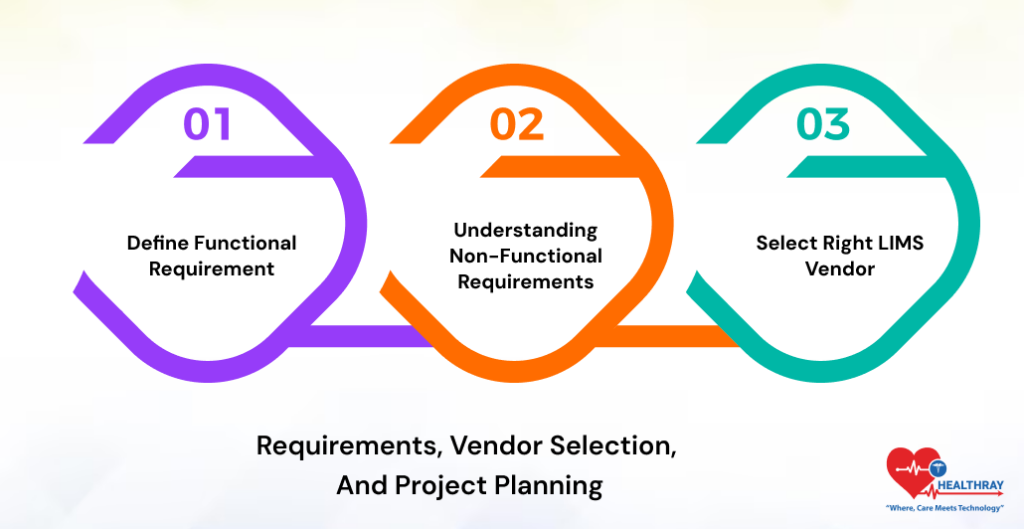
1. Define functional requirement
After understanding all the parameters discussed in phase 1, clinics should now focus on functional requirements. Before that, first, clinics should understand the concept of functional features. Furthermore, functional requirements are the features that clinics require to streamline their daily operations. Clinics should note down all the functional features that they want to discuss with the business analyst. Features such as sample tracking, test catalog management, result submission, quality control evaluation, and inventory management come under functional requirements; the rest depend on lab needs.
2. Understanding Non-Functional Requirements
Non-functional requirements usually define the system quality and performance. Furthermore, it helps clinics to determine the complete LIMS functions and how reliable it is in a real environment. It includes factors such as system speed, uptime, data security, backup, user access control and audit trails that govern the diagnostic lab management systems ability to resolve complex concerns. Moreover, when the lab discusses all the nonfunctional aspects with vendors, LIMS consequently provides a stable and secure environment to simplify the hectic load of daily operations.
3. Select Right LIMS Vendor
Selecting the right service provider is highly crucial in LIMS deployments. Further, if your vendor is experienced, they will provide you the best possible suggestion to overcome all the lab challenges. Labs should prefer the vendor that provides them proper training, technical support and implementation guidance. A right vendor will help to simplify all your mundane tasks and make the work culture smooth and secure.
 PRO TIP
Phase 3: System Design, Configuration, and Integration
1. Create a Detailed System Design
In this stage, both the lab team and LIMS vendor create a detailed blueprint for system implementation. Here’s the entire team’s plan of action are:
- Deciding the complete system structure.
- How will the data be stored?
- How to run the entire workflow?
Lab teams and vendors thoroughly plan sample types, test panels, result formats, and approval processes. Clinics should collect reviews from end users as well to match the features with real lab practices.
2. Define Data Model and Sample Structure
Data model design is a crucial step in the LIMS deployment process. In this phase, clinics evaluate how to configure samples and test data. It is highly important to note down sample types, test panels, result formats, measurement units and reference ranges concisely to avoid any ambiguities in the future. When clinics accurately plan the data structure, then staff members can conveniently retrieve the information.
3. System Configuration and Customization
In this step, clinics establish the LIMS according to actual workflows of the lab system. Vendor and lab teams collaborate with each other to discuss essential parameters such as test catalogs, result templates, worksheets, dashboards and alert configurations. Configuration’s main aim is to align the practices with the daily working structure. Beyond that, clinics should set user roles, permissions and notifications to help staff easily comply with their daily responsibilities.
Phase 4: Validation, Testing, and Quality Assurance
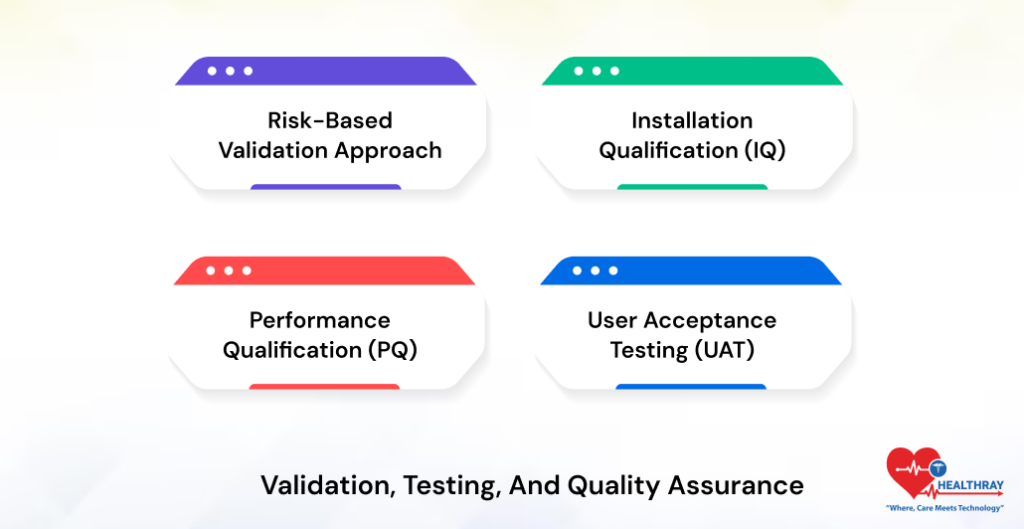
1. Risk-Based Validation Approach
Risk-based approach is all about testing the system features based on risk level. Every feature holds a different level of risk. In this phase, the lab should first identify the features that are critical for data integrity, patient safety, and regulatory compliance. Clinics perform detailed evaluation, documentation, and testing in these high-risk areas. Through the approach, clinics can efficiently conduct the validation process.
2. Installation Qualification (IQ)
The main objective of IQ is to check the installation process of Lims system. Clinic evaluate all the features such as server setup, database configuration and system infrastructure. This approach helps clinics to determine whether all the features are performing as per vendor guidelines.
3. Performance Qualification (PQ)
In the performance qualification and PQ stage, specialists should check the effectiveness of software in a real lab environment. During this phase, specialists should use actual lab workflows, sample types and test scenarios to evaluate the system performance at a practical level. This confirms whether the system is capable of handling routine lab operations efficiently and producing the expected results.
4. User Acceptance Testing (UAT)
In UAT, clinics should check the functionality by involving real end users. Lab technicians, managers and other staff evaluate the system performance. They check whether the system is easing their complex operations and automating the basic tasks. This approach helps clinics to determine usability issues and missing features in the LIMS software. Read the blog cloud migration for labs to understand the key points to check to mitigate challenges during cloud transition.
Phase 5: Training, Change Management, and Go‑Live
1. Role-Based Training Program Design
LIMS training should not be the same for everyone. Everyone’s role is different in the hospital sector. Lab technicians, supervisors, quality team and IT staff play different roles. That’s why training should be designed according to the role. First, clinicians should understand their daily tasks and design the features as per that. This helps the user to understand the LIMS system more easily.
2. Change Management and Communication
LIMS implementation brings a major change to the lab’s daily workflow. Therefore, clinics should provide prior information to staff. Regular updates and open communication help employees feel more comfortable in adopting the system. This minimizes resistance in acceptability.
3. Plan Go-Live Strategy
Before launching the system, first clinics should prepare a clear go-live strategy plan. Labs should decide whether to launch the system all at once or implement it step-by-step in different platforms. This helps clinics in controlling risk in the system.
 NOTE
NOTE
Conclusion
A well-planned LIMS implementation roadmap makes the complex IT project simple and manageable. When a lab follows a step-by-step approach, then system implementation becomes more organized and smooth. When lab staff, management, the IT team and stakeholders are aligned and work on the same page, then decision-making and system adoption become easier.