



Quick Summary
Patient relationships can affect a lot of your clinic’s growth. So, if you don’t handle it properly, it can create a mess. A clinic CRM software helps to manage it smoothly. It keeps patient data organized in one place, provides timely follow-ups, and makes sure clear communication. This system even reduces your staff’s manual work, which gives them time to focus on patient care.
Introduction
Patient care does not stop when they step out of your clinic. It is beyond that. This continues with reminders, follow-ups, and every small interaction.
Today, patients expect more than treatment. They want better clarity and attention. This is where the expectations keep growing. And to manage this patient relationship, you cannot just rely on your spreadsheets or memory.
Many clinics use clinic management software to manage schedules and records. But this alone cannot fulfil your requirements. You would need the best clinic CRM to meet these demands.
It will keep your patient details, conversations, and follow-ups in one place. In this blog, you will learn understand:
- What a clinic CRM does
- Which features matter the most
- How the CRM supports growth and loyalty
What Does Clinic CRM Software Actually Do?
Let’s briefly and crisply understand CRM software. It basically stands for Customer Relationship Management Software.
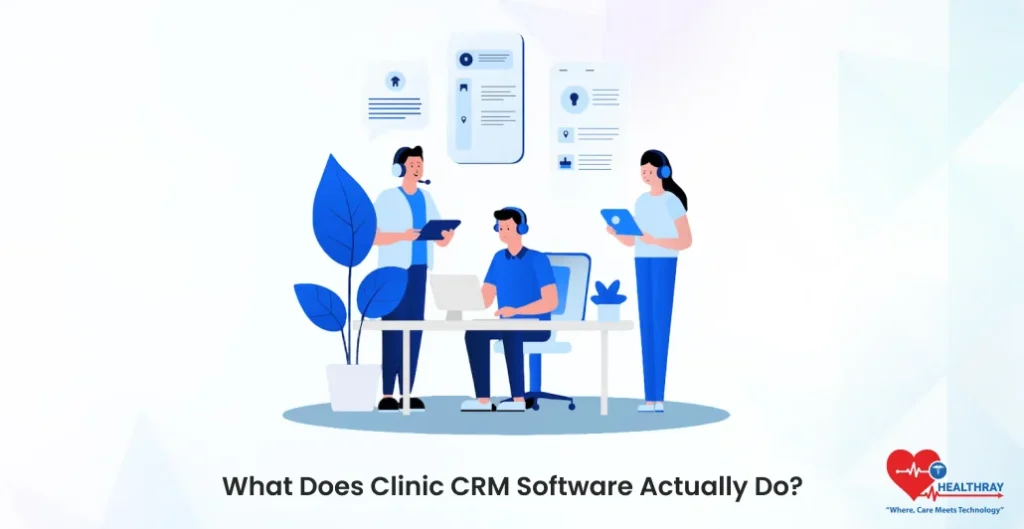
In the clinic, this system works as a healthcare crm that helps you to manage patient relationships. It will track every interaction that you have with them. This includes every phone call, appointment, and even prescriptions.
The best clinic CRM software stores all of this data in one place, so you don’t have to do any treasure hunt. Your staff can find anything whenever they need it.
Some of the core functions of clinic CRM software are listed below:
- Stores all patient details in one place.
- Manages appointments with booking and reminders.
- Keeps patient communication organized.
- Automates routine admin work.
- Shows reports to track clinic performance.
 NOTE
NOTE
Key Features to Look for in a Clinic CRM
The market is filled with so many CRM tools. But not everyone works the same. Some may be complex, and others may be limited in features. Check for the following features when you are looking for the best clinic CRM software:
Patient Master Data and Interaction History
This is the key feature that any CRM should offer. Patient data should not be scattered in different places. Rather, it should be one location, so your staff don’t have to guess anymore.
A good CRM shows:
- Basic patient details
- Visit timelines
- Past conversations
- Notes from staff
Your staff should see everything in a blink and not juggle between multiple screens.
Appointment Management
Appointments play a major role in driving your clinic flow. But scheduling can also be a nightmare. There might be double bookings, missed appointments, and dissatisfied patients in the lobby.
A strong CRM helps clinics:
- Book visits fast
- Send reminders
- Reduce no-shows
- Manage cancellations
When your clinic is organized, the patient stays satisfied, and you save time and money.
 PRO TIP
Communication Channels
Patients expect quick replies, but they use different channels. Some may prefer calls, others may prefer texts or emails.
The best clinic CRM supports:
- SMS
- Call logs
- Follow-up reminders
These modes keep conversation simple and organized. With them, everything stays linked to the patient profile. Plus, you get the bonus that it happens automatically. So, you have to set it up once, then the system handles the rest.
Workflow Automation
The tasks that are repetitive waste a lot of your team’s time. But with automation, you can manage routine tasks automatically. There is no need for human intervention.
CRM automation helps with:
- Appointment reminders
- Follow-up messages
- Review requests
- Task assignments
So, now with this system, your staff is more focused on patient care rather than on admin work. This eventually benefits everyone.
Analytics and Reporting
Numbers go beyond data. They even tell you the complete story about your clinic. A clinic CRM should show:
- Appointment trends
- Patient return rates
- Missed visits
- Engagement levels
These reports help you to know how many patients visited last month. You can see the most popular treatments in your clinic. These trends help you to spot problems early. So, you can fix these issues and make better choices.
Integration with Other Systems
Your clinic probably uses other software as well. The best clinic CRM should play well with others. It should connect to your existing systems seamlessly.
A CRM should connect with:
- Billing systems
- Practice software
- Messaging tools
Integration keeps your data moving smoothly between platforms. So, you don’t need manual data entry or any duplicate records. This keeps your data clean and saves time.
Step towards digital era with our healthcare solution
Revamp your hospital facilities and embrace change for better healthcare management. Ease in managing and organizing large medical datasets leads to effective analysis. Seize the opportunity now!
The Role of CRM in Clinic Growth and Patient Retention
If you want to grow your clinic, you cannot just rely on your medical skills. You also need a system that supports growth. Let’s understand why the best clinic CRM matters for your clinic’s future:
How CRM Improves Patient Experience
No one wants to have to recount their medical history every time they go to a health facility. It is tedious and frustrating for patients. They want to be remembered. A CRM helps clinics:
- Send timely reminders
- Follow up after visits
- Respond faster
- Personalize messages
So, now patients don’t have to recite their whole story every time they visit your clinic. Your staff can see their whole reports and prescriptions with just one click. This means now doctors know about their medical history without even asking. This makes patients feel valued. They get personalized care, which builds loyalty. This can even turn into recommendations for your clinic to others.
Link Between CRM and Retention Rates
When you go for new patients, it costs you more money. This is because you have to do marketing and advertising. But when you keep existing patients, it is cheaper.
A CRM helps clinics:
- Track inactive patients
- Send gentle reminders
- Share health tips
- Stay connected
The best clinic CRM software helps with retention. It tracks patient satisfaction and identifies at-risk patients before they leave. This system makes sure that follow-up happens consistently.
Operational Efficiency
If you are not saving time, then you are not saving money in healthcare. Your team has to spend countless hours doing paperwork. This is expensive. Even when appointments are cancelled, your clinic loses revenue.
CRM tools:
- Reduce manual entry
- Cut phone call load
- Organize tasks clearly
This system streamlines everything. Your staff works quickly, and schedules are more organized. So, now you can see more patients without hiring more staff.
Integrated Care Approach
Modern healthcare is not siloed anymore. Patients expect coordinated care. This means that if they see more than one doctor, everyone should be aware of what is going on.
The best clinic CRM software supports:
- Follow-up care
- Ongoing communication
- Patient education
So, with this system, care does not stop after a visit. Rather, it supports continuity. This integrated approach gives the patient better and faster results.
Top Clinic CRM Software Features Checklist
Before you decide which clinic CRM software is best, you need to make sure it has certain key features. Tick mark this checklist to see whether it fulfils your needs.
Is It Easy to Use?
If the software is complicated, no one will be able to use it. It should be simple so that your whole team can use it effortlessly. The screen should be clean, and navigation should feel natural. It should not be that your staff is confused about the next step. So, always test the interface before buying and see if it is easy to use.
Can It Grow With You?
You should not buy software that only works for the present but not for the days to come. Your clinic would probably grow in the upcoming years. So, you need a CRM that scales easily. You should check if it can adapt to new workflows. You can also look for custom software development options that let you add more features.
Does It Protect Patient Data?
Healthcare data should be protected at any cost. Your CRM must be HIPAA-compliant clinic software. It makes sure that the system you choose respects data privacy laws. The software should encrypt information and give access based on roles. You cannot compromise on security ever.
Can You Access It Anywhere?
No one can sit at one desk every day. The medical teams keep moving from one corner to another. The best clinic CRM software supports each device. This means that you can view data from anywhere and on any device. So, your staff can check the patient’s record even from their home.
Does It Play Well With Others?
Your clinic probably uses multiple systems. It can be EHR software, billing software, or pharmacy systems. The best clinic CRM software connects with the other tools smoothly. It should support data migration for clinics without stress. No data should be lost when you are moving to another place.
Does It Offer Good Support?
If things go wrong, you need good back support. You cannot take customer support for granted.
Always check the reviews of CRM software support quality. You must see if they respond in no time. Along with that, make sure that they are available and helpful when you need them.
What About Patient Feedback?
Feedback helps your clinic to improve. The best clinic CRM software collects reviews automatically. This means whenever a patient leaves, they get a survey. So, happy patients leave reviews, whereas unhappy patients give you a chance to fix problems before they go public.
Conclusion
The clinic’s relationship with its patients determines a lot about their future. Strong systems make this easier to manage. The best clinic CRM software helps your clinic to stay organized without being too rigid. It keeps all details of patients in one place, along with clear communication.
This system helps your staff to work more productively. Now, your team knows what task has to be done and when. The repetitive routine tasks are completed with automation. Along with this, the good CRM software shows you patterns and highlights the gaps. This overall helps your clinic to make smart decisions every day, even in urgent conditions.If you are looking for modern platforms that combine CRM with clinical workflows and options like custom clinic software development, then explore Healthray. It unites management and communication to support patient relationships in a simple and practical way.