


Summary
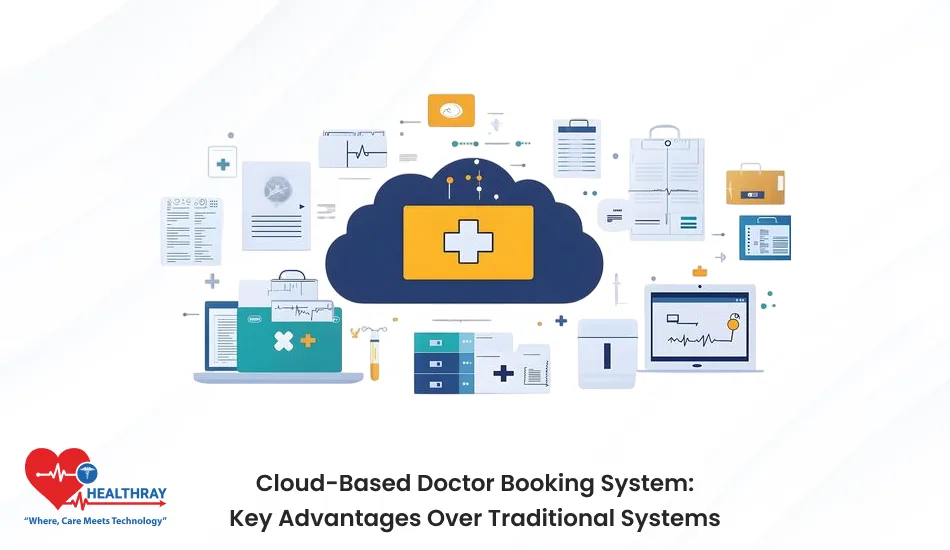
Cloud-based doctor booking systems are rapidly replacing traditional phone-based or paper-based appointment processes. Patients expect appointment scheduling and rescheduling to be as simple as booking a cab in today’s connected, convenience-focused world. On the other hand, healthcare professionals are looking for smarter or leaner ways to manage schedules, staff workload, and clinic resources. Cloud technology brings both sides into a single digital platform. In this blog, I will discuss how cloud-based appointment scheduling make medical practices fast, simple, and super organized. Also, I will explore how the cloud-based doctor booking system provides real-time slot visibility, helps patients manage their appointments, and significantly reduces admin chaos.
Introduction
When we heard about the team doctor appointment software, the first thought that clicked in our minds is “old-school register, phone calls, and patient line…? ” but now this is not the picture…
Doctors are no longer confined to phone calls, diaries, pens, etc. Clinics honestly tried their best to ensure smooth workflow in the system. But without cloud-based technology, this is completely impossible. Cloud-based doctor booking systems make the process simple, fast, and surprisingly effective. When clinics face daily challenges double-booking, patient rush, scattered appointment data, last-minute no-shows. Doctor appointment system can easily tackle all the tasks.
When clinics use the right cloud appointment system, then hectic mundane tasks seem super exciting. Daily tasks seem smooth, work feels light and you can also add a small fun factor in your healthcare activities. With cloud automation, clinics can effortlessly manage better data accuracy, low operational cost, and fast coordination and deliver a seamless booking experience for patients. Cloud-based doctor appointment system is not just an upgrade; it is the future of clinic scheduling that starts with a simple click.
Core Advantages of Cloud-Based Doctor Booking System
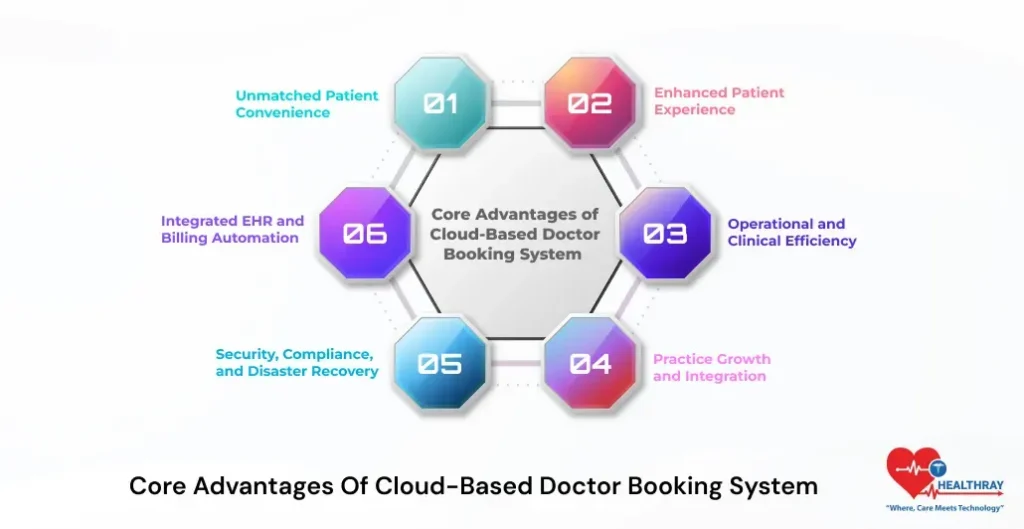
Let’s check out:
Unmatched Patient Convenience
- 24/7 accessibility: Patients can book appointments as per their convenience. Further, they do need to worry about timings. They can fix appointments even at midnight. Nowadays, patients do not like restrictions. Doctor appointment booking software for clinics provides them full control. Whether it’s midnight or the weekend, the system works round the clock. Additionally, it creates a predictable inflow for clinics that simplifies the daily workflow.
- Real-time updates and automation: Patients now have high expectations for speed. That’s the reason real-time updates prove to be a breakthrough for both medical facilities and patients. Further, a cloud-based doctor booking system automatically sends updates, whether it’s a confirmation, reminders or real-time availability. Overall, this automation eliminates double booking and entire medical practices become smooth.
- Streamlined workflow: In a traditional system, clinics have to manually perform tasks of rescheduling or follow-ups. This process was time-consuming and error-prone. Further, cloud-based doctor booking software minimizes administrative workloads as the system automatically handles rescheduling, follow-ups and confirmations. Moreover, it helps staff save their time on unnecessary workloads and put their focus on patient care, which is a vital part of the healthcare sector.
Enhanced Patient Experience
- Greater convenience: In the traditional system, patients have to call multiple times to fix the appointments with doctors. Furthermore, clinics and patients face challenges with language barriers and clinic timing. However, modern cloud-based systems allow bookings through mobile and web apps. Further, patients can choose slots in their preferred languages. In addition, they can reschedule or cancel the appointments as per their convenience. Additionally, patients don’t have to wait for calls or chase after administrators for every detail, allowing them to manage the entire process with ease.
- Reduced waiting and improved transparency: In manual infrastructure, clinics handle scheduling conflicts or updates, resulting in confusion, delays and frustration. Further, the medical appointment system displays real-time scheduling and availability, which provides an exact wait time idea to patients and avoids unnecessary delays. Also, it ensures a transparent workflow for clinics. Further, patients can instantly track their appointments and receive every update.
- Empowerment: Under the conventional system, patients have little control and staff members handle all scheduling and record access. This causes delays and dependency. Furthermore, cloud-based doctor booking systems give patients more control. Patients can effortlessly self-schedule, reschedule or cancel appointments. And access their appointment history securely. This raises patient confidence or satisfaction and creates a smooth environment.
Operational and Clinical Efficiency
- Reduction in no-shows: In the traditional system, patients get reminders through calls and messages manually. Errors and mistakes are more likely to occur in these procedures. Further, the doctor’s appointment system for modern healthcare provides automated reminders, confirmations and streamlined rescheduling. This minimizes appointment no-shows. Overall, the cloud system improves clinic revenues and makes the workflows smooth and saves staff time on unnecessary tasks.
- Minimized errors: In the traditional system, overlapping appointments,miscommunication or manual data entry mistakes are common, which affects clinical efficacy. Further, a cloud-based doctor booking system reduces errors and tracks appointments accurately and ensures an error-free workflow for staff. Hence, patients get reliable treatment, which significantly improves operational efficiency.
- Resource optimization: In the traditional approach, workloads are uneven and the overbooking and underutilization problem is more prevalent. Further, cloud doctor booking apps help providers to balance workloads and efficiently utilize resources and minimize overbooking. Overall, it optimizes utilization of clinic resources, staff feels satisfied and patient care quality gets improved.
Practice Growth and Integration
- Scalability and remote access: In traditional systems, data is available only in clinic premises and managing multi-location practices is really challenging. Further, with a cloud-based system, clinics can easily scale single and multiple locations. Administrators and staff securely access data from anywhere, and monitoring operations and clinic expansion becomes hassle-free and smooth.
- Smart analytics: In traditional systems, patients manually analyze patient trends, demand patterns and workflow bottlenecks. This procedure takes time and is prone to mistakes. Further, modern cloud-based systems provide advanced reporting tools. It helps clinics easily analyze patient profiles, manage patient demand and forecast trends. Additionally, clinics can make strategic decisions and optimize operations.
- Payment integration: In the traditional approach, billing, invoices and payments need manual support. Thereby, it enhances delays and errors in the system. Cloud-based doctor booking systems allow integrated billing, invoice automation and multiple payment modes. Therefore, it eases workflows for both practitioners and patients. It helps clinics timely collect revenue and makes the financial management simple and transparent.
 NOTE
NOTE
Security, Compliance, and Disaster Recovery
- Enhanced security: In traditional systems, clinics use paper and files to collect patients’ records. Furthermore, this enhances the risks of data loss, theft, and unauthorized access. Modern cloud systems use strong encryption, regular backups and user-level access controls. Therefore, with a cloud-based doctor booking system, sensitive data remain safe and regulatory compliance is maintained properly in the system. Also, clinics confidently run their operations without fear of breaches or misuse.
- Disaster recovery: In manual infrastructure, clinics struggle with system crashes, hardware failure or sudden data corruption. This put the entire clinical data at risk. Further, cloud-based doctor booking system provide automatic backups and secure restoration features. This helps healthcare facilities to protect their clinical records, scheduling data and operational information in a safe server encrypted with a strong password. Even in emergencies, clinics can quickly restore data and continue their practices without disruption.
- AI fraud detection: In traditional systems, detecting fraud was almost impossible. Staff must identify patterns manually, which is time-consuming and inaccurate. Furthermore, cloud-based doctor booking system detect suspicious activities such as bulk fake bookings, unusual booking spikes and repeated cancellation patterns through AI platforms. Overall, it protects the integrity of smart systems and reduces fraudulent entries. Also, it ensures secure, clean and reliable appointment data to clinics.
Integrated EHR and Billing Automation
- Seamless EHR Integration: In traditional systems, clinics handle appointments, patient records, prescriptions and billing differently. Further, cloud-based appointment scheduling systems seamlessly integrate with Electronic Health Records (EHR). When doctors finish the consultation, the system automatically updates patient records, prescriptions, lab orders and visit details. Overall, a cloud-based doctor booking system speeds up the documentation process and improves accuracy in the system.
- Automated Billing & Revenue Efficiency: Through billing software integration, charges, invoices and payments automatically get synchronized. Further, this improves billing accuracy and minimises claims errors and the revenue cycle becomes super-efficient and smooth. Overall, cloud-based doctor booking system eliminates the need for manual entries and saves plenty of time for staff, ensuring streamlined clinical administrative processes.
Step towards digital era with our healthcare solution
Revamp your hospital facilities and embrace change for better healthcare management. Ease in managing and organizing large medical datasets leads to effective analysis. Seize the opportunity now!
Hybrid Models and Limitations
Few patient groups still prefer the traditional system, particularly in areas with limited internet access or in demographics where patients are uncomfortable using technology. In this case, the hybrid model is the best option. Clinics can offer digital tool efficiency along with personal interaction comfort to fulfill the diverse needs of people.
Why Hybrid Systems Work Best
Hybrid systems provide flexibility to clinics. Digital booking, automated reminders, online records and AI-based tools improve efficacy. On the other hand, front-desk support or manual coordination is helpful for patients where digital adoption is still a complicated process. This balance helps clinics comfortably serve every patient group without compromising speed or care quality.
Essential for Modern Healthcare
Cloud-based doctor booking systems improve efficiency, patient satisfaction and operational resilience. That’s the reason the cloud system has become an essential investment for modern healthcare organizations. Digital adoption expedites the workflows, minimises errors and helps clinics deliver a higher quality patient experience.
 PRO TIP
Conclusion
Cloud-based doctor booking system centralize appointments, seamlessly integrate with bills and EHR, and can be safely accessed from various locations or devices, in contrast to legacy systems where data is locked in local computers or manual registers. This shift not only improves operational efficiency but also enhances patient experience, transparency, and continuity of care, especially for multi-location hospitals and telehealth-driven practices.