
From patients’ own records to compliance documentation, the physicians and hospitals have to deal with mountains of paperwork every day. This occupies much time that is needed for care. Often, physicians complain of being torn between communicating with their patients and undertaking exhaustive documentation. Little wonder, therefore, that burnout is emerging as an increasing concern in healthcare.
AI-driven MRD solutions aim to change this most comprehensively. They are intended to take the headache out of paperwork in all procedures and make data more accessible, thus saving time but also ensuring accuracy and compliance. In this way, service delivery by hospitals and doctors gets focused on where it is most needed: delivering quality patient care.
The article looks at some of the challenges involved in the use of traditional MRD Management Software, how AI meets these challenges, and the incredible potential of this technology to shape the future in healthcare. Let’s get into it.
What is MRD, and why does it matter?
MRD therefore forms the backbone of all healthcare systems in the creation, management, and maintenance of records about patient interaction, diagnosis, treatment, and outcomes with accuracy. These records are not only vital to the continuity of patient care but also in complying with regulations related to health care.
To the hospitals, MRD means smooth operations, sustained quality, and avoidance of litigation, while to the doctors, it is a repository of patients’ information that shall guide their decisions and make communication among healthcare providers seamless.
Traditional MRD systems do have their own challenges. Many of these manual processes are very time-consuming, error-prone, and cannot be managed easily with an increase in the volume of patients. That is where innovative approaches become game-changers, such as those driven by AI.
To begin with, it is crucial to determine MRD’s position in view of the potential that advanced tools have for transforming healthcare delivery.
Challenges that Hospitals Face with Traditional MRD
Accurate Medical Record Documentation has been an uphill battle for a long time. Though the process does indeed ensure that information pertaining to patients is documented, the conventional method more often than not causes more problems than it cures. Following are some key challenges that both hospitals and doctors face:
Labour-intensive processes
It is very time-consuming to document everything manually. The doctors and nurses have to record patient information for several hours every day, instead of spending their valuable time for the care of their patients. Extra workload exhausts them and affects their overall work productivity.
High error rates
The manual process can easily result in human errors, such as misrecording or omission of relevant information, which may further lead to misdiagnosis, improper treatments, and even possible legal liabilities for hospitals.
Inefficient Data Retrieval
Traditional management software for MRD relies on physical or outdated electronic records, which make accessing one particular patient’s information both difficult and time-consuming. Such a delay, associated with critical situations, can affect the results for the patient.
Compliance and Regulatory Risks
The healthcare regulations require the documentation to be accurate, timely, and secure. Most of the manual systems are not up to the mark, which increases the possibility of vulnerability toward compliance, leading to fines or reputational damage.
Scalability Issues
Hospitals with a large-scale setup cannot scale up with their conventional MRD systems as the volume of patients is increasing. Managing such large-scale data manually becomes impracticable and often leads to bottlenecks in operations.
Put them all together, and it becomes patently obvious why so many hospitals and doctors are considering smarter solutions. AI-powered tools increasingly are being viewed as the answer to these long-argued issues.
How AI Revolutionizes MRD Business
Artificial intelligence has changed the entire face of hospitals and the way doctors manage documentation related to the medical records of patients. Automation of repetitive tasks with the help of AI improves accuracy, speed, and real-time access to data. AI solutions solve many of the long-standing challenges traditional MRD Software presents. Let’s see how it works.
Smarter documentation workflows
AI-powered tools perform some of the routine tasks in documentation-transcription of the patient interaction, data categorization, and organization of records. Physicians would not need to spend hours filling out forms.
Accuracy Beyond Compare
Machine learning algorithms find patterns in documentation and flag inconsistencies, hence reducing the errors that can cause misdiagnosis or compliance problems. AI cross-references data for completeness, reliability, and validity.
Enabling Real-time Data Accessibility
AI systems are likely to be integrated well with platforms such as Electronic Health Records, where all information about the patient will be provided in real time. This will help doctors make decisions based on data more speedily during consultations or in cases of emergency.
Supporting Predictive Analytics
AI doesn’t stop at merely documenting information; it interprets it. For example, it could outline trends in the condition of the patients, predict complications that might arise, or even go as far as to suggest treatment plans based on history. In this way, documentation becomes a strong tool for proactive care.
Improving Scalability
Whether it is a small clinic or a multi-facility hospital, AI easily scales. It processes large volumes of data without lag, meaning healthcare providers handle growing patient numbers with ease.
Improving Compliance and Security
AI solutions built in healthcare are designed to cater to some of the most robust requirements from a security, data audit trail, and compliance with the law, such as HIPAA.
With these capabilities, AI-powered MRD Software solutions bridge the inefficiencies of their conventional counterparts and create new avenues for better patient outcomes and smoother hospital operations.
Benefits of Integrating AI for Hospitals and Doctors
AI integration with MRD goes beyond mere simplification of workflows and offers very real, tangible benefits in the form of efficiencies, accuracies, and better care for the patients. How do hospitals and doctors benefit from this?
For Hospitals:
1.Reduced Operational Costs: Automation of the documentation processes decreases manual labor and reduces errors, which in turn saves a lot of time and resources.
2.Improved Data Management: It maintains records in order and stores them for quick retrieval with easy access inter-departmentally. This also enables a smooth workflow and coordination.
3.Regulatory Compliance: Requirements on documentation and reporting are very strict; AI systems guarantee that all information is indeed accurate, timely, and within the legal bounds on patient data, such as HIPAA, reducing the chances of fines.
4.With easier documentation, hospitals are able to free up staff for patient care and other priority tasks enables smart use of resources and enhances productivity in general.
For Doctors:
1.Time Savings: AI-powered tools perform time-consuming tasks such as data entry and transcription, freeing doctors to spend more time with patients and focus on treatments.
2.Improved diagnostic precision: AI cross-references information from patients and assists in identifying trends that help doctors in decision-making.
3.Stress reduction: Automation of documentation reduces administrative burdens; hence, doctors are less likely to burn out, and can maintain a better work-life balance.
4.Decision Support: AI-powered tools analyze data to provide treatment options based on evidence and are thus an extra pair of eyes for critical decisions.
These combined benefits for hospitals and doctors translate into better outcomes for patients, more efficient operations, and importantly, a substantially improved healthcare experience. In this way, integrating AI turns MRD from a task-heavy obligation into a powerful tool for growth and care.
Practical Use Cases of AI in MRD
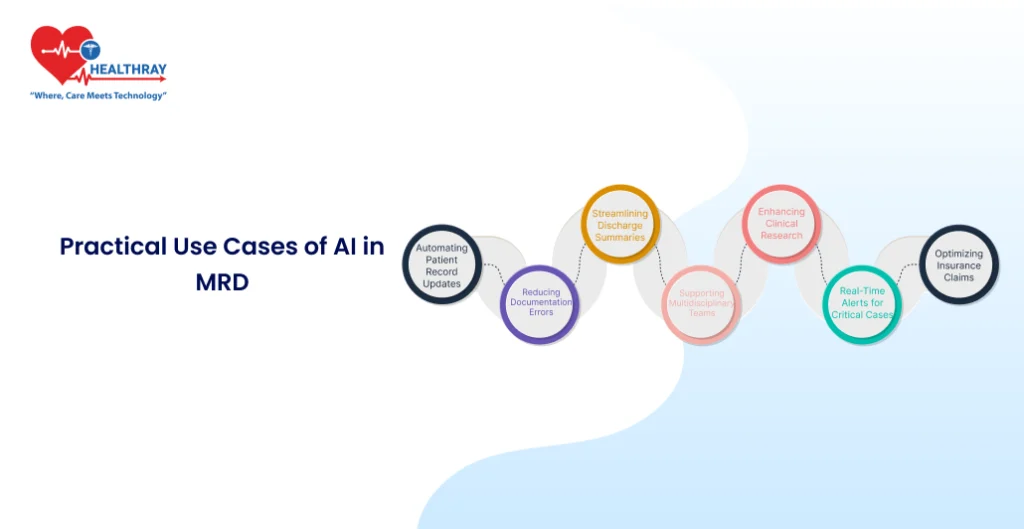
AI has tremendous potential for the health care industry. First, a real-life use case application to MRD is discussed, and the improvement in its efficiency and better patient outcomes have been witnessed. Workable use cases to demonstrate the impact of the same:
Automate Patient Record Updates
Artificial Intelligence-powered transcription tools automatically update patient consultation records at hospitals. These speech recognition software tools listen to the conversations between doctors and patients, structure them as medical records, and save them with no human interference.
Decrease documentation errors
Machine learning is used by the AI systems to find gaps or any other missing items in the medical charts. If, for instance, a physician happened to forget to include an essential code for diagnoses, then the system will prompt him to do so to ensure completeness and accuracy.
Smarter Discharge Summaries
Generation of discharge summaries is cumbersome and time-consuming. AI tools compile and summarize patient information, test results, and medicines onto one comprehensive discharge document in minutes.
Supporting Multidisciplinary Teams
AI helps in collating and sharing patient information amongst specialists. In this way, it ensures that all persons involved in the care process have updated and correct information to work effectively in collaboration and decision-making.
Strengthening Clinical Research
AI can help facilitate the work in hospitals involved in clinical trials by drawing relevant data from MRDs for research purposes. AI identifies patterns in patient responses that could speed up the identification of insights by researchers more precisely.
Real-time alerts in critical cases
AI-powered systems constantly monitor the patient record for critical conditions, such as abnormal lab results or worsening vitals, and trigger notifications to healthcare providers automatically for timely intervention and better outcomes.
Insurance Claims Optimization
AI simplifies the coding and billing process by ensuring that all the information required for an insurance claim is included in the MRD, thereby reducing delays and denials and improving the cash flow in hospitals.
The point of each of these examples is that AI is not about solving problems but changing how hospitals and doctors interact with data; it accelerates the processes, allowing them to be smarter and more reliable.
Overcoming the Challenges of Integrating AI
With great potential, AI in MRD also has several challenges. For the full harnessing of the potentials of AI by hospitals and doctors, these challenges need to be met. The challenges are:
Data Privacy and Security Concerns
Challenges:The challenges are that healthcare data is sensitive, and hence, compliance needs to be followed strictly with regulations such as HIPAA. AI systems handling MRDs are a target for cyber-attacks, which raises concerns about data breaches.
Solutions: Employ strong encryption protocols and multi-factor authentication across AI systems. Perform continuous auditing and compliance to ensure data privacy, while collaborating with trusted vendors that believe in healthcare security standards.
Resistance to change
Challenges:The challenges are that most doctors and other personnel are used to the traditional ways of doing things in the hospitals; they may resist the use of AI-driven innovations. Some may feel that AI is too complicated, or even that their jobs are taken over by the technology.
Solution: Give them practical training and clearly explain the benefits associated with AI. Show them that AI is designed to complement them, not take their jobs, by reducing administrative burdens.
Initial costs and resource distribution
Challenges: The problem is that most AI systems require upfront investments in hardware, software, and training, beyond the capacity of smaller hospitals and clinics.
Solution: Emphasize scalable, modular AI solutions that can be implemented in phases. Justify investment through cost savings generated by improved efficiencies, reduced errors, and faster workflows.
Integration with Existing Systems
Challenges: Among the challenges is the fact that many hospitals are dependent on outdated or fragmented EHR systems, making their integration with modern AI tools difficult.
Solution: The solution will be to ensure the selection of AI solutions that are easily integratable with the current EHR platforms. In this respect, collaboration across IT teams and AI vendors would ensure smooth installation with minimum disruption.
Accuracy Guaranteed; Reliability
Challenges:The challenge is that AI, while powerful, is not infallible, and mistakes in the algorithmic output can lead to a wrong diagnosis or treatment if left unchecked.
Solutions: These should be installed AI systems of open algorithms that are to be verified by medical experts. Regular updating and testing must be performed to make sure of its precision, changing according to new standards in the field of medicine.
Ethical and Legal Considerations
Challenges:The AI-driven decision will raise several ethical concerns about responsibility in case of failure. There might also be some legal liabilities that can arise because of the use of patient information.
Solution: Clearly define the roles of AI when it comes to decision-making to supplement, not supplant, human judgment. Establish contracts with vendors containing clear terms concerning liability and ethical use of data.
It is only by addressing these challenges head-on that a doctor or a hospital can tap into the full potential of AI and hence ensure that daily operations remain intact in areas such as trust, security, and efficiency.
Choosing the Right MRD Solution
First, find the correct AI-driven MRD solution for driving effective workflows both at hospitals and among physicians. The ultimate focus should then fall squarely on quality patient care. Here is a checklist that may drive such a decision-making process:
Scalability and Flexibility
What to Look For: An overall system that can handle growing patient volumes while its aptitude adapts to ever-changing needs in a hospital or clinic. Make sure the system will easily integrate with existing EHRs.
Why It Matters: Hospitals and clinics are constantly evolving. A scalable solution means that your investment will remain relevant over time.
Strong Data Security Measures
What to Look For: End-to-end encryption, secure data storage, and adherence to healthcare regulations such as HIPAA. Any solution for such requirements will have tight controls in place while protecting sensitive patient data.
Why It Matters: Breaches in security can lead to financial losses, legal complications, and lost patient trust.
User-Friendly Interface
What to Look For: There should be intuitive design features that minimize the learning curve for doctors and other staff, including systems featuring easy-to-use dashboards and guided workflows.
Why It Matters: A clunky interface discourages people from adopting it, and wastes the very time you’re trying to save.
Proven Track Record
What to look for: Solutions offering case studies or testimonials from similarly-sized hospitals or clinics, or those in the same specialty. Look for certifications or endorsements from recognized health care organizations.
Why It Matters: A proven system reduces risks and ensures reliability in a high-stakes environment.
Customization Options
Look For: How AI tools can be adapted and personalized for that particular hospital or specialty, whether it’s pediatric care or oncology.
Why It Matters: Every health care provider is different. Our customization ensures the system aligns with your needs.
Support and Training
What to watch for: Vendors offering extensive training programs, 24/7 technical support, and continuing system updates
Why It Matters: Proper training makes for a smooth adoption, and ongoing support ensures long-term success.
Cost-Effectiveness
What to Look For: Clearly outline the costs: an initial investment, implementation, training and maintenance. Go for the solutions where the return on investment is swift.
Why It Matters: Healthcare budgets are tight. A cost-effective solution makes it easier to justify the expense.
Real-time Analytics and Reporting
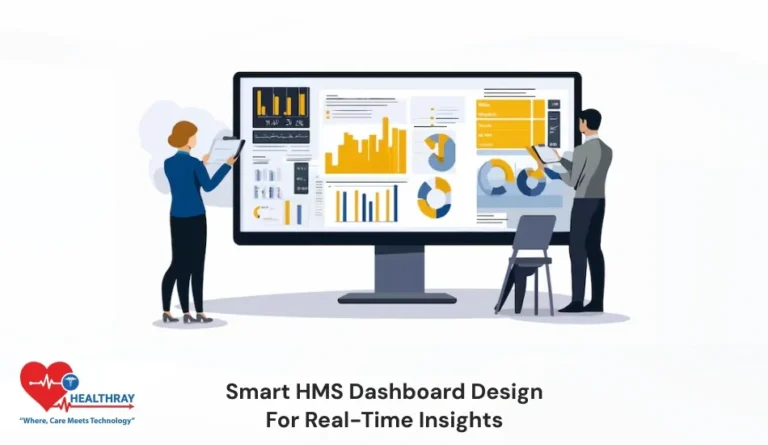
What to look for: AI Hospital Software provides actionable insights through analytics dashboards and real-time reporting.
Why It Matters: These characteristics help doctors and administrators make informed decisions and optimize workflows.
While choosing the MRD solution, the right mix of functionality, security, and cost needs to be selected. Much more than a technological investment, it is a commitment toward better care and smoother operations.
Future of AI in Healthcare and MRD
AI will shape the future of healthcare and, especially, MRD. While new technologies are in the course of development, promises abound to solve some of the longest-standing challenges in manners that will allow new possibilities both from the perspective of the hospital and the doctor. Here is a peek into what might be in store for the future:
Increased personalization in patient care
AI will not only document medical records but will also analyze these for personalized insights. From the risk prediction at a patient-specific level to suggesting personalized treatment plans, it will assist doctors in decision-making with more precision and effectiveness.
Advanced Predictive
Analytics Future MRD solutions powered by AI will include predictive models that can find health problems even before they occur, allowing for much better prevention and a reduction in the rate of readmission to hospitals.
Wearable Technology
Integration As wearables, from smartwatches to fitness trackers, become ever more sophisticated, AI will integrate real-time data from these devices into patient records and thus offer a more holistic view of patient health, enabling timely interventions.
Voice-Driven Documentation
The AI systems will further evolve in natural language processing, making voice-driven documentation seamless. Physicians will be dictating patient notes during consultations, while AI will be transcribing the information and categorizing it in real time.
Interoperability in Focus
In the future, AI solutions will be interoperable, allowing different healthcare systems to share data and access the same information with ease. This will facilitate more cohesive patient care across facilities and specialties.
Improved Regulatory Compliance
AI-powered tools will continue to automate increasingly sophisticated levels of compliance requirements. Automated audits and real-time notifications for missing or incomplete documentation mean that hospitals will be able to demonstrate faultless adherence to regulations.
AI as a Clinical Assistant
Apart from documentation, AI can also serve as an overall clinical assistant by suggesting diagnostic tests, recommending treatments based on patient history, and even flagging potential adverse drug interactions.
Cost-Effective Solutions for Smaller Clinics
It would be affordable for smaller hospital and clinics to implement the state-of-the-art MRD systems as technological evolution makes AI solutions cheap. Such democratization will enhance healthcare across all levels of the masses.
Augmented Reality and AI Integration
In the future, AR tools integrated with AI may allow doctors to visualize patient data in 3D during surgery or consultations. This will give insights like never before and improve decision-making. The potentials of AI in MRD and health are boundless and keep on expanding. Those hospitals and doctors that move along with such advances will be better equipped to render the best care possible, reduce inefficiencies, and provide cutting-edge services in an increasingly data-driven industry.
Conclusion
AI integration into MRD is much more than a technological upgrade; it is a game-changer both for hospitals and doctors. Automation of time-consuming tasks, reduction in errors, and real-time availability of data are just some of the ways AI frees up health professionals to focus on the most important task at hand: patient care. Though there are challenges regarding data privacy, cost, and integration complexity, they are surmountable with appropriate strategies. AI solutions continue to become secure, more affordable, and user-friendly, making it possible even for the smallest clinics to benefit from such advancements. The future of AI in MRD will surely be bright. From personalized patient care and predictive analytics to seamless data sharing, the potential is huge. The hospitals and doctors moving ahead with AI today will not just streamline their workflows but also set the path for a leaner and more effective healthcare system sometime in the future.