






Summary
It is no longer a logistical challenge to have inventory in more than one medical store. This has been made a strategic requirement. Due to the growth of pharmacy networks, the accuracy of inventory directly influences the availability, compliance, and patient trust. However, this has not changed many rising pharmacies, which are still using disjointed tools and manual coordination that cannot be scaled.
Here is where multi store pharmacy software generates actual operation value. It brings transparency among the places, substitutes the guesswork with information, and makes inventory decision-making based on order and structure instead of panic. Pharmacy leaders can learn to predict demand and to reallocate resources serenely in place of responding to shortages or surplus inventory.
In addition, centralized control leads to less wastage, expiry losses and unity of all stores in terms of discipline in inventory. This has the effect of making the pharmacies a one system, well synchronized system as opposed to separate stores. This blog describes the reasons inventory halts when growing, how organized systems put things back on track, and what good inventory management practices can be on a large scale.
Introduction
Pharmacies find growth exciting. New locations open. Patient volumes increase. Revenue opportunities expand. But inventory pressure increases in silence with growth. Hospital pharmacies and clinic-owned medical stores often feel this strain first. Orders increase. Stock moves faster. Errors become expensive.
Chaos in inventories is, however, not a natural consequence of growth. It is an indicator of lack of order. Inventory ceases to be reality when pharmacies are relying on the disconnected spreadsheets or the store-level decisions. Shortages surprise teams. Out of date inventories consume profits. Trust erodes.
A centralized Pharmacy Management System reframes this problem. Pharmacies have access to a system level view instead of inventory management per store. Data flows continuously. Decisions align across locations. Control does not impose administrative overheads.
This blog does not consider inventory a daily firefight but as an operational system, which may be scaled at a very slow pace. Pharmacies can expand properly without burnout, confusion, or lack of control.
Why Inventory Breaks When Pharmacies Expand Beyond One Store
Inventory hardly collapses at night. It is thinning out slowly because drug stores are opening branches without giving consideration to control. What is effective with one store fails when it comes to volume and distance.
The duplication of stocks rises. The stock in one shop is over-ordered and another one is short of items. Expiry losses rise quietly. Decisions become slow with manual coordination. Therefore, groups waste more time in remedying errors than attending to patients.
The difficulties of controlling pharmacy inventory between locations are usually due to the visibility gaps and not an intention. Executives do not have clarity on the spot. Store managers are self-directed. Purchasing decision-making processes are based on sluggish reports.
These gaps continue to expand as the expansion goes on. There is reduced inventory accuracy. Financial planning weakens. Stress becomes routine. In the absence of centralization, growth increases inefficiency rather than opportunity.
Operational Blind Spots That Appear at Scale
The blind spots occur when the inventory is stored in silos. Each shop has its own figures. The demand of the network remains anonymous. Late news distorts reality.
The manual reconciliation creates errors. The transfers rely on phone calls. Decisions arrive late. Consequently, teams continue to do this based on assumptions, and not facts. These loopholes undermine responsibility and responsiveness.
Inventory discipline needs shared visibility at scale. In its absence, operational blind spots can be systemic risks.
How Multi Store Pharmacy Software Creates Centralized Control
Multi store pharmacy software transfers inventory out to local improvisation to network-level discipline. Rather than controlling stock stores on a store basis, pharmacies have common sense and centralized control.
Inventory movement is determined by policies. Systems bring in uniformity. Transfers follow rules. Approvals remain traceable. As a result, micromanagement is eliminated and control is enhanced.
Such a method does not displace individuals. Instead, it supports them at every operational layer. Pharmacists focus on care, while managers focus on decisions. Leadership, as a result, does not need to pursue updates to maintain a clear view.
These controls create scale-wide discipline, so all stores operate under the same inventory standards regardless of location or size.
From Store-Level Decisions to Network-Level Visibility
When people and data become visible, everything alters. Inventory information reflects reality across locations, therefore decisions occur naturally. Leadership identifies trends early, and as a result, procurement aligns with demand. Transfers offset deficits within short cycles, consequently preventing shortages before patients feel them.
Fragmented reports, over time, get replaced by shared dashboards that guide unified action. There is no competition but collaboration between teams. This causes inventory to be predictive instead of reactive.
Pharmacy Inventory Management Without Guesswork
Pharmacy inventory management depends on timing and precision. Over-ordering wastes money, whereas under-ordering risks patient care. Most failures sit in between, because guesswork replaces clarity.
This uncertainty disappears when systems take control. Inventory updates occur automatically, so that usage trends become visible. Expiry date monitoring, in addition, flags risk well before losses occur. Moreover, centralized reporting provides the leadership with a clear picture without running after spreadsheets.
Teams will be operating in a relaxed environment when inventory is predictable. Pharmacists devote their attention to dispensing as opposed to counting. Managers are not concerned with firefighting, rather focus on optimization. As time goes by, operational confidence builds itself.
Real Time Inventory Tracking Across Locations
Reliability increases with the timeliness of information. Real time inventory tracking ensures that stock updates reflect immediately across stores. The dispensing of one place is observed by another. Records are updated immediately when there is a stock movement.
Such visibility eliminates duplication. Transfers happen faster. Shortages based on emergencies decrease. Consequently, inventory decisions can be proactive and not reactive. Growth is something that is directed rather than disorderly.
Medical Store Inventory Software That Prevents Overstock and Shortage
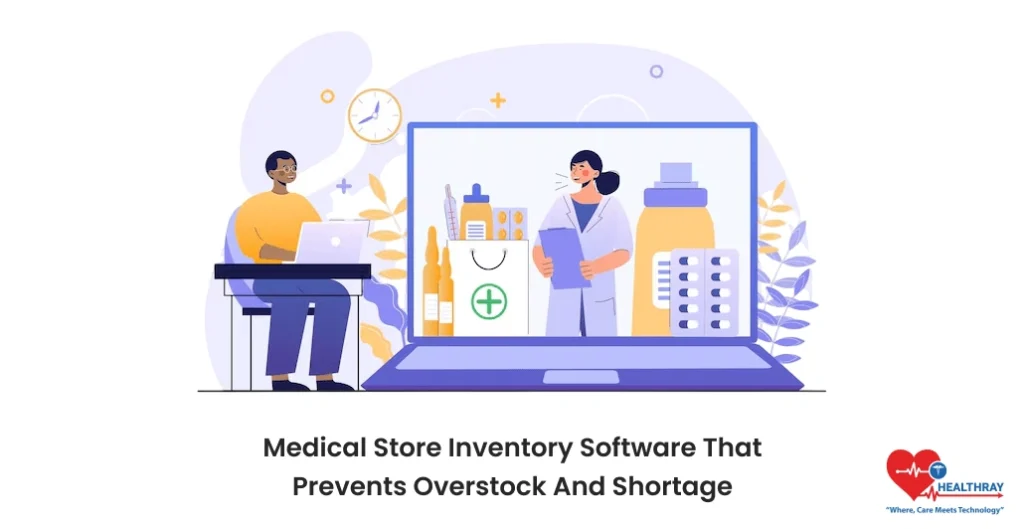
The medical store inventory software eliminates imbalance by matching the demand pattern in places. Systems indicate slow moving stock. Demanding products take priority. Pharmacies do not guess about the future needs, but they respond to visible trends which reflect actual consumption.
Redistribution replaces overordering. Stores complement each other dynamically but not compete over stocks. This also ensures that inventory remains minimal without posing the threat of unavailability. Expiry risks reduce because stock moves where it is needed most, not where it was originally purchased.
In addition to this, organized inventory reasoning introduces certain predictability to the procurement cycles. Purchase decisions rely on movement data rather than instinct. Teams avoid emergency orders, therefore costs stabilize. Vendors receive clearer forecasts, and in turn, supply relationships strengthen.
Such balance safeguards cash flow, reduces wastage, and consequently supports pharmacy profit improvement without pressuring prices or forcing cost cuts. Discipline, in effect, strengthens margins. Operations feel calmer, while leadership gains confidence that growth will not amplify inventory errors.
In the long run, this strategy will transform inventory as a daily issue to a managed operational process that will enable sustainable growth.
Pharmacy Stock Management That Works Across Cities and Clinics
With the introduction of pharmacy networks over cities and clusters of clinics, pharmacy stock management has become more of a coordination issue than a unit counting issue. Distance adds delay. Local demand varies. Balancing by hand cannot withstand stress.
A structured system keeps stock aligned regardless of geography. Inventory policies remain uniform. There are no changes in minimum and maximum levels. Transfers occur in a clear rather than a rush manner. Consequently, there is no panic ordering as well as redundant buffer stocks in pharmacies.
Distributed environments require predictability. Teams cease to improvise when the movement of stocks is in accordance with the system rules. Leaders gain confidence. The daily activities become more relaxed despite the escalation.
Inter-Store Transfers Without Manual Coordination
Inter-store transfers fail when driven by calls and approvals alone. Delays reduce availability, and as a result, errors multiply. Friction disappears when systems replace manual steps. Transfers activate automatically, documentation stays intact, and therefore wastage declines.
Quick balancing, in this way, ensures medicines remain available everywhere. Clinics support one another. There is a tightening of inventory discipline over the network.
Hospital Pharmacy Management Needs System-Level Thinking
Hospital pharmacy management extends beyond shelves. It integrates dispensing, procurement, compliance, and reporting, whereas fragmented setups create risk. During integration, however, control returns.
Hospitals demand accuracy, because delays affect treatment. Stock-outs disrupt care, so system-level thinking aligns inventory with clinical workflows. Orders reflect consumption, and consequently, procurement follows real demand cycles.
Inventory does not work in isolation. Rather, it assists in patient care in a smooth manner.
Aligning Dispensing, Procurement, and Reporting
Alignment removes friction between departments. Dispensing data informs procurement, while reporting reflects reality. Compliance becomes easier, therefore reducing inspection stress.
When systems connect these functions, hospitals avoid surprises. Pharmacy teams operate with confidence. Leadership sees clarity rather than chaos.
Pharmacy Operations Management Becomes Predictable at Scale
Pharmacy operations management defines whether growth feels controlled or chaotic. Speed matters less than predictability, because systems enforce rhythm. Processes repeat reliably, and as a result, exceptions stand out clearly.
Leaders stop chasing issues. Instead, they guide direction. Inventory follows rules, and consequently, growth feels stable.
 PRO TIP
Anticipated operations save teams burnouts. Growth is purposeful and not responsive.
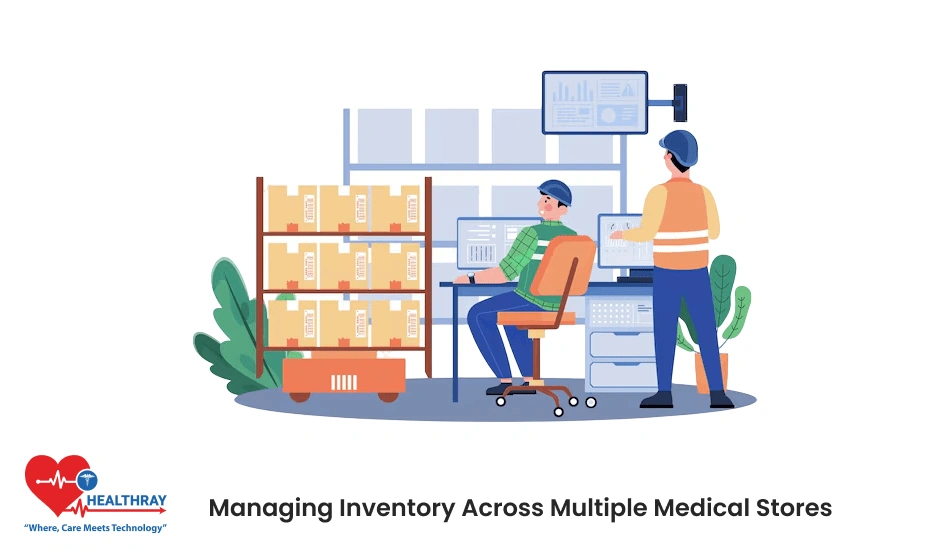
Managing Inventory Across Multiple Medical Stores Without Daily Chaos
At scale, inventory problems stop being occasional and become daily friction. Orders move across locations, demand shifts unexpectedly, and therefore human coordination slows response time. This is precisely where managing inventory across multiple medical stores requires systems that think beyond shelves.
Multi store pharmacy software aligns outlets with shared logic. Transfers follow rules, approvals remain traceable, and as a result, visibility replaces chaos. Shortages get flagged before patients feel the impact. Consequently, pharmacies operate as a single network rather than fragmented stores. This uniformity has a direct impact on the pharmacy customer retention, since availability generates trust and trust generates a repeat visit.
Leadership is not reactive, rather it foresees issues. Inventory planning is more of a continuous process as opposed to a monthly corrective exercise. This eventually stabilizes the operations, takes strain off the teams and ensures the patients do not leave without coming back.
The Role of Intelligence in Inventory Decisions
Intelligence shifts inventory from reactive to anticipatory. With AI in pharmacy, systems learn patterns. Alerts surface early. Forecasts guide procurement.
The inventory decisions become better with time. Overstock declines. Shortages reduce. Leadership strategizes.
Pharmacies that operate on data make adjustments more quickly than experience-based ones. Expertise is not substituted with intelligence. It sharpens it.
Inventory Accuracy and Pharmacy Customer Retention
Availability builds trust. Incorrect prescriptions disrupt it. Inventory precision is critical in pharmacy customer retention.
Patients revert due to the availability of medicines. Doctors make the referral when there is no significant change in reliability. Reputation comes with consistency.
Proper stocking leads to repeat customers. The compounding of trust is silent.
Inventory Discipline Directly Impacts Pharmacy Profit Improvement
Margins are eroded by inventory waste. Expiry losses are damaging to profitability. Overstock locks cash.
Discipline initiates pharmacy profit improvement. Inventory management is structured, which minimizes loss. Transfers protect value. Procurement is in line with demand.
Profits are improved without increasing prices. The driver of growth becomes efficiency.
Healthray Built for Multi-Store Pharmacy Control
Healthray takes inventory as a system- responsibility and not a store-level liability. The system contributes to multi store pharmacy software by making the inventory workflows across the location without introducing additional operational strain.
The visibility of stocks remains centralized. Moving is in line with paths. Expiry risks surface early. There is consistency in reporting. Teams stop improvising. Systems guide daily work. Also, Healthray uses AI in pharmacy to surface the demand trends, anomaly, and assist proactive inventory decisions throughout the network.
Healthray is also scalable based on the modular deployment, which also meets the pharmacy operations management requirement at each stage of growth. Inventory discipline is maintained regardless of whether one is dealing with two stores or twenty.
 NOTE
NOTE
Conclusion
Inventory on a large scale. Expansion ought not to be a source of tension. It must open opportunities. The problems of pharmacies are inability to keep up with ambition in inventory management. Memory-based systems fail in the long term.
The multi store pharmacy software substitutes the ambiguity with order. Inventory becomes visible. Decisions become timely. The teams remain on track with complexity.
Now is the opportune moment to analyze the current inventory movements in case you are in charge of a chain of pharmacies, a hospital pharmacy, or a growing chain of medical stores. Book a free demo and see how Healthray can assist pharmacies to scale inventory operations, without chaos, loss, or compromise.
Select systems that aid your direction where you want to be as a pharmacy, rather than where you began. Inventory discipline insures reputation, not revenue.