



Summary
Digital transformations are no longer an optional need; they have become a critical part for laboratories. It becomes difficult for the lab department to manage the daily intricate operations, such as collecting samples, testing the samples, and preparing a final report. Manual processes and scattered data systems can create the vulnerability of errors, delays and compliance issues. Advanced LIMS solutions simplify the sample tracking, result validation and reporting operation. This enhances the staff efficacy, minimizes human error and provides real-time insights to lab specialists. AI-driven validation, barcode integration and audit trails provide a secure and compliant ecosystem to lab departments. In this blog, I will discuss how advanced LIMS transforms the lab from paper-based disorder to informed clarity and helps specialists build fast, accurate and agile operations.
Introduction
Digital transformation is not just a trend. It has become an indispensable requirement for laboratories. Nowadays lab departments are constantly facing the pressure of fast reporting, accurate results, maintaining compliance and also meeting the patient’s expectations. In 2026, if your practices are still dependent on manual entries, spreadsheets and disconnected systems, then the possibilities of delays, errors and data mismanagement automatically increase. This is the point at which lab specialists should implement a laboratory information management system to alleviate their complex challenges.
In today’s competitive world, the lab department should embrace smart practices to meet patient expectations. Advanced LIMS automation provides powerful features such as AI-driven validation, barcode integration, audit trails andr compliance monitoring to provide a structured and secure ecosystem.
From sample registration and result validation to final report delivery, every step is digitally streamlined. The LIMS system minimizes manual workload, enhances staff efficieny and significantly reduces the scope of human errors. This is the right time to break the conventional system and replace it with progressive LIMS platforms. Through LIMS solutions, laboratories can make their operations effective, legally acceptable and completely digital.
The Imperative for Lab Digitalization
Digitalisation is no Longer a Choice
Traditional labs are still struggling with dispersed data, manual updates and slow workflows. Every department uses their own software, which breaks coordination. Simply put, it becomes difficult for lab departments to coordinate with different departments manually and collect test results to prepare a final report. Further, the lab specialist takes considerable time to prepare the final test report. Also enhances the risk of compliance, as there is no fixed rule in the practices. Moreover, in today’s healthcare landscape, the digital shift is no longer just an upgrade; instead, it has become a viable avenue for growth.
Transforming Slow Processes into Fast & Intelligent Workflows
These days, lab departments are at risk from manual report validation and reporting delays. Every extra minute can impact patient care. Patients have no time to visit clinics multiple times to acquire reports and seek consultation with doctors. However, through LIMS Automation and AI-driven systems, lab technicians can easily minimize repetitive pressure, minimise errors and open possibilities for real-time result verification. Additionally, the LIMS platform makes the practices more accurate and safer and elevates the performance of the team.
Smart solution of Regulatory Pressure
Nowadays compliance requirements are becoming strict. It becomes indispensable for labs and clinics to follow NABL and ISO standards for internal quality audits. In manual documentation, small errors can create substantial difficulties. Furthermore, digital LIMS for pathology labs systems automatically maintain audit trails. Records each and every activity of the lab department from sample collection to final report preparation. Additionally, it organizes the document properly; specialists no longer need to go through multiple documents to prepare results. It improves transparency among different departments, and lab specialists get clear clarity on all the operations. Thus, LIMS software minimizes unnecessary stress.
Agile Labs in the Era of Personalized Medicine
In 2026, healthcare is shifting rapidly towards personalized cures and rapid diagnostics. Every patient case is different, and labs should equally become flexible to handle multiple cases at a single time. Traditional systems are incapable of handling such vast information. It takes a huge amount of time to complete the test process, which ultimately delays treatment care. Further, labs need a scalable, flexible infrastructure that smoothly aligns with changing test volumes, new technologies, and customized reporting.
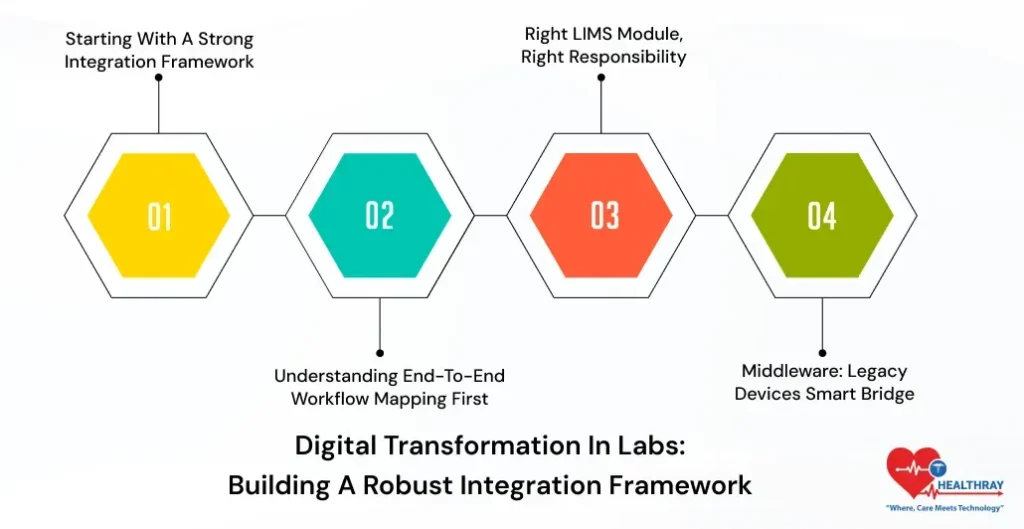
Digital Transformation in Labs: Building a Robust Integration Framework
Starting with a Strong Integration Framework
Digital labs become truly successful only when their foundation is strong. Furthermore, if systems are not deeply connected with each other, then this leads to data silos, postponements, and disorganization. Moreover, a well-planned integration framework ensures smooth collaboration among software, equipment, and departments. It helps lab teams to share their opinions and work on the same page.
Key focus areas:
- Plan the system architecture in the initial phase.
- Ensure smooth data exchange among all modules.
- Maintain real-time synchronization among different departments.
- Ensure a secure and steady data flow.
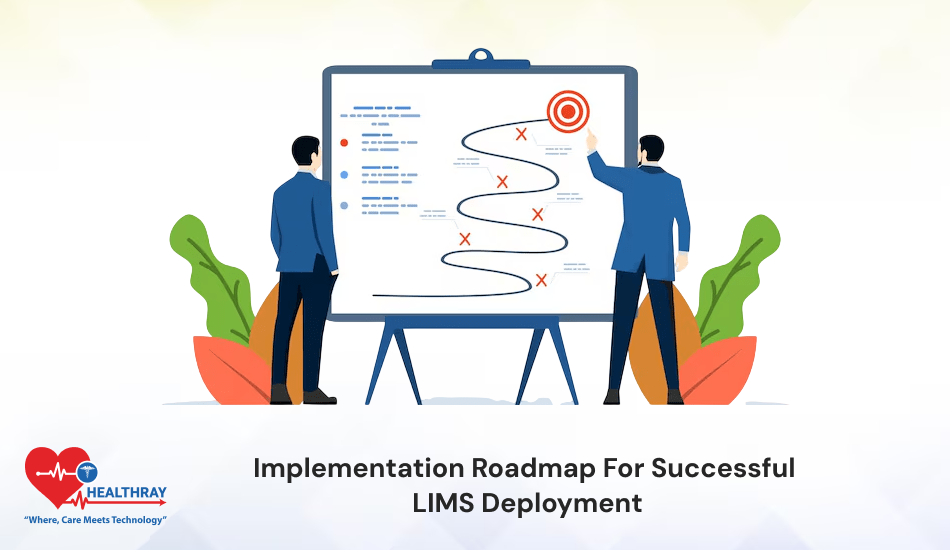
Understanding End-to-End Workflow Mapping First
It is crucial to understand the lab operation before optimizing it. Furthermore, the lab specialty should proactively map every step from sample acceptance to the end result dispatch. When the entire workflow becomes visually clear, then it naturally minimizes dissonance in the system. Additionally, integrating LIMS with the correct modules makes the clinical procedure more accessible and feasible.
Key steps to focus on:
- Clearly outline the sample collection and receipt method of collection.
- Establish the logical structure of test allocation and routing.
- Identify assurance verification and validation concerns.
- Assign responsible teams and roles at every stage.
Right LIMS Module, Right Responsibility
When every LIMS module gets clear responsibilities, then lab operations naturally become smooth. Furthermore, if routing, validation, and reporting get merged, automatically confusion and errors start increasing. Proper role allocation ensures the system remains centralized, predictable, and ready for inspection. It also strengthens accountability and improves performance.
Important module responsibilities:
- Capable of handling workflow engine sample routing and task allocation.
- Able to manage QC module result evaluations and quality assessment.
- Should be able to generate an accurate reporting module and timely reports.
Middleware: Legacy Devices Smart Bridge
Every lab doesn’t have the latest analyzers and fully automated instruments. Many laboratories are still dependent on legacy devices that are incapable of connecting with modern Lab management systems. Here, middleware works as a smart bridge. Further, it establishes smooth communication between old instruments and innovative systems. Moreover, it minimizes the need for manual entries, reduces human errors, and removes the possibility of data vandalism.
Middleware’s key benefits:
- Connect legacy devices with the modern LIMS platform.
- Minimize manual data entries.
- Enable real-time data transfer.
- Support technology upgrades.
 PRO TIP
Role of AI and Analytics in Advanced LIMS
AI Has Transformed LIMS into an Intelligence Hub
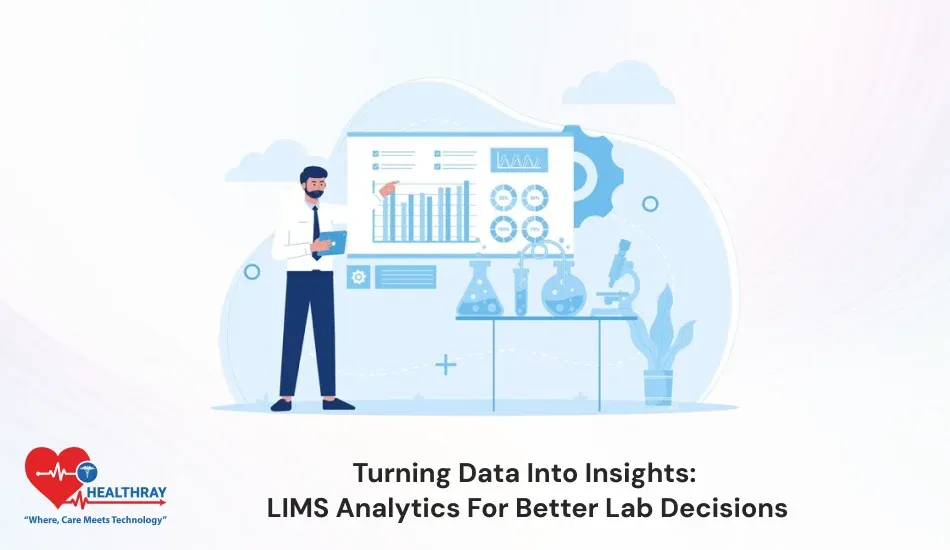
Nowadays, advanced LIMS are not just limited to sample tracking and report generation. LIMS has become a true intelligence hub after integrating it with AI, and it not only stores data but also interprets it thoroughly. Furthermore, LIMS systems analyze historical trends, discover unusual patters and impart decisive insights to management. Moreover, this speeds up the Online Prescriptions decision-making and makes it more dependable. This helps management to plan the strategy as per the real-time data and spot vulnerabilities beforehand. Overall, AI lims constantly optimizes the practices and makes them more successful.
Identifying Bottlenecks in Advance with Predictive Analytics
Specialists predict problems in lab workflows after they have occurred. However, AI-powered analytics change this situation. Furthermore, it evaluates past data, sample load patterns and processing time and provides complete information to specialists about where the problem arises. This allows lab management to timely take the concrete actions and resolve the issue at an early stage.
Result:
- Smooth workflow
- Faster reporting
- Prevents unnecessary work pressure
Faster Drug Discovery in Pharma Labs
Today’s pharma labs have highly complex research processes. They face huge challenges in storing data. Further, every experiment, trial result and compound analysis generates a huge volume of data. AI in datasets is not just limited to storing data but also helps specialists identify hidden variations and correlations. It is practically impossible for the human eye to identify, such as minor patterns. Additionally, it provides:
- Provide faster insights to researchers.
- Facilitates decision-making
- Speeds up Drug discovery pipeline
- Shorten testing cycle
- Significantly improve the innovation phase.
Transformative Impacts Across Lab Verticals
Advanced LIMS are not restricted to specific lab types. It provides tangible improvements in all lab verticals, whether it’s about clinical diagnostics, pharma R&D and industrial quality control. Further, every lab adopts the system as per their unique challenges. Centralized workflows, automation and real-time data visibility improve effectiveness, truthfulness and conformity. Also, read our blog on laboratory billing solutions to know additional facts about LIMS.
Clinical and Diagnostic Labs
Speed and accuracy are equally important in a clinical or diagnostic lab. Lims digitally streamlines the entire workflow of the clinical and diagnostic process from sample accessioning to final report dispatch.
- It eliminates unnecessary delays
- Reduces turnaround time (TAT) 50–70%
- Patients get faster and more accurate results.
Research & Pharma R&D
In pharma research every experiment is valuable. That’s why proper tracking is crucial. Further, researchers get a structured and transparent environment when they use experiment tracking and protocol versioning tools.
Key benefits:
- Simplifies the collaboration
- Avoid duplication
- Accelerates the discovery cycles.
 NOTE
NOTE
Conclusion
Advanced LIMS labs are part of a new era where efficiency, compliance aur innovation grow at the same time. Lims breaks the disconnected system and creates a centralized automation that makes the operation smooth and structured. Advanced lab management software is adaptable at every scale. Reduced turnaround time, error rates under 1%, and massive productivity improvements provide real financial growth to labs.