



Summary
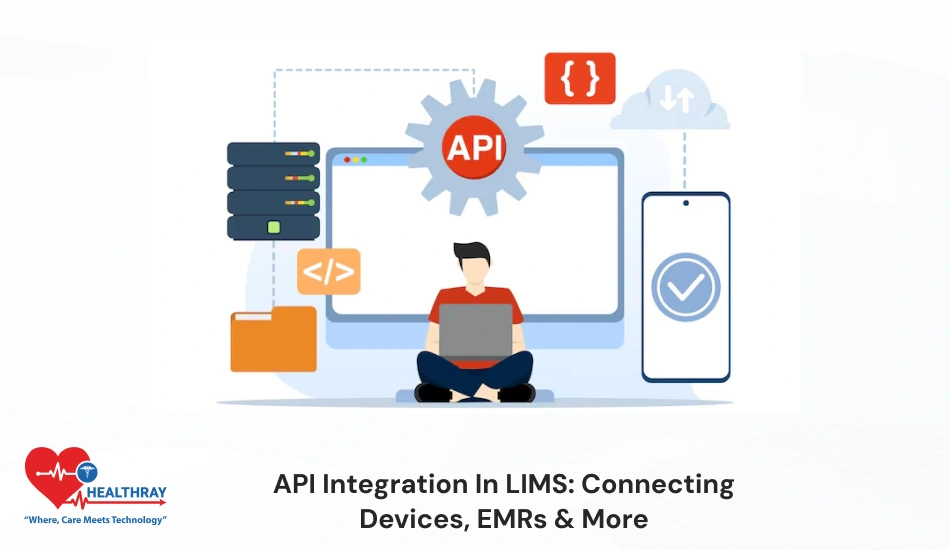
API integration with LIMS into a smart, connected system. It helps clinics to easily connect to all the other systems of the lab department, such as devices, EMR and HMS. This makes the data flow seamless and prevents manual errors in the system. In simple words, with API integration, doctors can directly send the reports and the lab can instantly process them. In this blog, I will show how API-based LIMS saves time, reduces cost and improves patient healthcare treatment services. Keep reading!!!
Introduction
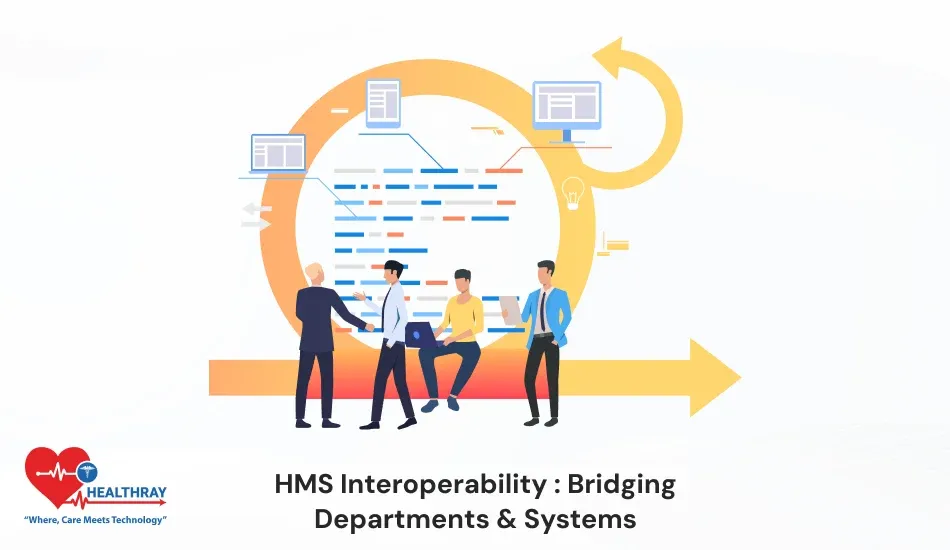
In today’s digital healthcare world, laboratories are not just limited to testing. They require fast, accurate and fully connected systems. Here the role of the laboratory information management system is highly important. However, LIMS is not sufficient. LIMS should be equipped with the ability to establish connections with other systems such as lab-standardized equipment, EMR (Electronic Medical Records), and HMS (Hospital Management Systems). API integration makes this connectivity feasible.
In simple words, API integration works as a bridge that connects the LIMS system with different software and devices. LIMS can conveniently connect analyzers, barcode scanners and middleware devices. Thus, it helps clinics automatically capture results, which slows down the delays and avoids typing mistakes. In 2026, API-driven LIMS has become a necessity. APIs help make the lab resilient to change by helping with automation, minimizing business expenses, and assisting with breakthrough technologies such as AI analytics. Overall, API integration converts the lab into a highly intelligent, unified, and effectively functioning ecosystem.
Common Challenges in LIMS API Integration and Solutions
1. Compatibility Issues
Lab devices have different communication protocols and data formats such as serial ports, USB and APIs. Further, this makes the direct connection with LIMS highly difficult. If clicks forget to check compatibility, then integration will go wrong or become unstable.
Solution: Clinics should analyze the device specification before LIMS implementation. Further, communicate clearly with your vendors to ensure LIMS conforms to the required protocols.
2. Custom Development Need
Several times, legacy or niche lab instruments do not support legacy or niche lab instruments. Therefore, clinics need to develop custom interference for them. Further, this process is complex and raises both development time and cost, especially when clinics involve multiple devices.
Solution: Use a middleware tool or choose an LIMS that contains pre-built connectors. This helps clinics reduce the load of custom coding.
3. Data Synchronization Errors
The process will slow down and the result will be inaccurate if the data format match between the device and LIMS is improper. Further, this raises the risk of data integrity and makes the report unreliable.
Solution: Clinics should use the HL7 or ASTM standard format. Further, they should implement data mapping and validation rules to ensure accurate or real-time sync.
How to Implement REST API Integration for LIMS and EMR
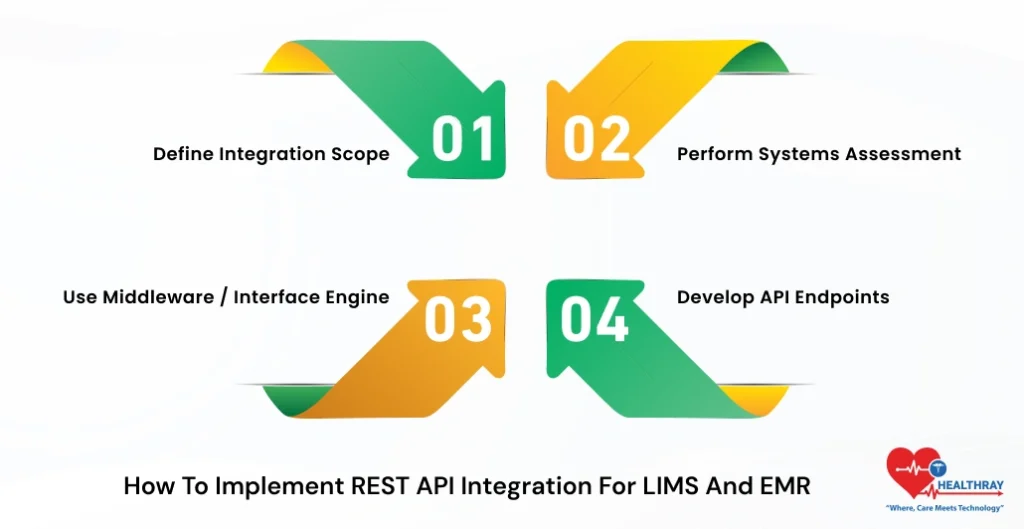
1. Define Integration Scope
Firstly, clinics should decide the type of data exchange. Let’s say, for example: Test orders will move from EMR to LIMS. It includes patient specifics, test codes and reports. Further, a clear scope helps clinics avoid confusion in later stages.
 PRO TIP
2. Perform Systems Assessment
Clinics should check if the two different LIMS and EMR support REST APIs. Further, it is crucial for clinics to review API documentation, endpoints, and authentication methods (OAuth and tokens).
3. Use Middleware / Interface Engine
Direct integration is highly complex. Further, clinics should use middleware tools (like Mirth Connect). Clinics can easily route, transform and monitor the data with the help of middleware. Middleware allows easy conversion of HL7 to FHIR and simplifies the operation of data flow.
4. Develop API Endpoints
Clinics should clearly test the end points for request-response accuracy. Furthermore, developing proper API endpoints for clinics ensures reliable data exchange in an accurate, standardized format. Also, read our blog Cloud backup for LIMS to know more about it.
What are Steps for Connecting Lab Instruments to LIMS via API?
1. Create Instruments Inventory
Clinics should prepare a proper list of all the instruments present in labs. Further, clinics should meticulously evaluate the device model, communication protocol (RS-232, TCP/IP, or Ethernet) and data format (CSV, XML, or proprietary). Clinics should ignore these essential steps, as this will create problems in the time of integration.
2. Select API Method
Next, clinics should decide the integration approach that they want to implement with LIMS. Mostly REST APIs are best but a few instruments are incapable of connecting with a direct API. In such cases clinics should use middleware.
3. Plan Data Mapping
Every instrument has their unique code. Let’s say, for example, glucose = GLU. Further, these codes must properly correspond with LIMS fields (sample ID, result, units). Wrong mapping leads to ambiguity and gives rise to sloppy reports.
4. Technical Setup & API Configuration
In this step, clinics should establish API endpoints for setups. These are the main points where data is sent and received. Furthermore, clinics must use the JSON format for transferring the data. If a direct connection is not possible, then clinics should use proper middleware. In simple words, it is a backend setup that controls the full underlying data flow.
5. Interface Development
In this approach, clinicians should develop an interface and parser that can read incoming data and convert it into LIMS format. Further, they should include error handling, a retry system and queue management. This helps them make sure that no data is lost and that it is stored in a safer place.
Step towards digital era with our healthcare solution
Revamp your hospital facilities and embrace change for better healthcare management. Ease in managing and organizing large medical datasets leads to effective analysis. Seize the opportunity now!
Common Errors in LIMS Instrument API Testing and Fixes
1. Authentication Failures (401/403 Error)
This error arises when API keys and OAuth tokens are invalid or have been expired. Due to this, the instrument is unable to acknowledge the LIMS request; consequently, data transfer turns out unsuccessful.
Fix: Clinics should follow the below steps to resolve the challenges:
- Verify credentials.
- Refresh the token
- Use postman tools to test the API.
- Enable HTTPS.
2. Data Format Mismatch
Sometimes instruments send data in XML or CSV format, but LIMS expects JSON format. Due to this mismatch, the system is unable to parse data and rejects the request.
Fix: Clinics should follow the below steps to resolve the challenges:
- Use Middleware or scripts (Python, Mirth) to convert the script.
- Follow one single standardized format.
3. Timeout / Network Issues
Slow network, firewall blocks and incorrect ports block the API request. Further, this creates an incomplete processing request and initiates the retry loop.
Fix: Clinics should follow the below steps to resolve the issues:
- Increase timeout duration (30–60 sec).
- Check the ports.
- Enable proper logging for troubleshooting.
Security Best Practices for LIMS API Connections
1. Strong Authentication & Access Control
To keep the LIMS API strong, clinics should use strong authentication such as OAuth 2.0 and JWT tokens. Further, lab clinics should avoid using basic auth, as it frequently gets hacked. Lab should provide limited access (RBAC) to every user and device.
2. Data Encryption (In Transit & At Rest)
When data travels in the network, then the clinic should use TLS 1.3 and when it is stored in the database server, then apply AES-256 encryption. Further, this keeps the patient’s sensitive information secure.
3. API Gateway & Endpoint Protection
It’s highly risky to expose an API directly. Further, clinics should use API gateways for traffic control, filtering and monitoring. It provides a security layer to patients’ sensitive information.
What are Cost and Time for LIMS API Setup?
LIMS API setup cost and time depend on lab size and complexity. Further, API integration with custom LIMS development costs typically vary from $20K to $1M+ and implementation may take up to 1-12 months. Clinics with simple setups are cheaper and faster to set up than clinics with complicated setups, which can cost a lot of money and take a few months. Let’s check more about it:
1. Small Labs (Basic Setup)
For small labs, cloud-based LIMS API setup is affordable. Further, 1–5 instruments and simple EMR integration range from $15K to $50K. Small labs often collaborate with IT services companies to handle REST API setup efficiently. Implementation takes less time. It takes 4–8 weeks for basic REST API setup and complete testing.
2. Medium Hospitals (Moderate Setup)
Medium-sized hospitals require multiple devices and bidirectional integration. Further, API integration for medium-sized hospitals may go to $12,000–$36,000 and maintenance charges are separate. It takes around 3–6 months for complete setup, as it also includes data migration and testing.
3. Large Labs (Enterprise Setup)
Large labs have custom APIs, middleware and compliance requirements. Further, its cost may reach up to $100K–$500K+. It takes around 6–12 months for complete setup; usually it includes phased rollout as well. It delivers an ROI in 12–18 months.
4. API Development & Customization Cost
For each device, clinics must create an independent interface for emr integration. Further, these cost $5K–$20K per interface. Middleware tools add extra cost. Cloud SaaS solutions on-premise are 40–60% cheaper. Read our blog to know about Best Laboratory Systems and how clinics should choose them.
5.Timeline Factors
Planning, testing and validation take around 30% of the project. Further, if clinics are implementing FHIR, HIPAA regular standards, then it will take 1-2 months extra.
 NOTE
NOTE
Conclusion
API integration converts the LIMS from an isolated to a connected system. APIs enable clinics to effectively link instruments, EMR, and HMS; this facilitates data flow and speeds up lab work. It keeps the system safe from cyber threats and data breaches. API integration is a powerful step that transforms lab operation and improves patient care.
Still facing doubts? Connect with the Healthray team to discuss more about it.