




Summary
The patient safety in hospitals has massive consequences over the quality and management of medical instruments. Diagnostic tools and other equipment including surgical tools should be properly sterilized, monitored, and assigned to avoid infection and to facilitate a smooth clinical procedure.
Central Sterile Supply Department (CSSD) integrated with hospital management system module will have computerized monitoring of sterilization, provide central storage and distribution of the instruments. This module simplifies the workflow and reduces human error, enhances the productivity of the staff, and has a positive effect on the overall patient care.
Introduction
In healthcare facilities, the number of instruments that need to be dealt with on a daily basis is tremendous, that is, surgical scissors and forceps, as well as sophisticated diagnostic equipment. In the absence of proper management, instruments may be lost, sterilized improperly, or damaged in such a way that it would negatively affect patient safety and efficiency.
The instrument management of any contemporary hospital is supported by Central Sterile Supply Department (CSSD) module. It manages the life cycle of medical equipment including procurement, decontamination, sterilization, inspection, storage and distribution to the surgical departments.
A well integrated CSSD module gives the hospital staff the real time status of the instruments, damage equipment notification and compliance documentation.The hospital information management system listed all instruments with labels and distributed, searching that label number. Having automated these crucial processes will give the hospitals room to concentrate on the results of the clinical processes instead of wasting time doing the administrative duties.
What is the CSSD Module?
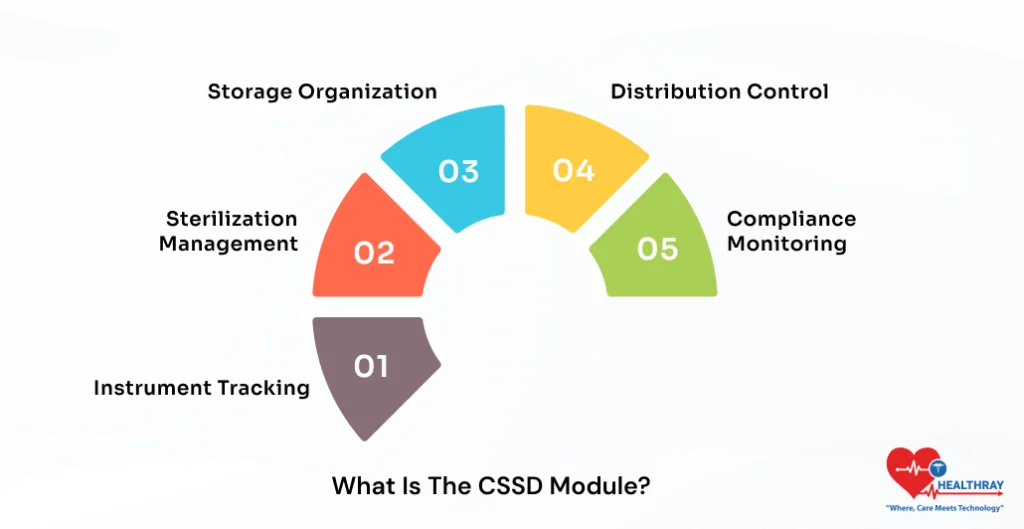
CSSD (Central sterile supply department) is also a module that is part of hospital management systems. Its basic aim is to make sure that all medical equipments are being sterilized, monitored and distributed appropriately to the surgical departments. Critical roles of this module are:
- Instrument Tracking
Every instrument will have a specific identification code, and the staff will be able to monitor its movement and status in real-time. This eliminates inefficiency and redundancy or abuse. - Sterilization Management
Cycles of sterilization of records, parameters, temperature, pressure, duration and method. This will make sure that all instruments are well sterilized. - Storage Organization
The tracks contain the instruments that are kept in right environmental conditions to retain sterility. - Distribution Control
The system distributes instruments to different departments and surgical teams in a more efficient way such that they are available when required. - Compliance Monitoring
Ensures that the records that are needed in the audit and compliance with the regulations are detailed so that the hospitals comply with the standards of healthcare.
Essential Features of CSSD Module Operations
CSSD module helps in hospital efficiency and patient safety through the control of decontamination, sterilization and instrument tracking ensuring that sterilized instruments are present at all times and thus surgeries run smoothly.
Decontamination and Sterilization
All medical equipment should be thoroughly decontaminated and completely free from any impurities.The system is used to track a large variety of instruments and supplies and it records activities, autoclaving temperature, and the flow of instruments. Instruments are sterilized and left to cool and then stored in the most appropriate places, either in regular shelves or in cool spots. Such processes facilitate the enhancement of efficiency among the physicians and increase patient safety.
Record Maintenance
A dedicated sterilization unit maintains comprehensive records of all medical supplies and tracks their sterilization status in the healthcare setting.The level of sterilization is used in classifying supplies and the items used in cleaning, decontamination and storage are tracked. Instruments with damages or scratches may be labeled and fully sterilized equipment can be easily spotted. Therefore, the hospital management system reduces physician obstacles to find the correct surgery equipment, helpful for smooth surgeries.
Regulation Enforcement
Sterilization and instrument management must be done by certified technicians. It should be done correctly, use of detergents, knowing chemical functions and how to operate the instruments. Standard practice will maximize the training of the staff, track surgical tools to a dot and make the workflow more efficient and safer.
How the CSSD Module Improves Hospital Workflow
CSSD module facilitates the work in a hospital making it simpler and more governed by facilitating the automation and tracking of sterilizing medical equipment. It minimizes the need to do things manually, it standardizes procedures making sure that instruments are secure and accessible. Constant monitoring and automatic notification enhance the efficiency of the staff, patient safety, and the quality of care.
Reducing Staff Workload
Tracking sterilization manually is usually time consuming and intensively labor intensive. The routine sterilization activities can be automated and the activities monitored, which minimizes manual work efforts. Employees are no longer required to waste a lot of time in search of tools and can allocate more time to work with patients and prepare them to undergo surgery. This eventually will assist hospitals in maximizing their workforce, as well as increase the overall satisfaction of the staff.
Enhancing Patient Safety
The correct sterilization of medical instruments is indirectly related to patient safety. The automated systems will make sure that all instruments are sterilized to the necessary levels before they are used. They are also in position to note ruined or infected equipment and ensure that the relevant tools are at hand when required during surgeries. This will lead to minimization of hospital acquired infections and improvement in clinical outcomes and enhancement of patient confidence in healthcare services.
Optimizing Instrument Performance
Constant scrutiny is important in ensuring quality of instruments. It aids in prolonging the efficiency of surgery equipment as well as enhancing the efficiency of the equipment used. Also, the system is able to anticipate maintenance requirements and this ensures that unexpected breakdowns are minimized and also, it is possible to minimize the cost involved in repairs. This allows hospitals to perform quality services and be able to control costs.
Standardizing Sterilization Procedures
Automation encourages uniformity in sterilization procedures by making sure that the standard cleaning and sterilization practices are followed to the letter. The digital logs increase the responsibility of the staff and send them warnings in case any of the steps of the process was missed or not fully completed. Such a high degree of standardization eliminates errors, enhances employee training, and makes sure that every instrument is safe and prepared to be used by patients.
Importance of the CSSD Module in Healthcare
CSSD module is needed to provide adequate sterilization and handling of medical instruments to minimize chances of infection. It simplifies the operations and enhances the productivity of the staff to provide more attention to patients. It also ensures the quality of instruments and contributes to the compliance of regulations contributing to the overall hospital efficiency and safety.
1. Reduces Infection Risks
A specialized sterilization unit also ensures the complete preparation of surgical instruments and equipment to help prevent the transmission of hospital-acquired infections (HAIs).
Enhanced control devices measure temperature, pressure and exposure time instantly. Any variance sends out response alerts. This thorough practice ensures that all instruments are within the strict hygiene protocols and this lowers the chances of infection to a large extent.
2. Enhances Workflow Efficiency
A centralized sterilization system facilitates the efficient movement of surgical instruments within the hospital.The automated tracking displays the precise position and the status of every instrument set to staff, minimizing time loss. Effective assignment to operating units reduces perioperative downtimes. This efficient coordination enables healthcare workers to concentrate on patient care which enhances the efficiency in the workflow of the hospitals.
3. Improves Staff Productivity
Such manual activities as record-keeping, inventory management, and allocation of instruments consume a lot of employee time. An automated sterilization system streamlines routine processes, allowing staff to focus more on clinical tasks. Online monitoring, decreased documentation, and computerized reporting increases efficiency. This enables the hospital to streamline the operations as employees focus on the provision of quality care to the patients.
4. Maintains Equipment Quality
Medical equipment is costly and requires meticulous maintenance in order to remain operative. A centralized sterilization system maintains records of the usage, cleaning, and maintenance of every tool. Damage is avoided through proper sterilization, maintenance and storage which increases the shelf life of instruments. This guarantees maximum performance, decreases equipment failures, minimizes the replacement expenses, and the availability of high quality tools at the necessary time.
5. Supports Regulatory Compliance
An automated sterilization system enables the recording of sterilization and inspection processes, ensuring that high standards of healthcare are consistently maintained in hospitals. Detailed audit and automated reporting make the audit process easier, more accountable, and traceable, as needed by patient safety and institutional credibility.
What can the Central sterile services department do to increase safety?
Central Sterile Services Department (CSSD) also improves the safety of hospitals by making sure that all medical tools are clean and safe to be used. It is used to prevent hospital-acquired infections (HAIs) by severe cleaning and sterilization measures.
It also standardizes processes, ensuring they are consistent and free from errors. It can make sure that only sterile equipment is used and facilitates compliance with healthcare regulations.The CSSD module in the hospital management information system improves the sterilization procedure due to gathering instruments and supplies information, labels on it, ticks on the activities that have been completed, and recording under the available column.
It also helps to protect the healthcare workers against the risks of contamination and enhances the efficiency of the working process by providing sterile instruments in time.
The Future of the CSSD Module in Healthcare
Sterile processing is being changed into a data-driven process with the integration of sophisticated CSSD modules into the information systems of hospitals. The new technologies are enhancing the sterilization processes, making them more efficient, accurate and reliable.
Sterilization Automation/ Robotics
CSSD operations are being transformed by automation, which does not only sort, clean, and load instruments, but also repetitive work. Robotic systems minimize human error, reproducible sterilization and amplify the efficiency of the operating procedures.
IoT Devices Integration
The IoT devices are used to monitor sterilization processes in real-time, monitor temperature, pressure, and equipment performance. The deviation warnings provide instantaneous corrective measures, and all the instruments must be up to safety standards.
Predictive maintenance Data Analytics
The use of historical data allows forecasting the time of maintenance or replacement of instruments or equipment. This minimizes the unexplained failures, streamlines the sterilization timetables and increases the lifespan of the instruments.
Centralized Management on the cloud
Hospitals can securely store and retrieve sterilization and equipment management data across multiple locations with the help of cloud-based systems. They allow distant monitoring, central control and scalability with expansion of hospital networks.
Artificial Intelligence and Intelligent Decision-Making
Artificial intelligence can propose the best sterilization procedures, identify process abnormalities, and make decisions automatically. This enhances accuracy, consistency and reliability and minimizes the use of manual judgment.
Improved Auditing and Digital Audits
The complex nature of the regulatory compliance can be facilitated by advanced digital tools that will enable an automated documentation, real-time reporting, and audit-ready records, reducing the administrative burden, and ensuring compliance to standards.
Enhanced Inter-hospital System
New CSSD modules will be in synchronization with operation theater, inventory, and patient record systems. This integrated strategy helps to improve the efficiency of the workflow, coordination, and patient care by providing access to necessary information in time.
Conclusion
Central Sterile Supply Department (CSSD) module is an important contemporary tool of hospitals. It takes care of the sterilization of medical equipment, its safe storage, and effective distribution to operating departments. Hospitals can improve patient safety and efficiency through the reduction of staff workload, procedural standardization, and better quality of instruments.
When it comes to investing in a CSSD module, it is not only about automation but improved patient outcomes, increased staff productivity, and enhanced quality of healthcare delivery. When hospitals adopt such technology, the chances of having complex workflows are successfully handled and errors are minimized, as well as, adhering to regulatory requirements.