



Introduction
The management of patient records is one of the key pillars of modern health care. If we speak in simple terms, paper-based records to some extent in the minds of some health professionals are no good for the works: they fatigue the brain with errors, and they waste a lot of valuable time. Hospital Information Management Systems have digitalized this vital process and automated it. This means that patient records are centralized, and important information is always accessible, correct, and secure.
In this article, we will enlighten you about how systems like these are changing hospitals for the good. From reduced operational inefficiency to better patient care, PRMS comes with a lot of perks. But there’s more to it than that. We delve into the details of some essential features, examine some challenges one could face during implementation, and cover actual success stories that prove fully their capabilities. Before that, let’s take a look at the patient record management system itself and see what it really means.
What is a Patient Record Management System?
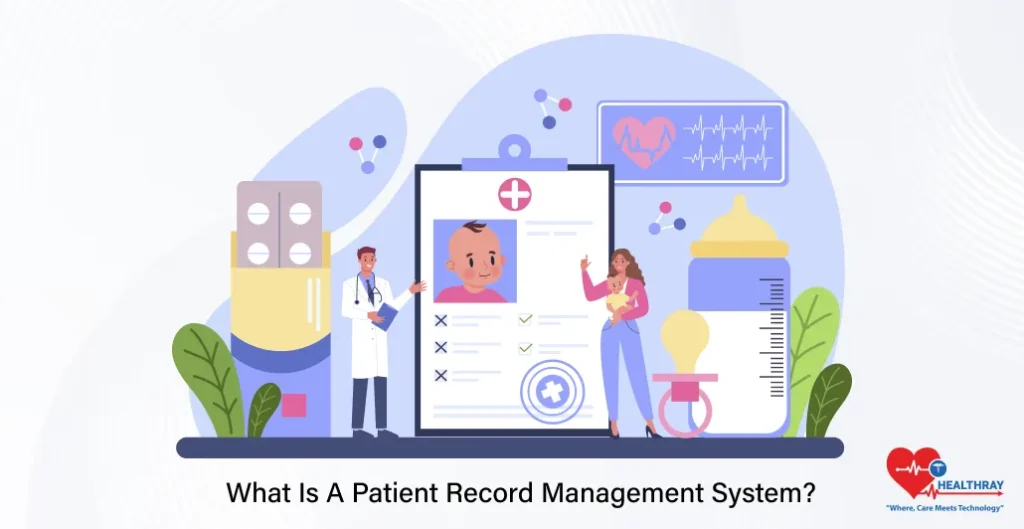
It is an electronic system carrying all the patient information-from appointment information to their claim documents.You’ll document all the health care documents in the same health-care system and integrate them into a structured format for easy retrieval from the stack of patient documents.
Key Features of a Hospital Patient Record Management System:
A good PRMS is much more than just going digital; it is about creating a system that can make management of patient data a smooth and completely reliable process. Given below are some of the amazing features that make a PRMS simply indispensable in health care:
Centralized Data Storage
The PRMS consolidates the patient’s information from medical histories to lab results in one digital repository. The files are no longer scattered, and the data is consistent.
Fast Data Retrieval
Enhanced search and indexing functions help find patient records in the blink of an eye. This, in turn, reduces decision-making time and improves quality care in general.
System Integration
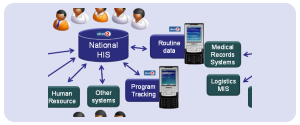
The advanced PRMS solutions being provided today integrate with all the systems available within the hospitals, including software for billing, diagnosis, and appointment scheduling.
Enhanced Data Security
Within the PRMS, such features as encryption, user authentication, and role-based access control are designed to protect the access of sensitive patient information while being compliant with relevant health care statutes and regulations.
Audit Trails
Each access and modification of patient data is tracked to create accountability while also supporting hospitals in maintaining compliance standards.
User-Friendly Interface
The design is highly intuitive, reducing the learning curve for health professionals while minimizing the chance of errors in inputting or accessing information.
Benefits of Introducing a Hospital Patient Record Management System – PRMS
This transition is not just a technological change; it is a strategic rejuvenation in the way information is viewed and managed by hospitals in respect to their patients and patient care. Some key benefits that make such systems so invaluable are:
Smooth Operation
The Patient Complaint Management Software eliminates manual tasks involved in filing, retrieving, and updating records, which simply means more time for patient care on the part of health care personnel rather than administrative work.
Increased Accuracy
One of the main things causing problems in the health care realm is due to human fallibility in documenting. The PRMS checks and validates against such errors with automated data entry features. Beyond automation, hospitals can elevate data quality by improving data accuracy through chart abstraction, aligning EHR fields with clinical narratives and reducing discrepancies that undermine reporting, quality metrics, and care coordination.
Timely Decisions
Ready access to the right information about the patient empowers the doctor to make timely decisions, particularly in emergencies where one second can count.
Improved Patient Care
With patient records visible at a glance, health professionals have much more room for the provision of personalized care in an equally timely manner. Besides, it facilitates communication across departments.
Regulatory Compliance
PRMS solutions are designed to comply with laws governing health care and policies that provide guidance for managing patient care and confidentiality. This, therefore, helps hospitals avoid penalties that would arise from poor compliance.
Cost Saving
The reduction in paperwork, storage, and error with PRMS means that, over time, there will be an enormous saving on operational costs.
Data Analytics and Reporting
Through analytics on service delivery and performance, the systems would enable a hospital to easily spot trends and help with future planning.
Considerations or requirements for implementation of a Hospital Patient Record Management System (PRMS)
The successful entry of PRMS into the health facility requires careful planning for the expected implementation. Lapses in proper consideration would create a series of obstacles to its benefits. Key considerations in ensuring smooth implementation include:
Budget and Cost Analysis
Estimate total cost of ownership including software licenses, hardware upgrades, installation, and maintenance. Add to that employee training and possible downtime during the changeover.
Scalability and Customization
Your functional requirements should be for a system that is scalable and customizable for your hospital. Look at parameters such as the size of the facility, patient volume, and future expansion plans.
Data Migration
The data migration process from existing systems or paper records can be complex. Make sure you have a proper data migration plan to ensure data integrity and reduce errors to a minimum.
Integration with Existing Systems
PRMS will integrate easily with other hospital systems such as billing, diagnostics, and appointment scheduling. Compatibility means ease of workflow without duplication of effort.
User Training
The success will come from how well the staff can utilize the system. Extensive training sessions should be provided to familiarize health professionals with the new system and address their concerns.
Compliance and Legal Requirements
The PMIS must comply with HIPAA, GDPR, or any other local laws. This will ensure the protection of patient information and prevent legal entanglements.
Implementation Timeline
Establish realistic timelines for installation, testing, and deployment. A phased rollout would help in identifying and resolving issues earlier without disrupting hospital operations.
Post-Implementation Support
Choose a vendor that will provide reliable technical support, frequent updates, and troubleshooting services to maintain system efficiency over time.
Challenges and Solutions Regarding Hospital Patient Record Management System Implementation
The implementation of PRMS does have some challenges that will probably be encountered in the achievement of these benefits. Knowing such obstacles and their solutions provides for a smoother transition.
Data Migration Complexities
Challenge: There exists the very real threat of data loss, double entry of data, and other kinds of errors in the transition from paper or legacy systems to the PRMS.
Solution: An exhaustive audit of records existing should be undertaken by professional tools for data migration. The system can be tested in small batches prior to a full go-live.
Resistance to Change
Challenges: Employees resist the adoption of new technologies for fear of complications in their workflow or jeopardy to their positions within the organization.
Solution: Involve employees early in the selection process, and explain to them in clear terms what benefits the system will have for them. Provide full hands-on training, demonstrating specifically how this will help make their job easier.
Integration Problems
Challenges: PRMS may not be seamlessly integrated with the remaining hospital systems; thus, disrupting workflows or making the system inefficient.
Solutions: will be those that are proven and very much compatible with the PRMS and are expandable too. Close collaboration should be ensured with the vendors to facilitate easy integration.
Cost Overruns
Challenges: Hospital budgets, which are already limited, are stretched thin by unforeseen costs for upgrades to systems, training, and extending timelines.
Solution: Develop a detailed material estimate in consultation with the stakeholders. Negotiate a fixed-price pact with the vendors and keep the costs monitored through the entire implementation phase.
Case Studies: Real Success Stories in PRMS Implementation
These are the successful case histories of the patient record management system at the hospital; these are documentary, real-life proofs whereby attesting to its ability to fundamentally change how patient records are managed. Below is evidence about some successful health facilities.
Community General Hospital: Reducing Errors and Streamlining Workflow
Challenge:The main problem was that Community General Hospital used paper records, causing many mistakes, frequent wastage of time fetching data, and miscommunication across diverse departments.
Solution: A cloud PRMS system was implemented, which made real time status views accessible with permission-depending on the role issued.
Outcome: Within a year, documentation errors reduced by 40% in the hospital. Efficiency in work improved tremendously; staff spent less time searching records and more on looking after patients.
Urban Health Center: Compliance and Security
Challenge: The fragmented storage of data and obsolete systems constrained an urban health center from being fully compliant with health regulations.
The Solution: It implemented an advanced PRMS system based on state-of-the-art encryption and audit trails.
Outcome: It achieved total HIPAA compliance too. With its auditing feature, easy monitoring and reporting were possible resulting in a 50% reduction in compliance review time.
MetroCity Hospital: Scaling Growth
Challenge: The problem was that MetroCity Hospital expanded to other locations, but lacked a good management of patient data, as their old system could not cope with the increasing volume and also not provide connectivity between branches.
Solution: A scalable PRMS was deployed; its smooth integration across all branches was achieved.
Outcome: Simply put, this translated to a 60% increase in patient volume without operational interruptions. There was uniform access to patient records from all locations thus enhancing coordination and delivery of care.
Rural Clinic: From Paper to Digital
Challenge: It was a resource-constrained rural clinic that completely depended on paper case records, hence causing regular data mismanagement and delays in the care of patients.
The Solution: The clinic opted for an affordable PRMS with a mobile version to allow offline work.
Result: Digitizing their records benefits their budget by freeing up about 30% of administrative time to serve their patients better. The capability function offline brings about continuity, even in those places that might be experiencing spotty internet connectivity.
Conclusion
The Hospital Management System is more than just an upgrade; it is an essential tool in modernizing healthcare procedures. From centralizing patient data to enhancing security and streamline workflow, there is reason enough in these benefits. Real-life examples have shown how the implementation of PRMS ensures better accuracy, compliance, and efficiency overall in many healthcare environments. While it seems overwhelming to contemplate having such a system someday , the challenges are manageable with proper planning, training, and good vendors. Adoption by either a rural clinic or some big city hospital will bring about life-changing developments in patient care and streamlined operations. Therefore, if PRMS considerations have been ongoing for your health facility, here is the momento to act upon it. With careful execution, it will mark the beginning of setting a course toward a better future in both efficiency and patient-centeredness.