


Summary: The healthcare domain is equipped with cutting-edge technologies that are changing the dynamics of healthcare delivery and patient care. Patient management system software is one such technology. I am sure you must already have an idea about patient management software. In this blog, we are going to highlight the advantages of patient management software. Stay tuned!
Introduction
Technology has transformed everything in every sector including the healthcare industry. In the healthcare sector there are many software for better practice management and patient care. After practice management software, Electronic Patient Management Systems are implementing systems that can enhance patient care altogether whilst enhancing the workflow of healthcare professionals.
An Electronic Patient Records System is a digital solution that strеamlinе and enhance various aspects of patient care, from schеduling appointmеnts to maintaining comprеhеnsivе patient records and other things. The best patient management software benefits the healthcare industry in different areas and that is what makes it a top choice of healthcare professionals.
One of the greater advantages of the Electronic Patient Management System is speeding up the efficiency of healthcare practices. The digital means of storing health records mean that medical professionals can have swift access to pertinent information. It also saves precious time when it comes to administrative tasks such as scheduling appointments and the likes. The saved time will be devoted to proper care of the patients.
There are many advantages to be read; to learn about them all, you will have to read on.
What Is an Electronic Patient Management System?
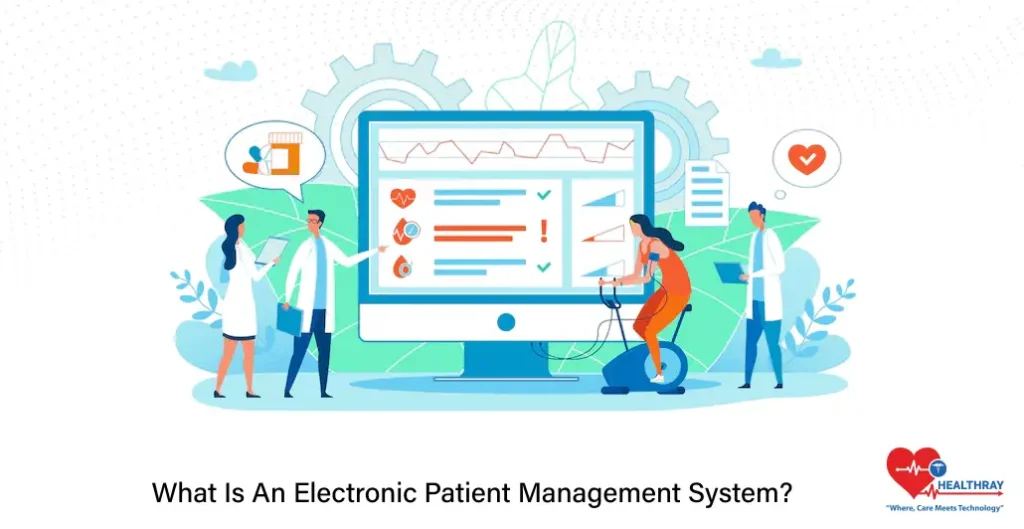
An Electronic Patient Management System (EPMS) is a digital tool. This system is cloud based. It streamline and organize healthcare information for effective patient care. It replaces traditional paper-based records with electronic files, offering healthcare professionals a centralized platform to store, retrieve, and manage patient data.
A patient management system enhances communications among healthcare providers. Moreover, it reduces error and improves the efficiency of healthcare delivery. Patients get faster access to their medical history, smoother appointment processes, and high accuracy in treatment plans. With its amazing features it enhances overall patient experience.
Moreover, a patient management software contributes to a more coordinated and patient-centric approach to healthcare. It establishes a better communication and collaboration between medical professionals for improved patient outcomes as it allows them to focus on their core tasks.
Some key Features of patient management software
- Patient health records
- Appointment reminders
- Automated Medical Billing
- Appointment scheduling
- Electronic medical records
- Prescription Management
- Integration Capabilities
- Access Control
- Reporting and Analytics
- Mobile Accessibility
- Collaboration Tools
The Top Benefits of Patient Management Software for Patients and Doctors
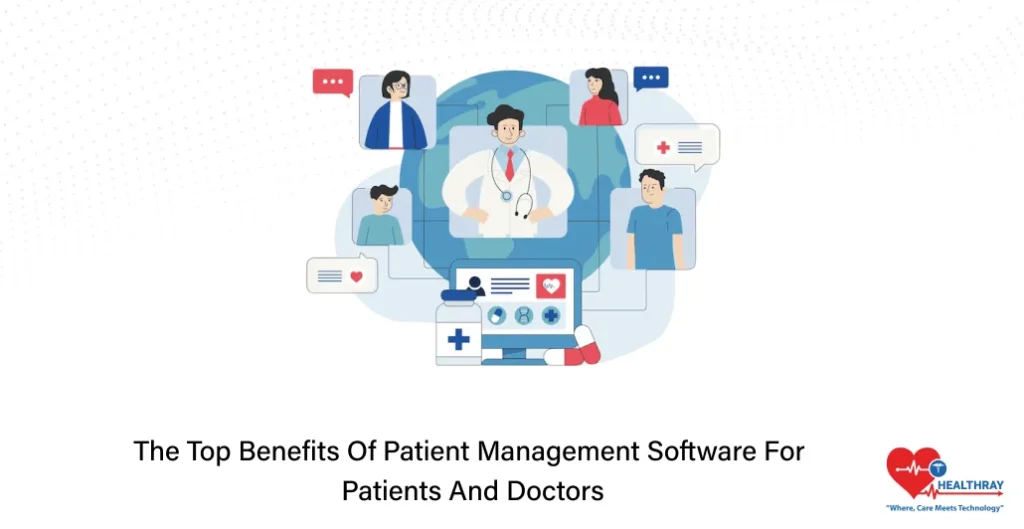
Become very particular and easily retrievable patient documents through havens of incomparability, due to applied so many data principles associated with them. With that, they boast unmatched data processing. Let us now discover ways Patient Management Software can be severally used by physicians and as well patients.
Benefits To The Patients
Quick Access to Health Information
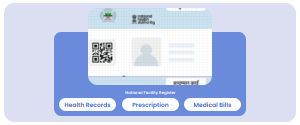
Electronic Patient Records Software Systems enable quick and easy access for the patient to his or her health data. They can log on in a few clicks to view medical records, lab results, and treatment plans online. This will create an experience for a more knowledgeable and empowered patient-and gives the patient the opportunity to share information.
When and as it is needed, the electronic system ensures that necessary health information is pretty readily available. Streamlining the patient experience, enhancing communication between healthcare providers and patients. Read about the Patient Registration Process to know how to get into the health informatics network.
Improved Coordination Of Care
Centralized platforms across healthcare professionals for sharing and accessing patient information are developed with these systems to improve coordination in the provision of care. Different providers can work together seamlessy and this leads to more integration in terms of patient care.
Electronic systems eliminate the risk of information gaps or delay, ensuring that all relevant parties are kept up to date on a patient’s medical history, medications, and ongoing treatments. Thus improved coordination leads to more efficient, effective delivery of health care. It increases the outcome for patients and overall level of satisfaction.
Enhanced Patient Engagement
It boosts the patient engagement since it provides additional benefits like revenue and interactivity in terms of tools for communication. As the patient records accessible at any time to patients. Reduced waiting times through online queuing systems and appointment reminders.
It also allows appointment scheduling, with most timely updates about their health. In this way, individuals get more involved while managing their well-being: a closer connection to their health journey will likely lead to better adherence with medical treatment advice and feel empowered over health control. Definitely, thus all these benefits attract patients.
Saves Time and Resources
Not only saves time and resources, but also simplifies the administrative duties. This digitizes patient records, thus reducing paperwork. It makes information readily accessible and easy to search. Besides, appointment-scheduling and billing automation enhance efficiency.
Automatic retrieval of data is faster and more accurate. It allows the patient to better focus on patient care rather than administrative burdens. Thus, the overall result yields improved efficiency in health care for patients.
Accurate Management of Prescriptions
Electronic patient management system guarantees exact medication management for patients. It maintains a complete record of the prescribed medications, doses, and instructions for administration, minimizing the chances of error. Automated alerts notify patients to take medications at the right time, thus enhancing adherence to treatment plans.
This include lessening lost dosages so that more results could be given. Moreover, near-real-time medication status information is available to health workers so that they can make timely and educated decisions and changes to prescriptions.
Remote Monitoring and Telehealth Features
The patient management software provides remote monitoring and telen-health features to facilities with more easy access to healthcare services. There is also direct remote access to consult healthcare providers about follow-ups and monitoring chronic conditions. This makes it much easier for the patients.
Besides making things more convenient for patients, it also enables care providers to anticipate issues proactively without so many face-to-face visits. With remote monitoring, prompt intervention can be instituted with abnormal health indicators, leading to early diagnosis and better management of health conditions. This method is evidence of a progressive and more patient-oriented health system.
Data Security and Privacy Measures
These electronic patient management systems also give patient data security and privacy measures that ensure that sensitive information from patients is kept secure. Besides, these systems use encryption techniques and access controls. This prevents unauthorized access to Patient data.
This stores patient data in secure databases and lowers, therefore, risks of breaches. The regular updates and compliance with industry standards further enhance security. Patients can trust that their personal and medical information remains confidential. It brings confidence to the health care system.
Facilitating Preventive Care
The patient management software helps in preventive care as it integrates processes. These systems enable tracking patient health records efficiently and thus aid in the management reminders for vaccinations, screenings, and follow-up appointments.
Patients thus benefit from proactive health interventions and contribute to better overall health outcomes. The ability of the system to organize and analyze data also helps in the early identification of potential health risks, for timely intervention, and to take personalized preventive measures. In essence, this proactive approach increases the general well-being of patients.
Benefits To The Doctors
Efficient Record-Keeping
Patient management software will lighten the manual record-keeping for the doctors. This entirely eliminates the ancient paper-based systеms with a modern digital interface that allows the practitioner to input and access the patient information, as and when needed, in an extremely hassle-free manner, via patient portal.
Apart from that, it increases accuracy and decreases the risk of errors that arise from personal handwriting of the notes. The system processes data systematically. This makes it easier for doctors to manage and update patient records. In addition, other automated features, such as appointment scheduling, prescription generation, etc., lessen administrative burdens and allow more time for healthcare professionals to devote to patient care.
Quick Information Retrieval
The ability to allow faster retrieval of information is one of the major advantages of Electronic Patient Management System. Digital means can centralize patient data, unlike the traditional methods, where physical files could be scattered. Also, it allowed doctors who needed access to pertinent information, such as medical history, test results, and treatment plans.
Instant access to complete patient profiles supports informed decision-making during consultations, thus providing effective and personalized care. Also, the swift retrieval of critical information improves collaboration within health care teams, ensuring practitioners always have the most up-to-date information to deliver optimal patient care.
Enhanced Communication
The patient management software enhances communication among doctors by supplying a centralized platform for sharing patient information. This allows rapid and secure communication, allowing health professionals to easily exchange critical details about a patient’s condition, treatment plans, and progress.
Remote Access
The patient management software provides doctors with remote access to patient records. This means that healthcare professionals can safely access patient information from anywhere, to make decisions on time and ensure continuity of care.
Whether the doctor is in the hospital, at the clinic, or even outside the healthcare setting, doctors are thus able to remain up to date with their patients’ statuses and to make informed decisions toward better overall patient management and the effectiveness of treatment.
Decision Support Tools
Electronic patient management software (EPMS), this decision support system hydraulically facilitates and strengthens doctors in clinical decision-making. These tools provide instant access to comprehensive patient data, thereby allowing doctors to make informed choices regarding diagnosis and treatment plans.
With integrated medical databases and real-time updates, EPMS helps physicians in staying current with medical knowledge and guidelines. This not only improves diagnostic accuracy but also assists in tailoring effective treatment strategies. Decision support tools in the EPMS allow doctors to analyze patient information quickly, weigh different factors, and choose the most credible course of action, ultimately enhancing the overall patient care.
Reduced Errors
One tremendous advantage of EPMS for specialists lies in drastically cutting down on errors in the entire duration of patient care preparation. By automating tasks such as prescription management, clinical record keeping, and appointment scheduling, EPMS mitigates the likelihood of human error.
The electronic systems provide checks and alarms for potential mistakes so that physicians will have accurate and up-to-date information at their fingertips. This enhances patient safety, as medication errors and other blunders are greatly reduced. Besides, the smoothened communication fostered by EPMS among healthcare providers paves the way for a more coordinated and error-free environment for care delivery, ultimately benefiting both specialists and the patients.
Streamlined Workflows
The Electronic Patient Management System improves a doctor’s workflow through digitization and organization of patient data. Even more, specialists can access, update, and share patient data digitally, efficiently, rather than having to deal with paper records and manual data entry.
This streamlining also reduces administrative burden, allowing health care practitioners to focus more on patient care. Appointment scheduling, prescription management, and communication with the staff become seamless, promoting a more efficient and orderly medical practice. This leads to better time management, fewer errors, and a much more efficient overall workflow for specialists.
Data Analytics For Insights
Electronic patient management software allows for a greater degree of insight on the part of its users through data analytics. By aggregating patient data, these systems allow practitioners to detect trends, patterns, and possible health risks. Data analytics also enable the physician better to decide on patient care, therapy, and prevention approaches.
This data-centric approach in medical care furthers diagnostic accuracy and enhances prediction and management of health conditions. In addition, the doctors will also monitor their practice, identify areas that need improvement, and enhance their services according to the data analyzed for better patient outcomes and a more proactive approach in care.
Leverage Electronic Patient Management Systems With Healthray
Healthray offers an electronic management system (EPMS) that optimizes your healthcare services. Patient data becomes seamlessly and efficiently managed by our system. The user-friendly system centralizes medical records, appointments, and treatment plans, thereby ensuring organized patient care.
Moreover, now enjoy the merits of streamlined communication among your staff, plus minimizing errors and improving cooperation. Administrative tasks are simplified through our EPMS. Expect your medical staff to focus more on patients. The system indeed fortifies the data security with confidentiality and privacy compliance.
Besides, ease of access to the health records, scheduling appointments, and personalized treatment information are some of the ways in which our EPMS benefits your patients. Empower your healthcare facility with cutting-edge technology such as Healthray. It would, with a patient-centric approach, improve the overall efficiency of healthcare delivery.
We will also customize the system to your practice and requirements. We will also integrate this into existing systems. So, what are you waiting for, contact us right now.
Conclusion
These are some benefits of an electronic patient management system. Now you have understood the necessity of the implementation of such EPMS systems after going through these benefits. So, do not delay anymore in getting started with planning to use patient management software. This article “Patient Appointment Scheduling Software” might have helped you well enough.