



Summary
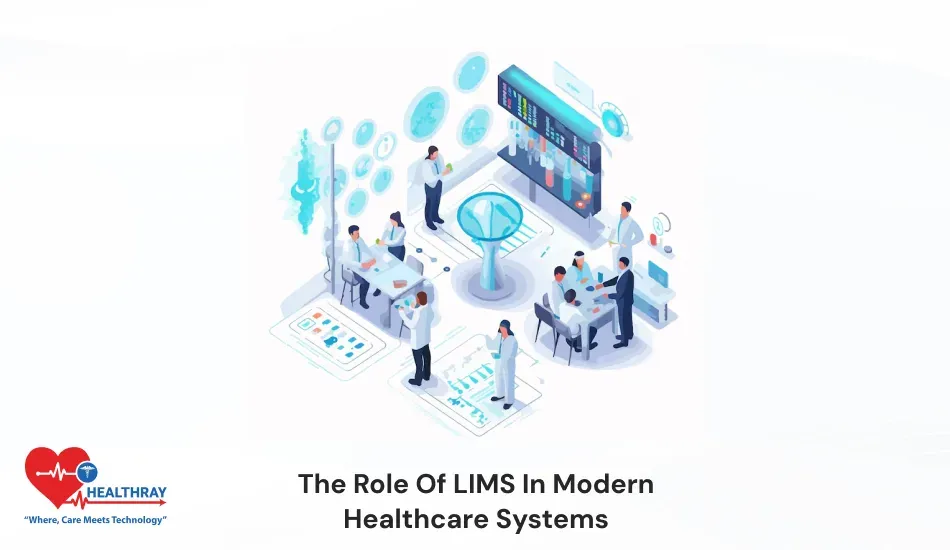
In today’s modern healthcare environment, depending only on manual systems can be highly risky for growth and efficacy, highlighting the role of LIMS in healthcare in driving operational improvement. It is highly crucial for clinics to adopt extremely effective platforms that are adept at handling complex tasks of laboratories. The LMS platform streamlines the hectic workflows from collecting the sample, testing the sample, and preparing the report to delivering the reports to patients. Patient expectations are high nowadays; they want fast and accurate results.
Do you think traditional systems are capable of handling such high expectations of patients, considering the growing role of LIMS in healthcare? Running the operations using conventional tools while maintaining a strong competitive advantage is extremely difficult. Through LIMS, lab departments can minimize errors and expedite turnaround time and overall staff productivity gets rave reviews. Beyond that, LIMS helps maintain regulatory conformance and dependable data management. Ultimately, LIMS makes the operation tangible, efficient and future-adaptable. In this blog, I will discuss the role of LIMS in healthcare systems and how you can achieve measurable results in a short period of time. Keep reading!!!
Introduction
In today’s highly advanced healthcare ecosystem, depending on disorganized manual operations and outdated lab procedures is a serious strategic mistake, emphasizing the role of LIMS in healthcare. Nowadays, agility, accuracy, conformity, and operational transparency are equally important. However, conventional systems are inefficient at handling increasing diagnostic workloads. Manual entries, disconnected systems, and delayed coordination slow down the laboratory efficiency.
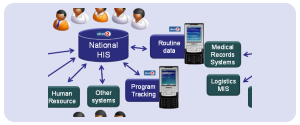
The Laboratory Information Management System (LIMS) emerges in the form of a modern revolutionary tool that empowers laboratories to transform their operational capabilities. LIMS is a secure electronic platform where all activities are automatically recorded, demonstrating the role of LIMS in healthcare in ensuring transparency. It directly impacts patient care and trust, which is essential for modern healthcare growth. LIMS help laboratories to follow NABL and other regulatory protocols. Digital audit trails and centralized data storage enhance operational transparency and provide a fully compliant environment to laboratories. LIMS adoption provides a versatile, effective, and sustainable infrastructure to laboratories.
Advanced LIMS Modules
Simplifying Genomics Workflow with Molecular Diagnostics Tracking
Modern LIMS provides beneficial features for laboratories to efficiently manage complex molecular diagnostics procedure workflows, highlighting the role of LIMS in healthcare in advanced diagnostics. Furthermore, genomic testing involves many complex steps such as sample collection, sequencing, and final examination. It is highly complex to track such parameters manually. Moreover, traditional software has limited features and is incapable of handling such intricate tasks. Additionally, to combat such scenarios, we require an intelligent AI-embedded lims platform to handle such delicate procedures.
How can LIMS help?
- Automatically monitor each and every step.
- Provide complete transparency
- Monitor the workflow accurately.
- Provide real-time visibility
- Significantly minimize human-made errors.
- Give outstanding diagnostic outcomes.
Efficient Handling of High-Throughput Sequencing Data
Advanced LIMS systems allow laboratories to efficiently manage large-scale sequencing data, reflecting the role of LIMS in healthcare in data-intensive environments. Furthermore, high-throughput sequencing generates a massive volume of data. Hence, it makes it difficult for clinics to manually organize it. It takes considerable time, and results will not be appropriate. Lims automatically organizes the data into a structured format and tracks it regularly to identify any uncertainties.
Additionally, LIMS provides:
- Quick data accessibility
- Better analysis assistance.
- Maintain data integrity
- Properly manages complex sequencing data.
- Ensure high accuracy in the diagnostic process.
Seamless Integration and Automation with NGS Instruments
Modern LIMS seamlessly integrates with NGS and makes the genomics workflow fully automated and efficient, strengthening the role of LIMS in healthcare. Furthermore, when the sequencing process gets completed, Lab management systems automatically organize and analyze the data without any human supervision. This makes the variant calling and report generation less lengthy and more precise. Moreover, it evades the need to manually transfer data to staff.
How does this integration help?
- Ensure workflow continuity.
- Save considerable time for staff.
- Improve accuracy.
- Enhance overall diagnostic efficiency.
Faster and Reliable Reporting with Automated Variant Analysis
Modern LIMS through automated variant analysis evaluates genetic data quickly and accurately, further proving the role of LIMS in healthcare. Further, the system automatically scans sequencing data to identify genetic variations without depending on manual interventions. Additionally, this provides faster insights to laboratories and significantly reduces the reporting delays.
What does automated analysis do?
- Minimize human error
- Maintain reporting consistency
- Help labs deliver accurate reports.
- Improved diagnostic dependability.
- Excellent patient care outcomes
Learn more: True Cost of Delayed Lab Reports and Fixes
Role of LIMS in Healthcare: Economic Impact Analysis
Faster ROI Achievement through Smart LIMS Implementation
Modern LIMS implementations are strategic investments for laboratories, underlining the role of LIMS in healthcare in financial growth. Further, It help clinics generate a measurable ROI in a short time. Manual procedures, data entry shortcomings, and inefficient coordination increase the hidden operational cost. Moreover, inaccurate data management prevents the company’s financial expenses on unnecessary resources from being incurred. Lims automation eliminates inefficiency. It helps clinics ensure faster execution and utilize the resources in a productive way. Additionally, LIMS strengthens financial control and enhances the productivity of the system and assists clinics in achieving a strong ROI within 12-18 months.
Reducing Labor Costs to Ensure Long-Term Financial Stability
Modern LIMS automation allows lab specialists to free themselves from repetitive tasks, showcasing the role of LIMS in healthcare in workforce optimization. Furthermore, this minimizes the overall burden of handling tedious work pressure. Routine activities such as data entry, sample tracking, and report preparation are handled automatically. It minimizes the dependency on humans. Moreover, clinics no longer need to recruit additional staff for managing basic operations. AI algorithms can smartly handle a high volume of tasks accurately. Existing staff becomes more productive. Additionally, they can concentrate on areas that require special attention. LIMS improves operational profitability and optimizes labor costs. Furthermore, LIMS helps clinics accomplish financial viability and sustainable improvement.
Supporting Value-Based Healthcare Models and Government Reimbursement Programs
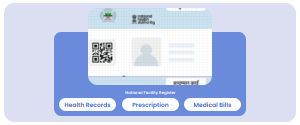
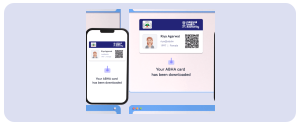
Modern mobile LIMS app supports laboratories in maintaining reliable or complete digital documentation. Further, it is highly essential for value-based healthcare models. When patient data, test results, and audit trails are properly documented, then the reimbursement claims process becomes smooth and faster. Moreover, Ayushman Bharat government schemes require proper documentation. LIMS automatically ensures compliance in the system and allows lab specialists to accurately handle the high-volume data that is covered under government schemes. Additionally, LIMS laboratories improve financial transparency. Helps patients receive timely reimbursements and provide support in sustainable financial advancement.
 PRO TIP
Should You Construct or Buy a LIMS?
Build Option: Custom LIMS Development
Customized design
By building an in-house LIMS, laboratories can design the system as per their operational needs and workflow. Further, clinics can even customize the features to their requirements. For instance, management needs features like approval and dashboard insights to make decisions, while a junior lab specialist only needs a few modules, like testing and report preparation.
Role-based design
Additionally, clinics can allow accessibility to features that are necessary as per the designation. You no longer require giving full access to every specialist.
Provide specialised Features
Custom lims support specialized features such as genomics and provide full freedom to lab professionals with vendor lock-in features. Custom development involves significant upfront cost, a dedicated IT team, and a long implementation timeline. Also read our blog Benefits of LIS Systems for more information.
Buy Option: Off-the-Shelf LIMS Solutions
Design method
Commercial LIMS solution provide quick implementation advantages to laboratories. Further, this makes the operational improvement immediately visible. Through predefined features and validated workflows, labs can easily adopt automation without any delay.
Faster way to achieve digital transformation
Additionally, it minimizes manual workloads, improves efficacy, and allows laboratories to achieve faster digital transformation with minimal risks.
Automates regulatory compliance
Off-the-shelf LIMS automatically manage regulatory compliance and system maintenance. Lab specialists don’t need to take the hassle of maintaining compliance at every step. System algorithm follows regulations automatically.
Predictable pricing model
Commercial LIMS systems provide predictable pricing and cloud scalability. Additionally, this model gives you better efficiency for long term and clinics can even scale the features during large-volume scenarios.
 NOTE
NOTE
LIMS vs. ELN: Check out the Key Differences
Understanding the Fundamental Role of LIMS and ELN in Modern Laboratories
In modern laboratories, LIMS and ELN, both are essential components for digital transformation. Further, their roles and functionalities are both different. LIMS primarily handles laboratory activities, sample collection, workflow automation, and compliance management. On the other hand, ELN helps researchers to digitally capture clinical data, guidelines, and observations. Additionally, this makes the research documentation organized and secure. Simply put, Lims improve operational effectiveness and diagnostic preciseness, while ELNs reinforce innovation and research accuracy.
Structured Diagnostic Workflow vs. Flexible Research Environment Support
LIMS efficiently manages standardized diagnostic workflows. Further, every sample conforms to a predetermined procedure and quality requirements. A LIMS system makes the sample tracking, test processing, and result validation structured and foreseeable. Conversely, ELN offers a versatile environment that allows for unrestricted experiment design and documentation.
Comprehensive Workflow Automation vs. Experimental Data Documentation
LIMS laboratories automate the entire operational workflow. Further, it ensures smooth coordination from sample registration to final report delivery. Lims software automatically manages sample monitoring, instrument integration, and result validation. This helps clinics improve accuracy and efficiency in the system. On the flip side, ELN is mainly designed for researchers. They can digitally document their experiments, observations, and protocols. ELN research makes the data systematic and easy to browse.
Conclusion
LIMS help laboratories achieve faster and more efficient operations through automated workflows, reinforcing the role of LIMS in healthcare in modern systems. Lms provide a centralized platform helping doctors, technicians, and staff to easily coordinate with each other.
Modern LIMS supports personalized diagnostics and precision-based medical care. In 2026, clinics that are adopting laboratory management software face minimal challenges as compared to the clinics still relying on the conventional approach. Platforms like Healthray help you achieve outstanding outcomes and gain a competitive edge in the market.