




Summary
Radiology teams fail not because they do not have tools. Their tools fail them as imaging work does not occur in the way they are supposed to. Custom RIS development is to seal that gap. Custom-built systems are congruent with actual clinical behavior as opposed to forcing clinicians into a fixed workflow. In the case of hospitals, clinics, and specialists, that fit has a direct effect on efficiency, accuracy, and confidence in technology decisions in the long term.
Introduction
Radiology processes appear to be foreseeable on paper. Practically, they vary according to volume, modality and urgency. Such incompatibility is the reason why most teams are hampered by conventional platforms. Individual RIS development starts with the acknowledgement that two imaging environments do not work similarly.
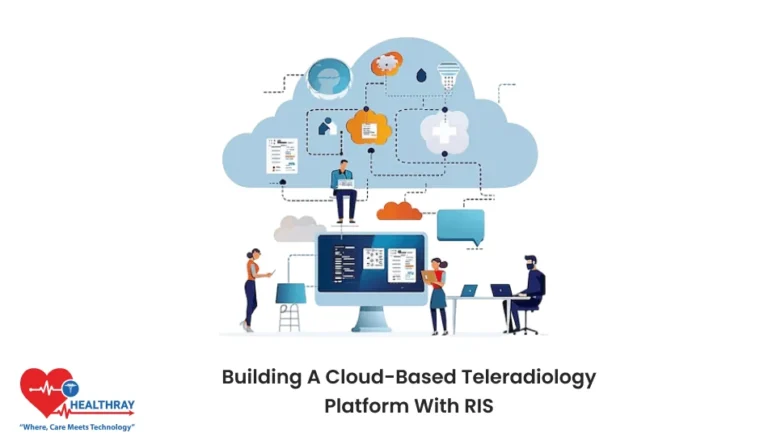
Simultaneously, numerous organizations already discuss cloud migration for RIS as a form of modernization. Custom development reinforces that path by making sure that new systems adapt in line with clinical requirements rather than tie up teams in atrophic designs. Above all, doctors expect software to work with them, not against them.
The Real Problem With One-Size-Fits-All RIS Platforms
The popular RIS solutions have general functionality. Nonetheless, they tend to create friction and not clarity. Features accumulate, processes are strained and employees develop workarounds in order to keep things running.
As a matter of fact, generic systems are problematic as they presuppose homogenous actions of departments. Imaging teams do not work in that manner. Cases of emergency have a different course of action compared to scheduled studies. Images are interpreted differently by specialists, as compared to general radiologists. These differences matter.
Custom RIS development is the solution to this problem that eliminates unnecessary complexity and returns power to clinical teams.
 NOTE
NOTE
Custom RIS Development Starts With Workflow, Not Features
Templates do not form the basis of the custom radiology information system but observation. The teams are mapping the flow of order of work prior to a single line of code being written. That would be a different approach.
Designing Around How Radiologists Actually Work
The customization of radiology workflow eliminates processes that delay clinicians. Reporting is congruent with reading habits. Scheduling is a manifestation of actual constraints. Consequently, the adoption is enhanced naturally.
The custom RIS development deals with:
- Radiologist manner of dictating and reading studies.
- The schedulers deal with conflicting priorities.
- The performance monitoring by administrators.
It is due to this fact that the clinicians do not waste much time on navigating systems and spend the majority of their time on the interpretation of the images. In case users require training to do very simple tasks, the design has failed to consider the workflow.
Custom Radiology Information System Built for Your Clinical Model
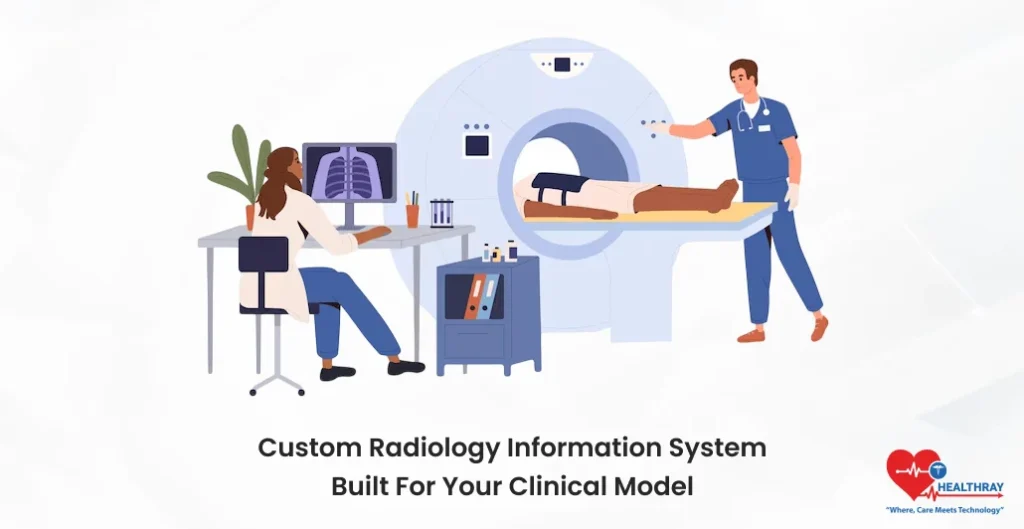
A custom radiology information system is an expression of the manner in which an organization provides care and not an imposition of a specific model. Hospitals deal with large scale complexity. A clinic is concerned with speed and coordination. Experts need precision and flexibility.
This diversity is supported by the development of RIS custom RISs that enable:
- Radiologist, technician and staff role-based interfaces.
- Modality or specialty variations in workflow.
- Incremental modifications that do not involve the entire system.
With time, a custom radiology information system evolves with the clinical practice rather than becoming obsolete.
Custom RIS Software That Evolves With Your Organization
There is a dynamic nature of the health care setting. Volumes fluctuate. Regulations evolve. Technology advances. This fact is taken into consideration by the design of custom RIS software.
Scaling Without Rebuilding or Replacing Systems
Instead of rebuilding platforms every few years, custom RIS development supports modular growth. New capabilities integrate smoothly while existing workflows remain stable.
This is flexible and would be compatible with a cloud radiology information system strategy, in which scalability is important but control remains more important. Teams gain the ability to expand services without disrupting daily operations.
RIS for Diagnostic Imaging Center Operations and Growth
The large-volume setting requires accuracy and expediency. RIS for diagnostic imaging center should be able to manage the throughput without causing any bottlenecks. That is possible through custom development.
Development of custom RIS enhances the functioning of an imaging center by:
- Maximizing scheduling of large numbers of patients.
- Facilitating the reporting processes.
- Enhancing the communication with referring physicians.
In the long run, these efficiencies help facilitate quicker turnaround of imaging and better referral relations. Imaging centers also become consistent and not inflexible.
Integration Is Where Custom RIS Development Proves Its Value
Integration will either result in systems working together or friction. A custom radiology information system is built on integration rather than a post-facto concept.
PACS, EHR, and DICOM Done the Right Way
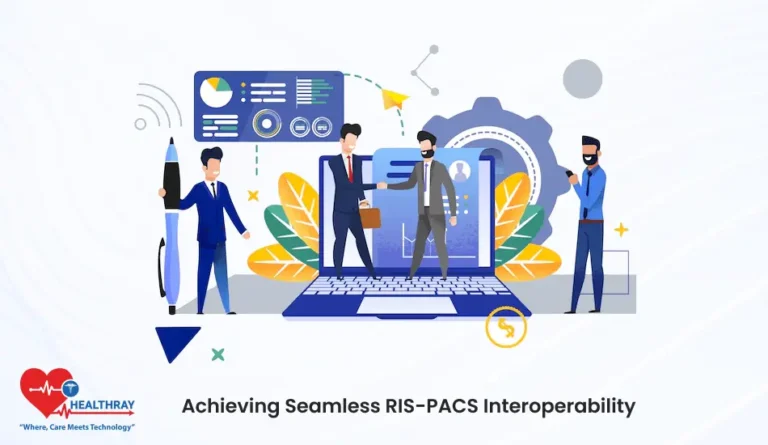
RIS PACS integration and RIS EHR integration are effective to guarantee the absence of data redundancy. All the radiologists can get everything under a single roof. Clinicians are promptly informed of the reports.
A RIS that is DICOM compliant will be interoperable between vendors and modalities. Custom DICOM integration services based on specific imaging settings can also be done through custom builds.
Additionally, data insights from predictive analytics in radiology help teams anticipate demand and plan resources more effectively.
Built In Security and Compliance
Security concerns often surface early in any technology discussion. With custom RIS development, those concerns shape the architecture from day one. Teams do not have to add a level of protection later on in the system, but rather create a system with protection at the core, access control, and audit preparedness.
A HIPAA compliant RIS keeps the condition of patient data secure even in the workflows. The access levels have real roles as opposed to generic permissions. As a result, clinicians see what they need, while sensitive data stays restricted.
In addition, secure RIS software minimizes risk because of encryption, surveillance and regulated integrations. When systems follow compliance standards by design, audits feel routine rather than disruptive. This trust is important to hospitals and clinics dealing with regulatory pressure.
Performance Outcomes That Matter to Imaging Teams
Technology is not important unless it enhances work on a daily basis. Personalised RIS development is concerned with the outcomes clinicians experience each shift, rather than theoretical technical benefits.
Some of the areas that imaging teams find value in include:
- Dealer access to studies and reporting faster.
- Less lag in the system at the busiest times.
- Better inter-departmental communication.
These advancements will result in increased turnaround of imaging and this in turn will influence patient satisfaction and clinician trust. Over time, consistent performance strengthens confidence in the system.
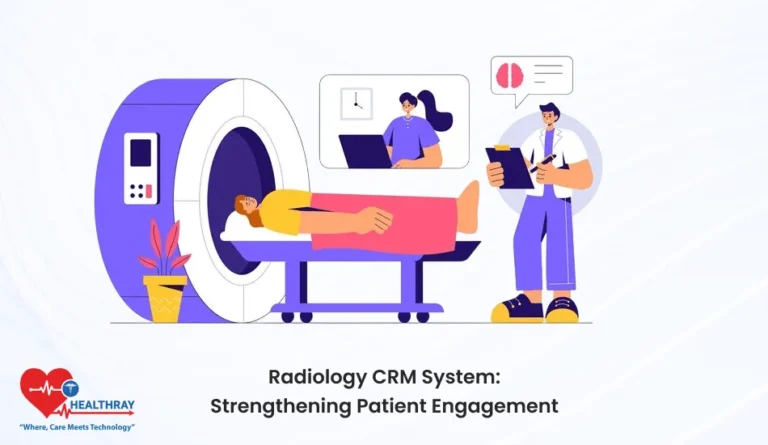
Additionally, custom RIS development supports advanced capabilities like AI chatbots for radiology, which assist with scheduling queries, report status updates, and routine communication. These tools reduce administrative load without disrupting clinical focus.
 PRO TIP
When Custom RIS Development Makes More Sense Than Buying Off-the-Shelf
Not every organization needs a custom platform. Nevertheless, when the complexity grows, then the custom radiology information system is the correct option.
It makes sense when:
- There are considerable differences between workflows depending on the specialty or modality.
- Plans of growth involve new destinations or services.
- Integration needs are more than standard set-ups.
Ready-available systems are applicable in homogenous environments. This is in contrast to the nuance and change of custom RIS development. Organizations do not always have to work around it, and regain some control in the evolution of systems. Over time, it is usually more cost-effective to develop a certain custom compared to replacement.
Ready-to-go RIS platforms are effective in foreseeable settings. Nevertheless, most imaging teams do not work in such a manner. The complexity creeps in the background and with time, common software begins to appear like a constraint and not the answer. This is normally when bespoke RIS development comes into the picture.
A more custom development of RIS is more logical in cases where the workflow in different departments or specialties is different. An example is the emergency imaging, outpatient diagnostics and specialty clinics that tend to have entirely different rhythms of operation. A single rigid workflow rarely supports all of them equally well. Customization in such instances brings a balance rather than compelling compromise.
The other important aspect is the degree of integration. Standard RIS platforms support common connections, yet they struggle when organizations need tighter alignment with existing systems. In instances where imaging teams rely on a high level of coordination with PACS and EHR, a tailored RIS development eliminates friction and manual workarounds.
Growth plans also influence this decision. Organizations expanding services, locations, or modalities often outgrow off-the-shelf tools faster than expected. Incremental RIS development assists in avoiding repackaged system changes. Such flexibility will save time, cost and disruption in the long term.
It is often most appropriate to develop custom RIS when:
- Workflows are either specialty or imaging based.
- Standard configurations are not the limits of integration requirements.
- Scalability in the long term is more important than the speed of short-term setups.
- Clinician adoption depends on workflow familiarity
All things considered, off-the-shelf systems aim for broad coverage. Custom RIS development focuses on precision. Customization ceases to be a choice and becomes a strategy when imaging operations require alignment and not adjustment.
Why Healthray Takes a Different Approach to Custom RIS Development
Healthray takes a clinical-first approach towards its own custom RIS development. The team concentrates on getting knowledge of workflows and then offers solutions. That will make the systems representative of how imaging teams operate.
As a healthcare software development firm, Healthray develops platforms that are compatible with the pre-existing environments. Focus is maintained on usability, compliance, and long-term flexibility but not the short term features.
Healthray also can serve high-level integration requirements, such as analytics, automation without overwhelming the users. The outcome is a collaborative experience as opposed to a transaction.
Learn more: Automating Radiology Workflows with RIS Software
Conclusion
Radiology teams are under constant pressure to provide accuracy, speed and reliability. Custom RIS development is the solution to that challenge, which is harmonizing technology with actual clinical requirements rather than creating compromise.
A custom RIS software intelligently streamlines the work processes, enhances security and aids in expansion. Clinicians acquire the tools that can be updated according to the changes of care models. The leadership feels secure of long term stability.
Organizations that invest now position themselves for resilience and innovation. If you want to explore what that could look like for your imaging environment, you can book a free demo and see the approach in action.