

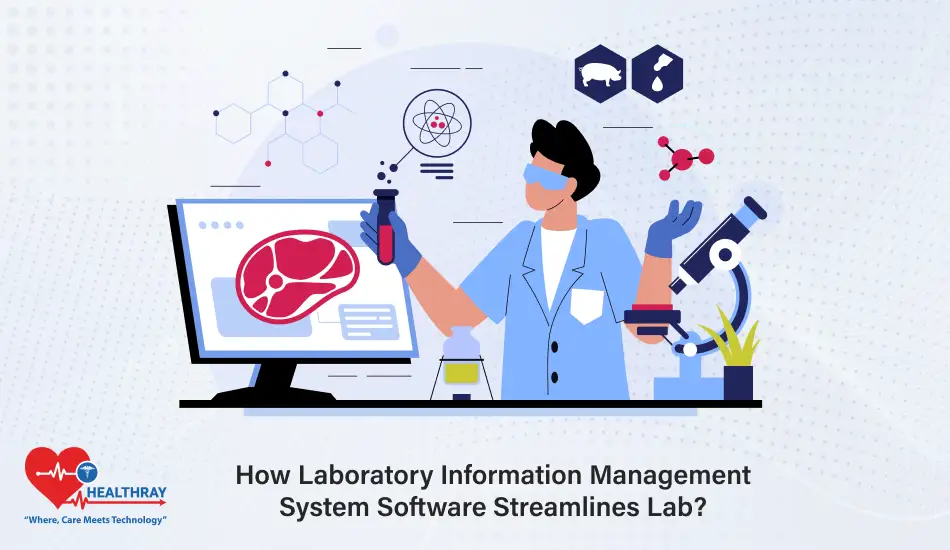
Managing a laboratory is juggling various functions-from tracking samples to analyzing data, while ensuring compliance with stringent industry standards. Under a facility without the appropriate tools, these challenges become unbearable. Laboratory Information Management System (LIMS) software is here to change this. It offers labs the ability to automate processes, centralize data, and streamline workflows.
This system offers specific advantages unique to lab managers, researchers, healthcare professionals, and even software developers who create solutions for laboratories. Come, let’s dive into how the Laboratory Information Management System simplifies operations for each role and why it’s an indispensable part of modern laboratories.
What is the Laboratory Information Management System (LIMS)?
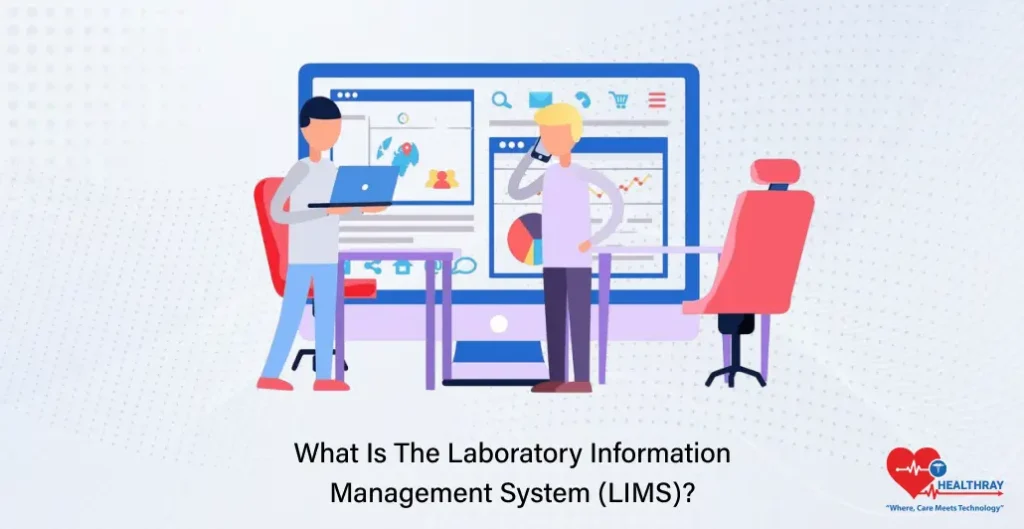
Laboratory Information Management System (LIMS) is specialized software that helps scientists streamline their day-to-day laboratory functions. It acts as a center point for sample tracking, data handling, and workflow automation. From the time the sample is logged in to the time it generates its comprehensive reports, LIMS eliminates manual processes and reduces human error.
LIMS is more than sample tracking; it also incorporates a sea change in laboratory operation. A versatile LIMS can rebrand the scope of management of test result management, lab instrument monitoring as well as compliance with statutory regulations. Streamlining laboratory operations helps labs concentrate on core functions: performing experiments, analyzing data, or offering accurate diagnostics.
Key features of LIMS include:
- Sample Management: Track an entire sample lifecycle from collection to disposal.
- Data Integration: Combine data from many instruments and systems in one location.
- Workflow Automation: Automate repetitive tasks like test schedules or generating reports.
- Compliance support: Ensures that labs comply with industry regulations such as ISO 17025 or HIPAA.
This potential benefit increases as the laboratory expands operations or handles larger data volumes, with few organizations seeking accuracy and cleanliness actually considering LIMS as excessive but rather essential.
General Challenges in Laboratory Management
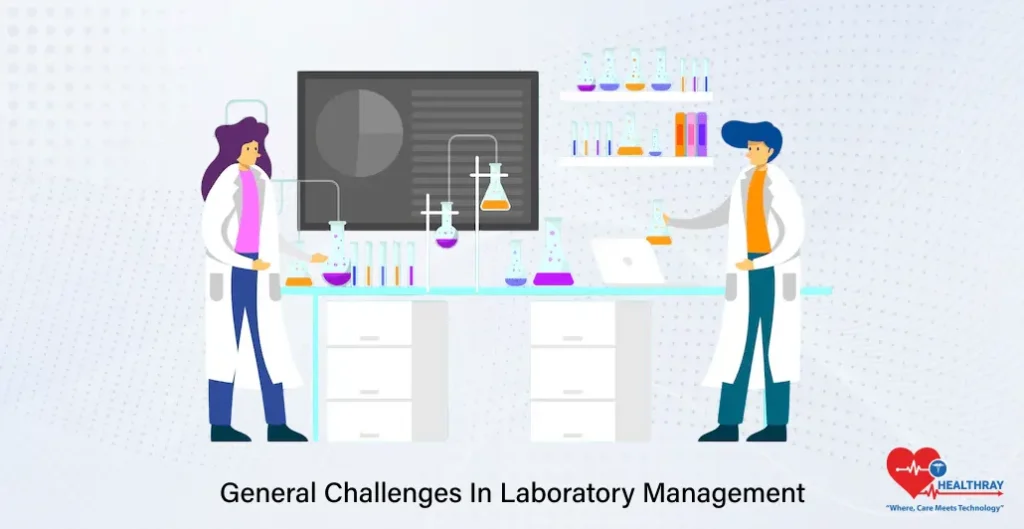
To be a laboratory manager doesn’t mean to be a scientist. It takes the maneuvers of overall operations to keep things flowing, enunciated data, and fit into regulatory control. Those challenges differ as those hurdles are going to change with the focus of the laboratory. However, there are common problems unrelated to the industry.
Data Overload
All modern laboratories are busy with loads of data in each modern day. Handling data manually can invite mistakes, misplacement of files, or inconsistencies. Without a centralized system, there soon becomes a bottleneck in accessing the data for fast analysis.
Manual Errors
Sample labeling, report generation-all manual operations can have mistakes. A small, minimal error may cascade into incorrect results, delays, or even regulatory problems.
Compliance Complexities
There are strict standards in industries, like GLP or ISO 17025 or FDA guidelines, when it comes to laboratory compliance. Tracking compliance by manual means is just time-consuming and risks not being fully conformed to if something gets overlooked.
Inefficient Workflows
Disconnected systems often lead to inefficiencies in the laboratory due to the age at which they were developed. Poor coordination among departments naturally leads to delayed results, thus incurring higher costs.
Difficulty in Collaboration
Teamwork becomes important in multidisciplinary labs. But then, shared findings or even data samples become a challenge in a geographic remote team that has no common system.
These are the top issues for which the labs should have a solid system. Not just addressing these problems, but also enhancing the productivity of the lab; LIMS software comes into this gap and provides automation coupled with integration that help clear such processes.
Benefits of Laboratory Informatics Software for Different Stakeholders
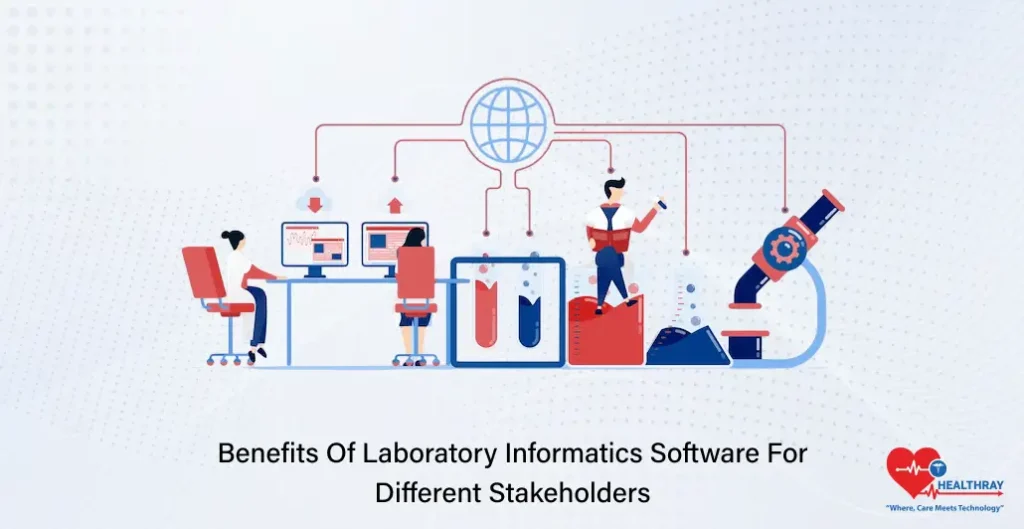
Laboratory Information Management System (LIMS) does not just help in improving the efficiency of the lab. Each individual involved will also gain value. Be part of operations management, researching, or working with healthcare, or creating lab solutions, and a lab information management system will indeed create value to suit those needs.
For Lab Managers
The multiple hats worn by lab managers range from direct supervision of operations to regulatory compliance. Tasks such as these get simplified with the help of LIMS:
- Centralized Oversight: Provides total real-time visibility into sample status, workflows, and performance of instruments.
- Automated Reporting: Reports can easily get generated with a few clicks instead of taking an entire day from manual work.
- Compliance Tracking: Compliance with all regulatory requirements is monitored, so labs are always audit ready.
This gives a freedom of mind to lab managers who can be more inclined toward putting a constructive effort toward improving lab efficiency, rather than getting bogged down by routine tasks.
For Researchers
Non-research activities slow progress for researchers. Conservatively, LIMS helps repurpose this by:
- Streamlined Data Management: Research data is stored in and organized in the same area, which also makes it easy to retrieve and analyze.
- Better Collaboration: This includes facilitating data sharing between teams, as well as speeding up research outcomes.
- Workflow Automation: Improving the management of repetitive tasks such as sample labeling and tracking makes it possible to afford more time to experimentation.
Researchers end up experiencing a smooth approach to focus more on discoveries rather than involve administrative work.
For Healthcare Professionals
Accuracy and speed become more critical in the healthcare setting. Hence, the following are ways through which LIMS can assist healthcare professionals:
- Patient Sample Tracking: Both manages patient information as to sample identification and removes mistakes.
- Shortened Turnaround (Laboratories): As automated processes deliver test results speedily, they derive benefits from this.
- Compliance with Regulations: Ensures that patient data is well and securely handled with all healthcare standards such as HIPAA.
LIMS directly brings benefits by reducing delays and mistakes in improving patient outcomes.
For Software Developers
LIMS indeed speaks for itself to the software developers involved in labs, flexibility, and integration capacity:
- Flexible Solutions: Gives the possibility of modifying the software in accordance to the specific needs of the laboratory.
- Enterprise Integration: Forms seamless connectivity with instruments along with legacy systems and third-party tools to create a truly unified system.
- Scalability: Adapts to the laboratory’s expansion by growing with increasing amounts and complicated data.
Developers can thus give laboratories modern, future-ready solutions that change along with their needs.
LIMS is not a one-size-fits-all solution; it’s a flexible tool adapted to the specific problems of its users, giving every user as much benefit as possible.
How Lab Information Management Systems (LIMS) Simplify Lab Operations?
LIMS is one form of the information management systems that really signifies an order amid the chaos in the laboratory activities. It undergoes the digitization of its workflows and time-consuming repetitive tasks while erasing inefficiencies that will normally harm lab performance. Here is what it does:
Automating mundane tasks.
Logging samples, scheduling tests, and updating records can take considerable time in every lab. This LIMS automation frees time for lab staff to concentrate on more important aspects. For example:
- Receiving samples; samples are automatically logged into the system when they arrive.
- Scheduling and tracking test assignments are done in an unattended way.
- Real-time alerts for delays or bottlenecks, including those who notice it, are sent directly to staff members.
Reduction of Human Error
Collection of errors at the point of record entry or sample-labelling will destroy results and waste money. LIMS antivirus technology reduces human errors by barcode scanning and automated tracking, thus achieving the result of:
- Identifying a sample accurately during its life.
- Consistent use of data entry and reporting.
- Greater reliability of test results and audits.
Enhanced Data Accessibility
LIMS should use a central system to store all data in a lab-scalable system usually through cloud platforms. That allows:
A quicker historical data acquisition for its survey or compliance processing.
Real-time updating of each team in order that all are kept on the latest information.
Remote access by staff or collaborators working off-site.
Integration with instruments and systems
Modern laboratories include various tools and software. As a result, LIMS acts as a bridge to automatically bring together these devices into a single operation. Example:
Automatic import of data from lab instruments.
Compatible with enterprise software such as ERP systems.
Unified dashboards to keep track of multiple workflows.
Compliant Support for Audits
It is easy to comply with internationally set standards through details and audit trails kept by LIMS. LIMS would eventually ensure that labs conform to the following standards without complication:
- ISO 17025 for testing and calibration.
- FDA 21 CFR Part 11 for electronic records and signatures.
- HIPAA patient data secured for healthcare labs.
Real-Time Status and Reporting
Moreover, LIMS puts laboratory managers in a position to constantly track the sample status and instrument performance or workflow progress. In addition to this, the software provides automatic reporting tools for easier preparation of comprehensive overviews to stakeholders or regulators.
LIMS manages all of those fragmented processes of your lab into an integrated, effective, cohesive system. By eliminating bottlenecks, and promoting accuracy, it helps labs reach their objectives faster and requires fewer resources.
What to Look for in LIMS Software
The right Laboratory Information Management System (LIMS) can change the way a laboratory works. Not all LIMS are created equal, however, making it necessary to identify the key features relevant to the needs of your lab. Here are features to prioritize:
User-friendly Interface
A LIMS should be simple and intuitive enough for use by even the most technically challenged individuals. Look for:
An uncluttered dashboard which gives an overview of key metrics and workflows at a glance;
Navigation is as simple as possible in order to reduce how much training time new users need.
Customization and Scalability
Every lab is different from the other; therefore, the most efficient LIMS will be flexible to all those differences:
- Customizable workflows should be matched with the specific lab process.
- Scalability will ensure increasing data volumes as the lab grows.
Integration with Instruments and Systems
The most robust lab information management system (LIMS) is one that will seamlessly connect with the instruments and software you already have.
Check for these:
- Capturing data automatically from lab instruments such as spectrometers or chromatographs.
- Enterprise systems such as ERP or CRM platform fields;
- API is available for further customization and integrations by other developers.
Workflow Automation
Has to be automation in all good LIMS. See to it that the software can:
- Assign and track tasks automatically
- Display alerts on delay or errors.
- Automatic reports and compliance documents.
Compliance with Industry Standards
Regulatory compliance does not have to be negotiated in labs. A good LIMS makes compliance automatic by:
- Provides audit trail and security on data for ISO, FDA, or HIPAA compliance.
- Includes features for validation reports and documentation.
Cloud Accessibility
There is a growing trend towards cloud-based LIMSs because of their convenience, scalability to accommodate changes in how a lab operates, and their other features. Some benefits would be:
- Access remotely by staff or collaborators.
- Automatic software and security patch updates.
- Less dependence on on-premise servers. .
Data Security
The laboratory’s data is highly classified; hence, it should be tampered with very carefully. The LIMS would include the following features:
- Data Security Storage and Transfer: includes Secure End-to-End Encryption.
- Role-based access to ensure only authorized persons can view or edit data.
- Regular backups to guard against data loss.
Advanced Reporting and Analyses
The ability to generate insightful reports can save labs considerable time and effort. Consider features like:
- Customizable reports tailored to your lab’s KPIs.
- Real-time data visualization for better decision-making.
- Pre-built templates for compliance and audit purposes.
When you have the right LIMS in place, you know your lab is going to run well and remain ahead as everything moves increasingly toward a data-centric world. Investing in such features in a LIMS will help save time, reduce costs, and improve performance across the board in the lab.
In-a-real-world-example elucidates the functionality of LIMS
A laboratory information management system (LIMS) is much more than a theoretical solution; it is a workable tool that is forever changing the lives of laboratories in various industries. Following are a few real-life examples in which the use of LIMS has promoted efficiency and accuracy in laboratories.
A Healthcare Lab Speeds Up Patient Diagnosis
A diagnostic laboratory processing thousands of patient samples daily adopted a cloud-based LIMS. The outcomes were as follows:
Faster turnaround Time: Automated workflows helped reduce the time taken to log, test and report results;
Error Reduction: Barcode tracking ensured every sample was accurately identified, thus eliminating mislabeled specimens;
Regulatory Compliance: The system maintained detailed audit trails to keep the lab compliant with HIPAA and other healthcare regulations.
With these improvements, the lab not only increased the number of patients it handled but also increased the accuracy of its diagnostic reports.
A Research Lab with a Collaborative Approach to Data
A pharmaceutical research laboratory, with a focus on drug development, needed a means to manage and share data among its many teams. After adopting a LIMS, they experienced:
- Centralized Data Storage- All experiment results were located in one place, providing easy tracking.
- Collaborative Tools- Researchers from different departments could work in real-time sharing data and analysis.
- Time saved- Automated data collection tools allowed researchers to focus on important experiments.
With the LIMS, faster insights translated into faster drug development timelines.
A Food Testing Lab Ensures Quality Control
A lab specializing in food safety and quality control was struggling with tracking sample lifecycles and meeting strict industry standards. Implementing a LIMS resulted in:
Lifecycle Tracking: From receiving samples to issuing reports, the system tracked every step with precision.
Compliance Documentation: Automatically generated reports ensured the lab met ISO 17025 requirements.
Improved Efficiency: Automation reduced the time spent on repetitive tasks, increasing the lab’s overall productivity.
With these implementations, the lab achieved better compliance while scaling its operations to meet its growing client demands.
A Biotech Lab that Integrates Instruments for Smooth Operations
Equipping its vast lab with genetic test needs and a system integration to interface with myriad lab instruments-the works. This integration brings LIMS-and with that:
- Two thumbs up for Instrument Integration: LIMS automatically took laboratory data from any sequencer and analyzer.
- Two thumbs up for Error-Free Reporting: It took away the chance of entering erroneous judgment by manual data entry via tools of automated data logging.
- Two thumbs up to Scalable LIMS: The growth of LIMS-side was such that it did away with the manual intervention of entering huge volumes of sample data.
This development allowed the firm to concentrate on innovation instead of logistical problems.
The above examples illustrate how LIMS far beyond enhances laboratory operations, from enhancing productivity to being compliant with regulations. Whatever the industry, an appropriate LIMS system can create wonders for laboratory operations.
Challenges and Best Practices of Implementation of an LIMS
Bringing LIMS to life could alter lab operations significantly, yet it comes with its fair share of challenges. Awareness of the challenges and adherence to the best practices will ensure a smoother transition while maximizing the benefit from your LIMS investment.
Challenges in Implementing LIMS
High Initial Costs
The high initial costs associated with purchasing and deployment of a LIMS can deter some from that project, especially small laboratories with limited budgets-the price affects mostly the hardware, software, and licensing fees.
Complex Integration
Integration of the LIMS with an existing instrument and legacy systems can also be technically and time-consumingly daunting.
Resistance to change
Laboratory personnel may refuse to change from manual processes to a new automated one. Such resistance will only delay acceptance and efficiency.
Customization needs
Laboratory workflows are often somewhat unique and so would require heavy customization, each of which increases its complexity and time of implementation.
Training needs
Somehow in larger organizations, training all personnel on how to use the new lab system can become an overwhelming task.
Best practices for successful LIMS implementations
Clearly Define the Objectives.
We want the LIMS to solve specific problems. What are they? Automating workflows? Reducing errors? Improving compliance?
Choosing the Right LIMS Vendor
Select a vendor with a proven track record, strong customer support, and experience in your industry.
Involve Stakeholders Early
Invite lab managers, researchers, and IT teams to the table at the planning stage to ensure their requirements are duly represented.
Integration Planning
Be clear about how the LIMS will communicate with the existing instruments and software. Ensure interfacing capabilities, and allow for some time for testing.
Proper Training
Ensure the training sessions for all users are rolled out just before go-live. Create useful good user guides and back that up with readily available after-use support.
Start small
Use a staged approach to implementation. The first would be a pilot of the system to identify problems, while the second would be a complete rollout of the system.
Focus on Data Migration
Clean and organize current data before the migration; the goal here is to prevent corruption or loss of important information.
Monitor and Optimize
After the actual implementation, keep monitoring data against key performance metrics set to evaluate the success of the system. Adjust wherever needed to optimize workflows.
Conclusion
Remember, the increasing demands for accuracy, efficiency, and compliance burden today’s laboratories. A Laboratory Information Management System (LIMS) integrated with Hospital Management System has ceased to become a luxury and has become an important component to answer these demands. It has revolutionized lab processes: The LIMS automates work, centralizes data, and allows for seamless integration into existing systems.
For lab managers, LIMS is a tool that provides oversight and reporting capabilities to facilitate data-driven management. The researcher benefits immensely from a streamlined version for data management, enabling easy collaboration while healthcare professionals get faster diagnostics and better patient care. Embedded also in the LIMS offered by modern vendors are maintenance opportunities for customization and scalability that a software programmer cannot afford to miss.
LIMS implementation, after all, should be planned with care, while the right use of integration and training challenges along with following all best practices will help the successful lab maximize the benefits of their hospital management system investment.
If you feel ready to take your lab’s operations to the next level, consider looking for a LIMS that is tailored to your specific needs. The payoffs include fortifications of accuracy, compliance, and productivity, which speak of a significant step towards the future-proofing of your lab.