



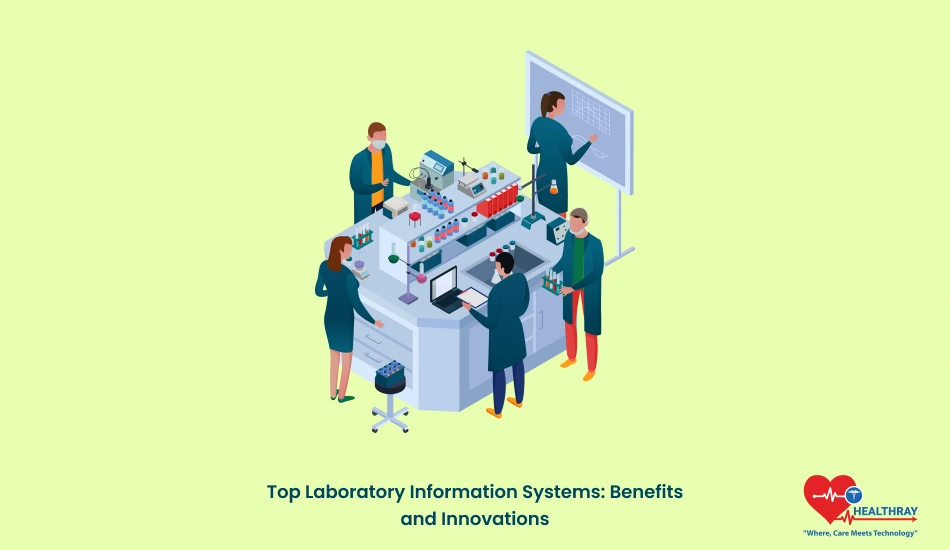
A laboratory information system is important and beneficial in the healthcare industry, especially among complicated and data-hungry laboratories. These are process-automating systems that will help manage patient data and conform to standards. As for LIS, over the years, the systems have had several advancements due to integrating inventions in technology. These improvements bring value to healthcare administrators, lab managers, and decision-makers in health IT alike.
The article examines the best laboratory information systems in the market today, what benefits accrue from LIS, and discusses current trends in the market. This resource is bound to be helpful for anyone seeking to optimize performance in the laboratory or create alignment with technological trends-this is knowledge that will definitely help make good decisions.
Understanding Laboratory Information Systems
Laboratory Information Systems (LIS) are those critical modern healthcare systems capable of automating laboratory and managing laboratory workflows. This system mainly concerns the management of patient data, test results, inventory control, and writing reports. Without being said, the efficiency and accuracy it introduces to laboratory operations make it integral to any healthcare environment.
Basic Functions of LIS
Among other things, LIS majorly deals with:
- Data Management: The process of storing, retrieving and updating patient and test related data.
- Automation of Workflow: Automation of standard operations, such as sample tracking and result reporting.
- Regulatory Compliance: The assurance of the adherence to medical regulations, such as HIPAA and CLIA.
- Integration: Link with Electronic Health Records (EHR) and other hospital systems in order to share data.
LIS versus LIMS: What Is the Difference?
LIS: often confused with Laboratory Information Management Systems (LIMS). Though similar, the two terms are not synonymous in application:
LIMS: Primarily patient-centric applications in clinical settings, such as hospitals and diagnostic labs.
Whereas the focus of LIMS is relatively more research-based since it is commonly used in pharmaceutical and environmental testing industries, it then manages samples and experiments rather than patient care.
This knowledge will help the decision-maker make the right choice of the right system to use in the organization depending on its needs.
Why Do Laboratories Require Best Laboratory Information System Software?
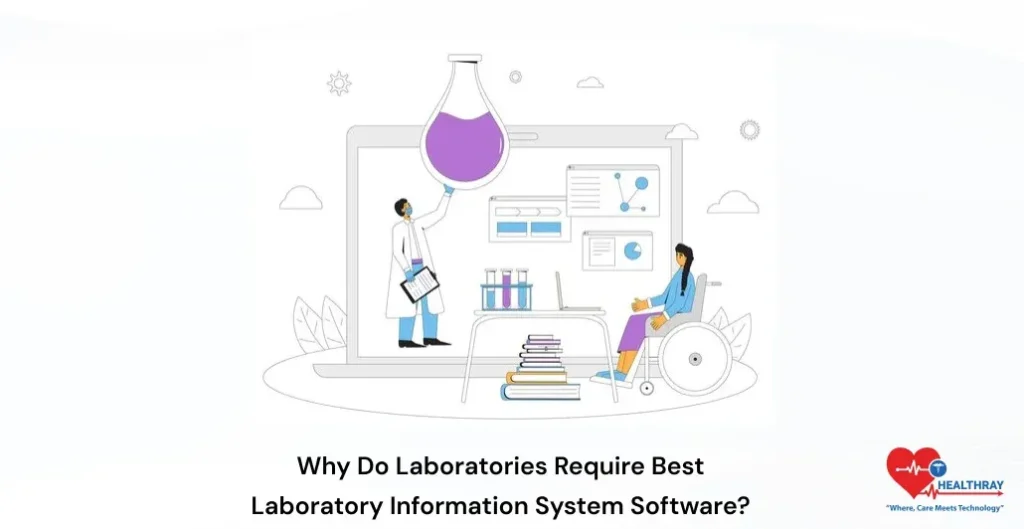
An LIS is necessary as the increasing demand for accuracy, speed, and effectiveness, in medical data handling, mounts. With workloads rising in healthcare labs, it’s just no longer reasonable to operate manually. Currently, an LIS is said to reduce human error and have a quick turnaround time and the very reachable memories that offend patient decisions.
Top Laboratory Information Systems Platforms in the Year 2026
Healthcare laboratories can choose not only solutions with powerful features and reliability but also innovative offerings when it comes to their selection of Laboratory Information Systems (LIS). Here are three companies noted for providing state-of-the-art LIS solutions for the healthcare laboratory sector:
1. Healthray Technologies
With easy and scalable LIS solutions, Healthray Technologies caters specifically to healthcare laboratories that need to make improvements to operational efficiency and data accuracy.
Key Features:
- Real Time Patient Data Management.
- Advanced Analytics for Decision-Making Aid.
- Seamless EHR and Hospital Systems Integration
Benefits:
- Healthray Technologies’ LIS streamlines lab processes, minimizes human error, and ensures compliance with healthcare regulations.
- A system excellent for mid-to-large laboratories looking for customizable solutions.
2. Bigscal Technologies
Bigscal Technologies offers an all-in-one LIS design that fits a clinical as well as diagnostic lab. Their system is built exactly on the premise of scalability, thus an excellent consideration for laboratories with future expansion plans.
Key Features:
- Customizable dashboards for tracking lab operations.
- Cloud-based data storage, enabling same-time access and security.
- AI-powered modules for predictive analytics.
Benefits:
- The versatility of Bigscal’s LIS makes it adjustable to varying lab needs.
- The cloud-based architecture of data ensures security while providing room for remote access, something ever-important in present healthcare settings.
3. EMRSoftware
An LIS solution by EMRSoftware integrates laboratory functions with wider healthcare IT needs. Their platform is designed to work internally and be user-friendly.
Key Features:
- Integration with the entire patient’s records.
- Automated reporting and dissemination of results.
- Regulatory compliance tools and audit management
Benefits:
- EMRSoftware’s LIS focuses on interoperability; thus, it ensures smooth communication between labs and other healthcare departments.
- This is a typical solution for laboratories with complex workflows but who still want to maintain quality in patient care.
- These strengths of the companies featured in this article make up the reason each of them positions itself as a top player in the LIS market.
- However, depending on the specific needs of your lab-in size, costs, and features; the right system will be that which fits best.
Critical Laboratory Information System Advantages
Laboratory Information Systems (LIS) are by no means a mere software program, but they have played a significant role in introducing a new work culture in the laboratories. The benefits that the decision-makers in the healthcare sector, lab managers, and IT decision-makers are likely to get when they implement an LIS are listed below.
| ADVANTAGES | WHAT IT MEANS FOR YOUR LAB | REAL-WORLD EXAMPLE | OPERATIONAL IMPACT |
| BETTER DATA MANAGEMENT | Through an LIS, a single and centralized patient and lab database is formed, which simplifies access, sharing, and management of information. It minimizes the use of manual records and enhances accuracy of data. | Instead of taking seconds to look through the paper files to get the previous test results of a patient, a technician can access the results in seconds. | Swift clinical decision-making and less data-entry errors. |
| WORKFLOW EFFICIENCY | Automation simplifies the process of tracking of samples, test processing and reporting of results. Employees waste less time doing the same duties and more time doing an important task. | There is a fast turnaround in lab results and this enables the lab to focus on increasing the number of tests that the lab can process on a daily basis. | Better turnaround time and increased productivity. |
| REGULATORY COMPLIANCE | An LIS also keeps an adequate documentation, audit trail, and integrity of records along with standards like HIPAA and CLIA. | On a check-up, the lab produces the necessary compliance reports prior to the system. | Less audit pressure and enhanced financial compliance. |
| STANDARDIZATION WITH OTHER SYSTEMS | Modern LIS systems are well integrated with EHRs and hospital management systems, enhancing the communication among departments. | The results of the tests are automatically updated in the EHR of the patient without the need to transfer to the manual data. | Improved coordination of care and decreased administrative slackness. |
| COST EFFECTIVENESS | Automation reduces manual labor, prevents duplicate testing, and minimizes errors that lead to extra expenses. | The lab does not repeat tests due to previous errors of data-entry. | Reduced operation expenses and high financial efficiency. |
| DATA SECURITY AND PRIVACY | An LIS safeguards confidential patient data by encryption and access privileges and regular system upkeep. | Reduced access and secured logins allow no unauthorized people to view patient records. | Better data security and more confidence in patients. |
| SCALABILITY | The system is flexible with the expansion of the lab, either with larger quantities of tests or the introduction of new services. | A laboratory that implements the new genetic testing brings in new workflows and does not displace its current system. | Seamless growth without business interruption. |
By implementing an appropriate laboratory information system software program, laboratories can attain an unmatched efficiency level and accuracy that is impossible to have with conventional methods. This stream of benefits is extended beyond laboratories and creates a positive influence on the outcome of patients and healthcare delivery in general.
Future Trends in Laboratory Information Systems
With advancing technologies, Laboratory Information Systems (LISs) are evolving by the hour to acquire newer capabilities to control lab workings. Here are the future powerful trends that will shape the LIS and what they should expect in the forthcoming years.
AI and Machine Learning
AI and machine learning are increasingly becoming the architectures within which LIS operates, permitting predictive analytics and automation. These technologies assist in laboratories to ascertain trends in test results, refine workflows, and even estimate equipment failure.
Future Impact: AI could assist in the diagnosis process by offering potential conditions based on diagnostic test information and massively reduce time to diagnosis.
Cloud-First LIS Platforms
Unmatched flexibility and scalability are the attributes projected to become the hallmark of cloud-based solutions. These platforms would allow lab operations to retrieve their data from anywhere, making uninterrupted business continuity a resolution.
Future Impact: Cloud LIS will foster global collaboration, facilitating secure data sharing across borders for large scales of research and coordinated responses among laboratories for any pandemic.
Integration with Genomic and Personalized Medicine
Genomics testing and personalized medicine are growing needs for laboratory information systems that are capable of evolving to withstand molecular and genetic complexities. The design of these systems will favor interoperability with genomic testing tools and the delivery of actionable insight.
Future Impact: This type of integration will promote targeted treatments and patient outcomes.
IoT in Laboratories
Smart analyzers and sensors enter the world of LIS from the IoT gadgets, they can do real-time monitoring and data collection, while linking together reduces manual intervention and increases accuracy.
Future Impacts: An IoT-enabled lab will be a quick one; through direct communication with the LIS via its devices, it will be updated immediately.
Mobiles and Wearable Technology
There is increasing demand for LIS to have mobile access. Wearables and smartphones are becoming tools for lab technicians to keep tabs on processes, track samples, and look at results while on the run.
Future Impact: Mobile LIS will enhance the positioning of the lab in workability, even more, remote or in places with resource constraints.
Enhanced Cybersecurity Measures
With the growing digitization of healthcare, data security is now top of the list. Future LISs are expected to implement high-level encryption systems, using blockchain for added security along with Artificial Intelligence to protect patient data.
Future Impact: Laboratories will engender greater trust with its stakeholders as they are secure against evolving cyber threats.
Advanced Interoperability Standards
In the future, LISs will be under high standards of advanced interoperability allowing seamless communication with other health information systems. This way, there will be no data silos evident that will allow streamlined patient care.
Future Impact: The lab would gain greater relevance in healthcare delivery as it shares critical information with clinicians and departments in real time.
Sustainability and Green Technology
Environmental concerns are shaping the LIS solution developments. Energy-saving systems and data centers would be highly preferred.
Future Effect: The laboratories will reduce their carbon footprint and still be able to maintain maximum operation.
Reporting Natural Language Processing (NLP)
The tools of NLP will improve the report delivery, covering complex lab data simplified to actionable insight to the patients and clinicians.
Future Impact: The clear communication with the external stakeholders will be improved, encouraging transparency and patient involvement in labs.
The trends mentioned above assure that LIS will continue playing one of the leading innovative roles in the healthcare industry. Laboratories embracing such innovations will find themselves with enhanced efficiencies and will emerge as leaders in a rapidly emerging and competitive marketplace.
Conclusion
Laboratory Information Systems (LIS) today are rapidly progressing in the health laboratories due to process simplification, enhanced accuracy of operations, and increased patient well-being emphasis. Their LIS offerings are considering the most involved operations that change the way labs used to work with modern healthcare setting innovations, such as AI, cloud space, and IoT.
For healthcare administrators, lab managers, and IT decision makers, the right hospital management system is no longer a luxury, but a must-have. Functionality conception, in its turn, requires efficiency, regulatory compliance and scale-up, which is more highly rated than the start-up cost. In addition, by keeping in touch with the latest trends including the increase of interoperability and of integration with personalized medicine, these labs will be able to keep pace with the forthcoming challenges.