



Introduction
More demands are being raised on laboratories for fast, accurate results, greater data transparency, and strict compliance with regulations. Attempts to balance these needs become difficult, especially in laboratories still operating on manual record systems or fragmented data systems. Laboratory Information Management Systems (LIMS) have come to transform modern labs in ways that simplify dealing with these operational issues.
For lab managers, software developers, and healthcare administrators, the envisioned potential of LIMS is not just another software. It is about envisaging how an integrated laboratory system may optimize day-to-day activities, sample tracking, data retrieval, and data security under compliance. We will present the top 10 benefits of laboratory system implementations in order to depict how LIMS can support and advance lab operations, spur innovations, and improve decision-making processes.
Major Benefits a Laboratory System Presents

Better Data Handling
One of the most significant aspects of any Laboratory Information Management System (LIMS) implementation is that it maximally centralizes and organizes data. This is not the case with traditional lab setups in which data are often scattered in multiple records: from physical logbooks to standalone digital data files. All these make the physical retrieval of information exceedingly time-consuming and highly error-prone. The LIMS creates a centralized environment for interacting and seamless flow of data into one system, thus preventing fragmentation of information.
Via the central management of the data in LIMS, lab managers can thus store, retrieve, and share data easily. One can quickly find any detail for a specific test sample or view earlier test results with a couple of clicks. It is no more about digging through spreadsheets and hard copies. The enhanced data accessibility nurtures inter-departmental collaborations among lab technicians, administrators, and all other stakeholders on the need-to-use basis for real-time and accurate data.
In addition, data integrity is greatly enhanced. Given that data entry and storage options are automated with this system, the risks of data loss or duplication during those procedures are minimized. Furthermore, as the data are being entered, laboratories have constant and real-time updates that enable them to keep records in check, which is important for internal management and compliance reporting.
Good data management translates into well-kept sample information, instruments description, and tracking know-how. Therefore, it nurtures all laboratory subsections to enhance efficient testing and predictive analysis for future inventory. This, consequently, will optimize lab workflow and improve revenue generation through cost reduction.
Enhanced Efficiency and Productivity
Implementation of the Laboratory Information Management System (LIMS) directly impacts lab efficiency and productivity. LIMS takes away lab technicians and managers’ precious time by automating routine tasks to allow them to pay attention to more pressing matters. Common tasks such as data entry, report generation, and sample tracking can be dull and time-consuming if done manually. With LIMS, all these processes are shortened in time and efforts.
LIMS automation shortens the workflows but does not exclude human error. Considering all the mistakes are made in the manual environment, they tend to happen more during hectic lab tempos when samples and data are leveled by staff. With laboratory systems, automated workflows minimize errors which would have otherwise led to costing re-tests or compliance issues, given that data are safe all along.
The laboratory system has varied ways to monitor samples, such as the barcoding system, enter a patient ID number, and client name. Every single time a sample is created, it generates a unique barcode that makes it easier to track information. This adheres to sample protocol results with quality. Workflow automation in laboratories reduces the possible error, streamlining analysis and minimizing employee effort.
The other side is that LIMS addresses laboratories resource management issues. Tracking samples for the progress, making available staff, and using equipment in real time will help managers allocate resources optimally. Laboratory systems will facilitate efficient resource allocation, thus shortening the turnaround period and correspondingly increasing lab productivity.
Regulatory Compliance
Compliance is important for the laboratory operating in highly regulated industries. It has to borrow all these regulatory requirements set by the industry standards and followed by the government. All that is provided for laboratory information management systems (LIMS) to make sure how easy regulatory compliance is. They are collecting data, documents on samples, and reporting samples. Hence, compliance will now be achieved without referring to any manual work for the whole laboratory.
A lab maintains a very detailed audit trail for every action taken within the lab starting right from receiving samples up to the final reporting of test results. This traceability could be very helpful during audit or inspections as it will provide verifiable records demonstrating compliance with the standards such as CLIA, HIPAA, or FDA regulations. The conditions would permit every lab manager or healthcare administrator to know well that every step is documented and combinable into review.
Compliance isn’t just record keeping, but also ensuring consistent quality. The LIMS sets system reminders and mandatory fields for prompters to ensure the protocols are followed. In this way, lab workflows may tend to be similar and in accordance with industry standards, preventing chances of non-compliance as much as possible.
Improved Sample Tracking
Sample plotting and good tracking can be said to be the foundation of any lab, especially in those with high volumes of specimens or very sensitive patient data. Sample tracking is much better in Laboratory Information Management Systems (LIMS) than ever before-with real-time tracing of each segment of its life history, from collection through storage, from test performance to disposal.
Real-time tracking allows lab personnel to know the exact location and status of each sample at any given time. This is especially helpful in busy labs, where handling a large number of samples can lead to confusion or errors. With LIMS, samples are logged into the system with unique identifiers, which greatly reduces the chance of mix-ups. Lab managers can quickly locate specific samples, saving time and reducing the risk of losing important specimens.
Each sample’s journey through the lab is documented in a thorough manner and readily available should compliance efforts require such information. This type of documentation is one of the hallmarks of meeting regulatory requirements and is also useful in audits or quality assurance checks. High dependability in sample tracking by means of LIMS brings a high state of orderliness to laboratory workflows and helps laboratories to meet deadlines and get highly accurate results in a timely manner.
Cost Savings
One of the most significant advantages is the use of laboratory management systems (LIMS) to cut operational costs over time. Investment in a LIMS can appear to be very expensive initially; however, the financial gains over the long haul would dwarf such initial costs. Following the commissioning of laboratory systems, such processes that are straightened out would be automated, causing a reduction in manual errors, thereby improving efficiency overall:
Using LIMS, a laboratory has the potential to reduce labor costs via efficient workflow, allowing lab personnel to concentrate on complicated activities as opposed to having them deal with simple repetitive manual data-entry and sample tracking. Less error means less retesting or correcting of samples, saving significant time and cost. Furthermore, better sample tracking and inventory management lead to significant cost savings by decreasing wastage and unnecessary purchase.
As such, it then becomes even simpler for sample reports to be generated, monitoring an inventory and costing products in laboratories. Tracking reagent, away from stuffing up the ordinary laboratory stockpile instantly, will totally reduce the huge amount of expenses as well. Employ the right protocols at the perfect time. The laboratory system holds the instrument information and takes the necessary action early before any incident occurs.
Undergoing sound and proper implementation of LIMS would optimize the usage of equipment. Maintenance would then be scheduled as required and therefore present status would be monitored to extent value lifecycle while keeping that costly repair or replacement at bay. Eventually, through such competitive advantage, one could have cheaper but more effective lab operation over time and, thus, the return of investment put in a LIMS is practical and measurable.
Scalability and Flexibility
Laboratory Information Management Systems (LIMS) adapt in their flexibility to change and grow with laboratories. It does not matter if the lab expands its scope or increases the volume of samples received, or new testing capabilities are being employed. A well-designed LIMS will surely sustain all those changes by scaling. This is especially practical for labs in some fast-changing disciplines that need to keep up with themselves and grow operations to stay competitive.
Scalability with better customizability is offered by LIMS, which empowers all laboratories to customize the system according to their workflows and requirements. The system can be adjusted as new protocols, instruments, or services are added without having to integrate the entire system entirely. This flexibility lets labs avoid needing to completely adopt new software or methodologies as they try to scale up or down depending on demand.
Scalability facilitates better resource allocation in times of changed performance. As operation increases in the laboratory process, there will also be increased loads of data and samples within the limits of performance. With such flexibility, the laboratory system remains for the long term with the laboratory manager and the healthcare administration, providing room for any possible changes that may occur with operations into the future.
Integrating LIMS with Your Existing Systems
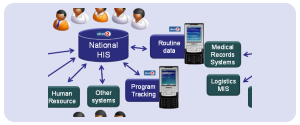
One great advantage that laboratories see in implementing their LIMS is that they can integrate easily with the lab instruments and software that presently exist. Several modern labs use specialized equipment or EHR systems and tools for data analysis; thus, when the LIMS can ‘talk to these systems’ that automatically brings the lab operations much more efficiency and cohesion.
When a LIMS integrates with lab instruments, data from tests and analyses can be directly captured and stored by the LIMS. This saves time and minimizes human errors in data entry, thereby recording test results and sample information accurately. When data flow is this seamless, lab managers and technicians can truly focus on the interpretation of that data, not on entering it.
Your back-end support system is endowed with interconnectivity to multiple healthcare systems, saving inordinate time and shoulder reduction of employee efforts. It simplifies the exchange of documents or other critical information to other care givers or units. Also, in case of new patients, transferring this information to other health departments becomes effortless. Thus, the integrated LIMS system increases the engagement score and operational efficiency.
Integration with EHRs or other healthcare systems is equally beneficial for labs inside healthcare facilities because it makes it easy to share patient data, test results, and reports across departments. Connectivity enables faster decision-making, supports patient care, and improves collaboration between the labs and other healthcare providers. As a central hub connecting all lab-related technologies, laboratory systems ensure streamlined operations and consistency and accessibility of data.
Enhanced Data Security
Data security is a top priority in labs dealing with sensitive patient data or proprietary data for research. LIMS provide further data protection through robust security features aimed at preserving the integrity and confidentiality of data. By centralizing data storage and laying down stringent access controls, LIMS mitigate unauthorized access or breach of data.
LIMS commonly offers role-based access, whereby only authorized personnel can access certain types of data or perform specific actions in the system. This minimizes the possibility of accidental exposure or modification of data, ensuring confidentiality for sensitive data. Most of today´s LIMS also have encryption protocols in place to protect data during transfer and when it is stored, which provides additional protection along the aforementioned pathway.
Another avenue through which LIMS increase the level of data accountability is through the audit trail. All actions from sample logging to data editing are logged, allowing managers to see who accessed or modified data, and when. This can assist not just in regulatory compliance but also acts as a tool for transparency-by ensuring that all data handling is documented and traceable.
Better Decision-Making
Laboratory Information Management Systems (LIMS) empower laboratories with data insights, which help facilitate informed decisions by lab managers and healthcare administrators. By consolidating data from different processes and displaying it in real time, LIMS provide a holistic view of laboratory operations, allowing for better resource allocation, accelerated identification of bottlenecks, and precise forecasting.
Tracking key performance indicators (KPIs) and trends with the help of real-time data analytics found within LIMS are fast becoming necessary in today’s laboratory environment. This may be accomplished, for example, by providing managers with the ability to track turnaround times, error rates, and equipment utilization for samples. Having such information allows for the proactive adjustment of workflows and resource capabilities for a smoother and more efficient laboratory operation.
Strategic planning decisions are also supported by insights from LIMS data. Data that include historical and current data allow labs to pinpoint opportunities for improvement, forecast what will be needed in the future, and back up investments with hard data. The ability to ground decisions in solid data thus leads to more efficient operations and enables labs to keep abreast of a fast-changing industry.
After gathering insights and processing information, assisting to make different types of laboratory decisions such as inventory purchasing, staff recruiting, and when to check laboratory instruments. It also assists to enact optimization strategies around client retention, as this depicts the collective information.
Increased Collaboration and Communication
Laboratory Information Management Systems (LIMS) foster communication and collaboration among teams, including the laboratory and outside departments. Many laboratories require input and coordination among numerous specialists, such as technicians, managers, and healthcare providers. LIMS speeds the connection and working from a single data source for everybody.
With centralized access to data, laboratory staff can easily view updates, monitor sample status, and share data without resorting to emails or manual updates. This way, information becomes available to all, resolving unproductive back-and-forths and any chance of miscommunication, especially in high-stakes environments where timing and accuracy are everything. For laboratories working in healthcare environments, integration with EHRs further assists the flow of communication between lab teams and clinical staff, making important pieces of information accessible for patient care.
This enhanced communication is not limited to internal teams, since LIMS could also promote collaboration with external partners, including research firms, regulatory agencies, and partner labs. Through secure, role-based access, all stakeholders are granted view access to relevant data while guaranteed safety. This is essential, for now, where collaboration is key to innovation and better patient outcomes, and LIMS has tools to further support such transparent and successful collaborative work.
Conclusion
The implementation of a Laboratory Information Management System (LIMS) can completely change lab operations with improved efficiencies, accuracies, and productivity. A well-integrated LIMS provides a strong base for lab managers, software developers, and healthcare administrators to deal with data management, workflow process improvements, compliance, and security of sensitive information. Each one of these benefits through better data management and informed decision-making signifies how LIMS can assist labs in meeting current demands while preparing for the future.
The right LIMS will help labs become better equipped to respond to today’s fast-paced and highly regulated environment. Investing in a Hospital Management System isn’t just an upgrade in technology; it is upgrading lab performance, sustaining quality, and ensuring that each sample, every data point, and associated result are tracked and managed correctly. With LIMS implemented, labs would be free to focus on what matters most: the delivery of accurate, timely reports supporting improved healthcare outcomes and innovative research.