



Summary
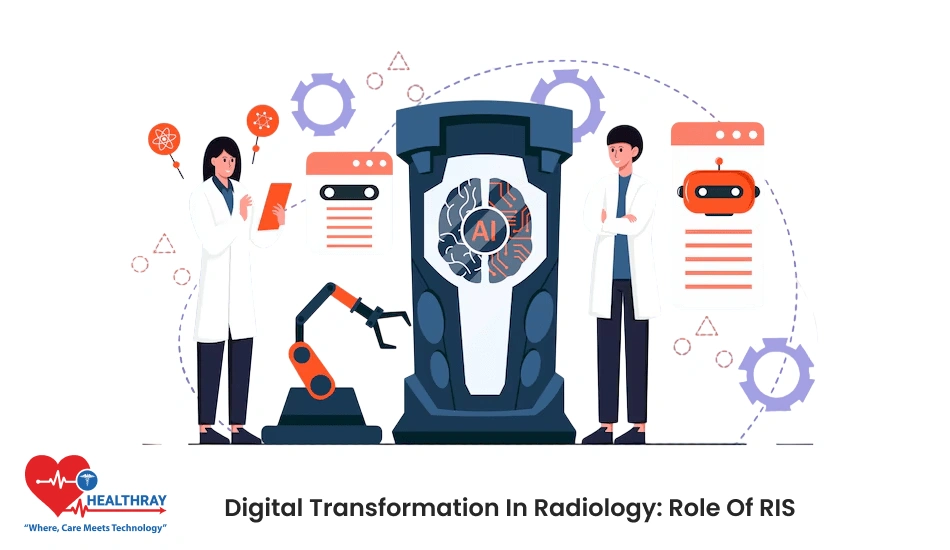
Digital transformation in radiology appears complicated, but its objectives are simple: to make things better. This remarkable simplicity is empowered by the radiology information system. It simplifies scheduling, reporting, and collection of patient data so that there is no uncertainty or ambiguity left. Also, radiologists are no longer picky about images. When they receive the entire clinical context, the decision is fast and accurate. RIS downplays manual follow-ups, delays, or errors.
When the system remains silent, then the radiology department becomes stronger. This is the real meaning of digital transformation-silent efficiency, better care, and sustainable growth. In this blog I will discuss how digital transformation in radiology streamlines the hectic operation of radiology departments. I will also cover how radiologists can strategically use the RIS platform to improve the imaging process. Keep reading!!!
Introduction
The radiology world is transforming deeply. Digital transformation is not a loud revolution; instead, it’s a steady process that makes the daily operations clean ,more accurate and humanized. In the middle of this process is the radiology information system, which not only organizes the data but also transforms the way of thinking. In traditional software, radiology departments relied on paperwork, phone calls and manual coordination.
Now, the radiology information system quietly brings the entire operation into a single digital rhythm. From scheduling to reporting, RIS organizes every step in logical order. Radiologists are no longer picky about images. But they also get the entire patient context, which makes the decision-making simple and honest. Digital transformation in radiology is not just about speed or automation; it signifies better decisions and fewer errors and more trust. Further, when radiologists get the right data at the right time, then technology becomes invisible and care becomes stronger. In the modern radiology ecosystem, a mobile RIS application is just a tool; it’s a backbone that makes the entire medical system silent, reliable aur future-ready.
Digital Transformation In Radiology: Beyond Technology
Digital transformation in radiology is not about installing new software or eliminating paperwork. Further, it is all about shifting mindset. Radiology software makes the entire step from ordering the image to sharing the report simple, fast, and reliable. Additionally, technology here plays a favorable role.
From Fragmented Systems to One Flow
In the traditional system, the radiology department faces challenges with film, manual scheduling and different systems’ working rules. It is extremely stressful to manage each and every department’s rules and regulations independently. However, a cloud radiology information system can help you tackle such chaotic situations. Furthermore, the combination of RIS, PACS, EHR and AI tools creates an end-to-end digital workflow. Also, the data remain unified and do not scatter in different departments. It follows a clear path, which minimizes delays and confusion in the system.
Speed, Accuracy, and Better Decisions
This transformation goal is not just about becoming “paperless.” Further, its real focus is reducing turnaround time, minimising errors and making the decisions data-driven. When radiologists get the right information at the right time, it naturally makes the workflows and practices robust and highly accurate.
RIS as the Digital Backbone
For many hospitals and centers, RIS is the foundation of the entire journey. Further, it unites the entire system and creates disciplines in workflows and gives radiology a coherent and dependable structure. It works silently in the background without creating noise and makes the daily operation smooth and highly intuitive.
 PRO TIP
Digital Transformation In Radiology: From Analog to Fully Digital
The Silent Shift in Radiology
Digital transformation in radiology is not a one-day task. Further, it is a gradual, disciplined shift, a transition journey from analog habits to structured digital workflows. Radiology information system is the backbone of this journey that converts chaos into orderly procedural steps.
Life Before RIS: Paper and Guesswork
Paper requisitions, manual registers or phone calls are regular in analog and semi-digital setups. Additionally, fragmented information leads to delays that are considered normal. Accuracy depends on experience, not on systems.
First Step: Digital Orders Replace Paper
In early digitalization, RIS replaces paper forms with electronic orders. Additionally, RIS lowers the possibility of missing data and makes the requisitions readable and traceable.
Structured Scheduling Brings Discipline
Instead of manual scheduling, RIS introduces digital schedules. Further, RIS provides clear structure to modality-wise slots, technician availability and patient timeline. In this way, it makes the daily workload predictable.
Electronic Reporting Changes Everything
The radiology information system makes the reporting completely digital. Further, templates, voice dictation and standardized formats make the reporting fast and consistent without compromising the quality.
Integration with PACS and Clinical Systems
In advanced stages, RIS, PACS, and HIS/EHR are tightly integrated with each other. Furthermore, images, clinical data and reports are not embedded in different places; they all flow in the same connected rhythm.
AI and Automation Enter the Workflow
As the system evolves and becomes mature, AI tools become a part of RIS workflows for priority tagging, worklist optimization and quality checks. Here, technology assists the practitioners, not overpowers them.
Billing and Data Flow Without Friction
In a fully digital setup, RIS tightly unites with billing or finance systems. Further, the radiology information system captures charges automatically, minimises errors and makes the revenue cycle incredibly transparent.
From Tools to an Ecosystem
This staged approach allows departments to evolve without creating any external pressure. Firstly, it begins with basic scheduling and then moves to reporting, integrations and automation. With time, radiology evolves into a mature, interoperable imaging ecosystem, where the system works uninterruptedly without involving human intervention.
 NOTE
NOTE
Integration with PACS, EHR, and Enterprise IT
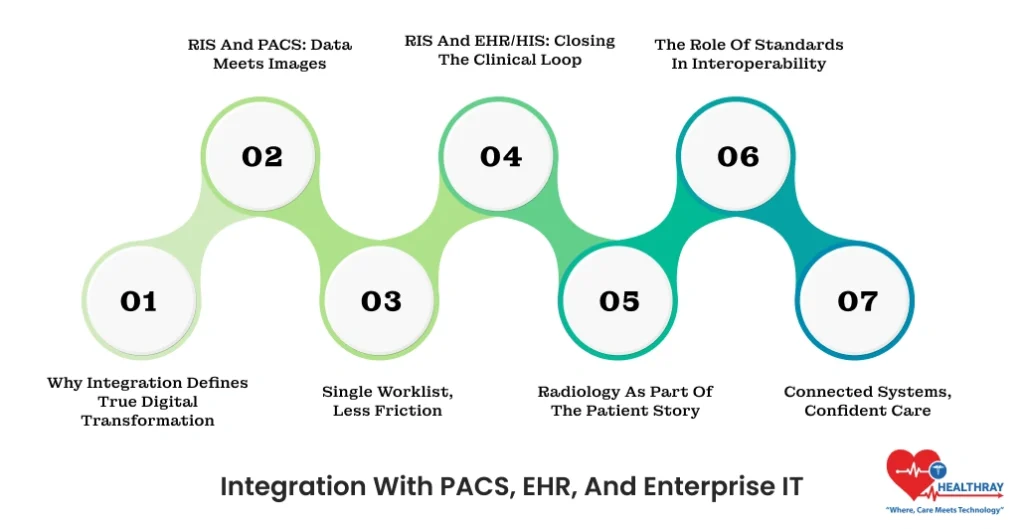
Why Integration Defines True Digital Transformation
Digital transformation in radiology is incomplete only when systems operate independently without communicating with one another. Further, RIS real roles start when it becomes a part of a broader IT ecosystem. Thus, making it connected, consistent and dependable.
RIS and PACS: Data Meets Images
In RIS–PACS integration, RIS sends the patient details and orders to PACS. Then, PACS reverts study status or image links. Its benefits are simple: radiologists can open images directly from the RIS worklist and send reports to patients, eliminating the need to switch the system.
Single Worklist, Less Friction
When RIS or PACS are synchronized in PACS, it minimizes duplication of data entry and confusion. Further, it expedites the reporting process and naturally minimizes errors.
RIS and EHR/HIS: Closing the Clinical Loop
RIS bidirectional integration with HIS/EHR provides options for clinicians to directly place the orders. Furthermore, reports are digitally returned to referrals, and radiology data is permanently added to the patient’s health record.
Radiology as Part of the Patient Story
After this integration, radiology no longer remains an isolated department. Further, Imaging insights become a meaningful part of the entire clinical narrative.
The Role of Standards in Interoperability
HL7 is a common language for both clinical data and DICOM imaging. Radiology data security standards ensure different vendors’ and multiple sites’ systems communicate with each other smoothly.
Connected Systems, Confident Care
When RIS, PACS and EHR work in the same workflow, technology becomes invisible. The only parameters that are visible are faster reporting, better coordination, and more confident patient care.
Key Digital Capabilities Enabled by RIS
Let’s check out:
RIS as an Enabler, Not Just a System
A radiology information system is not just administrative software. It activates the digital capabilities of radiologists through features that are adept at minimizing daily pressure and keeping the supervision strong.
Smart Scheduling That Thinks Ahead
RIS, in conjunction with rule-based scheduling, intelligently manages appointments. It improves slot utilization, reduces automated reminder no-shows, and maximizes scanner efficiency.
Smoother Patient Flow
Digital radiology workflow software makes the scheduling structured and makes the patient movement predictable. Further, waiting areas no longer remain jam-packed and technologists get precise timelines.
Dynamic Worklists for Radiologists
RIS builds more dynamic worklists. It arranges exam priority and modality on an urgency basis, thus minimizing decision fatigue.
Intelligent Exam Routing
RIS routes the exam result to the right radiologist automatically. Further, subspecialty matching or site-wise routing makes the reporting fast and accurate, especially in multilocation setups.
AI-Assisted Triage and Load Balancing
RIS integrates with AI and flags urgent cases and balances the workloads. Further, it helps radiologists to use the resources effectively and obtain the best possible outcomes from that.
High-Impact Outcomes
RIS provides shorter waiting times, smoother daily operations, and more predictable workflows where efficiency elevates without creating any external pressure on the system.
Step towards digital era with our healthcare solution
Revamp your hospital facilities and embrace change for better healthcare management. Ease in managing and organizing large medical datasets leads to effective analysis. Seize the opportunity now!
AI, Analytics, and Intelligent RIS
From Processing Volume to Creating Value
New generation RIS is not just meant for evaluating cases. Further, it adds intelligence in the software that shifts the radiologist’s mindset from numbers to tangible outcomes. Overall, work seems less heavy and more impactful.
AI Supports Workflow
In AI-enabled workflows, integration with RIS, pre-screens the studies and flags critical findings and auto-populates key measurements. Moreover, RIS helps in structured reporting, helping radiologists to put their expertise on concerns that are highly critical.
Radiologists at the Top of Their License
RIS automates the repetitive concerns and shifts the radiologist’s focus on interpretation, judgment and communication. Further, technology here plays the role of assistant, not a replacement.
Analytics That Reveal the Truth
RIS captures operation data such as turnaround times, modality utilization, referrer behavior and report delivery metrics. Further, this data is not just for dashboards; it also helps radiologists make concrete decisions to elevate productivity levels.
Smarter Staffing and Capacity Planning
Through these insights, leaders can identify staffing gaps, balance the workloads and realistically allocate the resources without wasting time in guesswork.
Radiology As A Strategic Service Line
When intelligence layers are strong, radiologists are not just limited to support functions. Further, they become a data-driven, strategic service line that delivers immense value.
Conclusion
Digital transformation in radiology is only significant if it can effectively integrate all the systems. RIS software converts fragmented tools into a disciplined workflow. RIS orchestrates workflows, properly aligns the system and generates meaningful outputs from the data. Without it, digital tools remain isolated.