


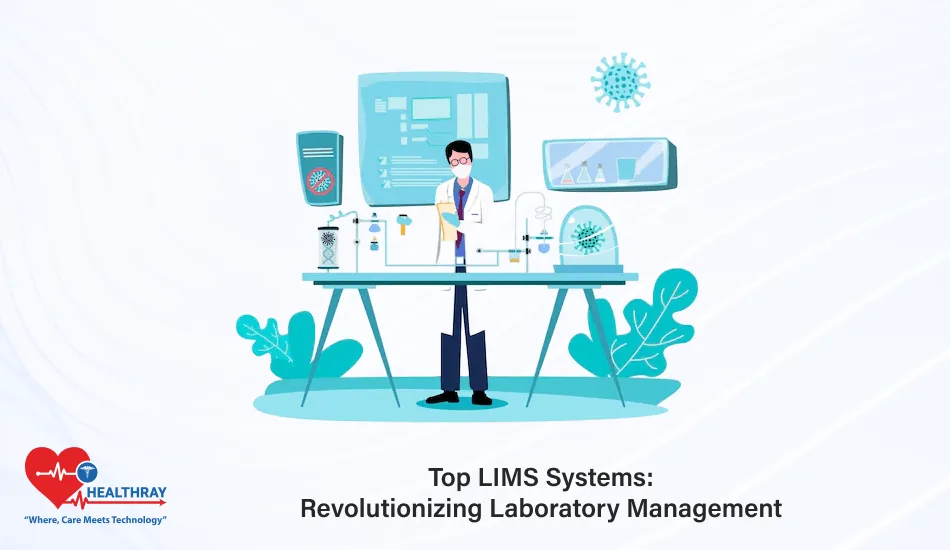

The laboratory field nowadays produces huge amounts of data with regard to sample tracking and report generation. Manual processing of such data or depending on less modern systems slows down operations and additionally increases the risk of errors. This is where Laboratory Information Management Systems (LIMS) come into play. These splendid tools are dedicated to reducing complexity in lab workflow, thereby enhancing data correctness and satisfying regulations.
For lab managers, IT professionals, and decision-makers in the fields such as healthcare, pharmaceuticals, and industrial sectors it is crucial to understand how LIMS can bring phenomenal change to their operations. This article will discuss various LIMS systems that are highest on the market, while also helping you find the best fitting LIMS for your lab needs. The major traits, advantages, and strategies toward smooth implementation will also be expounded.
Why Labs Need a Modern-Day LIMS
Laboratories affect the livelihood of core processes in healthcare, pharmaceuticals, research, and diagnostics. Operations have become more complex, demanding faster and more accurate results, with the traditional approach proving unsustainable for managing lab data. Hence, a LIMS is critical.
Challenges With Modern Labs
1.Data Overload: Per day, labs deal with colossal amounts of data-measurement data, sample tracking, results generation, and compliance records. Manual management can lead to mistakes and inefficacies.
2.Regulatory Pressure: Healthcare and pharmaceutical industries work under strict regulatory requirements, including HIPAA, FDA, and other ISO standards. Non-compliance may attract heavy penalties.
3.Speed With Accuracy: Automating all processes is now inevitable as clients and stakeholders expect faster turnaround times without sacrificing accuracy.
How Really LIMS Helps Solve Those Problems
The LIMS streamlines operations: Repetitive tasks such as tracking samples, inventory management, and report generation are automated by a LIMS. This translates to saving time and reducing human error.
Convenient for Compliance: Built-in features enable labs to comply with regulations by ensuring data trails are secure and auditable.
Boosting Collaboration: A central data storage allows teams to access and share information, thus enhancing productivity.
Who is Best Poised to Make the Greatest Gains?
- Lab Managers: Give back better oversight of daily operations.
- IT Professionals: Have regard for integration capabilities with other systems.
- Decision-Makers: Need the insights of data to make informed decisions.
- Lab Operators: Have a much smoother workflow with fewer bottlenecks.
Crucial Features to Consider in a LIMS
Choosing a Laboratory Information Management System would require focusing on what capitalization would be able to provide with unique features that would come in handy for your laboratory. A good LIMS Software will make processes easier while contributing to operational efficiency.
Sample Management
An excellent LIMS shall give you the capability to track your samples by totally and seamlessly moving from registration to disposal; it should maintain a clear audit trail at each point-in-time so that no sample can be mislaid or mishandled through its lifecycle at any stage: storage, testing or disposal.
Data Security and Regulatory Compliance
This is a must for laboratories in healthcare as well as in the pharmaceutical industry. An excellent LIMS would include:
- Encrypted secured storage.
- Access control to sensitive data.
- Complete audit trails for accountability.
Reporting and Analytics
Laboratories produce millions of data a day. A robust LIMS must:
- Customized Reports to be able to generate performance indicators.
- Analytics tools for trend identification and to aid in better decision-making.
- Generate automatically all regulatory documentation compliance.
System Integration
Modern laboratories have multiple instruments that are based on different software systems. Your LIMS should just be able to work with:
- Lab equipment such as analyzers and mass spectrometers.
- Existing systems like ERP or electronic health records (EHR).
Scalability
Big or small, a lab will necessarily have to scale as per demand. Maximally, learning aspects would have to be looked into while searching for a solution that would grow in terms of capacity as well as features when your laboratory expands.
User-Friendly Interface
A good user interface would not only shorten the time spent on training staff, but will also cut down a lot on mistakes. The main pillar aspects here include:
Navigation that is clear.
- Dashboards that can be customized.
- Quick access to the essential functions.
Cloud or On-Premise Options
Depending on your existing infrastructure, you may want a cloud-based LIMS for flexibility and remote access or an on-premise solution if control over data is most important to you.
Top LIMS systems worth looking into in 2026
Finding a proper Laboratory Information Management System could bring a complete revolution in operations at your lab. Below are the three dynamic LIMS providers with the continuous purpose of refreshing operations in healthcare, pharmaceuticals, and corporate worlds.
Healthray Technologies
Overview: Healthray Technologies presents an advanced LIMS solution intended to optimize laboratory workflow and yet comply with international standards that will ease the operations of laboratories, irrespective of size.
Key features:
- Real-time sample tracking from end to end.
- Compliance tools built exclusively for healthcare and pharma industries.
- Secure and accessible cloud storage from anywhere and any time.
Best for: Trustworthy and flexible system adjusted for each specific healthcare need.
EMRSoftware.Ai
Overview: By employing a high degree of artificial intelligence input through its internal innovation, the EMRSoftware.Ai continuously advances its laboratory functions. The mechanism of the operational laboratory maximizes efficiency through the assurance of better decision management.
Key features:
- Predictive trend and insight generation with AI analytics.
- Custom workflows for different lab environments.
- Easy access to already available lab hardware and software.
Best For: Labs that are looking forward to the next generation of AI-driven innovations.
Bigscal Technologies
Overview: Bigscal Technologies has an LIMS platform that focuses on providing a very user-centric, easy operation, as well as adaptable functioning. Their solution is applicable to both small labs and large scale enterprises.
Key Features:
- Modules tailored to what each lab requires.
- Real-time collaboration tools to facilitate communication within internal teams.
- Comprehensive support and training services.
Best for: Diverse users of all size laboratories requiring custom solutions with direct hands-on support from the vendor.
Choosing the Right LIMS for Your Lab
Choosing the right LIMS for your laboratory is not a question of choosing a LIMS that is usually passed among scientists; it should rather be selecting one that suits your own calls and requests. This guide should assist you to arrive at an informed decision.
Understanding Your Laboratory Needs
- Size and Complexity: small, medium, and large enterprise: Your selection should correspond to the lab size and operational demand.
- Industry Requirements: Lab belonging to the healthcare or pharmaceutical world attracts heavier restrictions and compliance than research and manufacturing labs.
- Workflow Considerations: Pay attention to workflow bottlenecks like poor sample tracking, over-compliance burdens, and manual data entry bottlenecks.
Evaluating Core Features
1. Does the LIMS cover what you need? Look for things like:
- Sample Management.
- Extended Analytics and Reports in Real Time.
- Interlinkage with your systems.
- Modules that can be scaled for additional growth.
2. Prioritize those features that will assist with your present issues first, but also allow some flexibility.
Budget and ROI
- Initial Costs: Look at all initial costs for hardware, software licenses and installation.
- Operational Cost: Recurring maintenance fees, supporting contracts, and training.
- Return on Investment: How much time in the long run will LIMS save you from putt, increase efficiencies, and save all mentioned pain associated with effort?
Check into Reputation & Support of the Vendor
1.Search for vendor reviews, testimony, and case studies with regard to reliability.
2.Covers standard training for your team in utilizing the offered software.
- Troubleshooting support available 24/7.
- Regular updates to software and compliance with the standards.
- Testing Usability in Demo
Demo request should test
1. Ease of user interface and navigation.
- Capability to customize according to the unique needs of your lab.
- Accessibility for team members with different levels of technological expertise.
2. Ask for input from your team with regard to the testing.
Post-Implementation Plans
Ask for details about:
- How fast the system can be implemented and what resource requirements are on the side of the vendor.
- Any down time anticipated during the transition.
- Post-implementation support for staff in the areas of training and troubleshooting.
Future Proof Your Choice
- Confirm that the LIMS will support your lab in the future as it expands.
- These factors include looking for AI integration, cloud compatibility, and interoperability with other systems within the laboratory.
- Choosing a vendor who has implemented continuous upgrades along with changes in the industry’s standards and regulatory changes.
Benefits of LIMS
The laboratory information management system will cause a revolution in how modern laboratories conduct their activities. A LIMS will be an invaluable tool in any modern laboratories by increasing the efficiency of daily life, productivity, accuracy, and compliance.
Faster and More Productive
- Automates repetitive activities (sample tracking, data-entry, report writing, etc.).
- Minimizes human errors through digitization of workflows.
- Encourages lab personnel to concentrate their efforts on the critical pathways rather than administrative tasks.
Data Entry Accuracy
- Centralized data storage cuts down on discrepancies created by data silos.
- Allows for real-time updating, whereby every data set converges with the latest information.
- Validation checks automatically prevent incorrect entries.
More Simple Compliance and Auditing
- Actually maintains compliance with regulations such as HIPAA, FDA, and ISO.
- It automatically generates audit trails and compliance reports.
- Immutable records of all the actions with very low levels of stress and fast, timely audits.
Through Analytics, Enhancing Decision Making
- Advanced reporting functions reflect on performance metrics, statuses of samples, and resource usage.
- Data visualization can spotlight trends and improvement areas.
- AI-powered analytics sometimes provide predictive insights for planning.
Savings for the Longer Term
- Less paperwork implies less cost.
- Trivially easy to save money by monitoring inventories to avoid waste of resources through either over-stocking or under-stocking.
- Finally, the savings of time from automation would convert into savings on overtime pay and employee hours because of inefficient process execution.
Scalability and Flexibility
- Easily configurable to fit incremental laboratory requirements, be it through adding more users or features.
- Cloud-based systems provide remote access and provide a flexible working atmosphere.
Collaboration and Communication
- A central system ensures smooth communication between laboratory teams.
- Remote access allows stakeholders to track data and progress from anywhere.
Real-World Success Stories
Lab Information Management Systems (LIMS) may appear daunting, but many laboratories have been down this well-trodden path with great success. These success stories provide a glimpse of the great advantage that the right LIMS can provide.
Healthray Technologies Turns Clinical Lab Operations Around
Healthray Technologies’ LIMS solution was chosen by a mid-sized clinical laboratory facing huge challenges with sample mismanagement and compliance. With the adoption of the cloud-based system from Healthray:
- Turnaround Times Improved: Automation cut about 40% of the time spent in manual data entry and report generation.
- Error Rates Minimized: Integrated validation checks virtually eliminated transcription errors.
- Compliance Secured: The built-in audit trails and secured storage environments helped the lab meet stringent HIPAA and FDA requirements.
AI-Powered Insights for Enhanced Lab Efficiency with EMRSoftware.Ai
Pharmaceutical trials engaged in drug trials adopted EMRSoftware.Ai’s AI-LIMS to facilitate better workflow and advanced data analysis:
- Results were achieved faster: 35% less overall trial data processing time due to an AI analytics-based approach.
- Improved Analytics: Predictive insights helped the researchers in trend analysis quicker, thus speeding up the major decisions.
- Real-time Collaboration: Decentralized data storage for teams in different locations to access trial data simultaneously.
Bigscal Technologies Simplifies Lab Operations for a Pathology Center
The fast-growing pathology center faced hurdles while scaling its business. Bigscal Technologies delivered a flexible and easy-to-use LIMS solution:
- Scalability: The modular features allowed the center to add new functionalities as required.
- Cost Savings: Automating sample tracking and inventory management reduced 25% resource wastage.
- Staff Satisfaction: The intuitive interface reduced the learning curve and helped the team adapt quickly.
Conclusion
Indeed, the effective management of any lab is a Herculean task in itself; however, laboratories are eventually going to be needed for industries such as health and medicines and research. The correct Laboratory Information Management System (LIMS) will make the entire process smooth with reduced chance of errors and ensured compliance, which is one of the most important labs consider today. Therefore, the way forward to selecting an ideal Hospital Management System hinges upon assessing laboratory needs and examining systems by organizations such as Healthray Technologies, EMRSoftware.Ai, and Bigscal Technologies, which exemplify how innovation, scalability, and support together can yield extraordinary results.