



How does LIMS (Laboratory Information Management System) work for you? Lab managers, techs, and decision-makers are often stuck between data, compliance, workflows, and quality control. And the load on their backs feels infinite; traditional methods are coming short, keeping lab personnel busy with even more pressure for faster and more accurate service. This is where the LIMS system comes in.
A proper LIMS does much more than data handling for the laboratories; it literally changes the laboratory’s lifetime behavior. The LIMS pulls together, tracks, and automates key laboratory processes to ensure maximum efficiency and compliance without any overhead. From tracking samples efficiently to accessing real-time data-the level of automation afforded by a LIMS software is geared towards saving time, reducing errors, and helping laboratories expedite sound decision-making.
This guide will go on to highlight the 10 key advantages of introducing a Laboratory Information Management System to your laboratory. Each advantage pertains to a specific pain point-whether it is regulatory compliance, productivity bottlenecks, or failing at keeping the data secure. Let’s break these salient advantages, and see how LIMS can offer some value and give your lab’s daily grind a tad less grief.
Top Advantages Of LIMS System Software
1. More Data Handling; More Information Storage-Become Centralized Immediately
One immediate benefit derived from a LIMS system is centralization of all laboratory data into one organized repository. Instead of relying on scattered spreadsheets, notebooks, or separate databases, some LIMS will place all sample data, test results, inventory details, and staff activity logs all in one place.
Centralization of data means no time wasted in searching files or databases looking for what they need. It is just easy to imagine how fast it could be retrieving the whole history of a sample, documented at every step in just a couple of clicks. Using LIMS systems, along with error and redundancy elimination, such data retrieval becomes possible and sustainable in cases of data duplication. This way, laboratory managers can rest without having to worry about missing or losing critical pieces of information, as all that information is now stored on a single secure platform.
Centralized storage thus provides laboratories with dependable and effective data backup mechanisms. Many LIMS systems automatically back up data to easily carry out restoration in case of disasters: instead of relying on hard copies of paper records, laboratories maintain an accurate record electronically secured, readily accessible, and dependable at the click of a finger.
2. Automation of Workflow
LIMS systems are built to take over the repetitive and time-consuming work, which wastes precious hours. Sample entry, tracking tests, and reporting are all areas ripe for automation; this gives laboratory technicians and managers more time for analysis or problem-solving and wastes less time on manual data entry or tracing of sample details.
Workflow automation in LIMS is beautiful in the elimination of human error and maximization of speed. A LIMS will automatically assign samples to the appropriate technician or, once the completion of a test stage, alert the samples for conformity and dismissal where doubt exists. Because the system will have automatically generated reports within a defined time frame, this gives managers a bird’s eye view of operations without the need to wade through all of the paperwork.
With automation, there is predictability and reliability in the laboratory processes. Automation frees the technician from repetitive work and allows him to take on other tasks that can boost productivity. The system can be likened to one that runs in the background to keep sorting and updating laboratory jobs for maximum efficiency and smooth operation.
3. Streamlined Sample Tracking and Inventory Management
On the other hand, many laboratories believe keeping track of samples during lab operations to be one of the most critical aspects of this practice. With LIMS, the lab can track each and every sample at every stage, right from the collection phase to storage and analysis phase. Such tracking helps prevent sample mix-ups, lost samples, and the ultimate processing delays-especially critical in clinical or research laboratories where accuracy and timeliness are crucial.
LIMS software allows for real-time tracking and ensures that every sample has a digital trail, specifying details ranging from who controlled it, its current location, and any tests that might have been performed. This kind of transparency allows lab personnel to trace samples quickly, check the current status, and confirm that they’re processed in the correct order. It also allows lab managers to look at all the ongoing processes at a glance, helping in the supervision of lab workflow.
Apart from sample tracking, the LIMS Management System has robust inventory management. This way, the laboratory is in the loop as far as consumables and supplies are concerned, so items that are even more critical are not lost track of. Alerts issued by the system on low stock levels keep the entire team notified, thus helping avert disruptions in lab operations while allowing for better purchase planning.
The lab environment will run more smoothly and efficiently owing to this streamlined management, which translates to fewer bottlenecks, lower wastage, and greater sample integrity.
4. Improved Compliance
Compliance is necessary for the very existence of the labs. Complying with various regulatory bodies-from the pharmaceutical industry to the health and environmental sectors-is no easy task; compliance is a time-consuming and arduous endeavor. By recording interactions correctly and by offering tools that can automate many of the tasks to curb errors in documentation and reporting, the LIMS is a boon to labs in ensuring compliance.
On an automatic basis, LIMS provides a presentation of a time and date-stamped audit trail-should lab managers present such comprehensive records for every sample, test, and procedure-to become a critical tool for audit or inspection preparation. That path to compliance becomes shorter when the manufacturers who use the LIMS are able to produce a compliance report within minutes, as opposed to requiring hours or a whole day collecting data from all over for documentation.
Aside from this proper certification process, the LIMS application often includes the features/facilities like electronic signatures, access rights, and validation of data according to their particular relevance with the various regulations. These checks help tremendously to keep lab procedures within legal boundaries, avoid unwanted access, and preserve data integrity. LIMS is the greatest thing that will happen to any lab desiring to steer clear of hefty fines, operational disruptions, or damage caused to its image due to non-compliance with regulations.
5. Data Integrity and Security
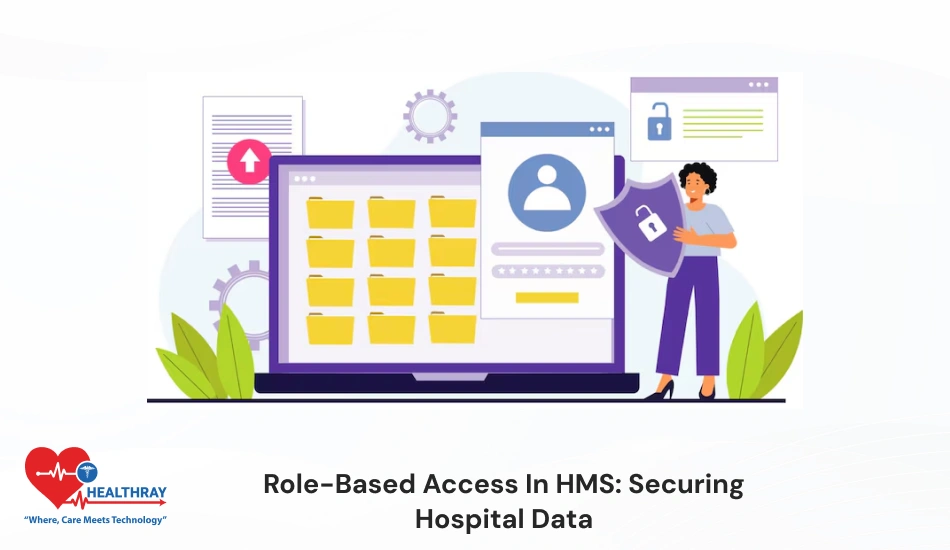
Data integrity and confidentiality are primary issues in any data-intensive lab environment present today. The Lab Information Management System does a perfect job of protecting both the aspects by making sure that each activity done in the lab is recorded in your most exacting style containing reliable, up-to-date data. The use of role-based access controls ensures that only those who are permitted to access sensitive data can do so in the first place, which thus allows such measures to be very powerful in avoiding an unpermitted alteration and safekeeping the confidentiality of lab information.
The computerized recording of everything makes the data much more reliable in terms of integrity as well. Each entry, deletion, or modification reflects on a full history of changes that the system maintains. When one part of the data is inconsistent, knowing immediately who accessed first or changed it or on what date provides a vivid picture of where the error(s) lies’. With timely knowledge of any inconsistencies, managers can react swiftly by addressing problems and maintaining good records overall.
6. Enhanced Laboratory Efficiency and Productivity
The efficiency of laboratories forms the nucleus around which any laboratory goal or objective is spun, and LIMS software is designed just for this purpose: to ensure that laboratories get more done in less time. By automating routine activities and consolidating data for common access, these software help laboratory employees to carry out their tasks faster and more efficiently. While some data entered manually would only take a few seconds, that is precious time lost whereby the technician/manager could be working on something more complex.
Because of the LIMS, laboratories would be able to cope with increased sample loads notwithstanding the accuracy and speed of testing. Bottlenecks in operations are avoided when the LIMS software automates sample tracking, test scheduling, and documentation of results. Thus, lab personnel are able to focus on other activities. For instance, once a sample moves to the next stage of testing, the status of the sample is updated by the system and relevant personnel are notified. Uninterrupted coordination such as this allows for uninterrupted flow of work.
Very easy access to data via LIMS also contributes to increased productivity. When laboratory staff want information, in seconds, it is retrieved rather than being hunted through different files or systems. Such impressive efficiency does not only leave time on the table but allows laboratories to undertake more projects or attend to more clients, thus increasing revenues.
7. Lower Operational Costs
Implementing a LIMS system can already give tremendous operational cost reductions to a lab. Any LIMS that will make the most of a lab’s already optimized processes will have its own computer muscle virtually working to establish more efficiency. One very nice feature of LIMS will be to reduce the ratio of manual tasks-the less holding to paper, physical storage, and labor hours spent on data entry or sample tracking.
Supply chain optimization is yet another significant cost-saving advantage of LIMS. Quite a good number of laboratories that mismanage their inventory either go into surplus stock or find themselves in short supply exactly at the worst moment. Not with a LIMS. A LIMS does inventory in real time, warning lab managers on supplies when they are critically low and preventing extravagant purchasing on one hand and expensive delays on the other.
Inbuilt quality control within the system also plays an important role in preventing operational errors that might result in repeated tests or much wasted material. Every misstep in the laboratory processes incurred costly losses, especially when it pertains to fragile or high-value samples. Therefore, by assuring performance with high accuracy and efficacy, LIMS helps save lots of money that can be reinvested in laboratory expansion or technological advancement.
8. Better Quality Control and Accuracy
Controlling quality is one of the most important considerations in any laboratory, and it is where LIMS software serves a crucial function. By eliminating the chances of human error and providing consistent results covering all laboratory operations through automated data entry, sample tracking, etc., LIMS provides reasonable assurance for obtaining irreproachable data, which is essentially the laboratory’s reputation.
A LIMS system ensures quality by providing predefined workflows and validation checkpoints that guide lab staff through each phase of a process without detours. For example, suppose certain samples require special handling or testing procedures. In that case, LIMS can prompt the technician at each stage to avoid any possibility of error. Such guidance improves the quality of the results and provides a standardized method of operation for newly hired personnel. This simplifies their training and integration into the laboratory.
Once the system generates real-time quality control reports, managers can easily notice problems in processes or equipment. If any inconsistencies or anomalies are found, they shall be immediately dealt with before they grow to compromise the results of a more extensive sampling. By promoting accuracy and credibility, LIMS helps laboratories meet industry standards and consistently provide reliable results.
9. Scalability and Future-Readiness
As labs grow or change due to new demands, they want systems that grow with them. LIMS systems are built with this flexibility, allowing the lab to increase its capabilities easily and without disrupting the entire operation. Any changes in sample volume, test types, or technologies, and these can be reflected in LIMS-to-LIMS changes in the lab operations.
Quite a few LIMS systems are modular; labs can add or drop functionalities as necessary. For instance, if a laboratory wishes to extend its operations to a new area of testing, they can integrate only those LIMS modules that are relevant without requiring an entirely new system. This kind of scalability ensures that the laboratories are kept agile and immediately responsive to these changes, whether coming from the industry from demand by clients, regulatory updates, or technological advancements.
Future-ready means that the LIMS system is also able to integrate with new technologies such as Internet of Things devices, AI-driven analytics, or advanced automation tools, assuring the laboratory that there is no need to start from scratch and can thereby remain competitive and efficient as the industry moves on. In a nutshell, LIMS presents a growth-friendly basis, making the labs fit for the future at any point.
10. Real-Time Reporting and Data Analytics
Real-time access to data is today nothing short of gold for fast-paced lab environments–LIMS software thus gives immediate access to reports, metrics, and analytics for lab managers and stakeholders alike to make informed decisions on the go. Instead of getting stuck waiting for summaries of the day’s work in the evening or wasting time compiling reports manually, labs now have real-time insights into a plethora of activities going on in the lab, including sample statuses, workflow inefficiencies, resource utilizations, and other key metrics.
As real-time reporting highlights bottlenecks or inefficiencies, allowing adjustments to the processes to keep things on track, lab managers get the opportunity to address a delay in a particular testing step right off the bat, greatly reduce downtime, and ensure timely processing of samples.
In addition, LIMS gives laboratories analytics tools to assist in tracking their performance trend over a specific period. Not only do these insights facilitate the running on daily decisions, but they also serve as a great reference when planning strategically. With historical data, laboratories may fine-tune their workflows, turnaround times, and, interestingly, even predict the future resource needs, thanks to trend-based predictions. This level of visibility and insight enables laboratories to make decisions backed by data, thereby fostering immediate efficiency and potential for long-term growth.
Conclusion
Implementing a LIMS system can transform any laboratory. Delivering automation of workflows, enhancement of data security, improvement of accuracy, and facilitation of regulatory compliance, LIMS software represents the winning ticket for any laboratory to transform all their ops. It does not only smoothen laboratory processes, but it also allows laboratories to grow, gives them the power to make better decision-making, and affords them the control to maintain stringent compliance with quality standards.
For all lab managers, techs, and executives, the LIMS system fast-tracks laboratory efficiency and productivity to an all-new level. LIMS software scores huge points as a long-term investment for laboratory success by solving everyday operational hurdles and putting the lab in good stead for the future.
If you intend to deploy a Hospital Management System in your lab, allow these 10 benefits to be your early thoughts. Each of the benefits offers some real-life, tangible benefit that means your lab will run much more accurately, faster, and reliable.