


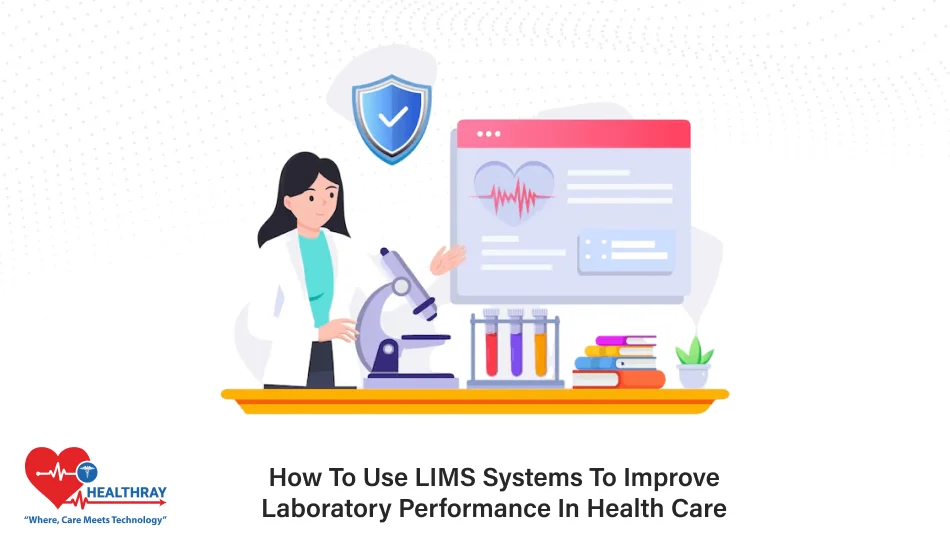

Pressure is increasing on laboratory services to process rising workloads, adhere to stringent regulations, and turn around accurate results with speed. That’s where Laboratory Information Management Systems (LIMS) become the indispensable cog in health care.
Systematizing LIMS is an aspect that enhances efficiencies, improves data management, and decreases human error in laboratories. By automating manual tedious processes and giving centralized management of data, the role of labs has been changed forever. Still, the overwhelming array of features and options can make full use and successful integration quite difficult to ascertain.
This guide will give you a comprehensive understanding of what LIMS are, the advantages they provide, and how they can enhance lab performance. It will also cover how to select the appropriate system, plans for its implementation, and the journey through challenges. This guide will help healthcare administrators, lab managers, and IT decision-makers take the educated steps necessary to optimize lab performance for good patient outcomes.
The Healthcare Perspective on LIMS
Laboratory Information Management Systems (LIMS) are more than twenty-first-century software; they are indeed a fulcrum upon which the workflow modernizing of laboratories tilts. Primarily, LIMS help laboratories with vast amounts of data, streamlining their processes, and ensuring compliance to healthcare standards.
What Does A LIMS Do?
LIMS helps laboratories track every step of the sample’s life, from collection to analysis and reporting. It automates procedures like sample tracking, data entry, and result generation, cutting down on risk for error and freeing up staff time to concentrate on higher-value tasks.
Here is how LIMS works in health laboratories:
- Sample Management: Tracks samples from the moment they are taken to when the results are declared.
- Centralized Data: Maintains all laboratory data in a single location for easy access by authorized personnel.
- Regulatory Compliance: Facilitates the lab to meet requirements such as HIPAA and CLIA through proper management of data integrity and security.
Why Are Healthcare Labs Largely Dependent on The LIMS
As the need for accurate and timely diagnoses increases, the demand for LIMS grows even stronger. They support laboratories in:
- Maintain Accuracy: Minimizes manual errors through automation of calculations and processes.
- Improve Turnaround Times: Expedites workflows through task organization and priority setting.
- Support Collaboration: Integrate with systems like EHR to allow seamless data interchange.
An adoption of LIMS would improve laboratory operational efficiency, thereby improving patient outcomes. If you manage laboratory operations or plan for a digital transformation, then it is these core capabilities that will guide your best use of LIMS.
Benefits of Implementing LIMS
Implementing LIMS is not just about installing the latest software package; it is about changing the way labs work to satisfy the demands of modern healthcare. Here is how LIMS can turn into a genuine lever for transforming lab performance.
Increasing Efficiency
LIMS helps automate repetitive tasks staying on top of studies, data entry, and generation of reports. It thus decreases the amount of time spent doing manual work and ensures that lab personnel channel more time on increasingly challenging responsibilities. Quicker workflows mean faster results to patients.
Greater Accuracy and Less Error
Manual data entry can cause errors that can be detrimental to results. LIMS avoids such incidences by enforcing uniformity and accuracy in data management. Automated validation checks further strengthen the reliability of test outcome reporting.
Help in Maintaining Compliance Standards
Health care labs are obligated to obey stringent regulations such as HIPAA and CLIA. LIMS assists in maintaining compliance by ensuring the safety of data storage while providing audit trails and access control. Thus, it helps reduce the risk of fines, if not legal battles.
Increasing Productivity
LIMS helps in scheduling, resource allocation, and prioritization of samples, thereby smoothing overall lab operations. This guarantees that resources are used optimally, which increases overall laboratory throughput.
Data Management Made Easy
LIMS enhances centralized storage that makes it easy to retrieve and share data. Be it tracking the history of samples or reporting, everything is at hand and secured in one place.
Supporting Scalability
With this upkeep of healthcare labs increasingly grow, their data management needs start increasing too. Buildings of LIMS are being scalable in an essence so as to withstand the increasing workloads without compromising performance and accuracy.
Cost Savings: Long Term
Implementing a LIMS calls for an initial monetary commitment; however, the long-term savings are huge. Automation of processes reduces costs associated with labor, while better management of resources reduces operating costs.
Key Features to Look For in a LIMS Healthcare
Choosing the right LIMS Software is critical to ensure it meets your particular healthcare lab’s demand. While every lab has its specificities, some features are common and, therefore, useful. Here are qualities that you should look for in a LIMS:
Sample Lifecycle Management
An efficient LIMS will deal with every aspect of a sample’s life, from collection and storage through analysis to eventual reporting. It should give real-time information about the location, present status, and results of samples provided with full traceability.
Integration Capabilities
Healthcare labs generally work with many systems like Electronic Health Records (EHR) and billing systems. A LIMS that can integrate with these systems avoids data silos and promotes smooth information flow.
Advanced Reporting and Analytics
An organization should look for a LIMS that has advanced reporting capabilities to produce versatile detailed analytics. Such analytics assist the lab in recognizing trends, monitoring performance, and reasoning on its decisions.
Compliance and Security
A LIMS for specific healthcare applications must comply with regulations like HIPAA and CLIA. It is imperative to maintain confidentiality and integrity through user access controls, audit trails, and encrypted data storage.
Customization Options
No two labs are alike. A great LIMS should be customizable so that it can allow the lab to operate and tailor its workflows, dashboards, and reports.
Easy-To-Use Interface
A LIMS that is easy to understand and easy to learn facilitates training and minimizes the chance of human error. Ease of use stands out in high-pressure environments like healthcare laboratories.
Scalability
The LIMS must be scalable because laboratory activities will undoubtedly increase. The scalability of the system will guarantee that it meets the future requirements of the laboratory, whether it is dealing with more samples, more tests, or simply larger data storage.
Mobile Accessibility
Modern LIMS solutions usually provide mobile applications or web-based platforms where lab personnel can conveniently access data anywhere. This proves to be extremely useful for labs with multiple locations or any field work.
Tools for Automation
Automation tends to be the primary key to improving efficiency. Some features, like barcode scanning, automatic assignment of test samples, and scheduling of workflow, help to reduce manual input and increase output.
Vendor Support
Good LIMS vendors should offer continuous software maintenance support and updates, troubleshooting, and training. Effective vendor support ensures long-term sustainability.
An Implementation Guide
The positive transformation of laboratory operations through the implementation of a laboratory information management system is premised on effective planning and execution. Below is a LIMS implementation guide to help with their seamless integration into your healthcare lab.
Assess Lab Needs
Before one selects a LIMS package, ascertain the peculiar needs of the laboratory such as:
- Which workflows operate smoothly, and which do not?
- Which features are indispensable (sample tracking, compliance tools)?
- How many users will need to access it, and what will they do?
- Understanding these needs ensures that one selects a system that satisfies the objectives of the lab.
Research and Choose the Right Vendor
Individual LIMS vendors are not guided in creation by the same principles. The following criteria can guide the vendor evaluation:
- Expertise within the healthcare sector.
- Availability of scaling and customization options.
- Online reviews and case studies from actual customers.
- Availability of technical support and training.
Request a demo from the vendors and have the staff evaluate the program to ensure the system is to their liking.
Develop the Implementation Plan
Following the selection of a LIMS package, formulate a detailed plan for its implementation. The plan should contain consideration in the following areas:
- Proposed Timeline: Reasonable deliberation on timelines for each of the phases must have been taken.
- Proposed Budget: Accounting must be done for the price of the software, hardware, training sessions, and maintenance.
- Proposed Distributions of Team Roles: Distributions must include those responsible for project management, system configuration, and training the end-users.
- The effort put into planning an implementation reduces the likelihood of disruption to the operations of the laboratory.
Prepare Your Infrastructure
Ensure that the infrastructure of the laboratory supports the new LIMS. It includes:
- Updating hardware or network systems.
- Check to ensure compatibility with software already in use, such as Electronic Health Records (EHR).
- Setting up secure data storage and solutions for regular backup.
Train Your Team
However advanced the LIMS may be, it will not work if its functions are not known by any members of the team. Thus, thorough training is vital:
- Hands-on sessions will be conducted to prepare staff for working on the computer interface.
- Linking the training to tasks of the LIMS staff is found to be extremely helpful for the trainees.
- Support and workflow clarification would be available on a continuous basis.
Roll Out the System
In order to roll out the LIMS, a phased approach would be commenced as follows:
- Pilot Phase: The LIMS will be implemented into a small laboratory section to evaluate problems.
- Full Deployment: Assuming that the pilot phase was successful, the system would then be passed into the other sections of the laboratory, ensuring that remaining hurdles were solved before a full implementation.
Follow-Up and Optimization
After going live, the team must monitor the system for satisfactory performance against expectations. User feedback must be collected regarding:
- Workflow efficiency.
- User-friendliness.
- Training.
Regular updates and optimization will ensure a smoothly running LIMS that continues to reflect your evolving requirements.
Cost considerations
Healthray. Implementing a Laboratory Information Management System (LIMS) in the health laboratory represents a large capital outlay, and therefore a good understanding of the resulting cost is important for ensuring smooth implementation without going overboard with the budget. Here’s what you need to know about LIMS expenses.
Initial Costs
The initial LIMS implementation cost varies greatly according to complexity and vendor pricing. The major costs that would typically be included are:
- Software License: Depending on the model, it could be one-time or subscription-based.
- Hardware Upgrades: If your lab’s infrastructure requires updates to support the LIMS.
- Customization: Adapting the system to your lab’s specific workflows and needs.
- Integration: Making sure that the LIMS works in harmony with existing systems like EHR and billing platforms.
Training and Onboarding
Utmost training is essential to maximize the benefit of LIMS. This includes:
- Training sessions to staff.
- Documentation and user manuals.
- Workshops or webinars led by of the vendor.
Training costs depend on the number of users and the level of support required during onboarding.
Maintenance and Support
Those continuous expenses that keep the LIMS running and up-to-date include:
- Annual software updates.
- Technical support service.
- Storage and backups services of data.
Most of the vendors have tiered maintenance plans for the varied budgets.
Long-Time Investment
While costs might be significant upfront, savings often outweigh the costs in the long term. Some sources of savings are:
- Labor costs brought down by automation.
- Reduced errors and rework.
- Better use of allocated resources and efficient workflow.
Factors Considered in Costs
The overall cost of a LIMS implementation is determined by different aspects:
- Lab Size: Larger labs may require more complicated systems and more licenses for users.
- Features and Customization: Advanced features such as analytics and real-time monitoring can raise costs.
- Vendor Pricing Model: Models that charge on a subscription basis will spread the cost over time, while those with perpetual licenses require bigger sums upfront.
Budgeting Tips
For effective cost management:
- Request cost breakdown from vendors.
- Feature Prioritization Based on Your Labs Needs.
- Research grants or funding for health information technology upgrades.
Real-Life Uses
Bringing in a Laboratory Information Management System (LIMS) can change healthcare laboratories dramatically. Real-application turns out to be LIMS evidence as far as performance improvement of laboratories, error reduction, and overall streamlining of operations are concerns. Here are some practical LIMS examples that show how they have affected health laboratories positively.
Streamlining Sample Management
Busy diagnostic laboratories have their own logistical nightmares when it comes to tracking samples. The capabilities of a LIMS are as follows:
Log each sample automatically upon acceptance.
- Assign a unique identification number for tracking.
- Track the current state of a sample in real time to minimize delays and errors.
Example: A clinical diagnostics lab with LIMS has enhanced accuracy in tracking samples in a client test-by-test time line of 30%, offering timeous test results and thus satisfying patients.
Facilitate High-Volume Testing
Busy child healthcare hospitals normally have bottlenecks with their workload. The automation and redundancy of the non-value-adding processes like data entry and report generation through LIMS actually free staff to devote time to more value-adding activities.
Example: At the peak of the flu, the hospital’s lab had maximized its LIMS implementation to contending with increases in the volumes of tests up to 50%. With the system, test scheduling and reporting were speeded up for timely diagnoses.
Sealing Regulation
A regulation such as HIPAA and CLIA in healthcare is so much important. For this reason, it also makes LIMS very easy:
Safe data storing.
- Audit trails are detailed for traceability.
- Regulatory-specific reports.
Example: A molecular diagnostics laboratory could avoid penalties pertaining to regulations compliance by downright efficient management of its documentation and audits through a LIMS system.
Improving Research and Development
Researchers are supposed to deal with large datasets and maintain data integrity; a research laboratory must relate well with those factors. Thus, LIMS is meeting this in terms of storage centralization and better analytics.
Example:There was even a 20% decrease in project timelines for drug development by a pharmaceutical lab with LIMS organizing workflows under research.
Integration with Other Systems
Health systems will connect seamlessly to each other when it comes to sharing information between them, as for example, between Electronic Health Records (EHR) and billing software. This is, in fact, what LIMS does: Bridges between these systems guarantee a steady flow of data between them.
Example: That of the diagnostic center that linked its LIMS to EHR: 40% of administration workload obligations were reduced, while working between clinical and lab teams was made easier.
Conclusion
As laboratories build the backbone of healthcare diagnostics, the rising demands for accuracy, speed, and compliance push the laboratories toward better technology. Within this, Laboratory Information Management Systems (LIMS) are starting to make significant improvements in the functions and operations of healthcare laboratories.
Hospital Management Systems manage automated workflows, data integrity, and centralized control of laboratories, thus preparing them to face burgeoning challenges in modern healthcare. From faster turnaround time to better compliance with industry standards, the evidence is convincing. The proper selection and implementation of LIMS will not only improve laboratory performance but will ultimately improve patient outcomes.
The time is now for healthcare administrators, laboratory managers, and IT decision-makers to assess their laboratories’ requirements and investigate how a LIMS can enhance their operations. Whether increasing effectiveness now and in the future, maintaining compliance, or managing greater workloads, LIMS is a step toward a more streamlined and reliable future.