


Managing medical records efficiently is one of the building blocks in a hospital for its good functioning. A well-installed MRD (Medical Records Department) Management system enables easy record keeping and adds to the operational efficiency, ensuring regulatory requirements are met, and patient care services are enhanced. But it can get overwhelming, given the options available to you.
So this guide intends to simplify that for you. It will discuss what your hospital needs to look for, how to evaluate its own needs, and some helpful tips to pick a system most well-suited to your facility. At the end, you will have your map drawn, leading to an informed decision.
What Is MRD in Hospitals?
A Medical Records Department (MRD) management system is a software solution that keeps track of the storage, organization, retrieval, and security of patient records. It plays a crucial role in ensuring that hospitals keep patient records accurate, accessible for quality patient care, and for legal purposes.
Why Is It Important?
Having understood what MRD means in hospitals, let us now shed some light on the significance of MRD (medical record department). An effective MRD Solutions does much more than serve as a digital filing cabinet. It changes the way hospitals manage information by enhancing workflow efficiencies, minimizing the paperwork, and securing sensitive data. In addition, with processes standardized and accurately documented, compliance becomes less cumbersome.
Potential Advantages to Hospitals:
Greater Productivity: Manual errors and attendant time wastage are reduced by automating keeping of records.
Greater Data Security: Stringent encryption and access controls keep all patient data confidential.
A Change for the Better in Patient Care: Fast access to accurate medical records aids the doctor’s timely consultation.
Key Features to Look for in an MRD Management System
A sound knowledge of features that matter most is a good place from which to start in determining what type of MRD management system is best. These features ensure that the system selected rides on the backs of the hospitals, offering much in terms of best operational practice and long-term value.
Integration Capabilities
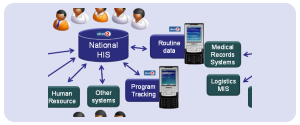
Hospitals use several systems for billing, patient management, and diagnostics. Your MRD system should smoothly integrate with the already existing platforms. In this way, smooth data flow shall be ensured with less duplication of work and a unified system for all of the hospital operations.
Data Security
Patient records are sensitive, and protecting the same is a non-compromisable issue. A system that provides encryption, access control based on the user’s role, and security updates on a frequent basis should be looked for. Such a system should also be compliant with healthcare regulations in your region to avoid any legal implications.
Workflow Efficiency
The most efficient MRD would ease current operations. Automated indexing, quick search functions, and customizable workflows would go a long way in easing the administrative burden on your team, allowing them to devote more time to patient care.
Compliance with Regulatory Standards
Healthcare regulations keep changing and are among the strictest. Your chosen system should be easily fitted with built-in compliance capabilities such as audit trails and secure data storage to always stand in line with requirements of HIPAA or GDPR type.
Scalability
If your hospital is growing in size, the system you are able to afford should also grow in size. Whether you are adding up new departments or merely increasing the number of patients, ensure the system is scalable without sacrificing any performance.
Patient Engagement Features
A contemporary MRD system transcends operating solely from within. Systems with features like patient portals allow patients to view their medical history or lab results and enhance patient satisfaction and engagement.
Analytics and Reporting
Data, when properly translated into information, forms the basis for decision-making. The assumed system, therefore, needs to analyze the operational efficiency, patient trends, and compliance and assist in locating all areas that need improvement.
Assessing Your Hospital’s Needs

Before starting to pour over vendor brochures and Product demos, get down to the bare minimum and identify what your hospital needs. By doing so, you guarantee that you select a system tailored to your hospital operations rather than some halfway fit for all settings.
Evaluate Your Current MRD Processes
An in-depth discussion about your current practices in medical record management needs to be undertaken. Pain points of frequent error, slow turnaround in retrieval time for requesting information, or publicity for non-compliance should all be noted. Areas where automation and streamlining will make the greatest impact should be highlighted.
Questions to Ask:
Do authorized personnel find it easy to access patient records?
Are there frequent delays or errors in documentation?
Is data security up to regulatory standards?
Keep an Eye on Size and Reach of Your Hospital
The requirement of a tiny clinic will not be similar to that of a massive multi-specialty hospital. Think of these:
Daily record maintenance volume
Number of users accessing it at a time
Integration across branches needed for multi-location access.
Identify Location-Specific Requirements
Every department may have its own needs. Such as:
Integration of images may be much needed by the radiology department.
Emergency units are likely to require speedy data acquisition.
The billing department may look for integration with MRD systems for accurate invoicing.
Fiscal Constraints and Financial Planning
While it is indeed costs that matter, one should have a transparent budget kept aside not only for upfront investment but also the long-term licensing, maintenance, and upgrade costs. A cheaper system could cost the organization more in the long term simply because it lacks some key functionalities or has to be customized extensively.
Know the Users
Include the team members that are going to use the system on a daily basis such as medical records staff and IT administrators. Their input regarding usability and specific requirements are really helpful. Having a simple user interface can also save many hours of training and сuts down errors.
Look Ahead
The thought shouldn’t be short-term. In case you are expanding the facility, acquiring new technologies, or telemedicine services, the system should also be able to scale and accommodate future needs.
Vendor Assessment and Selection
Now you are up to vendor evaluation once you clear your hospital needs. A wrong vendor is as good as the wrong system since it is mostly their support and expert know-how that would have a great impact on the success of the system.
Research and Shortlist Vendors
Start by researching vendors with experience in the healthcare industry. These could be vendors that specialize in MRD systems and have a proven track record. Shortlist a few based on:
- Customer reviews and testimonials.
- Years of experience in healthcare technology.
- References from other hospitals or medical institutions.
Evaluate System Features Against Your Needs
Now, compare all these features on offer from each vendor against your own requirements determined during self-assessment. Pay special attention to the following:
- Integration with existing Hospital systems.
- Security measures and compliance certifications.
- Customization options to fit unique workflows.
Assess Vendor Support and Training
A real vendor gives more than software: it will give support and training. Ask vendors about:
- What is the training they provide during implementation?
- Availability of ongoing support including a help desk or dedicated account manager
- Response times for resolving technical issues.
Pose the Right Questions
When engaging with vendors, ask pointed questions to help gauge reliability and appropriateness:
- What implementation time does it usually take before the system goes live?
- How often do they roll out the updates or patches?
- What do they do concerning data migration from your current system?
- What will the added costs be in upgrades, maintenance, or even training of different users?
Request Evaluation or Trial
A live demo or interim trial allows you and your team to experience the system firsthand. During this time:
- Test user-friendliness and ease of navigation.
- Evaluate how well the system handles common tasks like record retrieval and reporting.
- Check for any noticeable delays or system bugs.
Understand Costs Well Clarified
Make sure costs get broken down cleanly from the vendor:
- Licensing fees (one-off or subscription).
- Costs relative to setup, data migration, and training.
- Future costs once users increase or features are added for upgrades and extras.
Review Contracts Thoroughly
Before finalizing, contract details are well to be read up. Pay attention to:
- Service level agreements (SLAs) for support and uptime.
- Terms under which the contract can be canceled if the system does not meet expectations.
- Clauses related to the ownership and protection of data.
- Selecting the correct vendor would guarantee a smooth implementation process and competent long-term support.
Planning For Implementation
Once you have figured out your ideal MRD management system and vendor, your next task is to make sure that everything is implemented without issues. Migrating to a new system can become very complicated since it entails proper planning in order to reduce the impacts on operations and maximize the chances for success.
Detailed Implementation Plan
This would include developing a timeline with vital milestones and defining the allocation of responsibility between your team and the vendor. There should also be measures in place ensuring patient care and access to data are not hindered during changeover.
Preparation for Data Transfer
In most cases, moving the data from an old to a new system is one of the most important aspects, including:
Ensuring that all data apart from migrating is accurate and complete.
Cleaning data for obsolete or unnecessary records before migrating them.
Testing the migration for any possible preissues and rectifying them.
Invest-in-humans
The qualification of the project crew who man the system will suffice. They will engage in high-level training:
In-depth hands-on sessions on significant features and tasks.
Specifically-designed training for different departments.
User manual or video tutorial for quick and easy reference for them all.
Establish Interfacing with Systems Already in Place
The relevant MRD module needs to be interfaced with existing software systems currently running in the hospital that include:
Patients’ management systems
Billing and cashiering systems
Diagnostic Imaging and Laboratory systems
Once integration has been duly confirmed, transfer of data is then tested, and the free flow of information across platforms is checked.
Identify Stakeholders
Keep involved stakeholders informed about the implementation progress. For example, regular updates can be communicated to administrators, heads of departments, and any personnel involved with medical matters within the hospital to align expectations and support decision making by keeping everyone on the same page.
Monitoring the Go-Live Process
Ensure that the vendor’s support team will be available to settle any issues arising from the system launch. Pretty much the major focus areas to pay particular attention to are the following.
Action data in real time.
User feedback on capability and usability.
Consistent facilitation of daily operations through the system.
Plan for Ongoing Surveillance and Optimization
The post-implementation analysis will ensure that the system’s performance is continuously assessed. Use analytics and feedback collected through –
- Indicating areas for improvement.
- Overcoming emerging issues.
- Making plans for introducing system updates or further training when justified.
Every implementation must, of necessity, be thorough so that it can maximize the capability of the MRD management system.
Cost Benefit Analysis

MRD implementation should also include its financial aspect. With cost-benefit analysis, the initial amount spent is compared to the long-term returns it entails for your hospital.
Break Costs Down
The first step is to itemize all the costs involved with the system. They usually include the following:
- Initial costs: costs associated with purchasing software and hardware (if required) and installation fees.
- Implementation costs: data migration, customization, and employee training.
- Ongoing costs: including licensing fees, support contracts, and update/upgrade expenses.
Understanding expenses clearly helps provide a frame of reference for your discussion of total cost of ownership.
Identify the Benefits
Next, measure the tangible benefits from implementing the new system you expect. Think along the lines of:
- Time Savings: The hours of work that employees spend on manual tasks are decreased because workflows are now highly automated, streamlined, and fast. They will be able to focus on other key priorities.
- Lessivity: Keeping data accurate and securing records overall save the inestimable amounts of money by sidestepping expensive errors.
- Regulatory Avoidance: Fines and penalties are avoided by complying with healthcare regulations.
- Be Improving for Patient Care: Faster access to suspected health records skews better decisions but happier patients.
Calculate Return on Investment (ROI)
ROI estimates evaluate the performance of the system financially. The dimensions of the calculation involve conjunction on expenditure pertinent to this estimate of how the hospital will accrue either savings or revenue as a result of the system:
- Land Workforce Costs through Automation.
- Retained Patients because of Good Service.
- Prevention of Costs due to Fine Avoidance by Regulations.
Intangible Benefits to be Considered
Intangible benefits do not carry cash value in the assessment but are important. Examples would include:
- More employees have shortened workflows.
- Real retention based on good name and safe record-keeping.
- Better managerial decisions based on improved reporting and analytics.
Assess Scalability
For scalable systems, the payback capital is too high; however, as profits give in on the hospital, they become economical. Otherwise, factor in the future costs for increasing users or stretching the functionality.
Assess Financial Risks
Assemble growth risks that may threaten the financial grazing and include:
- Implementation deferrals due to unforeseen downtimes.
- Additional charges for upgrades or remedies.
- Resistance from people in the organizational establishment leading to poor adoption.
Make an Informed Decision
Armed with the full understanding of these costs, benefits, and risks, you may now make an informed decision about whether this system will indeed satisfy both financial targets and operational requirements within your hospital.