


Quick Summary
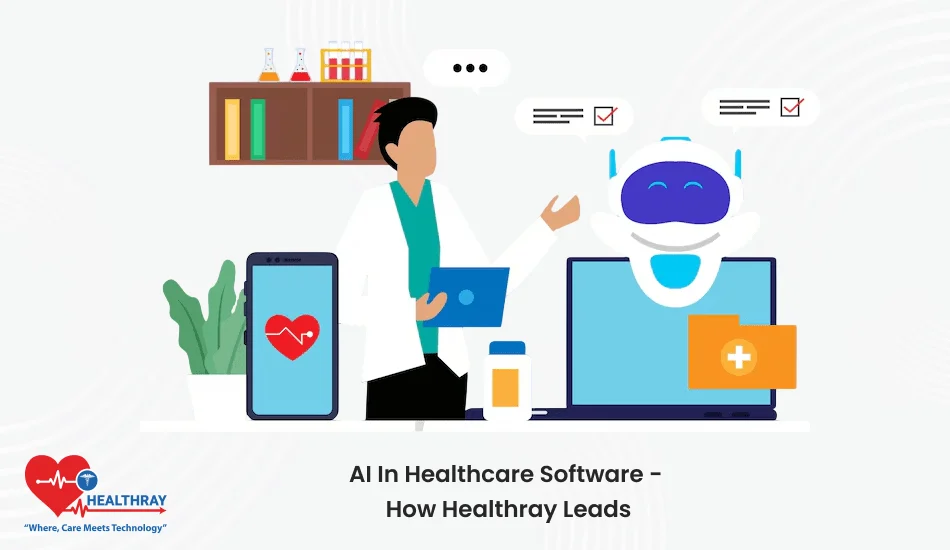
Healthcare tasks are itself a challenging predicament, the latest AI technologies makes it so much relief to healthcare staff. Addressing the global healthcare obstacles across departments, acts as a revolutionary force to reinvent clinical delivery. The AI hospital software impresses providers, enhances patient care, and optimizes clinical operations. Let’s gain more insights.
Introduction
AI in healthcare has the extensive potential to revamp each clinical department and revolutionize the patient experience. Not confined to only clinical data accessibility, but also improve diagnosis to the next-level. Simplifying the duties of healthcare practitioners, decreases their work burden, and improves physician experience.
One of the biggest strengths of AI in healthcare is to examine medical images, detecting medical disease early and helps in making treatment or diagnostic decisions. Furthermore, the advanced hospital management software has the ability to modify the entire clinical eco-system and seamlessly inspect early-on medical diseases.
Healthray, an incredible healthcare solution that administers voluminous details, can anticipate disease too well, reducing inefficiencies, and improves patient diagnosis. Furthermore, it gives multiple options to treat one’s disease, seamlessly examines healthcare images, improves treatment planning, and makes better decisions.
What Are The Impacts of AI in Healthcare Workflows?
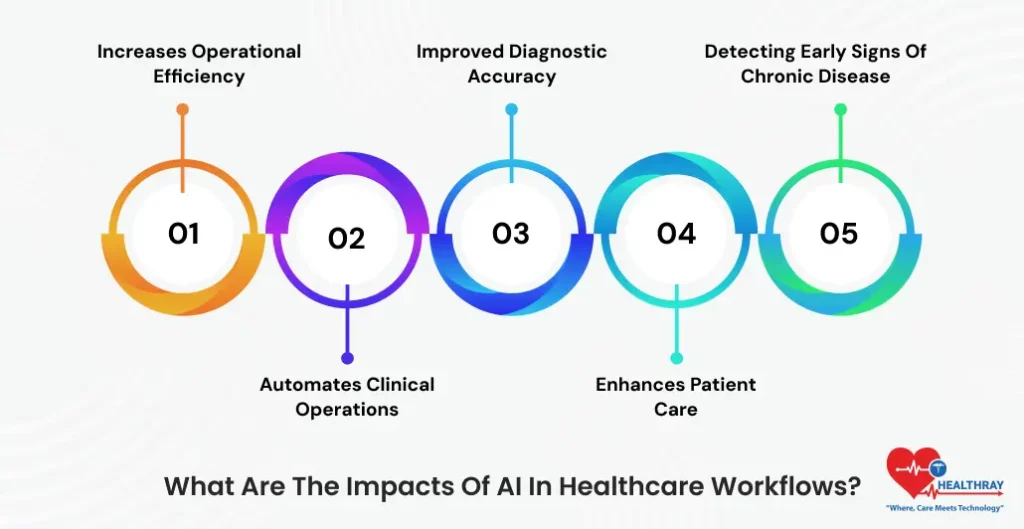
AI in healthcare encompasses different clinical technologies, each of their own duties which they perform such as machine learning, understanding recorded information and predicting well, deep learning to calculate loss and optimizing the model, and natural language processing comprehending the human language and turns into computer coded technology.
Let’s learn more about how AI impacts the clinical workflows.
Increases Operational Efficiency
In the administrative department, there is a high-end role of artificial intelligence whether to book an appointment, arrange and manage extensive clinical data, and create business intelligence reports for right administrative decisions. Moreover, AI in healthcare records can handle massive patient inquiries, schedule hundreds of appointments in a single day, and seamlessly manage calendar bookings for an entire month making an AI Chatbot Development Company a smart choice for scalable, efficient healthcare operations.
Generated the hundreds of medical invoices along with embedded codes, enhancing patient safety and decreasing risks. Furthermore, create thousands of clinical information and seamlessly manage finances. Using speech-to-text transcription that simplifies to create lengthy documents.
Automates Clinical Operations
Each healthcare leader knows the hospital workflow is the critical factor, which affects clinical revenue at a large. Furthermore, the artificial intelligence algorithm applies the available clinical information and makes the right decisions across your clinical workflows. Moreover, it streamlines to examine clinical images and can create treatment plans.
Drafting multiple healthcare documents that minimizes inefficiencies, reduces clinical errors, increases financial performance, and reduces human intervention, a process that is streamlined by AI Agents for Healthcare technologies.. Moreover, it easily flags any abnormalities and can detect the patient outcomes. Anticipating what actual patient demands, simplifying to resolve staff inquiries, and seamlessly easy to share current records.
Improved Diagnostic Accuracy
AI in healthcare software brings revolutionary force in administering information, diagnosing medical disease, and easy to examine healthcare images. Moreover, healthcare data uses advanced algorithms for unparalleled precision and augments the care level. AI in healthcare records simplifies diagnostic practices and easily analyzes the current medical condition.
Also, it examines the voluminous clinical details and anticipates the disease early-on stages. The AI-powered EMR platform utilizes advanced techniques to understand healthcare details, read the radiology images, create personalized treatment plans, mitigate diagnostic delays, and improve care delivery.
Enhances Patient Care
Progressive methodologies help in reserving seats, easily flag error in patient medical records, summarized patient details, precise interpretation of medical imaging results, and can analyze clinical or any patient reports in seconds. Moreover, it simplifies the registration process, improves patient practice, and easily diagnoses rare diseases.
It frees up clinical workers to focus on patient-centered services, simplifying for patients to get a specific document at any time. Furthermore, it seamlessly communicates with any of the specialists or providers with one single click. Mainly it renders a virtual healthcare assistant that easily answers to multiple inquiries and provides consistent support to patients.
Detecting Early Signs of Chronic Disease
When you incorporate artificial intelligence, create a new trajectory of patient care delivery and provide more efficient treatment plans than you can discover. Furthermore, the AI-enabled EMR solution is capable of inspecting chronic disease and can monitor clinical performance from anywhere.
From the lengthy clinical information, it inspects the subtle patterns that can’t even be noticed in the healthcare details. Moreover, the AI-enabled healthcare platform provides a new path to take care of patients and streamlines clinical services to make more efficient patient related decisions.
How Healthray Leads In AI In Healthcare?
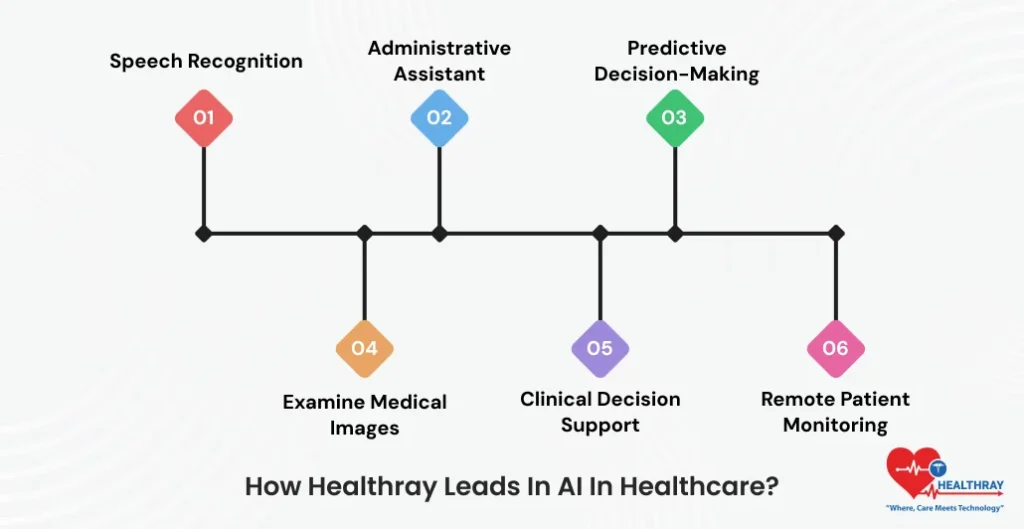
Healthray, the AI-powered healthcare platform creates an integrated clinical eco-system that manages each and every clinical service efficiently, creating future-ready workflows that can handle any upcoming challenges very smoothly. Furthermore, it is simpler to use and secure than any healthcare platform. Let’s see how healthray leads in AI in healthcare :
Speech Recognition
Based on the recent reports, it’s being speculated that the speech recognition integration will grow tremendously. It accelerates the rate of clinical workflows and enhances care delivery. The common doubt that arises after hearing speech recognition words like what it is and where it works?
Let’s clear the air, it can work in creating hospital documents, patient medical invoices, drafting clinical reports, and any office or physician related work. It translates your voice into text, which improves documentation precision, increases patient engagement rate, and saves operational costs.
Administrative Assistant
Crafting varied medical documents, answers numerous patients calls at once, seamlessly easy to draft medical invoices, and 24/7 interaction with patients. Furthermore, it swifts the interaction with a varied range of patients at the same time, sends appointment reminders, and easily traces patient health.
Therefore, the AI-enabled HMS system improves your patient journey, optimizes real-time workflows, and mitigates administrative workload, reduces wait times, and increases clinical efficiency.
 NOTE
NOTE
Predictive Decision-Making
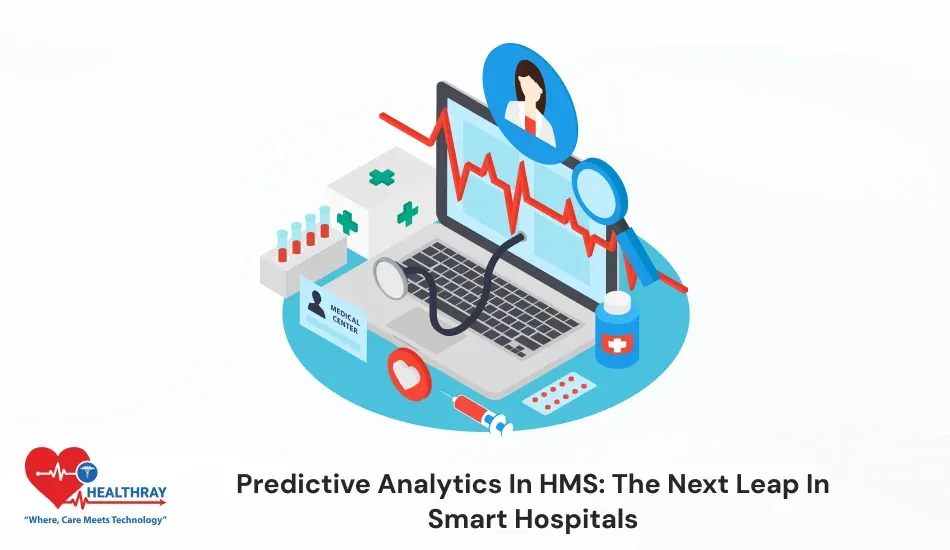
The hospital institution strides with the latest technology, which simplifies work in the shortage of medical resources, easily matches with the patient demand, makes faster clinical decisions, and can forecast healthcare outcomes. Furthermore, utilizing the machine learning technology to refine information, clean data, and apply algorithms to forecast what will happen.
Take major clinical decisions in advance without hassle, it decreases risks, reduces manpower efforts, and minimizes errors. Furthermore, it creates the visualization charts to understand the disease pattern and make the right decisions. It avoids obstacles in patient diagnosis, tracks patient progress, and makes clinical decisions in advance.
Examine Medical Images
Leveraging medical technologies to examine healthcare images, simplify to diagnose patients, and easily trace the medical condition. With the Healthray solution, you can easily gather medical images and examine them.
The CNN method helps to learn the patterns of images with varied filters, using max-pooling method for more concentrated on main functions, examining disease problems, applying activation functions like Relu or pre-relu, and creating the neural network. Moreover, AI in healthcare analyzes any critical disease and provides the relevant solution for this.
Clinical Decision Support
Artificial intelligence transforms the way to make diagnostics, patient, and clinical related decisions, easy to get evidence-based reports and revamping the complete healthcare experience.
Furthermore, the AI hospital software saves a lot of time to make decisions, improves clinical diagnosis, enhances care delivery, and mitigates cognitive load. Also, the AI-based hospital software improves workflow efficiency, mitigates potential errors, and enhances patient safety.
Learn more: 10 Questions Before Buying HMS Software
Remote Patient Monitoring
For several years, the healthcare institution relied on face-to-face visits. However, AI adoption will completely turn the clinical scenarios and enhance the power of remote patient care. Virtual patient monitoring seamlessly tracing patient health activity in the real-time, administer chronic conditions from your home, and take earlier actions to minimize risks.
Patients and caregivers both get advantages from the remote patient monitoring module, as doctors can see the real-time patient condition from any corner of and patients can easily take early on decisions.
How Is AI a Game-changer For Healthcare Workflows?
Want to get rid from the boring healthcare workflows? And, transforming the healthcare landscape. Then, you should adopt AI-based healthcare technologies that enhance care delivery, improve patient service, optimize clinical resources, and improve healthcare outcomes. Let’s glance, how it affects the healthcare workflows.
Automates Clinical Tasks
Revolutionize the hospital work system from registration, invoicing, appointment management to decision-making. Furthermore, the AI hospital software eliminates any kind of duplicate work, whether it is related to any medical document or writing prescriptions.
Swiftly inspecting anomalies of radiology images, automatically creating patient treatment, and examining the pattern of clinical data. Also, it anticipates the likelihood of medical disease and reduces risks.
 PRO TIP
Personalized Treatment Plans
A pivotal shift from conventional to customized treatment approaches, increases the patient outcomes and reduces risks. Furthermore, the AI-enabled hospital management system drafts the personalized treatment after evaluating each healthcare details and after that, easily tracing the path of getting medical treatment.
Enhances clinical outcomes, minimizes long-term expenses, reduces adverse reactions, saves enough money, saves physician time, and adaptable with evolving needs.
Early Detection of Medical Disease
Leveraging artificial intelligence (AI) to examine what is going on with healthcare disease, can analyze the current situation and suggest steps to overcome risks. Also, the hospital information management solution flags any pattern of clinical data that indicates high risks, tracking the symptom regularly, and it’s affordable to inspect any kind of disease.
Administer varied kinds of medical disease across specialists before it happens, Isn’t the out of the box part? It inspects critical healthcare diseases encompassing liver, heart, and Alzheimer.
Supporting Operating Workflows
The AI hospital software streamlines administrative procedures such as scheduling management, easily creates lengthy medical documents, impressive reports for making early on clinical decisions, simplifies to consolidate patient information, and can communicate well across all clinical platforms.
Rendering automated notifications through varied means of communication platforms like email, messages, and whatsapp. Seamlessly trace financial claims, decreases administrative burden, and coordinated departmental tasks.
Preventing Clinical Errors
One single human error disrupts the complete clinical workflows and can highly affect the patient’s medical treatment. Moreover, it creates multiple healthcare documents, easy to read and interpret by healthcare providers.
Mitigates the replicate efforts of clinical workers, enhances accuracy in medical information, optimizes clinical diagnosis, and minimizes the treatment complications.
How Does The AI Guide To Make Healthcare Decisions?
In the healthcare sector, the hardest task is not making hospital decisions but difficult to administer the ocean of information. With the advent of AI technologies, it simplifies to organize clinical information and embedded principles on it. Furthermore, examine the clinical information for making the right clinical decisions.
The AI healthcare software refine raw details into comprehensive graphical reports. Then, applying AI principles on the healthcare images and vast clinical details, improves the patient diagnosis, detects anomalies patterns, and helps in scrutinizing medical images to inspect chronic diseases within seconds. Therefore, it decreases costs, optimizes workflow efficiency, and increases patient centered-care.
Conclusion
Healthray, an AI-enabled healthcare management software that brings revolutionary change in the healthcare practice from administrative duty, physician practices, to resource management. Furthermore, it creates a greater impact on healthcare operations, patient diagnosis, care management, and healthcare outcomes. Its specialized functions that astonish each of the stakeholders such as voice recognition, clinical decision support, remote patient monitoring, and predictive analytics. Therefore, it simplifies healthcare tasks, creates personalized treatment plans, reduces clinical errors, and easily supports administrative workflows.