




Summary
Multibranch LIMS solution provides a powerful solution to connect all the operations of different clinics in the same software. In traditional software, clinics rely on different software to manage multiple branches. It causes confusion and makes resource management extremely difficult. With LIMS software, clinics can manage all the laboratories’ samples, patient information, reports and instruments from the same dashboard. LIMS systems allow real-time sharing that improves the coordination among multiple branches. You will fall behind in 2026 if your clinics continue to run several branches using an antiquated system. In this blog, I will discuss how LIMS provides a centralized solution to clinics to manage multiple clinic centers. Also, I will cover how these approaches help clinics deliver better services to their patients. Keep reading!!!
Introduction
Modern diagnostic labs and pathology networks are growing fast. Nowadays, many laboratories have several branches and operate in different locations. To manage such networked labs, clinics need a smart digital platform that is capable of connecting multiple branches and ensures smooth workflows. Multi branch LIMS solution is mainly designed for these purposes. The laboratory information management system provides a centralized platform that supports research facilities to control and monitor the entire network.
In today’s healthcare ecosystem labs need scalable and connected technology. Networked lab environment deals with complex daily operations. Different branches deal with patient registration, sample collection, test assignment and report verification tasks simultaneously. Multi-branch LIMS makes all these processes organized and allows different lab centers to instantly share the data. Doctors, technicians and lab managers can easily access the information from multiple branches.
On top of that, centralized LIMS laboratories help clinics to efficiently manage their resources and operations. Lab managers can conveniently monitor instrument usage, staff productivity and testing volume across different branches. These insights support laboratories in better planning and decision-making. Overall, it improves operation costs and lab services’ quality.
What are the Challenges of Multi-Branch Lab Management?
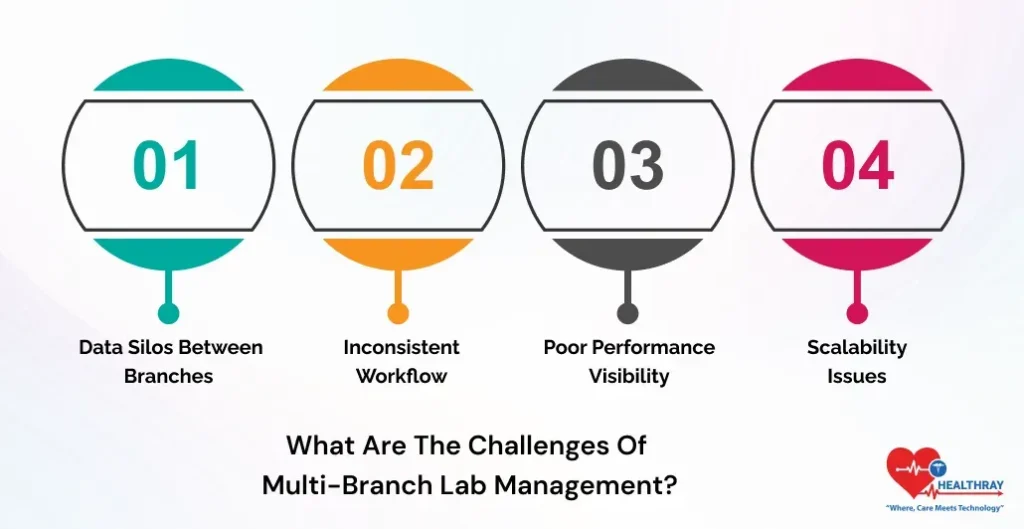
1. Data Silos Between Branches
When labs operate in multiple locations, it becomes highly difficult for clinics to share data from one branch to another. Furthermore, patient records, test results and sample details are stored in different databases and accessing the data from multiple locations is cumbersome. Let’s understand more accurately with an example: Suppose the patient has given blood samples in the Mumbai location and testing is conducted in the Delhi location; then lab technicians have to raise a request manually to check the patient histories and previous health reports. Moreover, this entire process consumes plenty of time and slows down the report delivery.
2. Inconsistent Workflow
When different branches flow their own way to implement the practices, then naturally workflows become inconsistent. Some branches are fully digital and some branches are still relying on traditional software to run the operations. Further, if operations run in different tracks, it becomes challenging for management to deeply analyze the method of operation and invest in strengthening it. Moreover, testing procedures, report format and approval processes are different for all labs. Example:
- Some lab rely in single report verification
- A few labs follows double-check approval process
- Some labs use different sample labeling techniques.
Therefore, it becomes difficult for clinics to maintain standard quality and seamless cooperation in the lab system.
3. Poor Performance Visibility
When labs lack a centralized system, then it becomes highly challenging for management to clearly check the performance of every system. Further, they are unable to determine which branch has more workload and which branch is still underutilized. Additionally, clinics have troubles in tracking staff effectiveness and instrument utilization. Let’s say, for example, if one branch operates on 200 samples daily and the other branch deals only with 50 samples daily. Traditional software takes ample time to determine the imbalance. This hinders the proper utilization of resources and negatively impacts lab efficiency.
4. Scalability Issues
When the laboratory network grows and new branches are added into the system, then lab management becomes highly challenging. Further, if branches are relying on a disconnected system, then managing all the branches under one roof is practically not possible. For example, if the lab wants to expand from 3 branches to 10 branches, then every branch’s data is stored on a different system. Management takes a long time to compile the report from different locations and evaluate the performance and analyze the operation. This minimizes the overall efficacy of the system.
How does a Multi-Branch LIMS Resolve these Challenges?
1. Centralized Dashboard Management
Multibranch LIMS provides centralized dashboards that allow lab owners and management to access the data of multiple branches. Furthermore, in these dashboards, clinics will get real-time information about sample registration, testing status and report generation. Administrators no longer need to check the entire system separately. They can conveniently manage the lab operations of multiple sites without the need to hire additional staff.
2. Real-Time Sample Tracking
Multi-branch LIMS systems allow sample registration and tracking in real time. Further, Lims’ system automatically updates the sample in the dashboards once the specimen is collected by the lab specialist. Lab technicians can easily view all the stages of a sample from collection to final report delivery in a single platform. They no longer need to collect manually and update in the system. This enhances the transparency in the system and minimizes the risks of sample misplacement and delays.
3. Cloud-Based Data Synchronization
Modern multi-branch LIMS are completely constructed on cloud architecture. In a traditional system, a clinic has to manually maintain and update every piece of software. This consumes plenty of time, and managing multiple branches accurately is practically not feasible. With a cloud-based LIMS model, data automatically synchronize among multiple branches. Further, Cloud migration for labs evades the need to maintain the local server for each branch separately. Staff can browse the data from multiple locations confidentially by just submitting their credentials.
4. Centralized Inventory Management
Labs should have a clear idea about reagents, kits and supplies availability. In this case, guesswork will not work out. If inventory is not clear, it delays the test reports and slows down the practices. Further, centralized inventory management displays all the branches’ stock data in a single platform. In a single click, clinics can examine the availability of stock. Real-time updates provide clear visibility to staff when the stock level goes below the threshold.
Step towards digital era with our healthcare solution
Revamp your hospital facilities and embrace change for better healthcare management. Ease in managing and organizing large medical datasets leads to effective analysis. Seize the opportunity now!
Real-World Implementation Strategies
1. Start with a Clear Needs Assessment
Every strong system starts with a clear understanding. Before initiating the implementation step, labs should clearly analyze their current workflows. Further, when clinics map these processes, then they can clearly understand which task is consuming time and which task is performing well.
Need assessment help clinics:
- To clearly understand the workflow of every branch.
- Helps clinics identify high-volume tests
- Helps clinics spot process gaps and delays.
- Ensure smooth and planned rollout.
2. Begin with a Pilot Branch
It can be unsafe to implement a new system in all branches at the same time. Further, if clinics encounter any technical issue or workflow problem, then it negatively impacts the entire lab network. The smart strategy is to begin pilot implementation on a single branch. This approach helps management determine how the LIMS system is performing in practical scenarios. This approach minimizes risk and gives ample time to staff to adapt to the system. Read our blog LIMS implementation roadmap to deeply evaluate the parameters before launching the LIMS system.
Pilot implementation helps clinics in :
- To test the system in a real workflow.
- To gather practical feedback from lab teams.
- Simplify the complex procedure
- To discover technical issues at the early stage.
 PRO TIP
3. Follow a Phased Rollout Strategy
As already discussed, implementing a new system in multiple branches can disrupt the system. That’s the reason clinics should adopt a phased rollout strategy. Clinics should use a step-by-step approach to introduce LIMS in different systems. In every stage, clinics should test the system functionality and collect the practical views from users and make efforts in small improvements.
Phased rollout strategy helps clinics :
- Train the system gradually.
- Minimizing the implementation risks
- Reduce unnecessary workflow disruption.
- Ensure smooth expansion.
Multi-Branch LIMS Solutions: Integrate Instruments and Other Systems
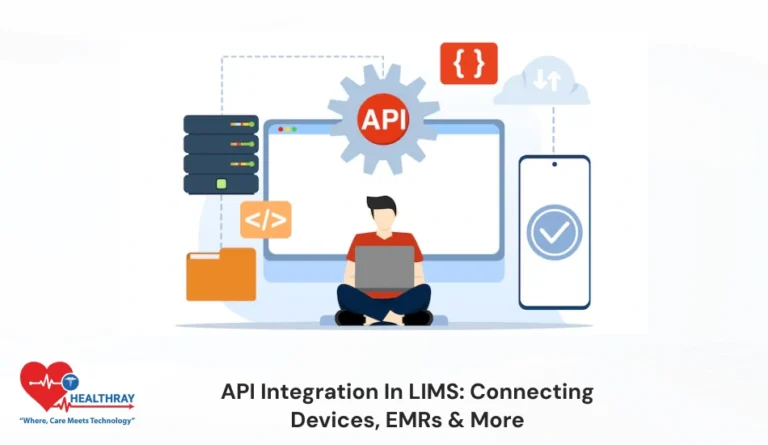
LIMS should be recognized as more than just software in modern labs; clinics should integrate it into a connected ecosystem. In simple words, clinics should integrate it with lab instruments, EHR systems and billing software. When systems are connected to each other, automatically they will transfer the data to other systems without any manual effort. API integration reduces the manual exertions of Lab technicians.
For example, if an analyzer machine generates blood test reports, then they are automatically displayed in LIMS dashboards. Thus, staff no longer need to enter the test results of patients manually into the system. Check our blog Role of LIMS in healthcare to get more details about it.
System integration helps labs:
- Expedites the process of report generation.
- Able to synchronize billing and patient records.
- Automatically captures test results.
- Minimizes manual exertion.
 NOTE
NOTE
Conclusion
Multibranch LIMS gives labs a centralized system that makes it simple to oversee lab operations across several branches. Multi-branch LIMS enhances testing and reporting speed through automation and improved coordination. AI integrations, interoperability and cloud infrastructure make the modern lab prepared for the future. Platforms like Healthray help clinics to achieve sustainable growth in the competitive healthcare market.
Still facing doubts? Connect with our Healthray teams.