



Summary
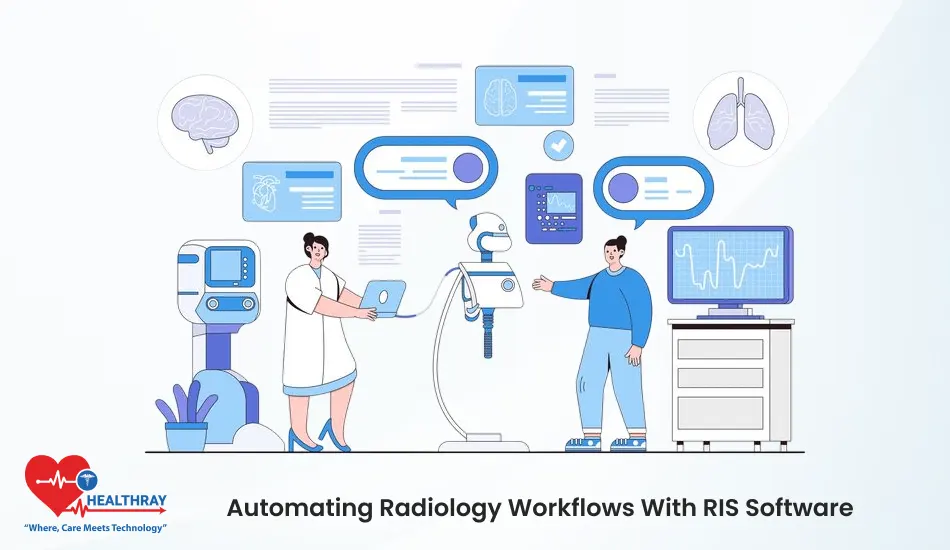
Radiology work should be simple and straightforward without any extra hassle. This is possible only with the help of radiology workflow automation software. RIS software makes the workflow simple. Set the appointments. Share the image accurately. And also writes the report on time. Radiology software reduces errors and eliminates room for mistakes. Further, radiologists can put their focus only on diagnosis and care. This automation works silently in the background and delivers clarity, speed and control in the system. In this blog I will discuss how radiology workflow automation software lessens the daily work pressure of the radiology department and transforms chaos into a standardized and coherent system.
Introduction
Imagine a diagnostic center where the machine humming sound and paper shuffle create rhythm. Radiologists are scrolling images on their screens and juggling patient histories. And you may be wondering if this mayhem will ever stop. In 2026, radiologists can easily cope with such stressful situations with the help of the radiology workflow automation system.
RIS just works like an invisible thread that seamlessly creates a link among scheduling, reporting, billing and PACS, powered by radiology workflow automation, ensuring each step is connected efficiently. RIS generates reports on time and efficiently manages appointments. Radiologists can perform their work effortlessly. Beyond that, radiologists can perform their day-to-day operations smoothly without taking on any hassle of paperwork. The entire workflow becomes a pleasing rhythm with just one piece of software. Additionally, to help you identify the precise tactics for excellent hospital uses, read our blog, RIS implementation roadmap.
Advanced RIS Modules for Multi-Modality Support with Radiology Workflow Automation
Machines That Understand Context
Every modality, such as CT, MRI and ultrasound, has a different working procedure, but with radiology workflow automation, these workflows are synchronized seamlessly for better efficiency. Furthermore, advanced RIS platforms are not just software; they are true assistants. RIS’s ability to adapt to various needs and circumstances is its best feature.
Protocols with a Human Touch
RIS automatically verifies the doctor’s order and chooses the contrast phase, whether oncology is a CT scan or a routine scan. Further, this automation does not seem robotic; it has a human touch. Also, it understands the entire context of what the radiologist wants to convey, just like a human.
When Workflows Choose Their Own Path
The workloads of trauma and X-ray centers are more than routine follow-up, and radiology workflow automation ensures urgent cases are prioritized automatically.. It automatically routes the cases according to urgency. It prioritizes trauma X-rays, ensuring that critical studies do not suffer from delays.
Action-Oriented Dashboards
Color-coded dashboards are not just visual aids. However, it provides operational clarity as well. Technologists and radiologists can easily identify which pending cases are urgent and which are ongoing and require top priority.
Standardized Technologist Preparation
Through smart devices, technologists get clear prep checklists. Further, mobile RIS applications cross-check the allergy history and contrast contraindications beforehand. This helps practitioners improve patient safety.
Hybrid Workflow Support
In high-volume centers, inpatient or outpatient workflows execute in parallel. Further, RIS software manages both through a single dashboard. Thus, it minimizes duplication, error, and uncertainties and makes the workflow impeccable.
Smooth Shift Transitions
RIS supports seamless handoffs at the time of shift changes. Further, work-in-progress studies are clearly visible that don’t break the continuity. Thus, it avoids reporting delays and provides an efficient environment to carry out day-to-day medical practices.
Scalable Multi-Modality Operations
Advanced RIS modules do more than just automate the system. Further, it can easily scale to align with clinical growth as well. The system preserves stability and solidifies the overall workflow even in situations of high volume or modality change.
 PRO TIP
How Radiology Workflow Automation Optimizes Scheduling and Registration
Real-Time Scheduling Visibility
Digital radiology workflow software provides a clear view of equipment, rooms, and technologist availability through real-time calendars, enabled by radiology workflow automation for fewer errors. However, the best thing is that it minimizes the need for manual coordination and avoids scheduling errors.
Automated Appointment Reminders
SMS and email reminders can automatically notify the patient, a process enhanced by radiology workflow automation to reduce no-shows further. Few medical centers have witnessed a reduction in no-shows of up to 70% in just a few months. Also, it helps clinics effectively utilize the scan slots.
Integrated Patient Registration
RIS software is seamlessly connected to self check-in kiosks. Further, Patient demographics are automatically retrieved from the EHR. Whenever a patient approaches, data automatically get fetched from EHR. Thus, registration no longer seems an obstruction; it seems like a short pause.
Electronic Order Intake
Referring doctors mostly send their orders electronically. RIS quickly grasps the context and updates the worklist, passing messages effortlessly!
Smart Rescheduling Logic
Whenever clinics encounter conflict. Clinics quietly decide the resolution. Cases like ER CT get the highest priority as RIS automatically shifts them to the top of the queue. Thus, it efficiently organizes the high-priority cases with any external hustle and bustle.
Reduced Front-Desk Dependency
After automation, the front desk is more than just a place to serve customers. Furthermore, it guides patients and understands their problems precisely rather than just filing a form.
Shorter Patient Wait Times
As the process becomes smoother and intuitive, it enhances patient experience as well. Patients no longer need to wait in long queues for consultation with doctors. The waiting process now only takes 15 minutes, compared to 45 minutes in the past. Interestingly, patients can feel the change and truly feel satisfied with the hospital services.
 NOTE
NOTE
RIS-PACS Integration for Seamless Imaging
Bidirectional RIS–PACS Communication
When RIS and PACS link together deeply, data flows in both directions seamlessly, thanks to radiology workflow automation, reducing manual logins and delays. Additionally, PACS resends the images after RIS software transmits the order. Overall, manual logins and repeat data entry quietly disappear.
Automated Image Routing
As the order generates, images automatically route to the right PACS destination. Hence, the system executes automatically, eliminating the need to give an explanation at every step. Process runs on autopilot system mode.
Intelligent Hanging Protocols
Hanging protocols automatically load the prior studies. Radiologists can easily recognize interval change in serial chest X-rays. Thus, it eliminates the need for extra clicks and time usage to understand the critical level of seriousness.
Structured Reporting with Image Data
RIS software directly pulls the structured reporting templates and measurements from PACS tools, using radiology workflow automation to make reporting faster and error-free. Reporting is not a new step; instead, it’s a natural extension of imaging.
Cloud-Based Hybrid Architecture
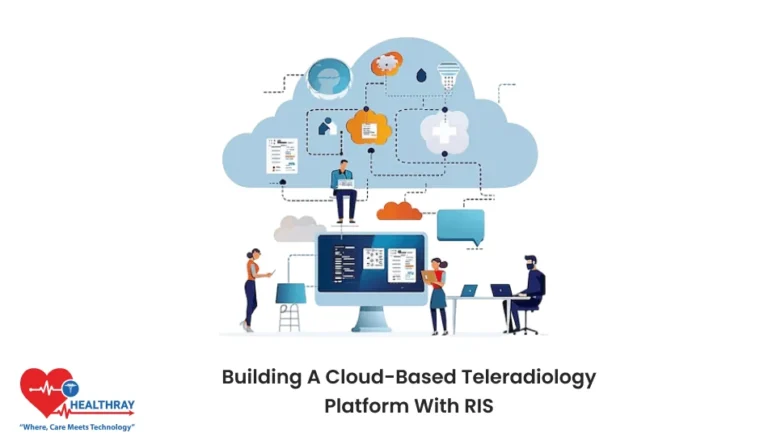
Cloud-based RIS–PACS setups provide remarkable support to remote radiologists. Teleradiology smoothly enables off-hours coverage without any system limitation.
Remote Reading Without Workflow Breaks
Whether the radiologist is working on-site or off-site, access and experience remain the same. Location may get change but the workflow remains the same.
HL7 and FHIR Interoperability
Through HL7 and FHIR standards, RIS–PACS synchronize perfectly with ehr. Reports, images, and clinical context move in a single closed loop.
Closing the Care Coordination Loop
Imaging is not a diagnosis process; it communicates perfectly as well, and radiology workflow automation ensures the information reaches the right team on time. RIS–PACS integration ensures information should reach the right system at the right time.
Specialty-Specific RIS Customizations
Orthopedic Measurement Templates
RIS software provides joint spaces, angles, and alignments of templated measurements for orthopedics. Further, it performs weight-bearing X-ray calculations automatically without any manual math.
Equipment Safety Intelligence
RIS flags weight limits at the time of MRI scheduling. This is not solely a compliance; it is a silent safeguard for equipment protection and workflow continuity.
Cardiology-Focused Reporting Structure
RIS software embeds structured formats for echo volumes and ejection fractions. Radiologists can easily calculate value from DICOM tags. Thus, help radiologists minimize integration gaps. Also, read our blog, digital transformation in radiology, to know more about automation.
Automated Cardiac Calculations
RIS software applies standardized formulas instead of manual calculation. Further, reports remain consistent irrespective of readers and shifts.
Oncology Lesion Tracking Modules
RIS tracks serial PET-CT lesion size in cases of oncology. Additionally, changes become evident over time without the need to compare reports.
Overcoming Integration Barriers with Modern RIS
Breaking Legacy System Silos
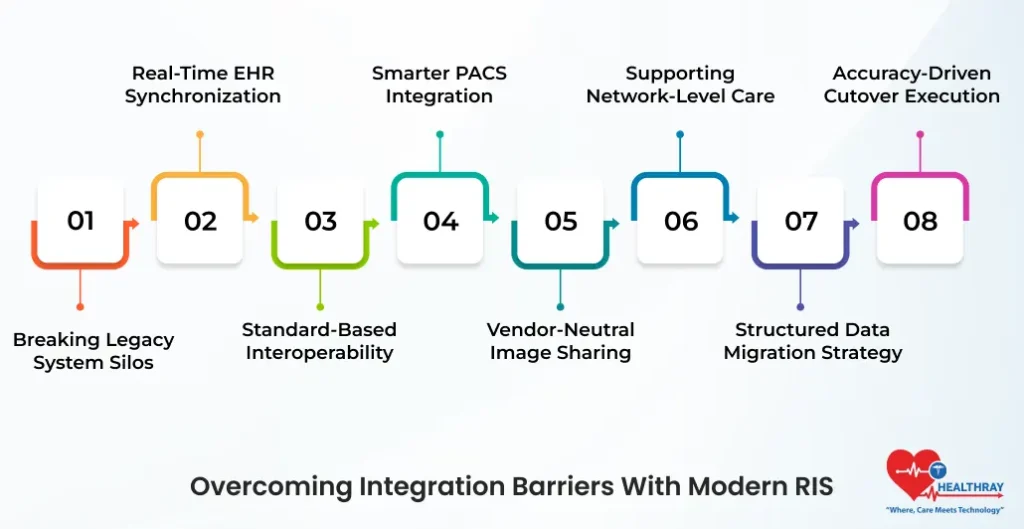
The traditional system keeps the data scattered in different departments. Further, modern RIS uses FHIR and HL7 standards in ehr and enables plug-and-play connectivity. This gradually dissolves silos.
Real-Time EHR Synchronization
Bidirectional APIs instantly synchronize patient demographics. Further, it minimizes duplicate data entry, which was common in non-integrated sites.
Standard-Based Interoperability
FHIR and HL7 are not merely for compliance. It also ensures systems understand each other without custom workarounds and manual bridges.
Smarter PACS Integration
As the radiologist opens the current scan, the patient’s old scans and reports are automatically reflected side-by-side on the screen. Side-by-side comparisons of Neurology follow-ups, such as serial MRIs, occur naturally and require no additional steps.
Vendor-Neutral Image Sharing
With VNA integration, images are not just limited to a single vendor. Further, it opens possibilities for cross-enterprise sharing, which is critical for trauma networks or multi-site hospitals.
Supporting Network-Level Care
When patients relocate, their data is relocated as well. RIS software ensures image continuity remains fully functional, even if the patient changes the location.
Structured Data Migration Strategy
As we know, data migration is a delicate and risky moment. That’s the reason modern RIS use staged import. In this case, data moves gradually and step by step, rather than all at once.
Accuracy-Driven Cutover Execution
Validation tools check data accuracy at the time of migrations. It ensures 99.9 % integrity so that even after go-live, the system remains consistent without holding any ambiguities.
Training Strategies for RIS Adoption
Blended Learning Approach
Blended learning is effective for RIS adoption. In this approach E-learning modules incorporates with live simulations such as mock scheduling rushes. This helps radiologists understand real-world pressure beforehand and helps them tackle scenarios more effectively.
Simulation-Based Practice
Live simulations provide sufficient space for staff to experiment with the system. Errors occur at training phases. This helps staff to easily curb the situation at the training phase only so that after go-live they do not encounter similar hostile situations.
Peer-Led Knowledge Transfer
Knowledge flow should be consistent even after the training phase. Make it a continuous process. Even within the team, system proficiency quietly increases.
Conclusion
Radiology becomes more than a response-based system with RIS automation. RIS software ensures clear workflows and anticipates load and priorities. Also, it improves operational margin along with care quality. Simply put, it’s a deliberate move; departments automatically move in the right direction.