

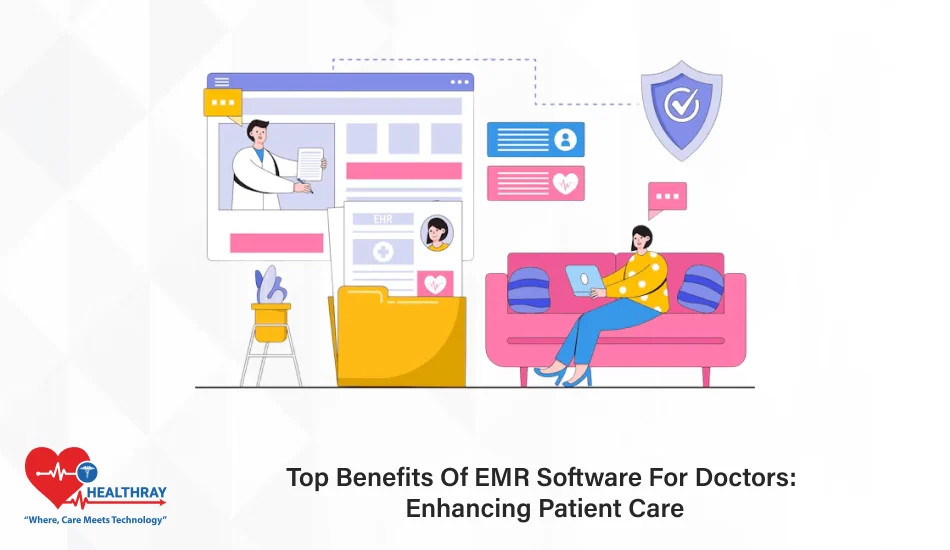
The fast-paced evolution of the healthcare sector is, above all else, thanks to technological advances that have dramatically changed how patient care is delivered. The Electronic Medical Record (EMR) software is a greater innovation for the industry. EMR software offers several benefits to doctors and other healthcare providers that improve clinical efficiency, patient care, and healthcare delivery as a whole. In this blog, we will discuss the main benefits of EMR software for doctors and how it improves patient care.
What is EMR Software for Doctors?
What Is EMR Software For Doctors – Healthray
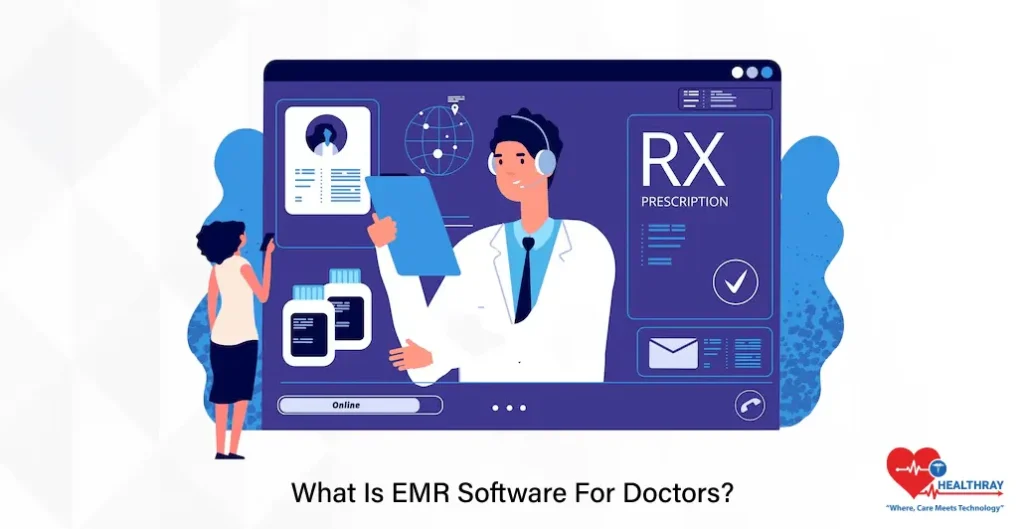
Before looking into the benefits, it is important to understand what EMR software is and how it is utilized in a medical office. EMR software is simply a digital version of the paper charts used in the doctor’s office. It includes the medical and treatment history of patients and, therefore, allows healthcare providers to store, manage, and share patient data efficiently.
Designed to support clinical workflows, EMR software for doctors provides electronic management of patient information such as demographics, medical history, lab results, prescriptions, etc. Functioning as a central electronic record system, EMR software profoundly enhances accessibility to critical patient data while supporting its practitioners in making decisions during the care of their patients.
Top Advantages of EMR Prescription Software for Physicians
Enhanced Patient Record Access
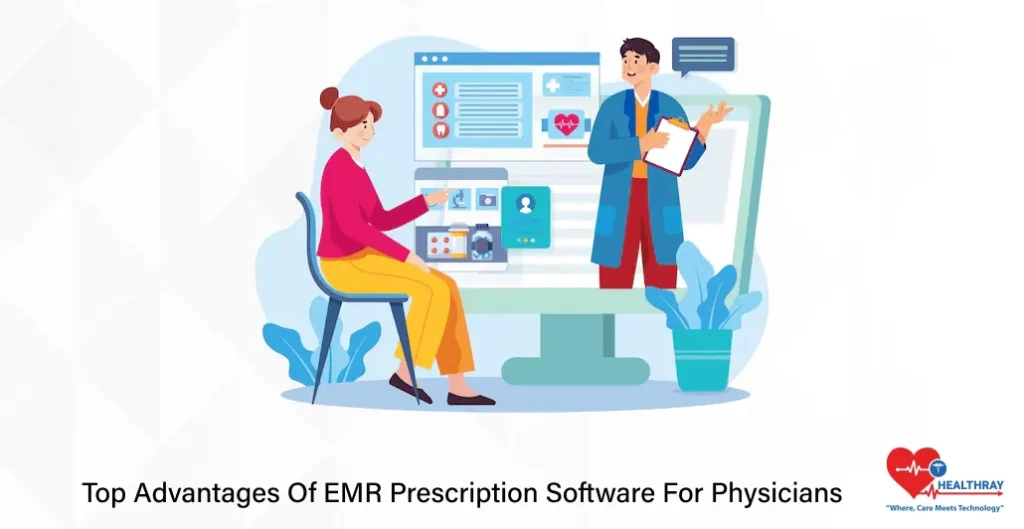
Among the first advantages of EMR software for doctors is that it grants practitioners instant access to the records of patients under their medical solution. Physical storage refers to traditional paper-based systems, making them more cumbersome in emergencies or when a doctor is away from the office. With EMR software, healthcare providers can access patient information from any PC or device with Internet connectivity.
As for the EMR systems, doctors can check the medical histories, lab results, and previous treatment of a patient at all times. This kind of access ensures that doctors make well-informed clinical decisions that will also result in better patient outcomes. Whether in the hospital, the clinic, or consulting from their homes, access to patient records within seconds significantly aids healthcare providers in diagnosis and treatment planning.
Improved Collaboration and Communication
Seamlessly communicating and collaborating are particularly vital for the comprehensive care given to a patient by healthcare professionals. The EMR software for doctors allows sharing patient information with other specialists, nurses, or allied health providers involved in a patient care.
EMR system allows information flow without hindrance and ensures every health provider has up-to-date information. For example, when a patient is referred to a specialist, the primary doctor immediately shares any related record: laboratory results, diagnostic images, and treatment plan with the specialists. Such sharing minimizes the chances of redundant tests or medical errors from partial or erroneous information.
Also, many EMR systems come with built-in messaging facilities, enabling communication among doctors, nurses, and administrative staff. This in-time updating helps share urgent matters with respect to patient care, hence aiding in an organized treatment process.
Increased Efficiency and Time-Saving
The enhanced efficiency of clinical workflows is achieved via EMR software. By automating time-intensive tasks like patient record management, scheduling, and prescriptions, EMR systems help doctors save time and engage with patients.
For instance, EMR software allows for the fast entry of patient data via customizable templates, thus deprecating the need for paper documentation. Further, reminders, e-prescriptions, and billing automation create a seamless environment for administrative tasks. Ultimately, this leads to improving efficiency on one hand and relieving doctors on the other hand from the potential downside of manual data entry and errors.
Now, instead of being bogged down in paperwork on behalf of their patients, doctors can spend much time interacting with them. Thus the quality of care improves and so does patient satisfaction.
Enhanced Diagnostic Accuracy
Diagnostic accuracy is at the center of assessing successful patient care, and EMR software greatly fosters this accuracy while being familiar to many in an MD program as something of great importance for clinical training. EMR systems give doctors thorough patient history, including prior diagnosis, medications, allergies, and test results. This information, further, guides doctors into making more accurate and informed clinical decisions.
Moreover, the EMR software very often has clinical decision support tools such as drug interaction alerts and allergy warnings and recommendations for diagnoses. These are instrumental to doctors in recognizing possible problems that otherwise may be missed in a manual system. For instance, if a doctor prescribes medication that contradicts one that the patient is currently taking, the system will alert the doctor. This level of assistance minimizes the risk for medical errors and certainly provides patient safety.
Streamlined Prescription Management
Prescription errors can lead to serious consequences for patients. EMR software for doctors offers a streamlined process for prescription management, enabling the elimination of the chances of making errors and thus enhancing patient safety. Electronic prescriptions (e-prescriptions) can be sent to the pharmacy directly from the doctors, limiting errors caused by legibility in handwriting or miscommunication.
EMR systems are also integrated with drug databases that provide relevant information about the drugs, allowing the doctor to prescribe the correct dosage and avoiding adverse drug interactions. Moreover, EMR software alerts the doctor about patient’s medication allergies to avoid dangerous prescriptions.
Another convenience of e-prescribing for the patients is that they no longer carry paper prescriptions to the pharmacy. This reduces patients’ wait and enhances the patient experience overall, making it a preferred digital workflow even in Doctor of Medicine (MD) programs where efficiency and accuracy are essential.
Better Patient Engagement and Satisfaction
Another way EMR software for doctors enhances patient engagement is by letting patients gain access to their medical records, including test results and treatment plans, through patient portals. Many EMR systems incorporate user-friendly portals that allow patients to schedule appointments, request prescription refills, and communicate with their health care providers.
Access to their health information allows a patient to take an active part in their own care, the heightened involvement leading to greater satisfaction as patients feel more incorporated in treatment decisions.
Moreover, patient portals foster doctor-patient communication. Rather than relying solely on phone calls or office visits, patients can send secure messages to their health care providers with questions or concerns. This convenience strengthens the doctor-patient relationship and leads to more personalized care.
Adherence to Regulations and Standards
Healthcare providers, for example, in the USA, must comply with an array of regulations and standards. Such is the case for the Health Insurance Portability and Accountability Act (HIPAA), which entails the protection of patient data regarding privacy and security. Electronic medical records software for doctors is designed to assist health care providers in the meeting of compliance requirements by providing a suite of data-protecting measures and audit track.
EMR systems involve the practice of encryption, access control measures, and user authentication processes, which ensure that patient data is protected from unauthorized access. Furthermore, these systems maintain an automatic audit trail, giving information about who accessed the patient record and what change was made. This will help healthcare organizations with transparency and accountability.
In return, through the use of EMR software, doctors will know that they adhere to legal stipulations and avoid causing harm to patient privacy through non-compliance and incurring significant penalties.
Data Analytics for Informed Decision-Making
EMR software for doctors is replete with data analytical tools for aiding healthcare providers in making informed clinical decisions. By analyzing patient data, doctors can identify trends, evaluate treatment efficacy, and make decisions aimed at optimizing care based on the data at hand.
Apart from that, EMR systems can be used to generate reports on different cohorts of patients, including the incidence of chronic conditions or the response of a treatment. Thus, this information empowers the doctors in amending treatment protocols or constructing preventive measures for vulnerable patients.
Also, EMR software is instrumental with doctors managing chronic diseases in the present day. By tracking changes in patient data over time, intervention opportunities are presented to the healthcare providers for the prevention of adverse effects related to chronic diseases.
Improved Revenue Cycle Management
EMR systems help in efficient and smoothened execution of revenue cycle management, which in turn constitutes the very essence of financial health for any medical practice.
To that end, EMR software for doctors significantly streamline billing and coding and reduce any chances of error, enabling timely submission of well-founded claims for reimbursement. This enhances the financial performance of the practice due to prompt reimbursement and less denial.
Most EMR systems integrate with billing software that automates the process of generating claims and submitting them for reimbursement to insurance providers. By erasing the necessity for manual data entry, EMR software reduces the probability of billing errors, culminating in delayed or denied payments.
Moreover, EMR systems aid in tracking patient payments by sending reminders for unpaid bills and generating financial reports that keep track of cash flows in the practice. This generalized outlook on revenue cycle management allows doctors to work on matters of their primary interest, that is, patient care, while keeping their practices financially healthy.
Telemedicine Support
Telemedicine is fast evolving into an integral part of modern-day health care, and it is the EMR software for doctors that plays a vital role in keeping up with virtual care. There are many EMR systems with built-in telemedicine applications that allow doctors to conduct their consultations over distances, seeing appropriate patient records, and able to make treatment recommendations online.
In the era of telemedicine, patients could be afforded some degree of convenience since they may have an age-old abhorrence to making a trip to the hospital for an in-person appointment due to some geographical location or mobility problems. Such wide-ranging access to care will thus render telemedicine especially beneficial for patients in rural or underprivileged areas.
Moreover, some telemedicine features inside the EMR systems enable the doctor to document virtual visits, issue e-prescription orders, and communicate with patients using encrypted messaging platforms, ensuring that patient data is always centralized and accessible regardless of the care setting.
Reduction of Paperwork and Storage Costs
Moving from paper records to electronic accounts reduces the necessity of physical storage space and its respective cost. EMR software for doctors surmounts the needs for filing cabinets, storage rooms, and off-site storage facilities to produce substantial savings.
Apart from saving on storage, EMR software also directly lessens the impact of paper on the environment. Going paperless means that the healthcare providers promote more environmentally sustainable methods; in turn, this is facilitated by a better organization and retrieval of patient records.
Doctors do not need to search through piles of paper anymore to find certain documents; EMR systems allow quick searches and easy access to patient information. More than just reducing paperwork, this means saving time, and it leads to better efficiency in the clinic and hospital environment.
Customization and Scalability
Every medical practice is unique, and EMR software for doctors offers customization options for specific needs. Be it a small clinic or a big hospital, EMR systems can mold themselves to fit the workflows and specialties and preferences of the medical staff on some basis.
Scalability allows organizations in health care to grow their systems as they grow; a real advantage. The continued functioning of the EMR system is subsequently assured, being always efficient as the practice builds additional patients, providers, and services.
Doctors can simply be sure that their EMR solution will evolve along with their ever-changing need of practice and thus yield long-term value and abundance by rendering customization and scalability.
Conclusion
EMR software for doctors has changed methods of delivering health care; it has made it possible for a host of advantages that benefit patient care and clinical workflows. These include access to patient records, collaborative work with other health care providers, aiding in making more accurate diagnosis, and engaging the patients in their own care EMR systems allow doctors to provide top-notch, efficient care. As health care continues to evolve, those doctors wishing for patient outcomes to improve, lessened administrative burden, and compliance with regulations will consider the adoption of Hospital Management System software to be exceedingly relevant. Through embracing EMR technology, doctors can refocus on what really matters; the delivery of utmost highest care of their patients.