



Quick Summary
To modify the structure of healthcare organizations, it is crucial to adopt a hospital management system. Moreover, this software has various modules such as patient registration, Appointment scheduler system, electronic billing, etc. Moreover, hospital management systems help in maintaining accurate clinical documentation and automate the healthcare process.
Introduction
The hospital management system acts as an electronic heartbeat for healthcare organizations. Have you ever wondered how to manage the entire hospital operations with your fingertips? It sounds like the toughest task. Right? But, nothing is impossible with the right software. There are different types of hospital management system available, each designed to meet the needs of various healthcare organizations.
Healthray is one of the best hospital management software, incorporating essential functionalities that are helpful for each specialist whether it is endocrinologists or dermatologists. Furthermore, these functionalities are part of hospital management system modules such as appointment scheduling, patient record management, inventory management, and insurance management.
The hospital management system is a risk taker and free professionals from a lot of burden. Easy way to execute administrative operations, manage patient records, and process entered information, whether it is finance related or inventory related. Furthermore, it improves staff efficiency, minimizes paper work, and makes business decisions at a faster rate.
The reliable hospital management system upgrades clinical services and increases hospital facilities to improve care efficiency and reduce errors. Moreover, it manages histories, creates reports, maintains data security, and improves the quality of healthcare documents. Increasing the treatment outcomes, improves patient satisfaction score, and enhances physician efficiency.
Preserves a number of large electronic documents, reduces struggle on administering clinical inventory, and increases the satisfaction rate steadily. Accurate distribution of finance, assign personnel resources to various departments, and maintain an optimal inventory level. Furthermore, the healthcare management system software creates better and intuitive reports that can be presented to all stakeholders without a hitch.
This hospital system has the large potency to record vast amounts of healthcare data and helps medical professionals simplify critical cases. Moreover, it maintains structured billing and takes timely follow-up of outstanding bills.
What are Hospital Management System Modules?
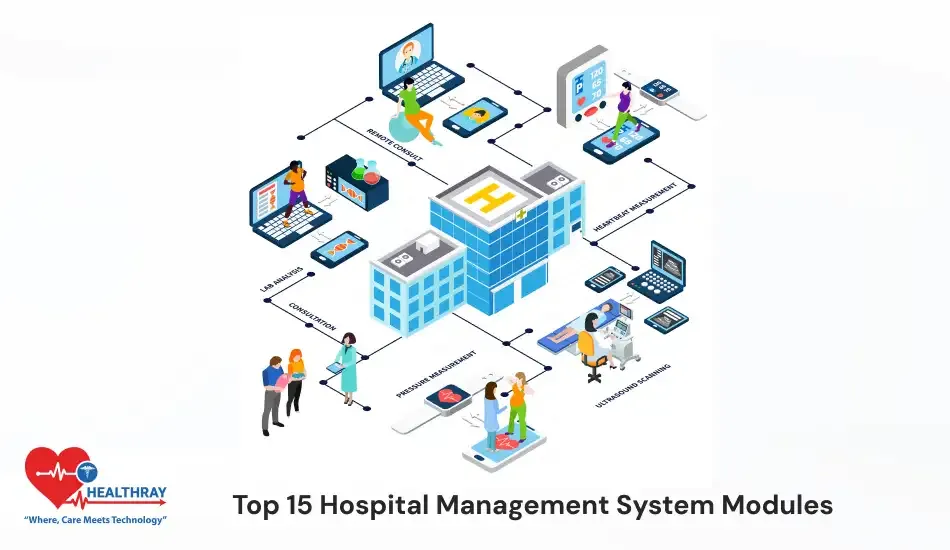
Hospital software modules are discrete modules of the hospital management system that deal with particular functions of the hospital like patient records, billing, appointments, laboratory operations, and inventory management. These modules are interconnected to form one system that enhances efficiency of the hospital and patient care is improved.
Types of Hospital Management System
It has various types of hospital management system depending on the needs of an organization:
- Cloud-Based HMS – Available on any location and updated in real-time.
- On-Premise HMS- Located locally, high level of data security.
- Standalone HMS -Apposite to small clinics having simple features.
- Integrated HMS -Integrates all departments into a single system.
Selection of the ideal type of hospital management system is based on the scalability, budget and operational requirements.
Definitive Brief Guide to Hospital Management System
A hospital management system (HMS) is a digital platform that has capabilities that have no match. Moreover, it automates your tasks within a few minutes, records patient data tirelessly, effortlessly diagnoses, generates electronic bills, and persistent health monitoring.
These extraordinary functionalities are only possible with different types of hospital management system, each designed to streamline specific healthcare operations. Consequently, it streamlines all medical activities and improves healthcare departmental services.
Dive Into 15 Leading Hospital Management System Modules
The following hospital management system modules play a crucial role in streamlining healthcare operations and improving overall efficiency.
| No. | Hospital Management System Modules | Description |
| 01 | Digital Reports | Generates and shares electronic medical reports with accuracy and quick access |
| 02 | Appointment Schedule | Manages patient appointments, reduces no-shows, and improves workflow |
| 03 | Claims Management | Handles insurance claims processing and settlements efficiently |
| 04 | Health Resource | Allocates financial and human resources effectively across departments |
| 05 | Facility Management | Manages hospital infrastructure, space, and environment |
| 06 | Physician Management | Tracks doctor schedules, performance, and coordination |
| 07 | Pharmacy Management | Manages medication inventory, billing, and vendor details |
| 08 | Medical Data Management | Maintains patient records and financial transactions in one system |
| 09 | Medical Billing Management | Handles billing processes, reduces errors, and improves cash flow |
| 10 | Laboratory Management | Manages lab operations, reports, and equipment efficiently |
| 11 | Patient Data Security | Ensures protection of patient records and compliance standards |
| 12 | Medical Inventory Management | Tracks and manages medical stock and purchases |
| 13 | Healthcare Staff Management | Monitors staff details, scheduling, and productivity |
| 14 | Bed Management | Optimizes bed allocation and patient flow in hospitals |
| 15 | Revenue Cycle Management | Manages complete financial lifecycle from billing to payment |

01. Digital Reports
- Creates a systematic e-medical files and easy to share
- Enhances document accessibility from any place
- Improves appointment information
- Upgrades medical documentation system
- Notifies when overstock and understock

02. Appointment Schedule
- Proficiently Distribute Health Resources
- Enhances Healthcare Productivity
- Minimizes No-Shows
- Streamlines Administrative Workflow
- Improves Patient Communication

03. Claims Management
- Makes sure insurance claims are submitted at the correct speed and with the rightness.
- Minimizes claim denials by proper documentation.
- Submission to settlement Tracks take claim of status.
- Increases reimbursement and enhances cash flow.
- Reduces paper work and manual processing.

04. Health Resource
- Properly allocate financial funds across departments
- Maintain optimal hospital staff levels
- Prepare treatment plans quickly
- Improve utilization of medical equipment and facilities
- Reduce operational costs by minimizing resource wastage

05. Facility Management
- Balances the space and the room allocation in the hospital.
- Secures cleanliness and hygiene conditions.
- Improves the security and safety in hospitals.
- Economizes use of resources and infrastructure.
- Facilitates the daily running of the facility.

06. Physician Management
- Reserves physician appointments and schedules.
- Physician profiles, specialties and work assignments are stored in the stores.
- Monitors performance and patient engagements.
- Enhances collaboration of medical practitioners.
- Guarantees medical standards and regulations.

07. Pharmacy Management
- Monitors the stock of medicine and tracks the inventory in real time.
- Handles details of vendors and acquisition of medicine.
- Automates pharmacy billing and prescription.
- Alerts on low inventory and refill of prescriptions.
- Makes sure that pharmaceutical guidelines are complied with.

08. Medical Data Management
- Clinical data
- Equipment data
- Medication data
- Billing information
- Treatment plans

09. Medical Billing Management
- Enhanced Hospital Cash Flow
- Properly Manages Financial Resources
- Lowers Billing Errors
- Adhere To Billing Regulations
- Risk Mitigation of Legal Fines

10. Laboratory Management
- Processes lab tests and samples.
- Enhances the precision and quality of the tests.
- Plans schedules and tasks of lab staff.
- Produces and distributes lab reports in a short amount of time.

11. Patient Data Security
- Custodians of patient records.
- Employs encryption and data-security storage.
- Holds privacy of medical/financial data.
- Makes certain of adherence to healthcare laws.
- Tracks and monitors data access and activities.

12. Medical Inventory Management
- Tracks medicine and medical supply stock in real time.
- Automates the purchase and replenishment processes.
- Keeps records of all inventory in a centralized manner.
- Eliminates out-of-stock situations and inventory.
- Assist in cost management and better use of resources.

13. Healthcare Staff Management
- Maintains staff records, roles, and background details
- Tracks staff availability, shifts, and attendance
- Supports training and skill development programs
- Improves workforce planning and productivity
- Helps reduce conflicts and ensures a better work environment

14. Bed Management
- Minimizes Healthcare Staff’s Work
- Enhanced Patient Care
- Improves Hospital Efficiency
- Effectively Manages Patient Flow
- Reduces Managerial Tasks to Allocate Medical Personnel

15. Revenue Cycle Management
- Maintain hospital finances
- Fast reimbursement process
- Persistently conformance with billing regulation
- Improves transparency of medical billing
- Streamlines financial sustainability
To simplify the hospital’s complex tasks, it is essential to implement hospital management software. Furthermore, this hospital software incorporates various modules to simplify hospital tasks and efficiently minimize the patient’s waiting time for accurate diagnosis and treatment. Let’s take a closer look at them:
Digital Reports
Hospitals Can Generate Electronic Reports Which Include Each Patient Tasks Easier. Moreover, Those Tasks Include Sharing Medical Reports with Other Healthcare Professionals and Formulating Precise Reports with No Errors. Also, it Quickly Accessible for Taking Emergency Medical Advice.Let’s dive into the benefits of digital healthcare reports.
Appointment Schedule
A newly launched feature within hospital management systems, AI call assistant. You can call and chat for scheduling appointments. Informing about the slot availability and date of appointment. Additionally, the appointment information administered by AI in the well-manner workflows. Let’s walk through the benefits of hospital management systems.
Claims Management
In a hospital management system, claims management simplifies the whole insurance process of claims creation to ultimate settlement. It makes sure that the insurance information of patients is properly documented and delivered to insurance companies on time. This module will minimize the manual labor and enable the hospitals to get prompt reimbursements because documentation and verification is automated.
Health Resource
In the healthcare organization, you have come across a variety of healthcare resources across the day. Mismanagement of resources is the primary concern for healthcare institutions. Eradicating them with hospital management systems and optimizing medical resources effectively. Have a look, what you got from the effective resource management.
Facility Management
Facility management of a hospital management system aims at taking care of the physical environment of the hospital (space, hygiene, and security). It assists in structuring and following infrastructure in the hospital that everything is used in a proper way to benefit the patients and staff. This module promotes a clean, healthy, and secure healthcare environment by making the activities of the facility lean.
Physician Management
A hospital management system that includes physician management assists in the organization and control of the activities of healthcare providers. It keeps extensive database on doctors with their schedules, specialties, and their tasks allocated to them. This module provides adequate coordination of the medical staff as well as performance monitoring and facilitation of adherence to medical regulations.
Pharmacy Management
The pharmacy management of a hospital management system deals with the entire process of medication including tracked inventory and even billing. It keeps proper records of medications, suppliers, and orders and automates the routine processes. This module assists in ensuring the availability of right medicines when required and safe and compliant pharmacy activities.
Medical Data Management
Hospital management system integrated with electronic medical records for efficient recording of entire medical and individual patient data. Moreover, this hospital software can store large amounts of patient records from their patient registration to laboratory test results. Not only HMS software records patient data but also, records many medical data.
Medical Billing Management
Billing management is one of the important aspects of the healthcare industry. Moreover, it helps in maintaining patient’s hospital billing that includes inpatient billing, insurance billing, medication billing, and surgical billing.
Step towards digital era with our healthcare solution
Revamp your hospital facilities and embrace change for better healthcare management. Ease in managing and organizing large medical datasets leads to effective analysis. Seize the opportunity now!
Laboratory Management
A hospital management system which has a laboratory management system simplifies the work of the laboratory by structuring the test processes, the activities of the staff, and the use of equipment. It makes sure that the results of the tests are performed rightly and with a speed with due records. The module assists in enhancing effectiveness and dependability of laboratory services.
Patient Data Security
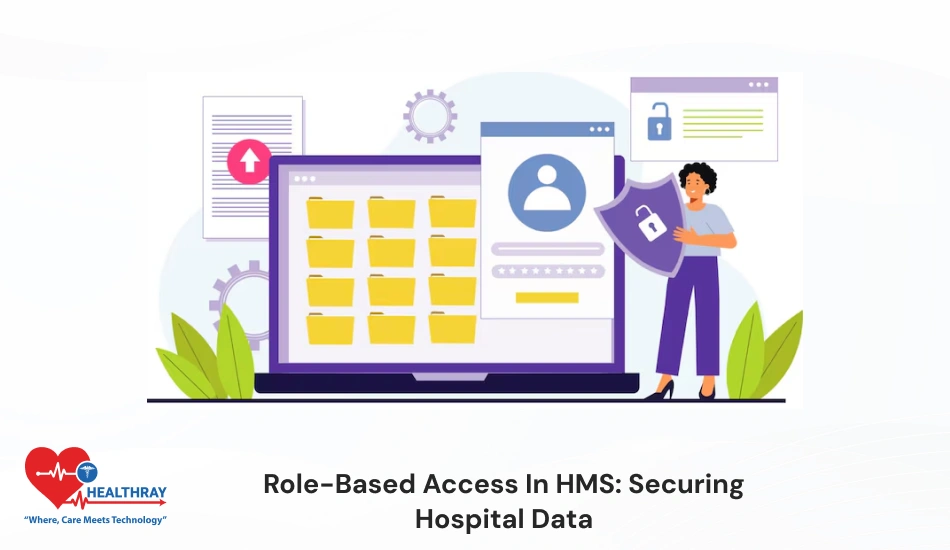
Data security where all patient data are stored in a hospital management system is so that no unauthorized persons can access the information. It employs safe technologies in the storage and management and sharing of sensitive information while upholding privacy and confidentiality. This module assists hospitals to protect patient records and ensure the standards of healthcare data protection.
Medical Inventory Management
A hospital management system will use medical inventory management to track, regulate, and maximize the utilization of medical supplies and equipment. It also makes sure that the necessary things are constantly present and the stock is not overstocked or understocked. Automating inventory processes, this module saves human factors and allows controlling the total hospital spending.
Healthcare Staff Management
Healthcare staff management in a hospital management system helps organize and monitor all staff-related information in one place. It maintains employee records, tracks availability, and supports workforce planning. By integrating with HR functions, this module ensures efficient staff utilization and smooth coordination across departments.
Bed Management
Records all hospital bed information with patient details. Moreover, helps in properly allocating beds and similarly, minimizes patient waiting time.
Revenue Cycle Management
Maintains whole hospital revenue in a unified platform where all the data already exists. Therefore, it means that it is easy to oversee all transactions of an individual’s patients with their medical information.
What are the Key Advantages of Hospital Management Systems?

- Administer all medical departments such as the administrative department, outpatient management department, financial department, inpatient department, payroll management, and stock management.
- Facilitates customization templates to simplify the medical specialist’s tasks. Moreover, it includes all specialists such as endocrinologists, oncologists, dermatologists, neurologists, and more.
- Improves patient engagement by providing a patient portal and automatic reminders. Also, increases a patient’s medical knowledge and facilitates integrity attributes.
- Eliminate paper records which reduces more than 40% hospital costs. Also, supports enhancing medical efficiency, eradicates medical errors, and saves a lot of storage space.
- Impress your patients, improves the workforce productivity, and increases physician performance.
- Optimizes appointment system, upgrades the billing system, and improves asset performance.
- Enhances treatment outcomes due to upgraded diagnosis facilities and advanced laboratory systems.
- Most importantly, saves precious healthcare providers time and minimizes patient waiting time.
Conclusion
The hospital management system encompasses endless functionaries for advancing healthcare systems. However, we are listing the top hospital management system modules such as digital reports, appointment scheduling management, claims management, bed management, pharmacy management, laboratory management, and more. Consequently, this simplifies the work tasks of all medical departments, improves healthcare efficiency, eradicates paper records, and saves a ton of time.