


Summary
In the recent radiology infrastructure, employees get frustrated due to underlie varied challenges in executing medical duties like difficulty in fetching radiology images, frequent maintenance, and opening multiple tabs for exchanging one single file. It clearly signifies the importance of the RIS upgrade strategy.
Introduction
If you are tired and overwhelmed by using the legacy RIS system – it is the right time to implement the modernized system, fit best to the personalized patient needs. Better to stop running the legacy RIS system without upgrading. Otherwise, it is the main cause of radiology inefficiency and reducing potential outcomes.
The legacy RIS platform does not provide the progressive imaging facilities as the modern radiology systems do. Moreover, this is one of your biggest hurdles to accomplish the desired level of outcomes and augment the rate of diagnostic efficiency. Not only harming the work environment but also affecting patient care services and decreasing retention rate.
We are very lucky because we have the easiest way to modernize our legacy imaging system – the modern RIS platforms, which embed with the AI-enabled functionalities and provide seamless interoperability. Also, include the radiology analytical dashboard with the predicting outcomes. Therefore, it increases innovations, enhances scalability capabilities, and decreases upfront costs.
What Challenges Are Found In The RIS Legacy Software?
Patient demands are changing as the time forwards and every sector adopting the modern trends, which entice more to them. Invest your valuable time and energy in the modernized platform and not in the outdated platform, which gives poor outcomes. See what hurdles you may find in the RIS legacy software :
Affecting The Workforce Performance
When you leverage the outdated RIS system, it mainly affects the working environment and delays the patient service procedure. Moreover, employees still do manual work as they have the RIS platform, affecting the care standards and healthcare efficiency.
Happen due to high load time, increases time of working cycles, and decreases lagging performance. Sometimes, users rely on outdated technology due to their comfort zone and do not want to use the new system. Mostly, they are the senior persons, affecting the lower staff and trainees as well.
Does Not Fit Into The Personalized Needs
Tailored-made service is somewhat hard, it can’t be provided through the RIS legacy system. Requiring the modernization features, the modern platform only has the potential to give. Here’s why it is difficult for them to go for personalized services :
- Inflexible To adapt
- Structured approaches
- Using monolithic theme
- Hard to make changes
Additionally, they create situations like information silos, difficult for them to exchange information across healthcare systems. They cannot handle the complicated workflows and have terminal-based design.
Risks Enhance Due To Non-Compliance
Doesn’t matter how much effort you make, still you get security challenges if you are leveraging the legacy radiology software, you should take steps for the RIS upgraded strategy. Without the modern RIS platform, it is almost hard to accomplish the desired objectives. Let’s look what they lack :
- Does not provide real-time notifications
- Weak encoding instead of modern one
- Not have strong accessible power
- Difficulty in compliant security protocols
Moreover, they have used old principles of securing information, non-competent with the modern environment as now cyber attackers find different manipulative methods.
Hard To Image Retrieval
In the traditional radiology platform, managing and fetching medical images would be the harder task for them, they have different folders but don’t have one central search system. Moreover, the most RIS interface is unintuitive in nature and also, does not have proper formats.
The legacy platform does not have modern functionality like one-tap searching and it doesn’t matter how many files and folders you made. Also, they have scalable issues, unable to record and fetch details.
Why Transitioning From Legacy To Modern RIS system?
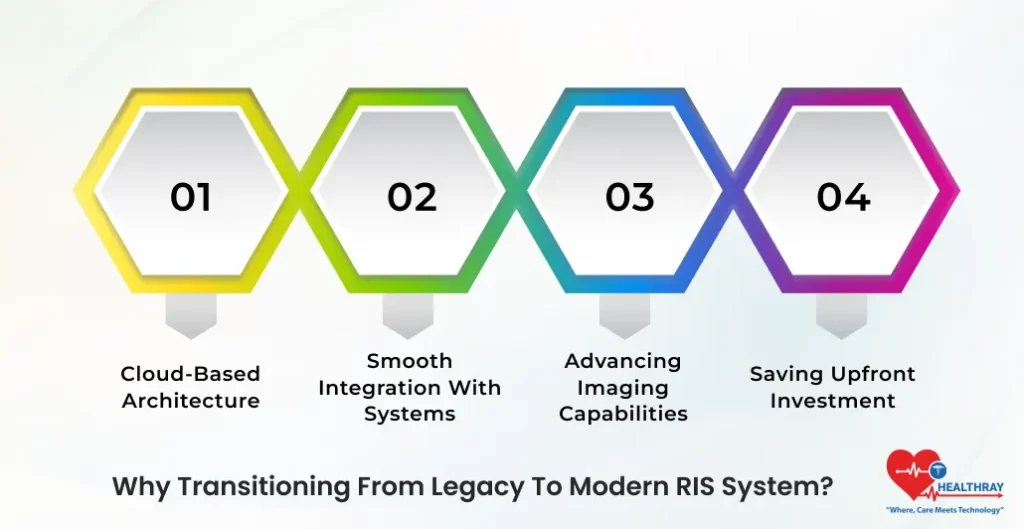
Are you planning to shift from legacy to smart RIS platform? Then, it is a great move. Eradicating the arising bottlenecks – decreases efficiency, data silos issues, and productivity problems. But, what are they providing? Just let’s see –
Cloud-based Architecture
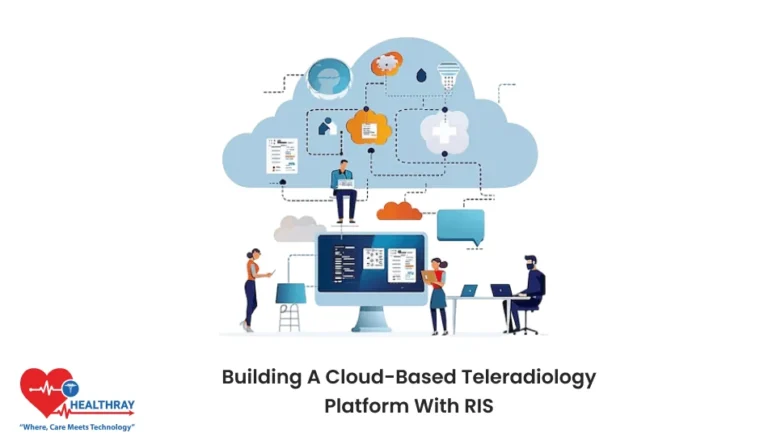
Leveraging the remote server is all you need in the current cloud-based architecture, assisting to control radiology workflows from distant locations, rendering extravagant data security, and smoothly accessing information within seconds. The primary elements of a cloud-based architecture includes :
- Interactive interface
- Back-end infrastructure
- Integrated Layer
- Supervise bandwidth constraints
Smooth Integration With Systems
One of the mind-blowing advantages of the legacy systems, connects varied healthcare platforms, making it smoother to exchange documents. Moreover, it seamlessly flows patient details and medical reports across medical systems, eliminating replicate copies and manual procedure.
Using the cloud server system for smoothly conveying information and documents from one division to another. Moreover, it abides with standard guidelines including picture archiving and communications system, electronic health record system, and health level seven. Minimizing reporting by 30%, reduces frustration, and increases the precision level.
Advancing Imaging Capabilities
The picture archiving and communications system renders the excellent imaging standard, provides smart workflows, and enhances the speed rate. Moreover, it is most secure and increases diagnostic standards.
- Get images accessibility from anywhere
- Examining radiology imaging reports easily
- Swiftly trace images at anytime
- Provide offline availability of medical systems
Therefore, it secures extensive information and provides smooth remote accessibility, tracing chronic conditions, and enhances diagnostic precision.
 PRO TIP
Saving Upfront Investment
When you adopt the modern trending technology like cloud-server system, automatically preserving the initial costing and eradicating the unnecessary expenditure. Let’s see how it reduces upfront investment :
- Mitigates overhead expenses
- Best for scaling growth
- No maintenance costs
- Enhance return on investment
Therefore, the RIS upgrade strategy decreases long-term administrative expenses and increases efficiency to the next level.
Step towards digital era with our healthcare solution
Revamp your hospital facilities and embrace change for better healthcare management. Ease in managing and organizing large medical datasets leads to effective analysis. Seize the opportunity now!
Vital Elements of The RIS Upgrade Strategy
The RIS upgrade strategy methods are beyond the diagnostic potency and more eye on gaining the operational effectiveness. Moreover, the radiologists and employees are ready to leverage the modern radiology information system. Totally different from the RIS implementation checklist. Here we talk about the elements of RIS upgraded strategy :
Strategic Planning
After examining your radiology centre work environment, examine your current hurdles to accomplish the objectives. Accordingly, set what is your exact objective like decreasing 40% turnaround time, affecting workflows analysis, and enhancing cloud-based architecture.
The selected new functionalities must be aligning with your KPI’s and do not interrupt radiology routine. Moreover, check whether it integrates with modern healthcare systems and always, prioritizing the advanced features.
AI-enabled Workflows
To modernize the radiology workflows standards, you must prioritize the AI-based functionalities for enhancing efficiency, reduce average costs due to speedy work, and enhance the overall radiology eco-system. Look below for understanding how it assists to optimize workflows :
- Anticipating the appointment cancelling
- Predicting the desired inventory levels
- Manage images, easily inspect anomalies
- Create structured report for making decisions
- Sleek flow of data across systems
Speech Recognition
- In modern healthcare, there is no need to pursue conventional methods and rely on manual documentation procedures.
- Moreover, you need to implement the voice recognition tool, simplifying writing by your voice, and can be utilized anywhere and any location.
- Natural language processing (NLP) comprehends the meaning and then writes, which reduces the dictation error to zero.
 NOTE
NOTE
Strict Compliance
When you adopt the new RIS upgraded strategy, you don’t have to worry about the regulatory compliance, and data security, it is easily manageable by the new radiology information system. It is because they adopt :
- Two and multi-factor authentication
- HIPAA, GDPR, and other protocols
- Convert data into cipher text format
- HL7 (Health Level 7) integration
- Controlled data accessibility
Upgraded Your RIS Legacy System In Just Three Steps
Essential to take necessary steps that should be taken for reducing future costs, modernizing workflows, and reducing long-term risks. Without wasting your valuable time, you should conduct these three steps :
Find Out Why Do You Require Modern RIS System
At the first step of your planning process, you should comprehend why your radiology centre needs the modern RIS system. Moreover, check which server you used, what new server provides and understand their benefits as well.
Then, you should focus on smoothly transferring information to modern systems without any hurdle and then, choosing the correct vendor. Also, drafting the contingency plan, RIS vendor comparison, and focusing on smooth deployment.
Sleek Migration Process
After getting a better understanding of your organization’s objective and clearance about the need of the modern system, you can seamlessly go to the advanced migration procedure. Create phased wise and smooth migration procedure.
Selecting the right vendor for connecting with varied systems like electronic health records and the PACS system.
Deployed A Reliable RIS System
Creating the accurate implementation strategies for the reliable radiology information system, drafts in the best possible manner, it does not interrupt the current workflows. Furthermore, employee training is the crucial one after implementing accurately.
You should check the progress for about 2-3 weeks after correctly implementing the scalable and reliable radiology information system.
The Smart Approach : Hybrid & Cloud-based Radiology System
Experienced professionals and experts suggested the cloud-based radiology architecture. However, if you have less budget and complex healthcare structure, you can go for a hybrid approach and they provide the offline mode of work, which increases information security and strengthens performance. Let’s understand why is it a smart approach to select hybrid and cloud-based approach :
- Get 24/7 document accessibility
- Smoothly transferring and refer doctors
- Increases data security and reliability
- Help in robust performance
- Enhancing the image retrieval procedure
Before taking any step, you should analyze the RIS pricing guide and make a budget-friendly decision.
Conclusion
Traditional radiology platforms won’t be able to meet your current objective and affect patient care as well. It’s the right time to move from your legacy system and adopt the modern one. Moreover, it breaks your challenges like reducing workflows performance, personalized issues, increases non-compliance risks, and delay in fetching the right image or documents. Moreover , adoption of RIS upgraded strategy helps in the cloud-based architecture, progressive imaging potency, and preserves upfront investment. Three steps you should follow while upgrading the RIS legacy system – why you need the RIS system, sleek data migration procedure, and deploying the reliable RIS system.