

Introduction
Today, EHRs have developed far beyond being just electronic filing systems into more sophisticated comprehensive tools that could potentially support virtually every aspect of healthcare. Innovations in the field of EHR technology continue to revolutionize the face of healthcare delivery with experiences that are a little easier on patients and providers alike. At this growth stage, innovations like AI, cloud-based systems, and increased interoperability are likely to help EHR systems better enable doctors to make better clinical decisions, improve patient engagement, and lighten the workload for administrators.
These innovations, though making things more efficient, affect health care providers and patients, bringing better customized care, faster health data access, and enhanced communication across networks. As with all advancements in this field, the technology leaders continue to evolve new features that meet all the challenges concerning data privacy concerns to real-time analytics, making EHR Software an indispensable part of modern healthcare.
Latest Innovations in EHR Systems
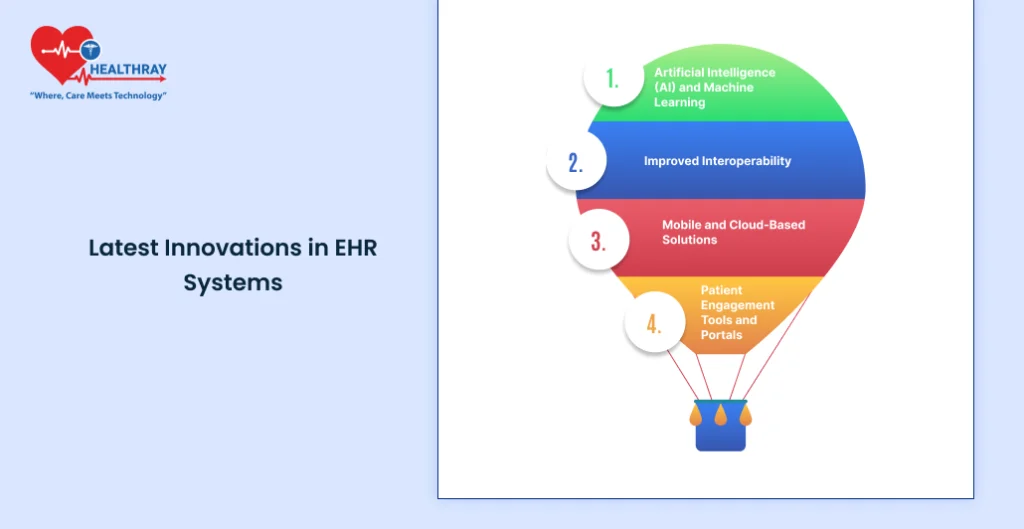
These recent developments in EHRs are working to overcome challenges that have the potential for the revolutionary transformation of the healthcare sector: issues related to data access, patient activation, and clinical decision support. Here’s a glance at some of the most transformative innovations that are revolutionizing the EHR landscape:
Artificial Intelligence (AI) and Machine Learning
The introduction of AI and machine learning brings a new age in EHR systems. It will analyze tremendous amounts of data for the healthcare practitioners to make decisions faster and based on data. For example, algorithms will identify patterns in patient records that may risk health problems or offer personalized treatment options. This innovation benefits not only the patients but also saves valuable time from doctors who currently toil with manual analysis of data.
Improved Interoperability
Perhaps one of the biggest, general barriers in healthcare has been communication among systems. New versions of EHR center on interoperability – simply the capability of different healthcare providers and systems to safely exchange data. Modern technology in Healthcare enables seamless information sharing between hospitals, specialists, and laboratories. This ensures patient records remain accurate, updated, and accessible, allowing patients to receive consistent and well-coordinated care regardless of where treatment is provided.
Mobile and Cloud-Based Solutions
With a cloud-based EHR system, data from patients may be retrieved anywhere. Such flexibility is particularly valuable for physicians working at multiple locations or requiring information on the go. Apart from that, mobile-friendly EHRs ensure efficient communication because care providers can readily access and update records with a tablet or smartphone, making health care delivery an even more streamlined process.
Patient Engagement Tools and Portals
Today’s patient expects more participation in his or her care, and EHRs meet this with patient engagement tools. Some of the most common examples are patient portals, which can be used to allow patients to input their medical records and check the results of their tests as well as their appointment schedule. It also allows safe messaging between the patient and healthcare provider, thus giving patients direct communication opportunities. The engagement level empowers the patients to be in charge of their health and information regarding their planned care.
Impact on Healthcare Professionals and Doctors
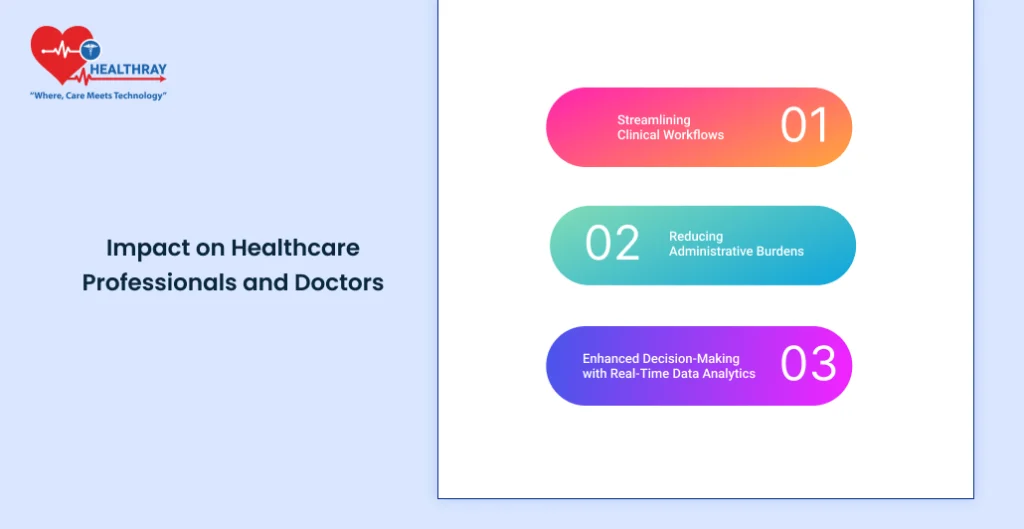
EHR innovations are more than just digitizing records; they make healthcare work more smooth and effective for front-line providers. Here’s how the breakthroughs shape the daily routines for healthcare providers:
Streamlining Clinical Workflows
The most sophisticated EHR systems have interfaces that are pretty user-friendly, which allows doctors and nurses to find, enter, and update information related to patients fast and easy. Automated entry of data along with preformatted templates minimize the repeated nature of work such that healthcare professionals will spend the minimum possible time on such activities while spending the maximum possible time on patient care. Workflow innovations also enable better interdependence among the different team members to ensure each member involved in treatment has rapid access to information concerning the patient.
Reducing Administrative Burdens
Administrative work often accounts for a significant portion of the health professional’s day. Advances in EHR technology in recent times are alleviating this heavy administrative burden through automated billing, streamlined coding, and customizable reporting. This has, therefore, meant that a doctor saves more time from paperwork to spend on direct patient interaction. This improves job satisfaction and quality of care delivered.
Enhanced Decision-Making with Real-Time Data Analytics
The EHR systems have evolved to provide advanced data analytics capabilities, giving the healthcare professional real-time views of the patient’s health status. A doctor can get into analytics tools so they can easily track how the patient is moving in treatment, point out the risks of health concerns, suggest courses of treatment, and base the data trends. Such insights come directly and are better, quicker decisions thus made by healthcare providers, with a better outcome for patients and fewer chances of error.
Benefits to Patients
EHR innovations transform the experience of healthcare not only for providers, but also for patients. With these innovations, they become active participants in their care and have access to more information on themselves, individualized attention, and better communication with providers. How does this impact patients?
Improved Access to Personal Health Information
Patients can now have direct access to one electronic portal where the summary of their care, laboratory tests, and treatment can be accessed immediately. This means patients do not have to wait for paper records or even lose important information. With direct access to health data, the patient is informed-an excellent method of managing chronic illnesses or follow-ups on progress from the recovery process.
Enhanced Communication with Healthcare Providers
Patient portals and messaging enable easy and secure communication with doctors, nurses, and other health care providers. It can be a follow-up question after a visit or clarification on medication; a patient can reach out and get answers without an in-person appointment. This feature not only improves the patient experience but also leads to better care as patients can address concerns promptly.
Personalized Care Plans and Reminders
EHR systems now enable providers to create more customized care plans for patients. Such plans may include personalized instructions, medication schedules, and even reminders for upcoming appointments or routine check-ups. In such a way, the patients can feel more in control of their health, as well as being better prepared to follow their care regimen.
Challenges and Considerations
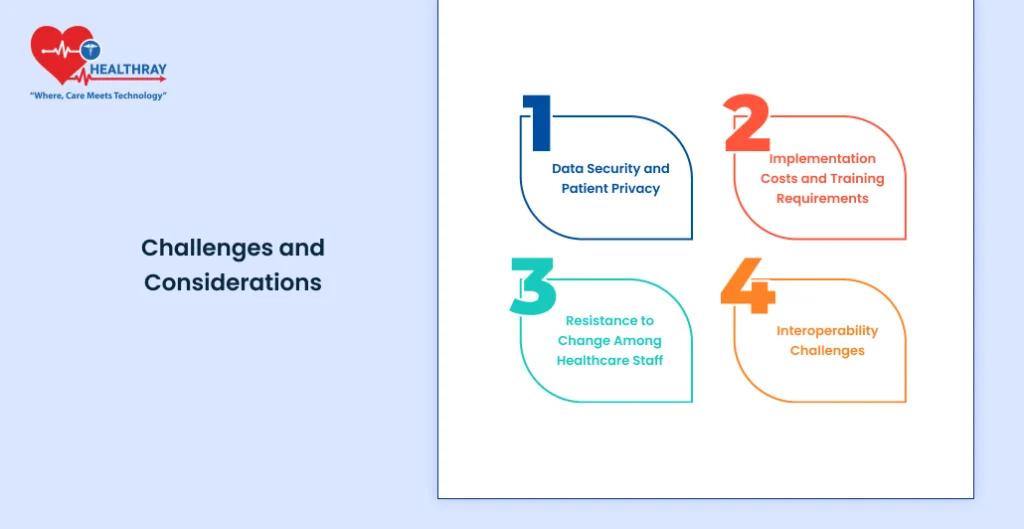
While a number of benefits are seen in EHR innovations, there are also unique challenges faced in the process of implementation by health care providers and systems. Navigating these obstacles, therefore, forms an essential component to fully realizing the potential of EHR technology in healthcare. Here are some of the key challenges:
Data Security and Patient Privacy
The EHR Software Solution only stores ever-sensitive data about patients. It is because of such an advancement that puts the need for enhanced cybersecurity measures into the limelight. Healthcare providers are thus at constant pressure as cyber threats continue to grow. This would compromise privacy but also affect the confidence of the patients, thus security forms an imperative component in the successful EHR solution.
Implementation Costs and Training Requirements
Implementing new EHR Software Solutions or upgrading current ones is capital-intensive. Expenses range from the cost of licenses and even some obligatory hardware upgrades. This would be more burdensome on smaller health establishments. Training to work on new systems is expensive as it consumes time, and this has to be weighed with instant and potential gains.
Resistance to Change Among Healthcare Staff
Legacy workflow-trained healthcare professionals might resist the change to adopting a new EHR Software Solution. The expected learning curve and opportunity for disruption of a workflow make folks uneasy. A smooth transition depends on the right kind of training and support in facilitating staff through these changes and maximizing the benefits that the EHR can bring to the entire organization.
Interoperability Challenges
Despite the above progress, there exist interoperability barriers that EHR Software Solutions sometimes encounter, and system standards and compatibility differences can sometimes make seamless data sharing nearly impossible, especially across providers who use older systems. Indeed, full potential on EHRs exists in satisfying a unified need for patient care, but this lacks completeness without the industry-wide standardization efforts.
Future Outlook
The future of Electronic Health Records (EHR) promises even greater advancements in terms of rapid progression made in technology. New tools and emerging technologies are on their way to redefine the ways in which healthcare providers, patients, and systems interact with EHRs. Here’s a glimpse into what the future may hold:
Integration of Blockchain for Enhanced Security
Blockchain technology has wide recognition due to the secure storage and transparent data space; one reason why it is emerging in the health sector is to further safeguard patient’s data. With blockchain, EHR systems could provide a security overlay that makes data unattainable to unauthorized persons without altering sensitive information contained therein. This could herald a more dependable and secure way of handling patient data.
Internet of Things (IoT) and Real-Time Health Monitoring
Widespread availability of wearables and IoT-enabled medical equipment presents an opportunity for EHRs to incorporate real-time health data from patients in a seamless way. These devices could help EHRs provide health professionals with the ability to gain continuous updates about a patient’s vital signs, activity levels, and other health metrics. Such advancement would lead to more proactive care and timely interventions, especially in chronic disease management.
Advanced Predictive Analytics and Machine Learning
Further capabilities in predictive analytics tools will be more intensely exploited in future EHR systems. Using advanced algorithms for machine learning, EHRs may predict patient outcomes, detect warning signs ahead of time, and make recommendations for preventive measures based on data patterns. This transition to a predictive healthcare approach will probably reduce the number of hospital admissions, better patient outcomes, and health care delivery efficiency.
Enhanced Personalization through AI-Driven Insights
Advanced technology in AI will soon enable EHRs to better tailor services to individual patients. These could run the gamut from customized treatment plans to predictive reminders concerning medication and appointments. The insolvency of large amounts of data is likely to make healthcare more tailored to every patient’s unique health profile. This would empower a patient to feel more in control of their care, while equally important, supported by their healthcare providers.
Conclusion
Innovations in EHR are transforming health care in ways mutually beneficial to providers and patients alike. An integrated Hospital Management System helps in these innovations in EHR, which include AI-driven analytics, interoperability, and better tools for patient engagement, making these systems simply the “heart” and soul of service providing for efficient, high-quality health care.
It is easy to express these developments to healthcare professionals in terms of saving time on clerical work within the Hospital Management System and concentrating more on direct patient care. For patients, themselves, the new developments allow them greater control over their data and bring their records more to sight to be able to make better informed decisions and take part in their health care in a more proactive way.