India’s healthcare system faces workforce constraints, while AI tools are increasingly being used to analyse X-rays, screen for tuberculosis and assist with clinical documentation. These examples show how AI is being applied to clinical and operational tasks across the country’s healthcare system.
But the numbers behind this growth are scattered across government releases, parliamentary replies, industry surveys and market research reports. Estimates also vary considerably, particularly when it comes to the size of India’s AI healthcare market.
We have brought together key AI in healthcare statistics for India in one place. The article covers market size, clinician and hospital adoption, government initiatives, real-world applications and funding. Each figure is linked to its source, and where research firms report different estimates, we present them separately rather than treating them as a single agreed figure.
Top 10 AI in Healthcare Statistics in India (2026)
- 41% of clinicians surveyed in India had used AI for work purposes in 2025, more than three times the previous year’s figure of 12%. (Source: Elsevier)
- 72% of healthcare providers surveyed in India prioritised AI for clinical documentation and data analysis. (Source: EY)
- Indian hospitals expect IT innovation budgets to increase by 20–25% over the next two to three years. (Source: EY)
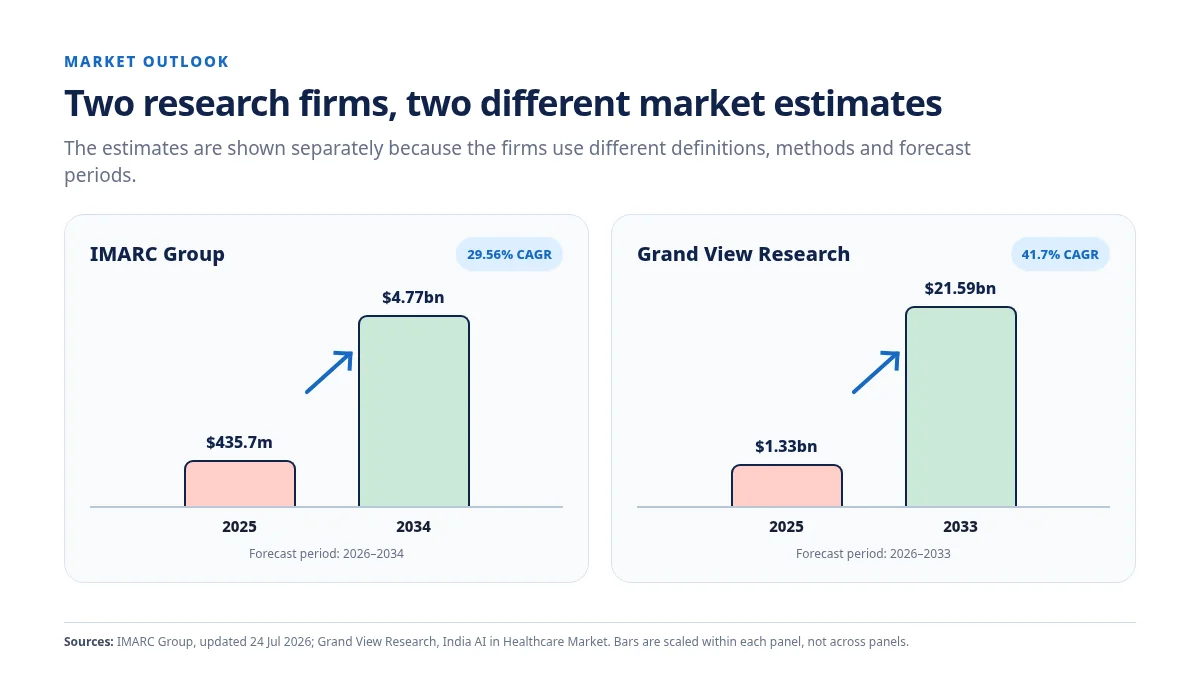
- India’s AI in healthcare market was valued at USD 435.7 million in 2025, according to IMARC Group, while Grand View Research estimated it at USD 1,331.1 million for the same year. IMARC projects a CAGR of 29.56% through 2034, while Grand View Research projects a CAGR of 41.7% through 2033. (Sources: IMARC Group and Grand View Research)
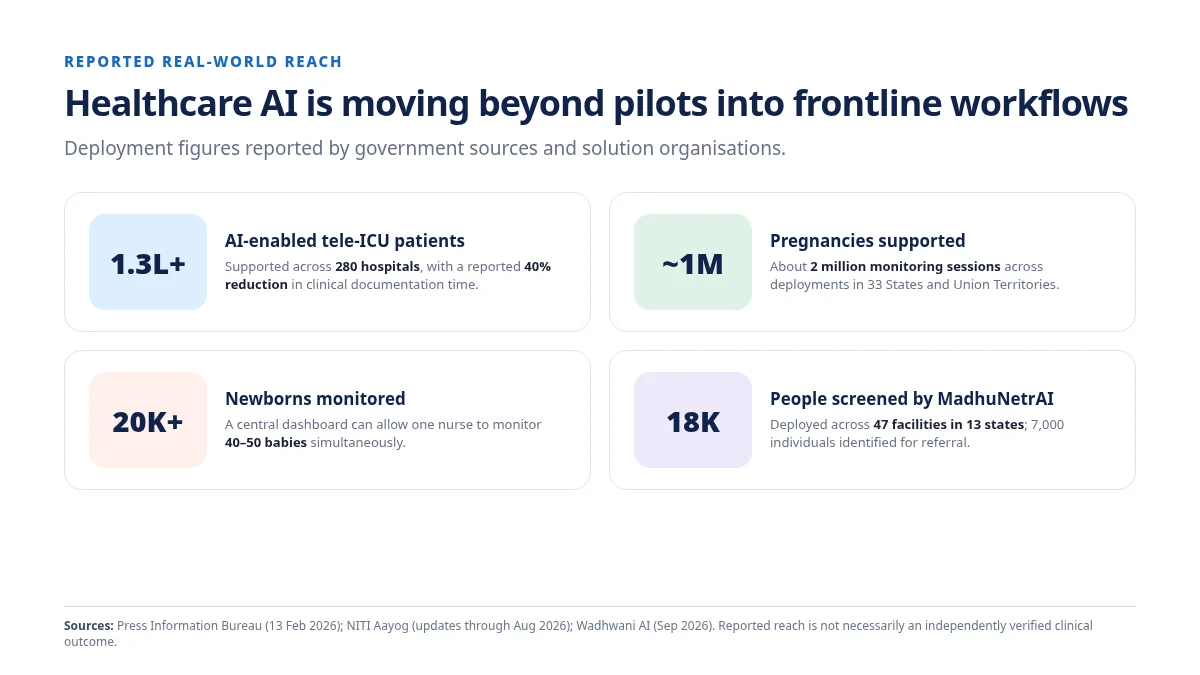
- MadhuNetrAI, an AI-based diabetic retinopathy screening solution, has been deployed across 47 facilities in 13 states and screened 13,862 individuals as of June 2026. (Source: Wadhwani AI)
- The government reported a 27% decline in adverse TB outcomes following nationwide deployment of its AI-based prediction tool. (Source: Press Information Bureau)
- DeepCXR has been deployed across eight States and Union Territories to identify nodules and cavities in chest X-rays of people with presumptive tuberculosis. (Source: Press Information Bureau)
- Cough Against TB has screened more than 1.75 lakh people, recording an additional TB detection yield of approximately 12–16% compared with conventional screening. (Source: AI Health Compendium 2026)
- India’s AI-powered Media Disease Surveillance system has generated more than 7,000 alerts by scanning digital news sources in 13 Indian languages. (Source: AI Health Compendium 2026)
- The Ministry of Health and Family Welfare designated AIIMS New Delhi, PGIMER Chandigarh and AIIMS Rishikesh as Centres of Excellence for Artificial Intelligence to promote the development and use of AI-based healthcare solutions. (Source: Press Information Bureau, 21 March 2025)
AI in Healthcare Market Size in India
Recent market research reports give different estimates of India’s AI in healthcare market. These differences reflect variations in research methodology, base years and forecast periods.
| Research firm | Market size | Forecast | CAGR |
| IMARC Group | USD 435.7 million (2025) | USD 4,773.7 million by 2034 | 29.56% (2026–2034) |
| Grand View Research | USD 1,331.1 million (2025) | USD 21,588.4 million by 2033 | 41.7% (2026–2033) |
Sources: IMARC Group – Updated 24 July 2026, Grand View Research – India AI in Healthcare Market.
Market Estimates for Specific AI Segments
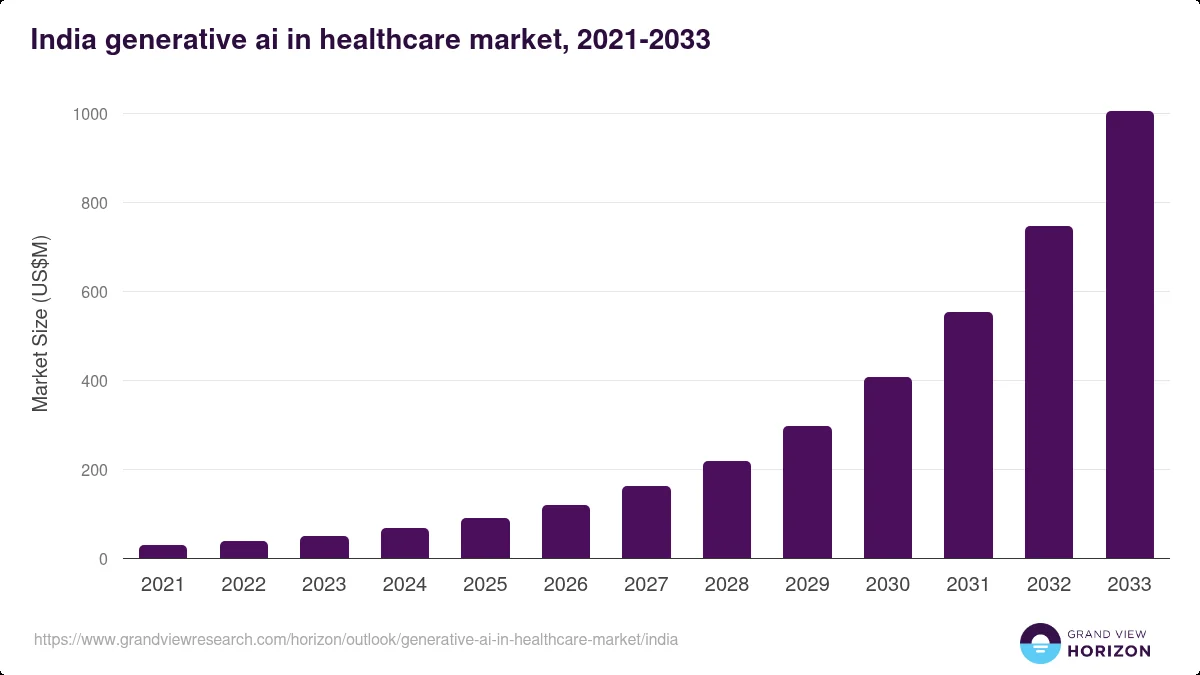
- Generative AI in healthcare: USD 89 million in 2025, projected to reach USD 1,004.1 million by 2033 (CAGR: 35.5% for 2026–2033). (Grand View Research – 25 March 2026)
- AI in medical diagnostics: USD 12.87 million in 2024, projected to reach USD 44.87 million by 2030 (CAGR: 23.10% for 2025–2030). (TechSci Research)
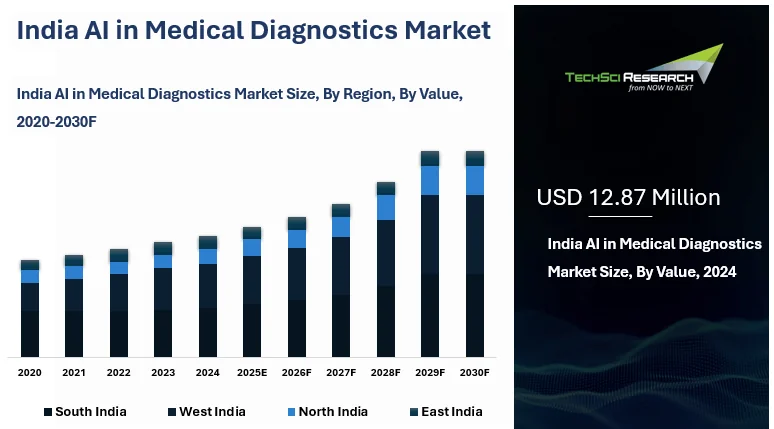
These are narrower market segments and should not be added to the overall healthcare AI market estimates.
Why India Needs AI: Workforce and Disease Burden
India’s healthcare system faces pressure from limited workforce availability, growing patient workloads and a rising burden of disease. These challenges highlight where AI could assist healthcare professionals with clinical tasks, patient assessment and hospital operations.
- According to the Ministry of Health and Family Welfare’s Lok Sabha reply dated 24 July 2026, India had 15,35,155 registered allopathic doctors and 7,51,768 registered AYUSH practitioners. Assuming 80% availability in both systems, the estimated doctor-population ratio was 1:778. (Source: Ministry of Health and Family Welfare)
- India had 42.94 lakh registered nursing personnel as of 31 March 2025. (Source: Ministry of Health and Family Welfare)
- According to Healthray Research, OPD doctors saw an average of 46 patients per day in 2026, rising to 58 in Tier 2 and Tier 3 cities. (Source: Healthray Research)
- Patients waited an average of 34 minutes from registration to consultation across 1,800 OPDs. (Source: Healthray Research)
- The number of medical colleges increased from 387 before 2014 to 846 as of August 2026. MBBS seats rose from 51,348 to 1,39,864, while postgraduate medical seats increased from 31,185 to 86,360. (Source: Ministry of Health and Family Welfare)
- According to the ICMR–National Cancer Registry Programme, India had an estimated 15,69,793 new cancer cases in 2025, based on estimates submitted to the Lok Sabha in July 2026. (Source: Ministry of Health and Family Welfare, Lok Sabha reply, 24 July 2026)
AI can support healthcare teams in responding to these demands through faster medical image analysis, early risk identification and clinical documentation. These applications can help clinicians manage workloads and make better use of available resources.
AI Adoption in Hospitals and Among Clinicians in India
AI is becoming more common in clinical practice, and Indian healthcare providers are identifying where it could improve clinical work and hospital operations. However, survey findings show that wider interest has not yet translated into large-scale implementation across healthcare organisations.
Clinician Adoption and Perceptions
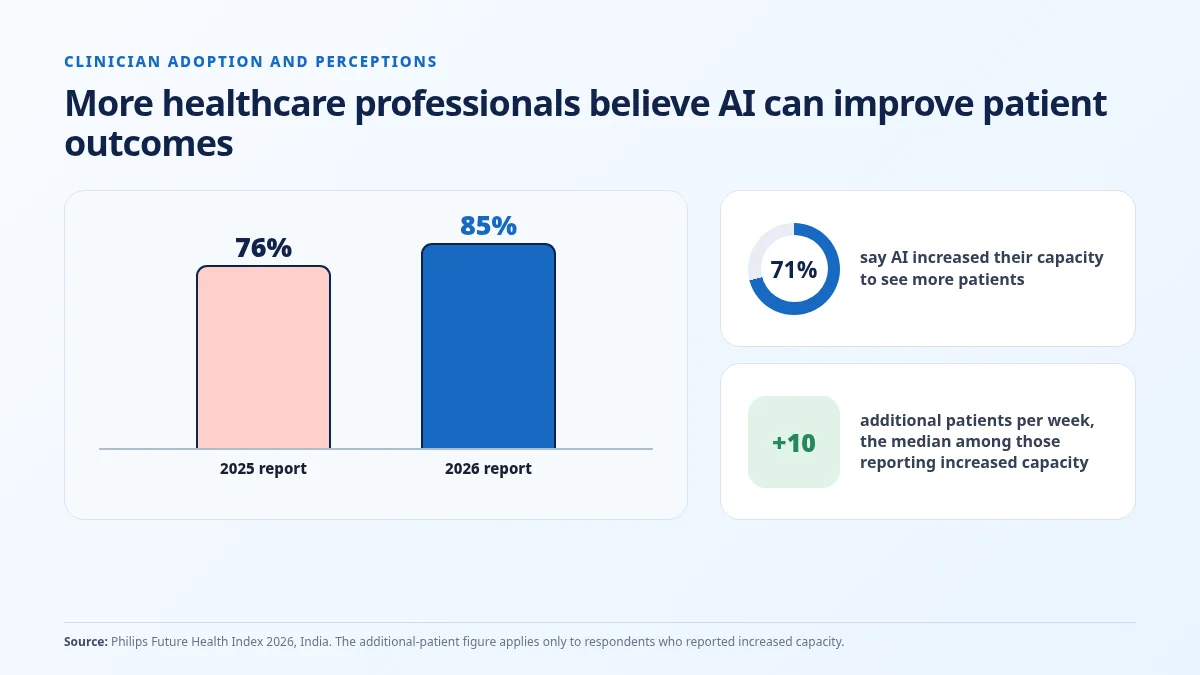
- According to the Philips Future Health Index 2026, 85% of Indian healthcare professionals believe AI can improve patient outcomes, up from 76% in the 2025 report. (Source: Philips Future Health Index 2026)
- The same Philips report found that 71% of Indian healthcare professionals say AI has increased their capacity to see more patients. Among those reporting an increase, the median improvement was 10 additional patients per week. (Source: Philips Future Health Index 2026)
Hospital Investment Priorities and AI Implementation
- The EY–CII HealthTech Survey 2025 found that nearly 50% of healthcare providers allocated between 20% and 50% of their IT budgets to digital innovation. It also projected a 20–25% increase in IT innovation budgets over the following two to three years. These figures cover broader digital investment, not AI spending alone. (Source: EY–CII HealthTech Survey 2025)
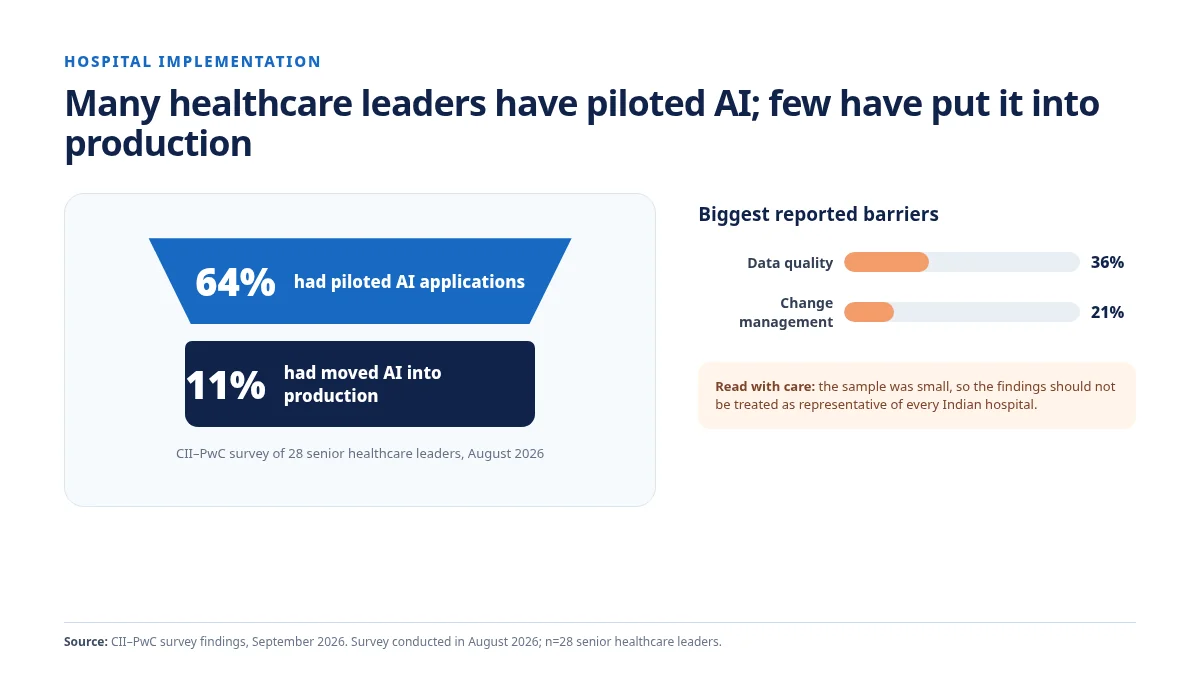
- A CII-PwC survey conducted in August 2026 found that 64% of surveyed healthcare leaders had piloted AI applications, but only 11% had moved them into production. Data quality was the biggest reported barrier (36%), followed by change management (21%). The survey covered 28 senior healthcare leaders, so its findings should not be treated as representative of every Indian hospital. (Source: CII-PwC survey findings, September 2026)
Hospital Digital Readiness: EMR Adoption in India
- 11.8% of hospitals and clinics maintained fully electronic medical records in 2026, while 88.2% still kept part of their records on paper, according to Healthray Research. (Source: Healthray Research)
- Healthray Research found full EMR use was higher in multi-speciality hospitals (62%) than in single-doctor clinics (28%). (Source: Healthray Research)
How Indian Patients Are Responding to AI in Healthcare
Indian patients are beginning to see practical uses for generative AI in healthcare, particularly when preparing for or making the most of doctor consultations. However, AI-generated health information still needs to be considered alongside advice from qualified healthcare professionals.
According to Philips’ Future Health Index 2026, 68% of surveyed patients in India said generative AI had helped them make the most of their time with their doctor. This suggests that patients see value in using AI to support their consultations. It does not establish that they trust AI to diagnose conditions or recommend treatments.
For healthcare providers, this highlights the importance of helping patients distinguish between general health information and clinically verified advice, particularly as AI becomes another source they may consult before or after an appointment.
India’s Digital Health Backbone: ABDM Statistics
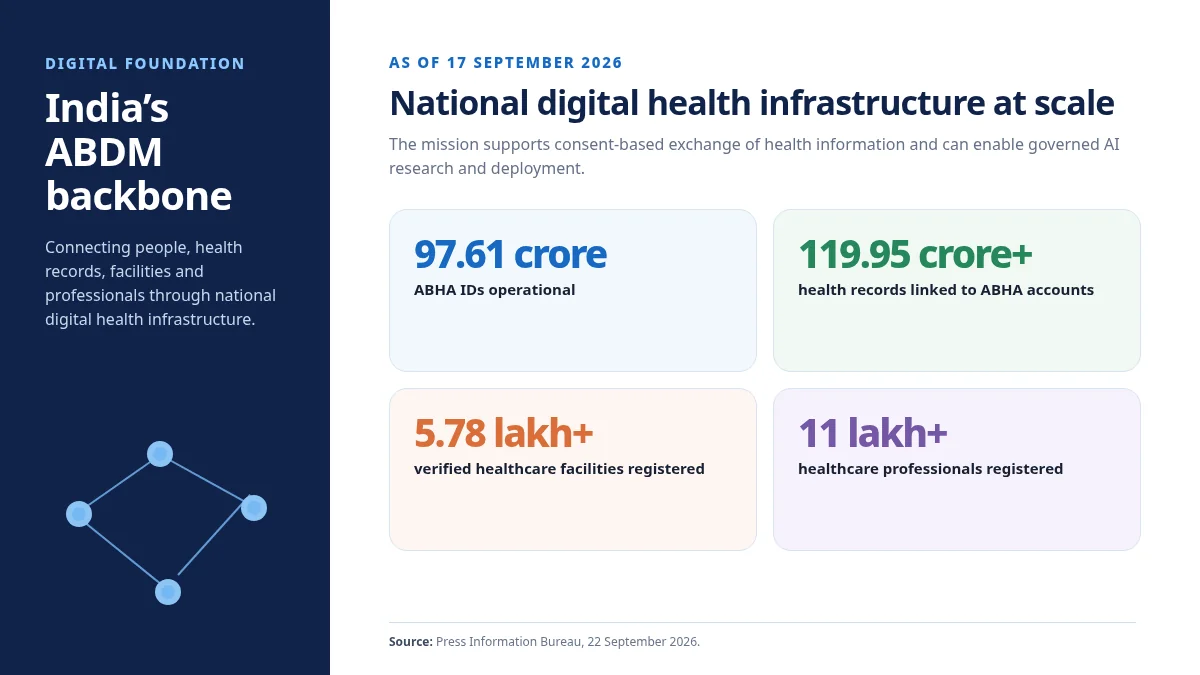
India’s Ayushman Bharat Digital Mission (ABDM) is developing the digital infrastructure needed to connect patients, healthcare facilities and health records. Through ABHA IDs, linked health records and national healthcare registries, the mission supports the secure and consent-based exchange of health information.
This infrastructure can also support responsible healthcare AI research when data is accessed under appropriate consent and governance safeguards.
According to the Press Information Bureau, as of 17 September 2026:
- 97.61 crore ABHA IDs were operational across India.
- More than 119.95 crore health records were linked to ABHA accounts.
- More than 5.78 lakh verified healthcare facilities were registered on the ABDM platform.
- More than 11 lakh healthcare professionals were registered on the platform.
(Source: Press Information Bureau, 22 September 2026)
Healthray’s ABDM integration data: According to Healthray Research, 57% of hospitals and clinics on the Healthray platform had ABDM integration as of October 2026. This provides an internal view of ABDM integration among Healthray’s hospital and clinic users; it should not be interpreted as the adoption rate across India’s healthcare sector. (Source: Healthray Research)
Government AI Initiatives in Healthcare
The Government of India is using AI for disease screening, telemedicine, outbreak surveillance and medical research.
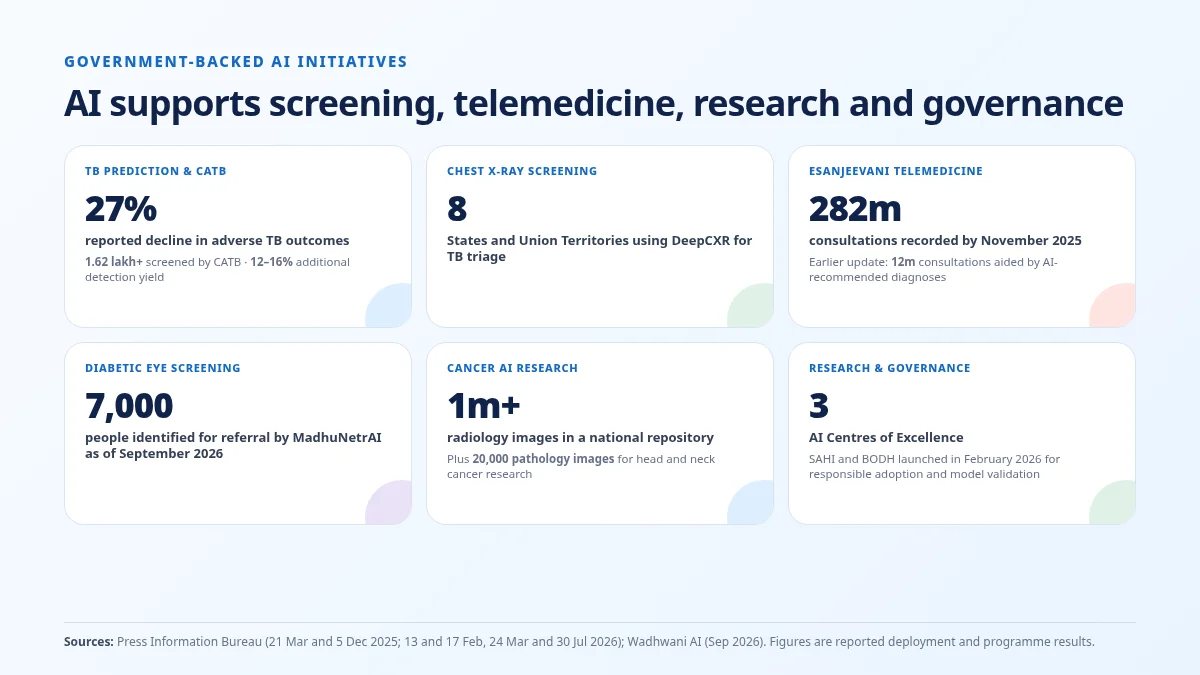
- TB screening: The Health Ministry reported a 27% decline in adverse TB outcomes following nationwide deployment of its AI-based prediction tool. (Source: Press Information Bureau, 24 March 2026) Cough Against TB (CATB) has screened more than 1.75 lakh people, with an additional TB detection yield of approximately 12–16% compared with conventional screening. (Source: Press Information Bureau, 24 March 2026)
- Chest X-ray screening: DeepCXR, an AI tool for TB triage, has been deployed in 8 States and Union Territories. (Source: Press Information Bureau, 13 February 2026)
- Telemedicine: Since an AI-powered Clinical Decision Support System was integrated into eSanjeevani in April 2023, 282 million consultations had benefited from its standardised data capture as of November 2025. Separately, the government reported in March 2025 that 12 million consultations had been aided by AI-recommended diagnoses. (Sources: PIB, 5 December 2025; PIB, 21 March 2025)
- Diabetic eye screening: MadhuNetrAI uses AI to analyse retinal images and identify people who may have diabetic retinopathy or diabetic macular oedema. As of June 2026, it had screened 13,862 individuals across 47 facilities in 13 states and identified 5,037 for referral. (Source: Wadhwani AI)
- Cancer research: A national imaging repository contains over 1 million radiology images and 20,000 pathology images of head and neck cancer for AI research. (Source: Press Information Bureau, 30 July 2026)
- AI research and governance: AIIMS Delhi, PGIMER Chandigarh and AIIMS Rishikesh were designated Centres of Excellence in March 2025. SAHI and BODH, launched in February 2026, support responsible AI adoption and model validation. (Source: Press Information Bureau, 5 December 2025) (Source: Press Information Bureau, 17 February 2026)
AI Use Cases in Indian Healthcare: Measurable Impact
AI is being used in India across diagnostics, critical care, maternal health and newborn monitoring. The figures below are reported by government sources and the organisations behind these solutions. They indicate reported deployment and reach, not necessarily independently verified clinical outcomes.
Radiology and Diagnostics
AI-based thermal breast screening has covered over 1 lakh women across India. (Source: NITI Aayog, Frontier Tech Repository)
Critical Care, Maternal and Newborn Care
- AI-enabled tele-ICU services have supported over 1.3 lakh patients across 280 hospitals and reduced clinical documentation time by 40%, according to a government backgrounder. (Source: Press Information Bureau, 13 February 2026)
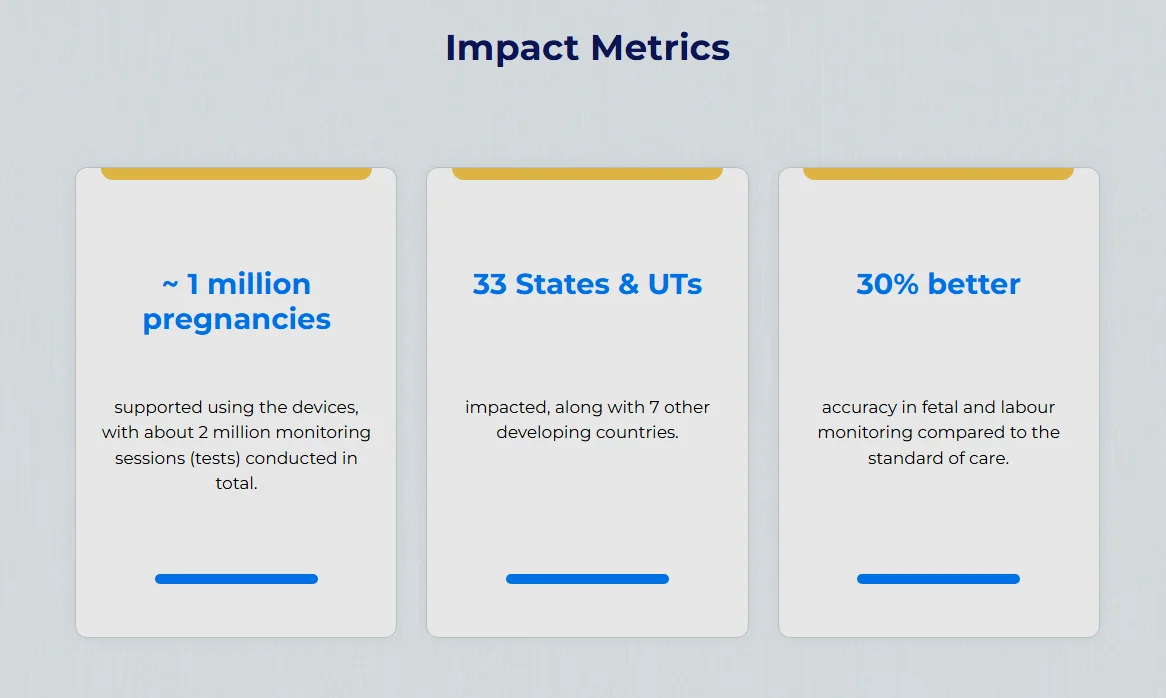
- An AI-powered maternal and labour monitoring system has supported approximately 1 million pregnancies, with around 2 million monitoring sessions across deployments in 33 Indian States and Union Territories. (Source: NITI Aayog, updated 31 August 2026)
- A wearable AI-enabled newborn monitoring system has supported over 20,000 newborns across multiple Indian States. One nurse can monitor 40–50 babies simultaneously through a central dashboard. (Source: NITI Aayog, updated 17 December 2025)
Clinical Documentation and Hospital Software
At facilities using Healthray’s AI-assisted prescription feature, average prescription time fell from 5.4 to 3.5 minutes over six months, according to Healthray Research. (Source: Healthray Research)
The growing use of AI in Indian healthcare is also reflected in startup activity and investment. The following figures look at the funding and business activity behind this growth.
Indian AI Healthcare Startups and Funding
India’s healthcare AI startup sector is attracting investment, although funding levels vary from year to year. Tracxn’s October 2026 data provides a snapshot of the companies operating in this category and the capital they have raised.
- Tracxn lists 179 companies under its Native AI in Healthcare category in India. Of these, 57 have received funding, and one has reached unicorn status. (Source: Tracxn, October 2026)
- These companies have collectively raised approximately USD 955 million in funding, according to Tracxn’s key metrics. Its annual funding data records more than USD 265 million in 2021, around USD 206 million in 2025 and USD 4.29 million in 2026 up to September. (Source: Tracxn, October 2026)
Challenges Slowing AI Adoption in Indian Healthcare
Despite growing investment and reported use cases, hospitals face practical challenges in adopting AI consistently, along with emerging compliance requirements. These include staff readiness, the reliability of AI-generated outputs, compatibility with existing systems and data protection.
- Limited AI training: In Philips’ 2026 India survey, 45% of healthcare professionals said AI training at their organisations was limited or inconsistent. (Source: Philips Future Health Index 2026, India, 11 August 2026)
- Reliability and clinical oversight: 78% of surveyed healthcare professionals said they had needed to correct AI-generated misinformation, while 86% said all AI outputs require human oversight. (Source: Philips Future Health Index 2026, India, 11 August 2026)
- Data and system integration: The EY–CII HealthTech Survey 2025 found that 50% of healthcare providers faced challenges integrating data and adopting business intelligence tools, while 40% of CIOs reported difficulties integrating new applications with legacy systems. (Source: EY–CII HealthTech Survey 2025, 10 September 2025)
- Data protection requirements: India’s DPDP framework is being implemented in phases. The Consent Manager registration framework took effect on 13 November 2026, while the main obligations for organisations processing personal data are scheduled to take effect on 13 May 2027. Hospitals using AI to process patient information will need to account for these requirements. (Source: PIB – Consent Manager Registration Framework Comes into Effect, 14 November 2026)
Together, these findings show that investment and access to AI tools do not automatically lead to wider adoption. Hospitals also need trained staff, reliable outputs, appropriate clinical oversight, compatible systems and sound data protection practices.
Conclusion
India’s healthcare AI sector is growing, driven by digital health infrastructure, clinician interest, government initiatives and startup investment. AI is already being used in medical imaging, TB screening, tele-ICU, maternal care and newborn monitoring. However, wider hospital adoption and measurable outcomes at scale remain areas that need attention.
For hospital leaders, the next step is to identify where AI can address a specific operational or clinical challenge, whether through faster documentation, imaging analysis or clinical decision support. Before adopting a solution, hospitals need to evaluate its accuracy, staff readiness, data quality, integration requirements and clinical oversight.
The real measure of AI adoption is not how many tools a hospital implements, but whether they improve workflows and support better care delivery.