


September 25, 2026

7 Best MocDoc Alternatives and Competitors in 2026

Mocdoc-alternatives-healthray-hospital-management-dashboard

During a busy hospital day, a few extra steps can quickly add up. Staff may have to re-enter patient information, billing may wait for a pharmacy or laboratory update, or management may still depend on Excel for certain reports.

As the hospital grows, these small gaps can put more pressure on daily workflows. Adding beds, expanding departments, increasing patient volumes, or managing another location can make processes that once worked well harder to manage.

For hospitals using MocDoc, this can be a good time to assess whether the current system still fits their operational needs. The question is not simply whether another platform offers more features, but whether it can support the hospital’s workflows, teams, and future growth.

This guide compares seven MocDoc alternatives for hospitals in 2026, covering what each platform does well, where it may fall short, and what hospitals should evaluate before switching.

How We Have Analysed and Selected MocDoc Alternatives

We evaluated seven MocDoc alternatives by reviewing their hospital capabilities, workflows, and publicly available product information. Our sources include official vendor websites and product documentation, along with G2, Capterra, and SoftwareSuggest reviews where available. We checked the information in September 2026.

Each platform was assessed against the same criteria, including OPD, IPD, emergency, OT, pharmacy, laboratory, and radiology workflows, clinical and EMR capabilities, billing and revenue management, India-specific requirements such as ABDM and ABHA, integrations, implementation and migration, scalability, staff adoption, reporting, security, and pricing.

We do not rank the platforms by review rating alone. We considered how well each system may suit different hospital requirements and highlighted its key strengths, limitations, and practical considerations. Where information such as pricing or specific compliance details was not clearly published, we have stated that rather than making assumptions.

Quick Overview of the MocDoc Alternatives

Here’s a quick comparison of the seven MocDoc alternatives to help you understand their key differences before going into each platform in detail.

Healthray Logo

Healthray

Aarogya HIS Logo

Aarogya HMS

Ehospital Logo

eHospital Systems

Caresoft Logo

Caresoft HIS

HealthPlix LOGO

HealthPlix

Best for Hospitals & Health Systems Hospitals & Healthcare organisations Hospitals & Healthcare organisations Hospitals, medical colleges & multi-centre hospitals Doctors & clinics; OPD-focused EMR
Pricing Custom Plan by beds & Modules Quote-Based Quote-Based ₹90,000 onwards ₹11,999/year (Pro) · ₹17,999/year (Elite)
Migration & implementation Migration + training · 1–3 weeks(Free) Migration + training Migration + training Migration + training Migration + training
India readiness ABDM/ABHA · PMJAY · NABH ABHA ABDM · NABH ABDM/ABHA
Key integrations HL7/FHIR · PACS/DICOM · Lab PACS/DICOM · Lab · APIs HL7 · PACS · Lab PACS + lab Not stated
Deployment Cloud / On-premises / Hybrid Cloud / On-premises Cloud / On-premises Cloud / On-premises Cloud / On-premises
Rating
OPD/IPD Management
Bed & Ward Management
Bed Management Only
Operation Theatre (OT)
EMR / EHR
Pharmacy
Lab / LIMS
Billing
TPA / Insurance Claims
ABDM / ABHA
ABHA
ABDM
PMJAY Support
NHCX Readiness
NABH-related Tools
HL7 / FHIR
PACS / DICOM
PACS
Lab-Instrument Integration
Typical Implementation Time
1–3 weeks
Not Stated
Not Stated
Not stated
Migration & Training Support
Both
Both
Both
Both
Both
Offline-Tolerant Workflows
Support Model / SLA
Post-Go-Live Support
MIS Dashboards
Custom Reporting
Smart / Predictive Analytics
Not stated
Not stated
AI & Automation
Encryption & Data Protection
Access Control & Audit Trails
High Availability & Backup
Disaster Recovery
Security Certifications / Data Residency
ISO 27001:2022 · ISO 9001:2015 · HIPAA · SOC 2 Type II
Not stated
Not stated
ISO 27001:2022 · PCI DSS · ISO 9001:2015
ISO 27001:2022 · HIPAA
Central Stores & Procurement
Ambulance Management
Not stated
Housekeeping Management
Not stated
Dietary Management
Not stated
Biomedical & Asset Management
HR / Payroll / Duty Rosters
HR + Payroll
Patient Communication
Multi-Facility Support
Not stated
Get A Demo

7 Best MocDoc Alternatives for Hospitals

1. Healthray

Healthray is a hospital management platform built to connect patient care with the administrative and operational work that keeps a hospital running. It brings patient information into a shared digital environment, allowing teams across registration, clinical care, diagnostics, pharmacy, billing, and other departments to work from the same record instead of managing disconnected processes. The platform is designed for Indian healthcare settings, supporting requirements such as ABDM, ABHA, GST-ready billing, PMJAY, and TPA workflows, while also supporting international healthcare interoperability standards such as HL7 and FHIR.

What Stands Out

  • Migration support helps hospitals move existing patient data, tariffs, formularies, and outstanding balances from legacy systems into Healthray during the transition.
  • Workflow customisation lets hospitals configure tariffs, formularies, forms, approval chains, and report templates around their existing processes.
  • Built-in HRMS brings staff records, attendance, leave, payroll, and duty-roster management into the HIMS, so hospitals can manage workforce administration alongside their other hospital operations.
  • AI-powered voice-to-note documentation converts clinical conversations into structured notes, helping doctors reduce manual clinical documentation.
  • Speciality-specific EMR workflows provide structured templates across 28+ specialities, helping clinicians document consultations according to their clinical requirements.
  • QR-based tracking and AI chatbot combine QR-enabled relative and asset tracking with a 24×7 AI chatbot for hospital support and routine queries.
  • Website-integrated patient services connect appointments, home care, and teleconsultation with the hospital’s own website, extending digital access beyond the hospital.

Best For

Multi-speciality hospitals, growing hospital groups, diagnostic centres, and multi-location healthcare organisations that need to manage multiple departments, facilities, and expanding operations through one system.

4.9/5 by G2

Pros

  • Faster prescription processing allows doctors to spend less time writing prescriptions and handle more OPD patients.
  • Multilingual support makes the system more accessible to staff and patients from different language backgrounds.
  • Easier access to clinical research data allows users to retrieve patient information for retrospective studies.
  • Quick access to previous reports, medicines, and consultation notes helps doctors review a patient’s history during follow-up visits.
  • Automated appointment reminders help staff reduce routine reminder calls and keep patients informed about upcoming appointments and follow-ups.

Dr. Samir Gami

Whenever an old patient revisits, it is easy for me to view his/her chest films, medication details, and consultations while he/she is with me. There is no need to wait for the file to be located since I am able to get it instantly.

Verified Review

Cons

  • Custom report setup can take additional time, although saved reports can be reused once configured.
  • New users may need additional training to become comfortable with some advanced features.

Milan K.

The advanced features take some time to learn, but once you become familiar with them, the product feels powerful and flexible.
Verified G2 Review

Considering Healthray for Your Hospital?

See how Healthray fits your hospital’s workflows, departments, and current setup.

Book a Free Demo

2. Aarogya HMS

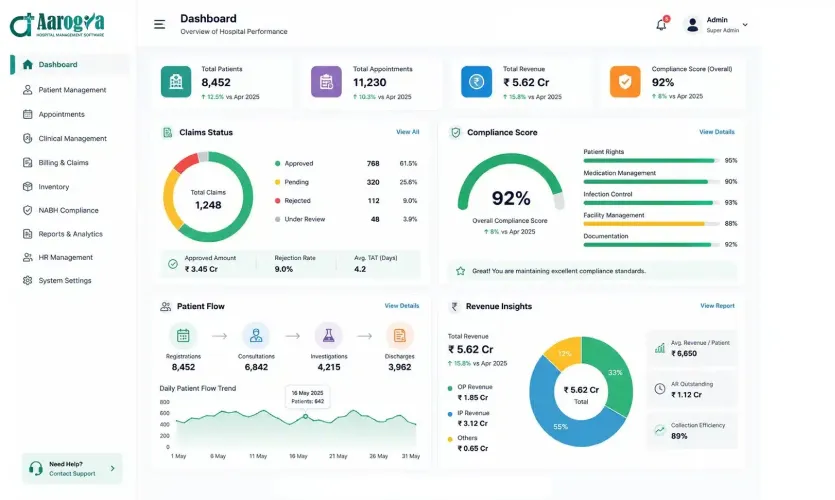
Aarogya HIS Screenshot

Aarogya HMS is a hospital management system designed for hospitals to manage patient care and the operational work around it. It covers workflows across OPD, IPD, billing, pharmacy, diagnostics, OT, TPA, nursing, and other hospital departments, bringing these functions into a single system for managing patient and hospital information.

What Stands Out

  • Patient, doctor, and nursing apps give different users their own mobile interface, with access tailored to the tasks they need to perform outside the main HMS.
  • Token-based queue management includes token issuance and live queue visibility for OPD visits, thereby providing separate management of queues to the OPD registration and consultation team.
  • Multi-location management integrates hospitals, clinics, and medical stores operating from multiple locations within a single platform for use by those organisations which run more than one location.
  • Pre-registration and pre-appointment booking enables hospitals to get details of patients, generate or search UHID, and plan appointments even before the patient arrives at the OPD registration counter.
  • Hospital support service department includes CSSD, housekeeping, dietetic service, and MRD, and processes that include management of the departments together with the hospital activities.

Best For

Small and mid-sized hospitals, including multi-speciality hospitals, that need core hospital management workflows with dedicated mobile access for patients, doctors, and nursing staff.

4.6/5 by SoftwareSuggest

Pros

  • The user-friendly interface is intuitive, allowing the user to get used to it in very few attempts.
  • The quick response time ensures that screens do not become slow during regular usage.
  • The technical support team offers assistance to the user in case they have any difficulty using the system.

Adijdhv

The program is user-friendly, with an appealing user interface and straightforward navigation. It takes users only a few tries to feel at ease with the software. There is also a quick response time; the screen does not lag at all.

Verified Software Suggest Review

Cons

  • Branch-wise performance reports are not available for comparing operational performance across different hospital branches.
  • Revenue management is not included for tracking revenue-related performance and financial metrics.
  • Inventory management capabilities are limited for more complex hospital operations that require detailed stock tracking and control.
  • Doctor-wise performance reports are not available for tracking individual doctor performance within the hospital.

Nilesh

Useful for small hospitals only. If you are considering it for a larger hospital, choose another option, as this software doesn’t include many features like branch-wise/doctor-wise performance reports, revenue management, or inventory management.

Verified Software Suggest Review

3. eHospital Systems

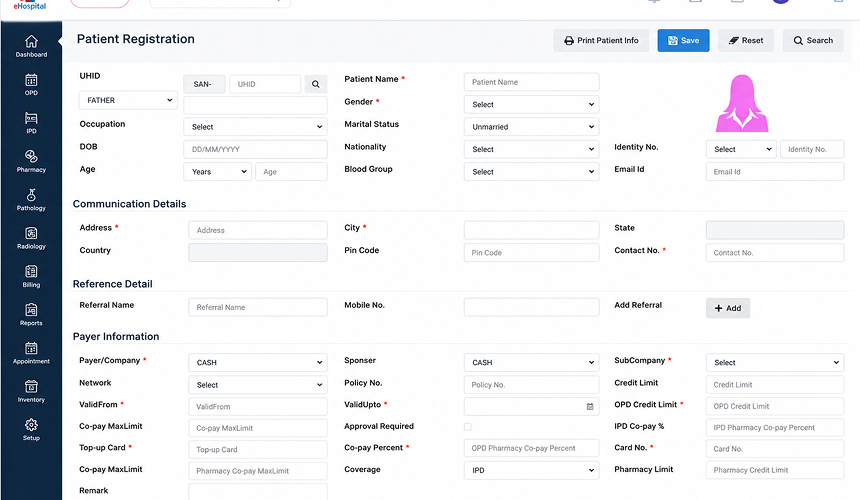
EHospital Systems Screenshot For Alternatives

eHospital Systems from Adroit Infosystems is an enterprise hospital management system that brings clinical, administrative, and operational workflows into a common environment. It is designed to support both outpatient and inpatient hospital services while keeping related information available across the organisation.

What Stands Out

  • Modular architecture allows hospitals to select the modules relevant to their requirements and add others as their needs change, rather than adopting the entire system at once.
  • Business Intelligence dashboards provide management with dashboards and reports for analysing hospital data and reviewing operational performance.
  • Separate mobile applications are available for doctors and patients, alongside a patient web portal for access to appointments, schedules, health information, and related services.
  • Multi-facility management supports organisations operating multiple hospitals or healthcare facilities, with the system designed to manage individual locations while maintaining organisation-wide visibility.
  • Broad interoperability supports integrations with systems and equipment such as laboratory systems, PACS and imaging systems, as well as HL7 and FHIR-based interfaces.

Best For

Large hospitals and healthcare organisations managing complex departmental operations across multiple facilities and locations.

4.7/5 by G2

Pros

  • Easy navigation makes routine patient and hospital information easier for staff to access and manage.
  • Centralised patient information keeps clinical and administrative data accessible across different hospital workflows.
  • Responsive support helps users resolve issues and get assistance when they need it.

Ines M.

eHospital Systems has simplified our hospital activities through the implementation of one integrated system for our work. Our team wastes less time switching from one tool to another, while the support team is available when help is required.

Verified G2 Review

Cons

  • The system can take longer to load and respond when handling very large patient records and datasets.
  • New users may need additional training to become comfortable with the system’s extensive features.
  • Reporting has limited flexibility for hospitals that need highly customised management reports.
  • The interface can feel less intuitive when users work with some of the system’s more advanced functions.

Jennifer L.

When we work with very large patient records and datasets, the system can take longer to load and respond.

Verified G2 Review

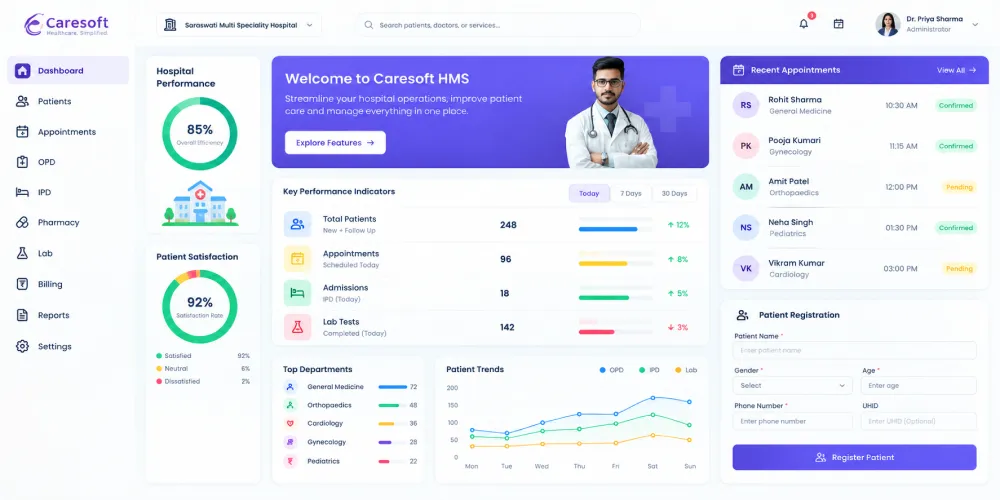
4. Caresoft HIS

Caresoft His Screeenshot

Caresoft HIS is a hospital information system from Caresoft that brings patient records, hospital administration, billing, and departmental processes into a shared digital environment. It is designed to give hospitals a structured way to manage clinical and administrative operations digitally, from patient registration through ongoing care and hospital services.

What Stands Out

  • Customisable workflow enables hospitals to set up process flows that are unique to their departments rather than work with pre-designed processes.
  • IPD paperless enables the clinical staff to maintain inpatient documentation by creating, updating, and retrieving inpatient records through the system.
  • Business Intelligence allows adding dashboards and analytical views in the HIS, which helps managers analyse data in the hospital beyond the transaction reports.
  • Hospitals’ integrated administration expands the scope of the system from clinical workflows to include billing, finance, HR, payroll, and inventory management.
  • Mobile applications provide doctors and other authorised users with access to relevant hospital information outside the main HIS interface.

Best For

Small to large hospitals and multi-centre hospital groups that need one system to manage clinical, administrative, financial, and departmental operations.

4.6/5 by SoftwareSuggest

Pros

  • Easy to use, making the system easier for hospital staff to learn and handle during routine work.
  • Simpler billing makes routine billing easier to complete and helps reduce the effort involved in day-to-day billing work.
  • Responsive support helps users resolve system issues and get timely assistance when they need help.

Lailesh

CareSoft is easy to use, and the support staff is helpful. The team provides good service and is always available to resolve queries. The product performs well for routine hospital use.

Verified Software Suggest Review

Cons

  • Specialisation and prescription pages need improvement for users who rely on these functions during clinical workflows.
  • Reporting has limited flexibility for users who need reports tailored to specific management or operational requirements.
  • Pharmacy workflows can have issues during routine use, which may require users to seek support to resolve them.
  • Old OPD bills may not update token numbers automatically, requiring additional manual attention when handling those bills.

MR N.

The token number does not update automatically in old OPD bills, so it requires manual attention when handling these bills.

Verified Software Suggest Review

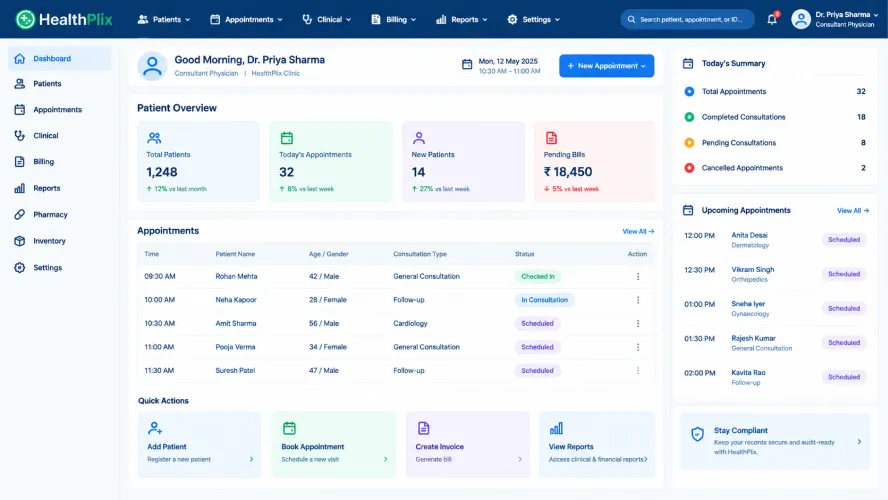
5. HealthPlix

Healthplix Screenshot

HealthPlix is an EMR and healthcare management platform developed for doctors, clinics, and hospitals. It supports consultations, appointments, prescriptions, medical records, and patient management for doctors, along with inpatient management, billing, revenue management, and patient engagement for hospitals.

What Stands Out

  • Clinical decision support gives point-of-care guidance for such purposes as drug interaction alerts, which helps physicians when they evaluate prescription and treatment plans.
  • Prescription analysis will assist physicians in analysing prescription trends, providing analytical functions in addition to the prescription creation and storage functionality.
  • Hospital revenue insights help with financial and operational dashboards to assist in analysing revenue performance, opportunities for revenue leakages, and resource utilisation.
  • Patient communication via PlixConnect facilitates automated reminder services and personalised communication for patient follow-ups and other continued communication apart from consultations.
  • Mobile access for doctors and patients provides separate mobile experiences, allowing doctors to access relevant clinical functions while patients can use mobile services for appointments and healthcare interactions.

Best For

Clinics, speciality practices, and hospitals looking for an EMR-led platform that combines doctor-focused clinical workflows with inpatient care and patient engagement.

2.8/5 by G2

Pros

  • Accessible medical records make it easier to keep track of patient information within the system.
  • Post-consultation communication allows patients to continue asking questions after an in-person consultation.
  • Convenient appointment booking allows patients to schedule consultations through the platform.

Verified User

The medical records are easy to track, and it is helpful that all the records are safely kept in the system.

Verified G2 Review

Cons

  • Customer support can be difficult to reach when users need assistance with platform-related issues.
  • Prescription language support could be expanded beyond the currently available 14 languages.
  • Frequent server breakdowns can disrupt access to the platform and interrupt regular clinical workflows.

Verified User

Rx language support could be improved by including more languages; currently, only 14 languages are available.

Verified G2 Review

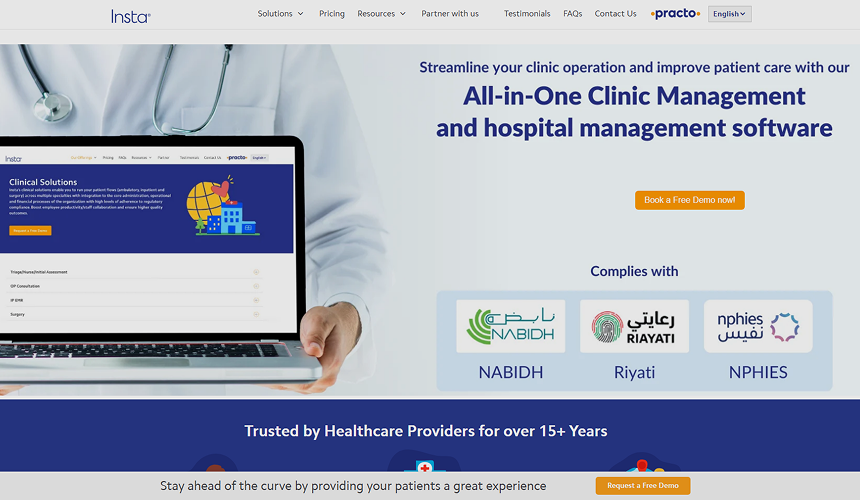
6. Insta HMS

Insta HMS Screenshot For Alternatives

Insta HMS by Practo is a web-enabled hospital and clinic management platform designed to support healthcare organisations operating across multiple centres. It brings clinical care together with patient administration, finance, diagnostics, pharmacy, inventory, and other core hospital functions, providing a common system for managing day-to-day healthcare operations.

What Stands Out

  • The central laboratory model lets multi-centre hospitals collect samples at different locations and send them to a central laboratory for processing, helping keep diagnostic work coordinated across centres.
  • Automated bed-charge calculation calculates inpatient bed charges based on bed allocation, shifts, retention, and discharge, reducing the need for staff to calculate these charges manually.
  • Treatment packages let hospitals create and manage bundled health-check, surgical, and treatment packages with their associated services and charges.
  • The prescription-to-sales reconciliation ties prescribed medications with pharmacy sales data and helps in identifying prescriptions that do not have matching medicine sales recorded.
  • Clinical documentation configuration enables hospitals to customise their EMR documents according to needs like SOAP notes, diagnoses, and e-prescription needs.

Best For

Hospitals and healthcare groups operating across multiple centres that need consistent processes and shared visibility across locations.

3.6/5 by Capterra

Pros

  • ICD coding provides a dedicated module for recording and managing clinical diagnoses using ICD codes across patient records.
  • Report building gives hospital teams flexibility to create and customise reports for their specific reporting and management needs.
  • Paperless workflows reduce manual paperwork by keeping patient information and hospital processes digitally recorded and accessible.

Nageswara Rao B.

The software is easy for semi-skilled staff to use, and the report builder is particularly useful. New employees can understand the system with minimal training, and the flexibility to add new fields to modules is also helpful. Some of the modules are unique as well.

Verified Capterra Review

Cons

  • Support issues can take weeks or months to resolve, with limited follow-up during the process.
  • Tax handling has limitations, particularly for requirements involving taxes such as VAT.
  • Some modules are missing important functions, particularly in dietary, procurement, laboratory, and stores.
  • Integrations with other systems can be difficult, especially when connecting Insta HMS with existing hospital platforms.

Roshni T.

The software creates more difficulties than it makes managing tasks easy. It can take weeks or even months to resolve support tickets without any proper follow-up on the matter.

Verified Capterra Review

7. SoftClinic GenX

SoftClinic GenX Screenshot For Alternatives

SoftClinic GenX is a hospital and clinic management software by JVS Group, which encompasses patient files, clinical procedures, billing and accounting, reporting, pharmacies, laboratories, inventory management, and other features in a single platform. The software can be used by clinics, nursing homes, and hospitals, with both cloud and onsite implementations being possible, and with several additional modules available.

What Stands Out

  • Multi-user and LAN-based setup allows multiple users to access patient and hospital information through a shared local-network environment.
  • Regional-language support includes regional-language prescriptions and patient-name entry, allowing these details to be recorded in supported local languages.
  • Patient portal access gives patients access to their stored health records and allows them to share those records with family members and physicians.
  • Equipment interfacing connects SoftClinic GenX with supported medical equipment for exchanging relevant data between connected devices and the software.
  • Fingerprint-based patient identification adds fingerprint scanning as an identification method during patient registration, alongside the system’s standard registration process.

Best For

Small to mid-sized hospitals, clinics, and nursing homes that need broad core HMS functionality without requiring a highly specialised enterprise platform.

3.6/5 by Capterra

Pros

  • Ease of use makes the system fairly easy for employees to use and manage during normal operations within the hospital and clinic setting.
  • Simplified paperwork allows hospitals to maintain patient information electronically as opposed to the current reliance on paper records.
  • Patient management becomes convenient for employees to manage patient information and retrieve records during normal work.

George P.

The software has enabled us to move towards a more paperless process in our healthcare institution through the integration of functionalities like lab, pharmacy, accounting, HR, and inventory management.

Verified G2 Review

Cons

  • Billing processes can be complex, which can make some routine billing processes more difficult.
  • Accounting processes can be hard to use because it is advanced, especially for users who require a more straightforward accounting process.
  • The software could go into sleep mode after some time of inactivity, and users have to start it again in order to continue working.
  • Patients’ information might need to be entered again in other modules because OPD, IPD, laboratory, and radiology processes could work independently.

Caroline W.

The software sometimes shuts down automatically when it is not used for a longer period, so I have to restart it, which wastes time.

Verified G2 Review

How to Choose the Right MocDoc Alternative for Your Hospital

Choosing a MocDoc alternative should start with understanding what you need to change, not simply finding a system with more features. List the areas where your hospital needs a different approach, whether that involves OPD and IPD workflows, diagnostic coordination, pharmacy, billing, reporting, integrations, customisation, or support. Use these requirements as the basis for comparing the shortlisted platforms.

Next, check how much change each option will require from your hospital. A system may cover the right departments but still require staff to change established processes or rely on additional tools. Ask vendors to explain how they would configure the system around your existing workflows, what data can be migrated from MocDoc, which integrations are available, and what implementation and training will involve.

Finally, evaluate the shortlisted systems with the people who will use them. Give each vendor a few problems your hospital currently faces and ask them to show how their system would handle them. Pay attention to the number of steps involved, information staff need to enter manually, how departments share information, and what happens when something goes wrong. This gives you a clearer basis for deciding whether an alternative actually addresses your hospital’s needs.

Final Verdict

There is no single MocDoc alternative that will be right for every hospital. The choice will depend on your hospital’s current workflows, operational needs, and plans for growth. Features and pricing are important, but ease of use, implementation, support, and how well the system connects different areas of the hospital also matter.

For Indian hospitals that want clinical, billing, pharmacy, laboratory, and administrative work handled through one connected system, Healthray is worth considering. It supports hospital workflows as well as India-specific requirements such as ABDM and ABHA, which can help hospitals reduce manual work and reliance on multiple systems.

If Healthray is one of the options you are considering, a live demo can give your team a better understanding of how the platform fits your hospital’s workflows. You can also use the demo to discuss migration, integrations, implementation, and any other requirements before making a decision.

See How Healthray Would Work in Your Hospital

Walk through the workflows your team uses every day and discuss your requirements around migration, integrations, implementation, and training.

Book A Free Demo

Frequently Asked Questions

What is the best alternative to MocDoc for hospitals?

There can never be one answer that fits all the requirements of different hospitals. There are many alternative HMS vendors, such as Healthray, Aarogya HMS, eHospital Systems, Caresoft HIS, HealthPlix, Insta HMS, and SoftClinic GenX. Each has something unique that it can offer to hospitals.

Is Healthray better than MocDoc?

Both platforms cover core hospital management needs, but they differ in their capabilities and approach. Healthray supports India-specific requirements such as ABDM and ABHA, along with flexible deployment options and a wider range of hospital workflows. Whether it is the better fit depends on your hospital’s requirements, so it is worth comparing the workflows, implementation, integrations, and total cost.

How much does it cost to switch from MocDoc to another HMS?

The cost of switching depends on a variety of factors, including the size of the hospital, the number of users, the modules needed, the data migration process, integration, customisation, implementation, training, and support. Many HMS systems provide customised prices rather than fixed costs, which means that you need to know the cost breakdown.

How long does it take to migrate from MocDoc to another HMS?

There is no fixed migration timeline for every hospital. It can vary depending on the amount of historical data, number of users and locations, required integrations, and customisation involved. Ask vendors for a migration and implementation timeline based on your hospital’s existing setup rather than relying on a standard estimate.

Can patient data be migrated from MocDoc to another HMS?

Patient information can be transferred depending on the ability of the current information to be compatible with the new HMS system and the vendor offering to migrate the data. Before signing any contract, one must verify the type of data that will be transferred, verification of the migration, personnel involved in the migration, and post-migration data validation.

Healthray Editorial Team

About the Author

Healthray Editorial Team

The Healthray Editorial Team creates and reviews content based on Healthray's experience working with hospitals, clinics, and healthcare technology. Our content covers hospital management software, EMR/EHR, healthcare IT, automation, and digital transformation.