



1. Healthray
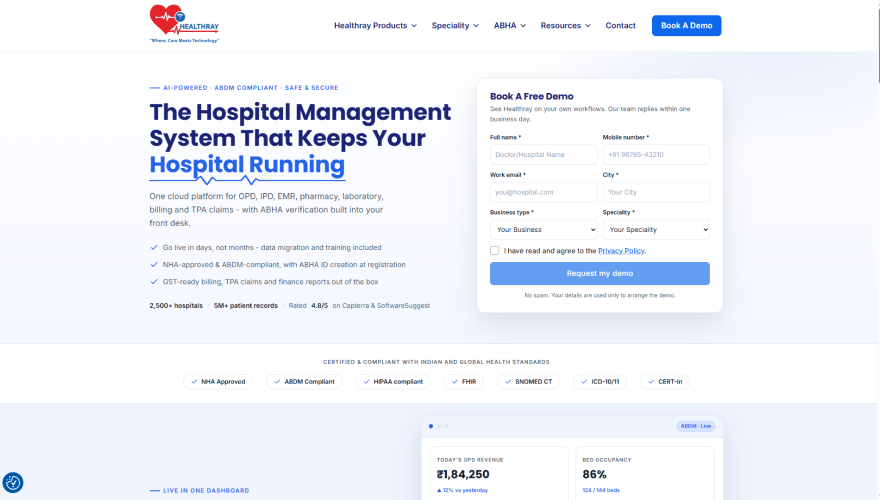
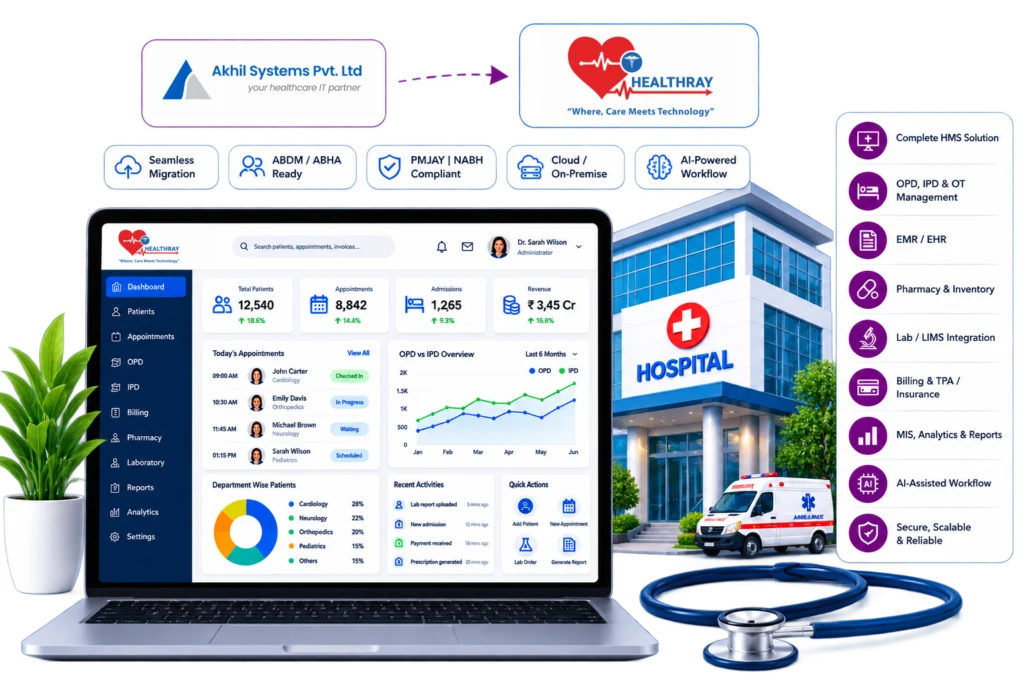
Healthray is designed for hospitals that need speciality-specific clinical documentation, smoother migration from an existing HIS, and integration with systems such as PACS/ DICOM, accounting, payments, and insurance. It also supports AI-assisted documentation and voice-to-text for doctors, along with multi-facility operations, clinics, and diagnostic labs. As a cloud-based hospital management software, Healthray gives hospitals the flexibility to manage these needs as their organisation grows. For a hospital moving away from Miracle HIS, these capabilities can help address both the practical challenges of switching systems and the need for stronger clinical and operational support.
Best For
Multi-Speciality Hospitals, Growing Hospital Chains, Clinics, Diagnostic Labs & Multi-Facility Healthcare Groups
What Stands Out
- Connected Workflows: Registration, consultation, diagnostics, pharmacy, billing, admission, and discharge are connected. Staff can access patient information across these areas without entering it again.
- Simpler Migration: Healthray supports data migration, training, and phased implementation. This is useful for hospitals moving from an existing HIS.
- Easy Integration: It works with PACS/DICOM, accounting, payments, insurance, and other healthcare tools. So hospitals don’t necessarily have to replace the systems they are already using.
- Speciality EMR + AI Assistance: Doctors get speciality-specific EMR templates instead of using the same format for every department. Voice-to-text helps doctors write notes. AI and automation are used in billing, inventory, lab, and reporting.
- 24×7 Multilingual Support: Support is available 24×7 in English, Hindi, Gujarati, and other languages. This means hospital teams can get help outside normal working hours too.
- Built to Scale: Healthray is available on cloud, on-premise, and hybrid setups. Multiple facilities can also be managed from the system. This works for hospitals with more than one location or plans to expand.

Pros
- Handles multiple users without noticeable lag during busy hospital operations
- Keeps OPD and lab queues moving with real-time patient and task prioritisation
- Lets staff categorise patients as emergency, follow-up, or new for clearer handling
- Supports custom notifications to help teams stay on top of pending work
- Pharmacy updates are integrated into the workflow, helping reduce prescription errors
We already had different systems and years of data, so switching was not something we wanted to do casually. My main questions were around migration, user access, integrations and what kind of support we would get after go-live. Healthray’s team worked with us through the setup and configuration, and we were able to bring the major workflows into one system. From an IT point of view, having fewer disconnected systems to manage has made things easier.

Cons
- Some of the modules may take time for new users to learn
- Pricing is not published, so hospitals need to request a customised quote
The advanced features take some time to learn, but once you become familiar with them, the product feels powerful and flexible.
Overall Verdict
Healthray is a strong Miracle HIS alternative for multi-speciality hospitals, growing hospital chains, clinics, diagnostic labs, and multi-facility healthcare groups that need to manage different operations and facilities together. Its speciality-specific capabilities and support for migration and integrations also make it a practical option when replacing an existing HIS.