

Summary
Cloud-based LIMS software is transforming lab operations today. It provides teams with easy access to data, seamless collaboration and quicker results. It also reduces the high costs of servers and IT work, simplifying and streamlining lab operations.
This system greatly increases the speed and accuracy with which labs can work as it is highly secure, infinitely scalable, and easily integrated with advanced tools. It even includes AI-based insights, predictive planning and connected workflows to drive productivity.
If you want to understand why so many labs are switching to cloud-based software, read the full blog and check out the full transformation.
Introduction
In today’s fast-moving world, labs need smarter tools to work faster and accurately. To accomplish this, cloud-based LIMS software helps labs keep track of where samples are, store data, and manage work all in one place.
We all know that labs handle an ever-increasing volume of data on a daily basis. Moreover, manual tracking introduces errors, lag, and misunderstandings. Unfortunately, traditional laboratory information management systems don’t scale easily and were not built for remote teams. As a result, labs waste time, money, and resources, and research progress is hindered.
This is why more labs are moving to cloud-based LIMS software. It increases efficiency, accelerates collaboration, eliminates mistakes, and secures data. When labs move to the cloud, they can focus on what matters most: accurate research, faster results, and smarter growth.
What is Cloud-Based LIMS Software?
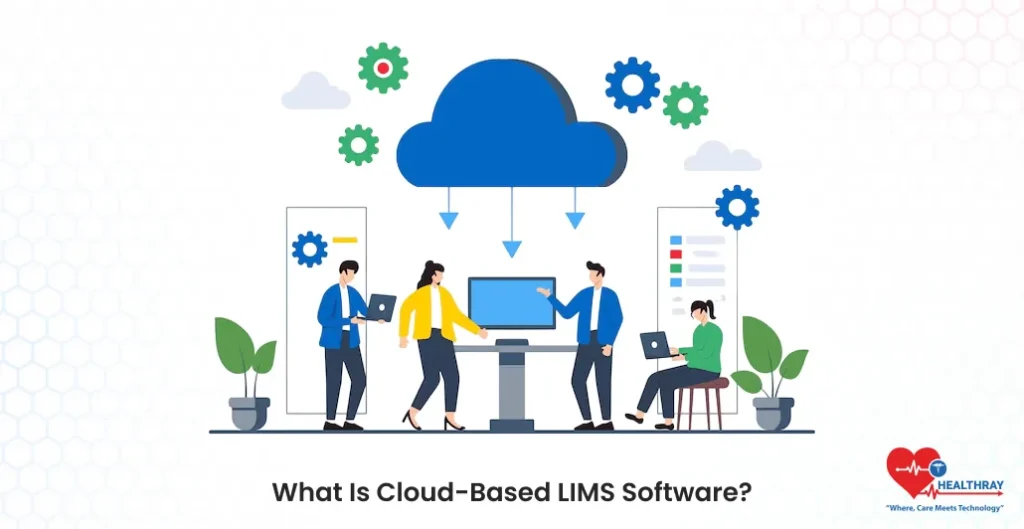
LIMS stands for Laboratory Information Management System. Cloud-based LIMS software is a modern online tool for labs to manage their samples, tests, and results. Unlike traditional lab inventory software, cloud-based LIMS software stores data in the cloud, meaning lab teams can access data anytime, anywhere.
The system enhances the workflow, diminishes mistakes, and assists in making decisions more quickly. With cloud-based LIMS software, labs can instantly log experiments, track inventories, and share information with colleagues or collaborators.
It is often used in conjunction with laboratory information management systems and also with AI-powered LIMS systems in order to enhance efficiency.
Key Difference Between Cloud-Based LIMS Software and Traditional On-Premise LIMS
| Feature | Cloud-Based LIMS Software | Traditional On-Premise LIMS |
| Accessibility | Access from any device, anywhere | Only available on local computers |
| Cost | Lower upfront cost, subscription-based | High upfront cost, hardware setup needed |
| Maintenance | Provider handles updates and backups | Lab IT team manages updates |
| Scalability | Easily add users or storage | Limited by hardware |
| Collaboration | Easy sharing with remote teams | Sharing limited to local network |
| Data Security | Advanced encryption, automatic compliance | Security depends on local IT |
 PRO TIP
Why Labs Are Moving to the Cloud-Based LIMS Software?
Labs are increasingly adopting cloud-based LIMS software because it solves many traditional problems. Below are the key reasons labs are moving to the cloud.
Accessibility Anywhere, Anytime
Cloud-based LIMS software makes lab data accessible from any device, anywhere in the world. As a result, researchers can verify test results, monitor samples, and disseminate reports in real time. In contrast, typical laboratory information management systems are tethered to local or on-site computing, which can limit access for remote teams.
Moreover, cloud-based LIMS software can even allow remote field labs, satellite offices, or mobile research units to be connected. Consequently, lab managers can supervise operations, check inventories, and approve workflows without being there. This constant availability, in turn, leads to greater productivity as well as decisions on crucial issues based on up-to-the-minute information.
In addition, since the LIMS software is on the cloud, it allows tablets and smartphones to function as mini workstations. Thus, teams can communicate securely and view dashboards while managing tasks in the lab, on the road and from home. Therefore, this makes cloud-based LIMS software the best LIMS software for modern, dynamic laboratory environments.
Cost Efficiency
On the downside, cloud-based LIMS software is much less expensive up front. Traditional LIMS systems, in contrast, require expensive servers, hardware maintenance, and IT personnel for updates. On the other hand, cloud solutions for labs are subscription-based and can be paid monthly or annually.
Furthermore, it also integrates with lab inventory software to monitor resource use, thus minimising waste and overstocking. Additionally, it streamlines a given pipeline and automates redundant labour, thereby lowering labour costs even more. Consequently, this saves labs time and money.
Moreover, cloud-based LIMS software also removes the need for heavy CAPEX for small to medium labs. In fact, it brings features and automation previously available in large institutions into budget-strapped labs. Therefore, this financial flexibility makes cloud-based LIMS software extremely attractive and practical, often considered the best LIMS software for cost-conscious laboratories.
Data Security & Compliance
Sensitive data is critical to laboratories. Indeed, LIMS software that is cloud-based utilises advanced encryption, multi-factor authentication, and automated backups for data protection. In contrast, traditional systems, where data is stored on a local server, are more prone to hardware malfunctions or human mistakes.
Furthermore, labs need not manually track compliance. An AI-powered LIMS system captures activities and records modifications, automatically compiles audit-ready reports, and does so without human intervention. Consequently, this lightens the load on lab personnel while still complying with international norms.
Moreover, cloud-based LIMS software enables labs to share secure data with collaborators, research institutions, or health care providers. Thus, this type of safe sharing encourages innovation while protecting secrets. Ultimately, this level of safety, transparency, and adherence to regulations allows cloud-based LIMS software to become a trusted and reliable software tool.
Scalability
Labs grow and evolve over time, and cloud-based LIMS software is easily scalable to these changes. It is quick and easy to add new users, storage, or other modules. Conversely, traditional on-premise systems are sometimes reliant on hardware upgrades or complicated IT work.
Furthermore, it is connected to lab inventory software to maintain accurate tracking and reporting as sample numbers increase. Notably, an AI-powered LIMS system has the ability to process big data efficiently, enabling labs to operate smoothly while scaling up at a rapid pace. Consequently, scalability is one reason so many labs view cloud-based LIMS software as the best LIMS software for future growth.
 NOTE
NOTE
Enhanced Collaboration and Faster Decision-Making
As research increasingly involves working as part of a team, modern cloud-based LIMS software allows real-time collaboration. Thus, the same data can simultaneously be available to multiple researchers, departments, or even labs anywhere in the world. This, in turn, avoids latency when duplicating datasets or moving files.
Ultimately, the best AI-powered LIMS system integrates with and enhances analyses, speeding up the interpretation of results for teams. Additionally, integrating cloud-based LIMS software with lab inventory software also makes sure that all collaborators know what is available. Therefore, these characteristics lend themselves particularly well to research conducted across multiple locations, as is often the case.
Since the cloud-based LIMS software enables everyone to see the same data in real time, teams make decisions much faster. Researchers are not waiting for files or updated files to download. Changes instead appear in real time for all collaborators. It minimises confusion, accelerates the days of discussion, and allows teams to move very quickly.
Easy Integration with Lab Tools
Cloud-based LIMS software integrates easily with just about all modern lab equipment. Labs can integrate instruments, barcode scanners, reporting systems, and workflow tools in minutes. As LIMS software hosted in the cloud runs on flexible APIs, labs also don’t need to go through complex configurations or suffer through long installation processes. This makes for easy integration and helps teams get faster and reduce errors.
By integrating cloud-based LIMS software with lab inventory software, labs are able to track supplies in real time. They know when the chemicals are running low, when reagents expire, or when equipment needs to be cleaned. This connection allows labs to plan ahead and not fall behind.
Many of these newer labs also connect their AI-powered LIMS system to a cloud-based LIMS software. This enables smart automation, swift analysis and accurate predictions. The system directly obtains data from instruments, eliminating staff typing. This minimizes error and saves time.
Cloud-based LIMS software also offers monitoring of instruments remotely. This means that lab managers can remotely check instrument status and logs, and approve workflows from afar. Traditional systems cannot provide this solace.
This is part of the reason that many labs refer to cloud-based LIMS software as the best LIMS software for integration. It removes data silos, connects every tool, and creates a seamless digital lab.
Disaster Recovery and Reliability
Loss of data can wipe out months of research. However, this risk is mitigated when using cloud-based LIMS software, as its robust disaster recovery features keep labs protected from data loss. Specifically, it backs up data automatically several times a day. Furthermore, the backups remain encrypted and uploaded to secure cloud servers.
In the event that an unexpected problem occurs, such as system crashes, power outages, hardware failure, or accidental deletion, labs can recover data in minutes. Conversely, conventional systems often break down in these scenarios because they require local storage.
Moreover, LIMS in the cloud prevents downtime during disaster situations. For instance, when a lab computer goes down, staff can sign onto a different machine. As a result, the workflow remains safe, and research continues uninterrupted. Thus, cloud-based LIMS software is one of the most secure digital options available for labs.
Additionally, this recovery plan is improved by integration into the laboratory information management systems. Consequently, labs can easily recover histories of samples, action logs, user activities, and inventories. Notably, with an AI-powered LIMS system, the platform can even predict risks and warn teams before failures occur.
Learn more: How AI is Enhancing the Efficiency of Laboratory Billing Solutions
Future of Labs with Cloud-Based LIMS Software
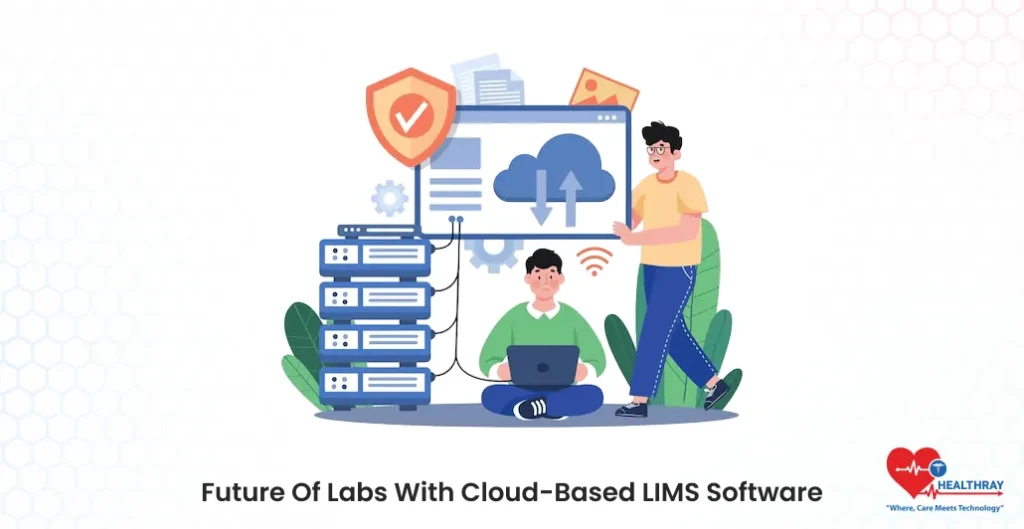
Here are the key ways the future of modern laboratories will be shaped by cloud-based LIMS software:
- AI and analytics will be a core part of the cloud-based LIMS software to help labs process data faster, recognize patterns early and reduce manual errors. This will streamline and improve accuracy in laboratory information management.
- Instruments equipped with smart monitoring tools will be linked to cloud-based LIMS software to enable predictive maintenance. Essentially, labs will receive alerts before a machine failure, leading to reduced downtime and greater consistency in day-to-day operations.
- Smart lab management will increase as cloud-based LIMS software integrates with lab inventory software. The system will automatically track the supplies, so labs avoid running short, waste, and unnecessary purchasing.
- Teams around the world will be easier to integrate with, as cloud LIMS software enables real-time collaboration. Teams in different locations can work on the same data in real time, fostering communication, decision-making, and overall lab efficiency.
Conclusion
Labs that require rapid, accurate results and seamless day-to-day operations should choose cloud-based LIMS software as the best option. It provides faster data access, easier collaboration, and increased security to help teams better manage laboratory information.
It also grows with the lab, adds new features easily, and connects with advanced tools. As labs handle more samples and complex studies, cloud-based LIMS software helps them save time and stay ready for the future. It is flexible yet powerful, and ultimately becomes a long-term partner for the lab, driving smarter workflows and better care.