



Choosing the right Laboratory Information Management System (LIMS) to manage present laboratories becomes, therefore, of utmost importance. When 2025 brings even more sophisticated features and technology, lab owners and operators are posing the question, “What’s the best LIMS software, this year,”?
The short answer: The optimal LIMS may depend on the unique requirements, from sample management to compliance, of your laboratory, even with space for future expansion. Labs aimed at being efficient and good at something should select a LIMS solution that has easy-to-use interface and powerful features (e.g., by which AI, or by which it is provided with cloud-based access).
But this article is not solely about the presentation of just a few software packages. We’ll go into detail on the enabling factors of a successful LIMS solution, discuss the advantages that these systems offer to labs, and describe the trends transforming the landscape in 2025. No matter whether you run a pathology lab or a research laboratory, you will discover actionable information which helps you select an appropriate LIMS for your use.
What is LIMS?

A Laboratory Information Management system (LIMS) is a software package to support laboratory operations in the context of day-to-day laboratory activities. These systems perform automation of workflow, sample tracking, data quality control and regulatory compliance. At its core, a LIMS is considered the electronic brain of a lab, from test results to inventory management.
Why LIMS is Important for Modern Labs?
The laboratory workload has grown tremendously over the passing years. With the progress of technologies, people have been demanding toward greater efficiency, accuracy, and compliance. Labs, whether academic, medical, or anatomical labs, are becoming increasingly under stress to process high flows of data and preserve high quality standards. This is where a LIMS comes in handy.
Streamlined Sample Management
Labs deal with countless samples daily. If a robust system is not in place to manage these samples, they can become very confusing, and cause mistakes and incorrect results. All of this is facilitated by a LIMS, which records each sample, and tracks the entire life of a given specimen, from the time it arrives at the lab, to the end of analysis.
Data Integrity and Accuracy
Although manual data entry is traditionally commonplace, it is prone to inaccuracies. A LIMS automatically keeps records producing them without human error and hence they are accurate. This is particularly the case in the laboratory environment where even a single lapse in concentration can be dangerous especially in clinical, research, and forensic applications.
Compliance with Regulatory Standards
Laboratories, especially with clinical trials and diagnostics purposes must have strict control. A LIMS assists labs in providing documentation, records, and workflows that adhere to these standards of compliance, e.g., ISO 17025, HIPAA or CLIA. The existence of a LIMS, means, that your lab is always audit-ready, and all the information needed, is always at your fingertips.
Improved Workflow Efficiency
A LIMS is not just keeping track of sample data; A LIMS is automating these tasks which would otherwise be time consuming. From setting up equipment maintenance scheduling and tasking the lab technicians laboratory managers, can easily reduce a large part of the burden and what they have to do, diverting their time towards performing a more important job.
Scalability for Growing Labs
As labs grow, so do their needs. Whether you’re expanding into new areas of research or processing more patient samples, a LIMS is built to scale. It provides the flexibility for you to integrate additional new features or deal with a larger amount of data as your lab expands without having to rebuild the entire system.
Types of Labs That Use LIMS
Lab, there exist some various needs for LIMS, such as, one, the character of the lab environments. Here’s a look at some of the most common:
- Clinical and Diagnostic Labs: These labs handle patient samples and are heavily regulated. LIMS is employed for patient data management, test results, and to guarantee compliance with health care regulations.
- Research and Development (R&D) Labs: In R&D LIMS plays a critical role in the control and progress tracking of experimental data and information. In all branches of biotech, in pharmaceuticals, and in environmental science, laboratories use LIMS for data management and retention of research quality.
- Pathology Labs: Pathology laboratories and in particular those looking at biopsies or other patients’ specimens have to ensure that the results are of an adequate quality, provided in time and properly logged. A LIMS helps manage these processes smoothly.
- Environmental Labs: This laboratories are dedicated to the analysis of air, soil or water samples. LIMS can handle the big batch size of environmental monitoring data sets that are used in the lab and comply with the labs regulatory compliance with the industry-specific regulations.
A LIMS is an all-in-one solution for laboratory activities, from clinical to environmental labs, including their complexity, as a matter of fact. It has a degree of order and efficiency that’s hardly possible by purely manual techniques.
Key Features to Look for in LIMS Software
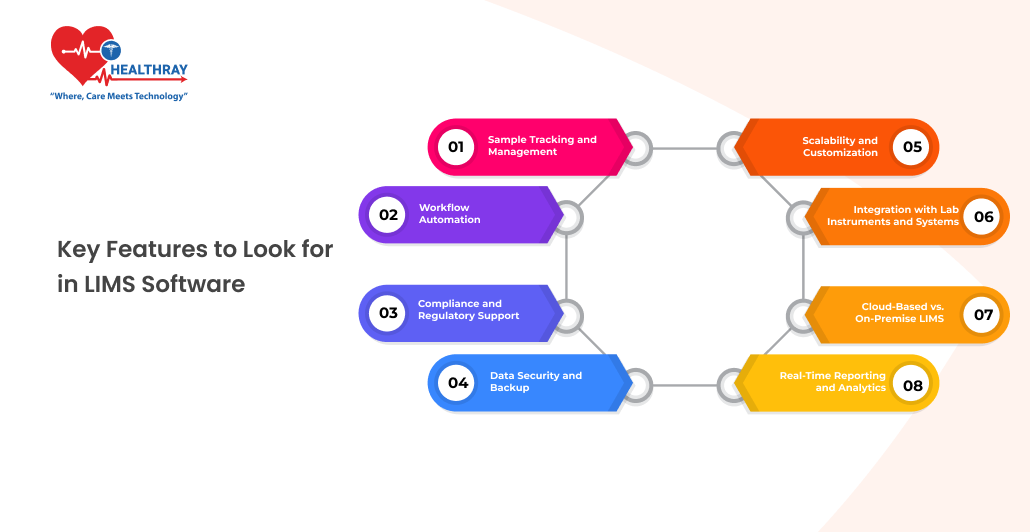
Choosing the right Laboratory Information Management System (LIMS) is not an absolute standardisation. Nevertheless, each lab has its own requirement, depending on the amount, the type, and the workflow. However, in some respects LIMS is practical in other lab environments. If you’re evaluating LIMS software for 2025, these are the features you should focus on.
Sample Tracking and Management
The heart of a LIMS is its ability to manage sample information and samples. Due to the high number of samples processed in the labs, a careful trace path of each sample in the laboratory is required. Look for a LIMS that offers:
Detailed Sample History: Every sample must be accompanied by a recordable history between reception and testing and disposal. This includes metadata (e.g., who worked on what, what tests were conducted, and when results were generated).
Barcode or RFID Integration: This allows easy monitoring of samples with minimal operator’s involvement, accelerates the process and minimizes errors.
Real-time Monitoring: It is through the ability to monitor sample status at every timepoint that greater transparency is achieved, and leads to faster decision making.
Workflow Automation
In the laboratory the most common jobs are repetitive tasks of a labor intensive, easily error-prone kind that are best completed together in greater part automatically. A good LIMS automates workflows to increase efficiency and free up valuable time for lab staff. Important workflow automation features include:
Task Assignments: Distribution of algorithmic work among laboratory technicians based on type of sample, test criteria, and supply.
Data Collection Automation: Automating and the logging of data from laboratory instruments, thereby eliminating the manual entry of data.
Notifications and Alerts: The design of automated alerts for critical events such as the report of a test result, or provision of preventative maintenance schedule to equipment.
Compliance and Regulatory Support
- Audit Trails: The completely archived history of all activities in the system, from sample processing to data entry. This is essential during audits or regulatory inspections.
- Pre-configured Compliance Templates: Some LIMS come pre-configured to allow labs to meet certain standards, such as ISO 17025, CLIA or HIPAA.
- Document Management: Ability to store and archive compliance documentation, certificates, and related information in a centralized repository.
Data Security and Backup
Labs work with sensitive data, from patient’s records in a clinical lab or internal data in an R&D lab. The LIMS that you select should, as a matter of data security, be such that limited access is available only to selected personnel. Essential data security features include:
- Role-Based Access Control (RBAC): This is also an advantage, because users can use only the relevant data and facilities for their role in the lab.
- Data Encryption: Data encryption (at rest and in transport) assures unauthorized access to private data cannot be obtained.
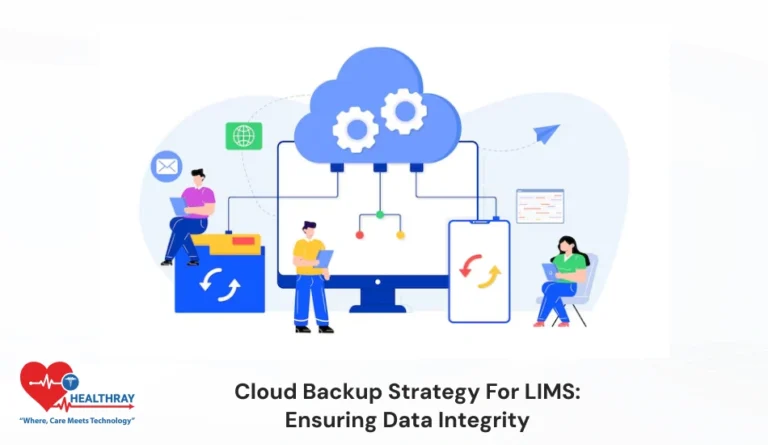
- Automatic Data Backup: Regularly needed backups are crucial in order to prevent loss of data, in particular when the system has experienced overheating or been compromised.
Scalability and Customization
No two labs operate in the exact same way. The LIMS you choose should be a “wig”, with the capability to fit what you need at the moment and be able to expand as your lab grow over time. Look for software that allows:
Customization of Modules: A number of LIMS systems provides modules that are configurable so that they can be tailored to fit your workflows. For instance, a pathology laboratory will require a different reporting schema, whereas a research laboratory will require more advanced data analytics tools.
Scalability for Expansion: In the event that the size of your lab increases or the lab expands to new areas, the LIMS must be able to process bigger and bigger volumes of data and a growing list of lab personnel without compromising the speed of LIMS software or necessitating a mass redesign of all software embodied by LIMS.
Integration with Lab Instruments and Systems
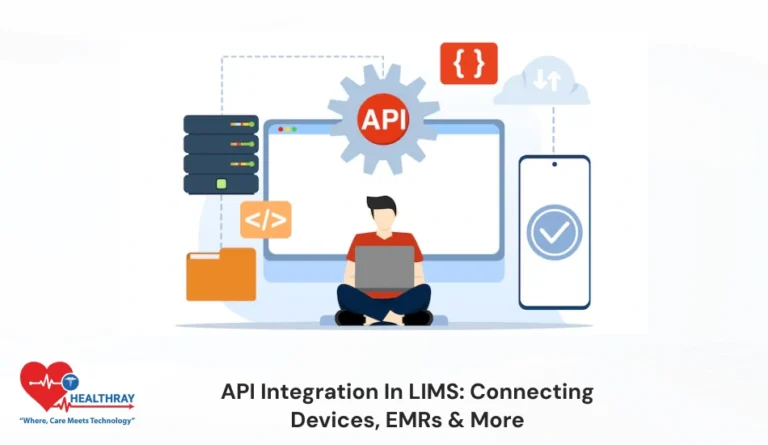
It would be desirable to equip a LIMS with the ability to interface with all of the (instrumental) instruments present in the lab, as well as with other software programs. The fusion ensures that the data between the platforms continues to flow continuously without delays and without human errors. Key integration features include:
Instrument Integration: The capacity to passively collect data from laboratory devices (spectrometers, chromatography, and other diagnostic devices).
ERP and CRM Integration: Integration with enterprise resource planning (ERP) or customer relationship management (CRM) systems for lab that is directly working with large organizations, can enhance invoice process, reporting and client interactions.
Cloud-Based vs. On-Premise LIMS
One of the key choices in selecting LIMS software is the whether a cloud-based solution or an on premise solution is to be used. [One of the key choices in selecting LIMS software is the selection of a cloud solution or an on premise solution. Each has its own set of benefits:.
Cloud-Based LIMS: These systems are served remotely, so you don’t have to purchase expensive servers or IT gear. Cloud-based solutions, etc., are inherently scalable and have, by definition, built-in automatic patch management and backup functions. However, there may be concerns regarding data security, or a need to deploy systems on either an off-loaded system, or on-premise system in some laboratories.
On-Premise LIMS: Intuitively speaking, for the laboratories who prefer data stored onsite, on-premise LIMS may be more appropriate. Nonetheless, it comes with full control over security and system administration but at the potential expense of higher upfront cost and ongoing IT support. Whether you choose cloud or on-premise deployment, keeping systems updated is crucial. Laboratories increasingly use patch management software to automate updates and security patches across their IT infrastructure, ensuring the LIMS environment remains stable, secure, and compliant.
Real-Time Reporting and Analytics
With today’s data-driven world, real-time data may become a crucial element in speeding up the decision-making process in a lab. Look for LIMS software that offers:
Customizable Reports: The ability to create and schedule reports tailored to your lab’s specific needs, whether it’s monitoring sample throughput, analyzing test results, or tracking equipment utilization.
Data Visualization Tools: Graphs, charts and dashboards assist the user to detect trends or face early problems before they become enlarged to a significant degree.
Advanced Analytics: With respect to research laboratories, the use of integrated within the LIMS advanced data analysis features may be employed to further reduce the time requirement for manual data processing.
If you take into account these underlying features, you will be able to choose a LIMS not only adequate for the current working lab situation, but also adequate for the future developments. In 2025 the advance of LIMS software will be focused on these functional areas to guarantee a good functioning and long term success.
Conclusion
Selecting an appropriate Laboratory Information Management System (LIMS) is one of the most important decisions, which potentially changes the lab workflow for long run. The ideal PT workflow optimizes workflows, reduces opportunities for human error, and maintains your lab compliant with regulations, all while ensuring you have access to more data and operational insight.
With the advent of 2025, the need for an excellent LIMS cannot be emphasized enough. Labs are increasingly facing the challenge of higher throughput with ever more samples, and to handle ever more complex work and to keep tight data security. This is where LIMS comes into play providing the needed efficiency and scalability to meet current demands.