



Quick Summary
Artificial intelligence (AI) transforms hospital management systems through predictive analytics, remote monitoring, and continuous learning, boosting productivity, reducing costs, and enabling personalized care. Hospital management systems change procedures, optimize resources, and improve patient outcomes.
Introduction
There are tons of healthcare professionals and organizations that are getting accustomed to these new systems of artificial intelligence each day. Therefore, AI stands at the forefront of transformation in the healthcare industry. This transformation in hospital management systems would create the potential for AI to push forward positively to influence the healthcare sector. It aims to improve patient experience and the health of populations and bring well-being to the experts.
Such transformation is in the progress of many forms. AI is now helping the hospitals and health systems predict and diagnose diseases, and gain insights for care teams. The next major step every organization and health center have to take is to establish an interoperable, AI-enabled ecosystem connecting patients, healthcare practitioners, and multidisciplinary teams. Furthermore, it can create excellent communication between interdisciplinary teams, professionals in healthcare, pharmaceutical companies, and research organizations.
AI combines hospital management systems to create a forte that bears fruits for each and every healthcare area, from the pharmacy to the laboratory. It also enhances your radiology information, advances documentation, and enhances treatment outcomes. Hospital management systems should keep your health facility inventory operational while managing financial systems and tracking records without stress.
AI innovation in applications continues to enhance flexibility and scalability. It will analyze revenue and develop the most appropriate cash flow enhancement strategies. Through the AI hospital systems, the physician examines the rapidly changing medical condition of the patient, develops the modality of patient treatment, and corresponds to the concurrent report with historical report. But which way impact facility management ecosystem based on AI in hospitals and care centers upon their efficiency and process?
AI hospital management systems can do anything from analyzing millions of data at once in real-time to providing support to the daily operations. These applications could alone do much more than what is possible in a conventional system with the benefit of artificial intelligence and data management systems. It can speed things up and develop predictions in real-time. Would you like to know more about AI’s impact on hospital management systems? Read on.
A Snippet on the Hospital Management Systems
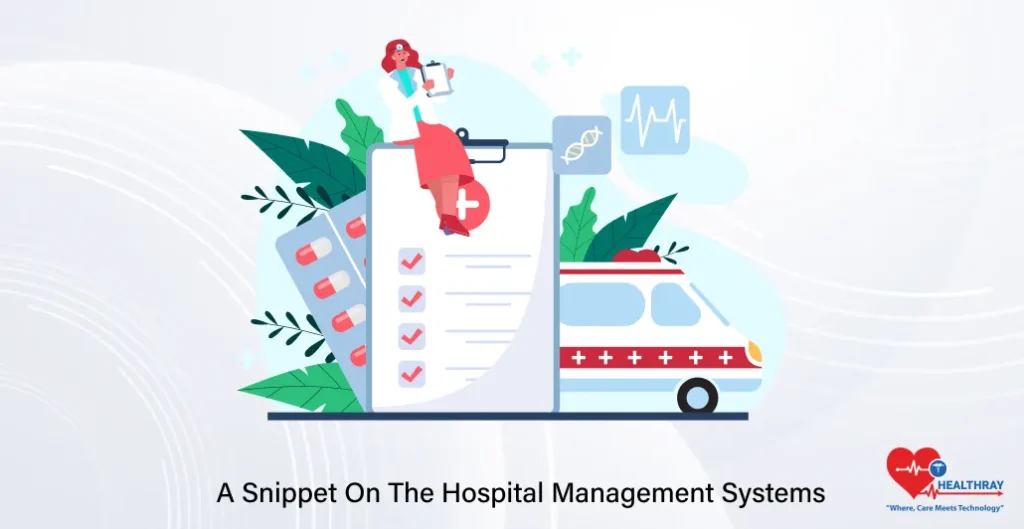
The figures show that over 35% of the time is spent by healthcare experts in documenting patient data in electronic health records. Now, how best can this time be saved and all efforts employed? In this need, a hospital management system could assist. This is software specially tailored for electronic medical record entry, checking laboratory results, integrating radiology images, pharmacy data, etc. Hence, it helps hospital facilities maintain the management of patient data, so hospitals can provide the best quality care and services.
There is absolutely no need for most of your employees to waste their time creating healthcare documents, which can be automated for them by hospital management systems. However, you have to make something to actually set up these working health information management systems that would use up operating costs and increase healthcare efficiencies.
As of now, the majority of healthcare institutions have a preference for online hospital management systems partly due to the user-friendly interface and wide accessibility across devices. It is this hospital information system that would enable specialists to optimally apply the technology. It can help keep data connected to the following departments:
- Clinical Management
- Financial Management
- Laboratory Management
- Inpatient Management
- Outpatient Management
- Inventory Management
- Pharmaceutical Management
The implementation of hospital management systems came about to solve complications like managing documentation of patients from various departments with utmost confidentiality. It helps institutions able to deal with all paperwork in a single place, reducing burden of work upon the staff for the arrangement and analysis of patients’ documents. It can handle numerous tasks such as:
- Keeping records of the patient data
- Keeping track of contact details
- Maintaining appointment dates list
- Keeping a record of insurance information
- Keeping track of bill payments
If you want to create advanced healthcare services, no software is better than hospital management systems. It keeps patient history, enhances data security, improves financial operations, streamline operations, and advance the cycle of medical billing.
Never tire your staff organizing patient or healthcare documents without maintenance, enhance the claims management process. This can be understood only with the modules; otherwise, it is quite a job understanding HMS software. It is also a need for every department’s hospital information management system and boosts end-to-end productivity.
Enhance enthusiasm among employees, decline their efforts, save more energy, and keep time. Thus, improved productivity, efficiency, and patient care have been advanced. Give precise guidance to patients after examining their whole health information along with their regular habits.
Top 10 Impacts of AI on Hospital Management Systems

Enhanced Patient Care and Experience
AI has brought about a huge revolution in hospital management systems by enhancing the quality of patient care and experience through the development of treatment plans designed for personal needs based on real-time data analysis. Predictive analytics can be useful in the early detection and prevention of complications. Apart from that, it further enhances safety requirements for patients with optimal results. They automate tasks such as scheduling appointments, managing inventory, cutting on wait times, and improving workflows.
Accurate medications harness the power of AI to create personalized treatment plans based on genetic makeups that help to eliminate the risks of adverse reactions. Utilizing the benefits of AI-based hospital management systems would provide help in diagnosing diseases and treating them accurately.
Asset optimization, too, through AI forecasting and staff management can ensure seamless operations in hospitals. With the assistance of AI remote monitoring systems, doctors would easily observe patients’ health status remotely. Thus, it decreases hospital visits and early detection of problems.
AI also aids fraud detection and guarantees compliance with regulatory requirements, which further ensures safeguarding of hospital financial information and consequential data. Continuous insights fed from data inputs and AI workings may keep medical practitioners abreast of the latest advancements in medicine.
These would all contribute towards better patient care, optimized resource allocation, and improved operational efficiency in hospital management systems.
Optimized Resource Allocation
Optimizing resource allotment is one of AI’s most potent impacts on hospital management systems. AI can help in the productive and cost-effective distribution of assets including medical staff, equipment, and medicine through the use of sophisticated internal calculators and analysis of relevant data.
Moreover, predictive analysis of AI can be used to analyze the incoming and outgoing patient volume, along with any possible endangered epidemic or other similar disaster. It empowers them to make needed staff adjustments accordingly. In addition to increasing the efficiency of human eatery management, the HMS software also guarantees prompt continuous expert care.
Moreover, by predicting the demand for medicines and medical supplies, artificial intelligence can help optimize inventory management. This results in minimizing waste and ensuring that each item is available as required. AI automates repetitive tasks such as appointment scheduling and maintaining medical records, unsettling clerical staff to focus on more important areas in patient care.
As such, health facilities create all avenues toward operational effectiveness through improved resource allocation using artificial intelligence. This would ensure efficient delivery of health care, lower expenses, and better patient outcomes.
Personnel resources are the most critical and complicated to manage. For proper allocation, it is required to know whether the necessary employee is available or not. In addition, manual recording and monitoring data are far harder to do. In this case, automated solutions would help you significantly. It captures all required data in real-time, and compared with others, it becomes easy to analyze the best human resource for specific tasks.
Streamlined Administrative Processes
Simplification of administrative procedures in hospital administration depends on the fact that artificial intelligence is going to develop into hospital management systems. For example, you could take regulatory obligations, such as scheduling arrangements, to make registration and invoicing more precise and efficient with the help of artificial intelligence.
AI algorithms can analyze huge amounts of data to predict patient flow and help with asset allocation and staff arrangement online. In addition, AI chatbots can ensure prompt addressing of questions, thus relieving the staff workload while also heightening patient satisfaction.
It could also easily predict orders and automate the supply chain, thereby, assuring patients the right availability of stocks and devices in the hospitals. It also helps prevent deficient band and excessive cost-expenditures and avoids the wastage of things.
Moreover, these AI-driven tool analytics solutions allow hospital administrators to get vital insights into patient demographics, treatment outcomes, and effectiveness, which allow making wise decisions, resource allocation, and strategic planning. Therefore, this contributes to the overall efficiency of hospitals. Keep your appointment information in the aligned format and help to recover the data from anywhere. Trigger appointments to patient portals and healthcare software. It alerts physicians, what to do now and what to do next. Not only for appointments but equally responsible for physician work tasks.
And finally, integration of artificial intelligence into hospital management systems eventually brings a major transformation to better health care all over.
Improved Operational Efficiency
Artificial intelligence combines with hospital management systems for the greater operational efficiencies of healthcare organizations. One such application is that it optimizes the allocation and planning processes. These AI algorithms then sift through patient information and patterns from history as real-time analysis for the prediction of patient flow. That should help hospital managers optimize their staffing and asset allocation. The predictive capacity of AI can greatly improve operational efficiency in stock control.
Allocating just the right amount of equipment and medicines would greatly reduce wastage while ensuring that necessary supplies are available. This preemptive measure would further streamline communication, boost productivity, minimize interruptions to continuous care, and facilitate the procurement bedding administration process.
AI automations could facilitate management duties such as scheduling, billing, and managing healthcare records. With automation of the tedious processes, hospital personnel can now focus on delivering high-quality patient care, which strengthens overall productivity and patient satisfaction.
AI is equally important in the improvement of hospital management systems by enhancing diagnostic accuracy through imaging and diagnostic instruments. The machine learning algorithms are beneficial to the interpretation of medical images and patient information, allowing the practitioners to make timely and accurate diagnoses. This, in turn, goes a long way to the benefit of the patient outcomes.
The integration of AI into hospital management systems has turned the other way around in operations: optimization of resource management and allocation. Provide an intuitive interface and generate insights on bed management, appointment management, and e-test reports. Therefore, automating the administrative tasks enhances diagnosis accuracy, increased operational efficiency, and improved patient care.
Cost Reduction
Focusing on the use of AI in hospital management systems would greatly diminish the costs borne by the healthcare organization. AI has multiple potentials to improve resource utilization and smooth processes. Thus, all grown to low costs within certain domains of hospital administration. One of the major areas is in predictive analytics, which takes into account large amounts of real-time data in order to solicit predictions on parameters such as patient admissions and duration of treatments, such as timely allocation of resources.
Thus, this very ability helps hospitals adjust staff levels, look after bed allocation, and manage inventory more efficiently. They are, moreover, eliminating extra costs that accompany overstaffing or stockpiling supplies. Furthermore, AI-based tasks such as billing, claims, and coding electronic prescriptions can eliminate factors that may lead to human error and lower labor costs through this automation of otherwise dull tasks. This, then, provides for the release of staff time for activities that are more critical to patients.
Furthermore, AI-enhanced tools also improve diagnostic accuracy and efficiency in interpreting medical imaging. This, in turn, leads to expedited diagnostics and encourages better therapeutic decisions. Thus, it may economize unnecessary tests, procedures, and in-patient admissions. In general, the extensive application of AI in the hospital management system is an excellent cost-containment mechanism through streamlining operations, increased resource allocation, and enhanced diagnostic accuracy. This means more efficient and financially sustainable healthcare delivery.
Remote Patient Monitoring
One of the top applications of AI in hospital management software is the establishment of remote monitoring capacity. This enables health care providers to monitor their patients’ health remotely. Therefore, it enhances patient outcome independence from the geographical location of the patient. This, in turn, decreases costs with regard to traveling or otherwise. Using wearables, sensors, and other remote monitoring solutions, these AI algorithms can analyze patients’ health data.
Apart from all this, the algorithms also detect subtle or minor changes in patient portal vitals, medication adherence, and indicators offered by various healthcare services. Hence, it allows health care experts to act on the required steps immediately, before the situation gets worse. This proactive monitoring of patients may help avert complications, promote the prevention of readmissions, or even facilitate early detection of a disease. Thus, the patient would have a more enhanced healing process.
Artificial intelligence assists predictive analytics in finding trends and possibly changing patient data. Thus, it allows healthcare providers to anticipate health issues and treatment plans correlated with personal health status. Armed with these AI-based insights, the healthcare team can ensure that care is targeted and effective. Hence, this culminates in improved health outcomes. This will also promote patient outcomes further.
The integration of AI into the hospital management system has ushered in a new era of personalized medicine and treatment approaches while revolutionizing patient care. AI algorithms analyze patient data, including genomic information, medical history, treatment outcomes, and lifestyle variables.
It, therefore, comes up with a personalized medicine approach for the specific patient. One of the major impacts of AI in the health care industry is the instant and precise treatment method for patients.
Personalized Medicine
Personalized medicine uses AI-fueled technologies for predictive analytics that search for patterns and correlations involved in patient information to perceive each patient’s unique response to different medications. Consequently, it helps healthcare providers describe the best treatment interventions for particular patients. This can help diminish trial and error treatment avenues. An AI-assisted system can help healthcare professionals efficiently access complex patient information translating to individualized treatment strategies, all in accordance with the latest evidence-based medicine and guidelines.
This understanding derived from AI-powered analytics can assist a healthcare team in making intelligent decisions for diagnosis, prognosis, and treatment, all leading to the development of a treatment plan for the particular needs of that patient. This leads to better outcomes for patients, greater satisfaction among patients, and more engagement from patients in their care.
Continuous Learning and Improvement
The integration of artificial intelligence within hospital management software fosters a culture of continuous learning and improvement for healthcare organizations. These AI algorithms work through huge amounts of data, including patient records, treatment results, and new literature among others, while trying to identify patterns, trends, and areas for improvement. Another dimension of AI’s impact on continuous learning is provided by real-time clinical decision support. Such systems help further give professionals access to the latest medical information and evidence-based guidelines, which then translates into informed choice support.
On the other hand, AI algorithms are also set to constantly learn from new data inputs and fine-tune treatment recommendations for the purpose of improved precision and relevance. On that premise, analytics are what enable hospitals to constantly monitor and evaluate the efficacy of their operations. Through the identification of inefficiencies and bottlenecks, these will attempt targeted improvements in workflow, resulting in enhanced outcomes and efficient resource allocation.
In broad terms, the integration of AI into the hospital management system would further ensure continuous learning and improvement in clinical decision-making, operational efficiency, and patient care quality with data-derived insights. Such an iterative mechanism normally guarantees that healthcare organizations remain flexible and responsive to community demands and industry standards, thus leading to better patient and healthcare provider outcomes.
How Healthray exploits AI in developing hospital management software?
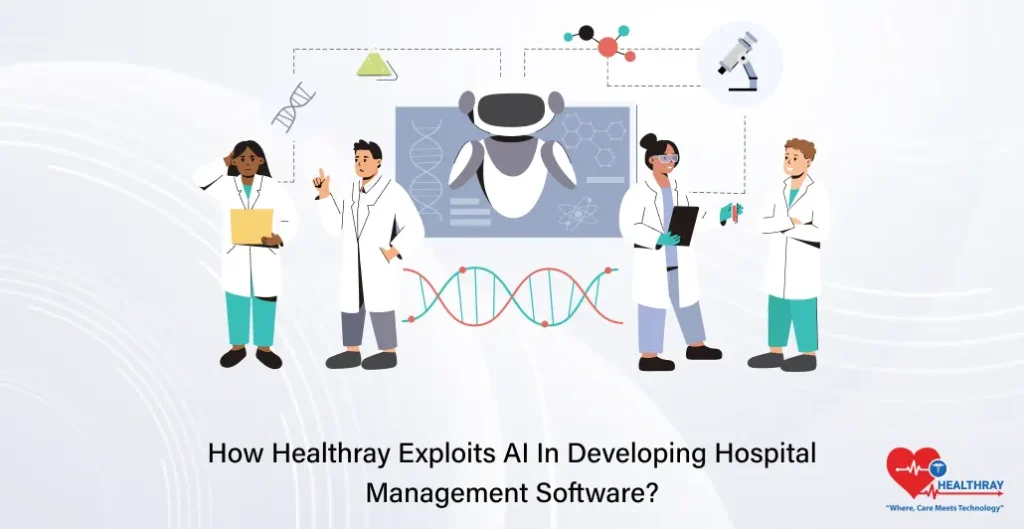
Healthray sets itself apart from each and every one of its competitors by making fine use of AI’s precision in hospital management systems. The working of the Healthray platform is supported by an AI engine that smoothly crosses the multiple areas of hospital operations, with this capacity bringing hitherto unparalleled levels of accuracy, speed, and innovation into hospital functioning.
AI algorithms used by Healthray in its hospital management system do predictive analytics to foresee the needs of patients, optimize resource assignment in financial administration, and speed up workflow. This way, it ensures peak performance for all hospitals. In this manner, with constant learning and adapting, the medical software keeps getting better along with the health service providers. Therefore, it is regularly fine-tuning its recommendations to incorporate all the latest research findings and industrial best practices.
Furthermore, it uses AI for the hospital management software to personalize therapeutic interventions. Its impressive algorithms can efficiently analyze an enormous amount of patient information and customize treatment plans accordingly. Furthermore, the platform facilitates immediate clinical decision support for care settings. Cumulatively, it thereby reduces healthcare costs and improves clinical outcomes by giving medical professionals relevant clinical information right at the point of care.
Resource time-saving empowers proactive decision-making from consolidating reports straight through to maintaining financial audits through precise invoicing, decreasing workload from revenue reconciliation through to collection, and finally, increasing revenue. It improves revenue cycle management, boosts workforce productivity, and maintains information consistency.
Set the gold standard for excellence within the healthcare arena by utilizing AI for optimal functioning of their hospital management software. This allows us to provide quality care with the utmost efficiency. Reach out to utilize the power of AI in the most beneficial way!
Conclusion
By now, you should have understood the revolutionary impact of Artificial Intelligence on hospital management software. In fact, AI-Separated Time of health care joins operational efficiency, cost lessness, personalized treatment, remote patient monitoring, continuous learning, and improvement. Artificial intelligence mechanisms allow hospitals to optimize assignment of resources, ensure smooth administrative transactions, confer diagnostic accuracy, and take efficient care of patients online.
AI also helps hospitals adjust and advance according to the needs of patients and standards set forth by the industry. Hence, it guarantees an agile, innovative, and patient-centered approach in healthcare delivery. And, as AI progresses, there are opportunities for changing hospital management software and patient care. Surely, it will continue to blossom, shaping the future of healthcare in once-unimaginable ways.