


As health care keeps evolving, there is always the need for a development response in hospitals that acts in line with the technology and expectations of the patient. HMS, which provide solutions meant to improve the process optimization as well as enhance decision making, will be significant in the coming change. This paper explores the future of hospital management system in the context of innovations being developed in the management of health care.
The Growing Significance of HMS
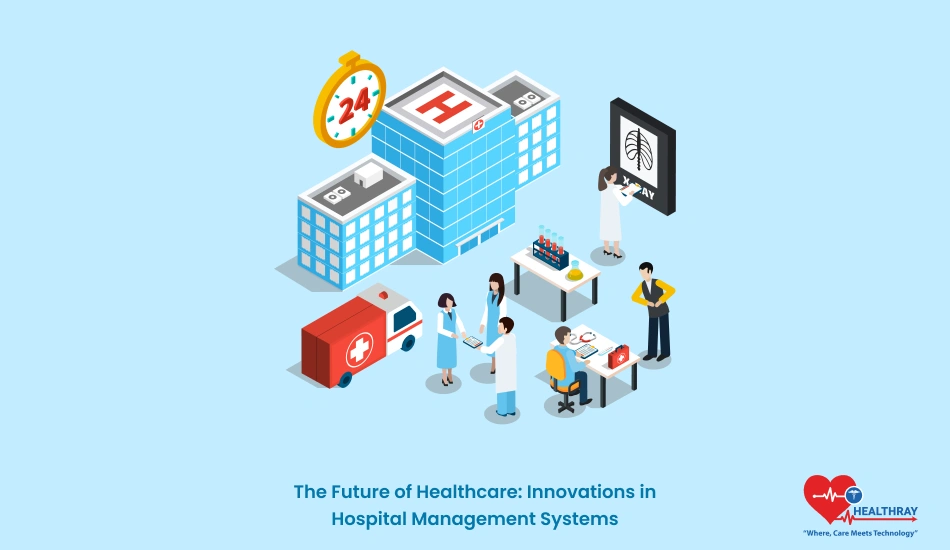
Hospital management systems have become a necessity of the modern hospital. Large multispecialty hospitals cater to many different departments, which range from inpatient and outpatient care to managing laboratories, pharmacies, and radiology.
Processing such diverse activities manually or even with outdated software often leads to inefficiency and errors and waste. HMS enables hospital decision-makers to aggregate all these different operations under a single digital roof, making all processes more efficient and reducing error room.
For multispecialty hospitals, which cater to a high volume of patients and a wide range of services, a robust HMS is critical in managing clinical, financial, and operational data. It helps streamline patient records, billing, inventory, and even appointment scheduling. Without such systems, hospitals risk operational bottlenecks and compromised patient care. As healthcare becomes more complex, hospitals that still rely on manual systems or older software are at a serious disadvantage.
Innovations that will Shape the Future of Hospital Management Systems
The future of hospital management is based on the use of the latest technological advancements. From artificial intelligence to telemedicine and IoT, these innovations promise to change the way hospitals function.
Artificial Intelligence and Predictive Analytics
The base of healthcareoperations is increasingly formed by AI and predictive analytics. AI-driven tools can analyze large datasets from EHRs, which can help spot patterns that human operators may miss.
AI can predict patient outcomes, helping physicians make better decisions regarding treatment plans. Predictive analytics can also be used by hospitals to forecast resource requirements, manage bed capacity, and optimize staffing in order to reduce waste and improve patient care.
Cloud Technology and Cybersecurity
Secure processing and storage of data will be more and more important as more data is produced in a hospital. Because scalable data storage options exist through cloud technology, hospitals can immediately expand their capacity on an as-needed basis. Moreover, in larger health networks, these cloud-based systems allow easy departmental and even hospital-to-hospital sharing.
There are also more potential security threats, however, with the expansion of digital healthcare. Private patient information needs to be safeguarded from online attacks. Future hospital management systems must have sophisticated cybersecurity measures to maintain the confidentiality of the patient and ensure integrity in data.
Telemedicine Integration
The pandemic of COVID-19 has really pushed telemedicine, and there is no turning back. In the future, the hospital management system will fully incorporate telemedicineand a robustvideo streaming solutionfor virtual consultations and remote monitoring of patients.
This will enable health services to be available beyond geographical limitations and can provide care to the patients who seek virtual comfort. An integrated telemedicine solution also saves from overcrowding, makes sure appointments are kept perfectly in track, and can provide constant care to the patient at multiple sites.
IoT in Healthcare
IoT health devices comprise intelligent medical appliances as well as health wearables. The world of healthcare is rapidly becoming data-intensive. These devices are being employed by hospitals these days to collect real-time data about the vital signs of patients, their mobility, and even whether they have consumed prescribed medications on time.
This data is received by the management system of the hospital, which allows physicians to monitor patients from a distance and take corrective actions in real time. Additionally, it reduces the need for in-person examinations, thus decongesting the hospital and making it easier for patients.
Interoperability in Future Hospital Management Systems
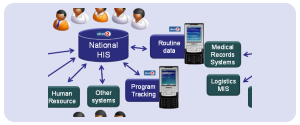
As the hospitals grow, so do health care networks; hence, hospitals require integrating their different systems with each other in order to easily share data. Sharing data in real-time with other healthcare systems such as handling patient records, pharmacy data, and diagnostic data can be feasible with interoperability.
It decreases the number of data silos that occur when some critical patient information becomes locked in one system and therefore not available for other systems. A highly interoperable HMS facilitates clinical decision-making as quickly and correctly as possible. Interoperability HMS also enhances care continuity by providing every department with current information for every healthcare provider.
Furthermore, interoperability simplifies coordination with external healthcare providers, such as labs, pharmacies, and outpatient clinics. This makes it possible for multispecialty hospitals to have a complete alignment of the entire healthcare ecosystem, resulting in improved patient outcomes and more effective operational processes.
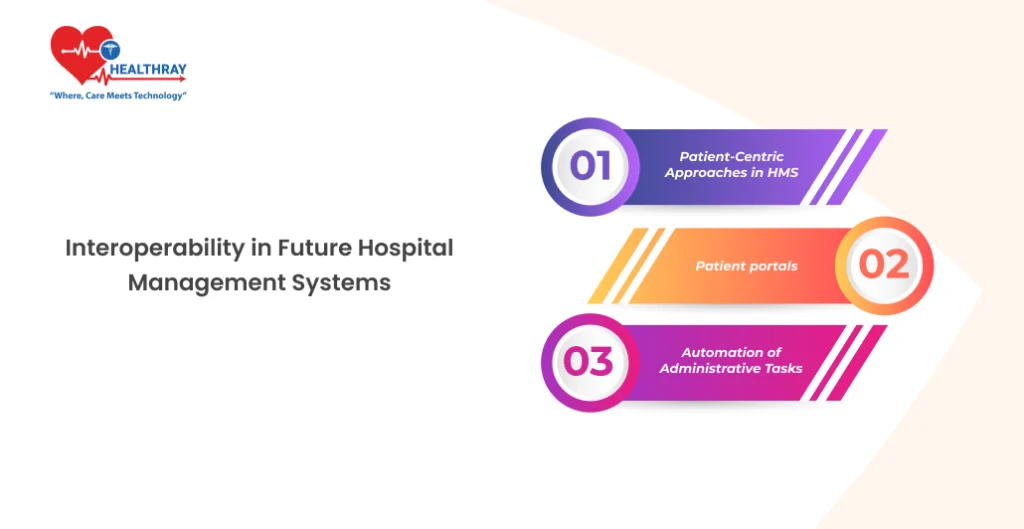
Patient-Centric Approaches in HMS
The future order of the day for hospital management is a patient-centered approach. It is the creation of systems that meet the preferences and expectations of the patients besides the administrative requirements of the hospital. In today’s digital age, the patients want to easily get their medical records, fix an appointment, and talk to their doctors-all from the comfort of their smartphones.
Patient portals
This will impact the future of HMS quite substantially. Such portals provide the facility for viewing medical records, appointment setting, reminding medications, and telemedicine consultation by a patient’s physician.Hospital systems can help to engage more patients and boost satisfaction through provision of such tools.
Automation of Administrative Tasks
Automation can lessen routine administrative jobs in billing, admissions, and discharges. With HMS, hospitals unshackle time from staff because they are not likely to employ it on extraneous manual processing, freeing up their time for more critical operations. Automated workflow reduces the possibilities of human mistakes in service delivery; it heightens the rapidity of such delivery and thereby improves the degree of patient experience.
Challenges and Opportunities in Adopting Advanced HMS
Although advanced HMS carries numerous advantages, it has its downsides. Setting up a system in a major hospital is slow and expensive, while integration with the existing old system, which would probably not work, is again another challenge. A lot of money has to be spent to train the hospital staff on a new system that should be accompanied by proper support during the implementation process.
However, the advantage far outweighs the disadvantage. A modern HMS will be a strategic move for the decision-makers of the hospital: CTOs, COOs, and trustees. They can look forward to long-term benefits from the well-implemented HMS, where it will enable the hospital in delivering better patient outcomes, reduces operational costs, and position them as a leader in the future of healthcare.
Conclusion
Healthcare will be a digital future; those hospitals that fail to catch up might end up way behind. In this scenario, new developments in the field of Hospital Management System Software change the game for healthcare, efficiency, security, and patient-oriented healthcare. And the hospital leaders will be wise if they invest the right technology that would enhance their operations and care for their patients and lead in the continuously evolving healthcare space.atient care, and remain competitive in the evolving healthcare landscape.