




It starts with diagnosing accurately and efficiently to afford high-quality patient care. Yet many healthcare facilities suffer from outdated workflows and fragmented data systems and face slow diagnostic processes. These problems lead to delayed treatment, errors in care delivery, and annoyed patients.
Diagnostics management systems offer the answer: they combine new technologies with the streamlining of workflows. As a result, it takes out the guesswork from the diagnostician’s request to derive timely, accurate diagnostics, freeing the health practitioner to concentrate on what matters most: the patient.
This article will look at the essential features of a hospital management software: its benefits for healthcare, its practical implementation strategies, and future innovations that will shape this area. Let’s dive into understanding how this device is transforming patient care all around.
What is the Diagnostics Management System (DMS)?
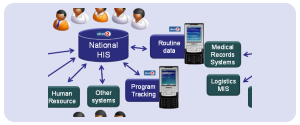
A diagnostics management system is an end-to-end technology platform to manage and optimize the processes involving patients and diagnostics. It fills the gap between diagnostic processes, health professionals, and patient outcomes by getting data centralized and activities streamlined.
Key Components of a Diagnostics Management System
Laboratory Information Management System (LIMS): Automated laboratory workflow for fast sample processing, accurate test performance, and efficient reporting connects laboratories with healthcare providers to do away with manual delays.
Integration Complementing with Electronic Health Records (EHR): The diagnostic data then falls under the fold of patient health records for a holistic view of a patient’s medical history. This means that the critical diagnostic insight will be available at all times for better decision making.
Real-Time Data Analytics: Advanced analytics tools embedded within these systems can identify patterns and other irregularities in the data. In this way, it supports early disease detection, trends monitoring, and evidence-based care provision.
Automated System and AI Contribution: Automation constitutes a process of decreasing or removing repetitive manual tasks while AI provides an extra dimension of accuracy by identifying potential diagnostic differences or errors that the humans would not have noticed.
How It Supports Patient Care
A diagnostics management system takes replicating and conflating test processes, thus reducing inefficiencies and mistakes. By integrating such systems into already existing frameworks in the healthcare facility, organizations can streamline patient service delivery for faster and more reliable outcomes. Patients enjoy shorter wait times for diagnosis, custom treatment plans, and much more coordinated care experiences.
The Key Benefits of a Strong Diagnostic Control System
A hospital management software completely transforms how hospitals and clinics operate in terms of processing diagnostics. Issues faced by medical practitioners and administrators alike have long influenced the treatment process within these facilities. Benefits to patients in the end become a way of life. Let’s analyze the impact of benefits conferred:
Better Service Delivery for Patients
Faster Diagnosis: Automated workflow with integrated systems will allow a quick turnaround of result reporting to significantly hasten treatment.
Improved Accuracy: The tool reduces errors in diagnostics with advanced technologies like Artificial Intelligence to access more precise assessments and better safety against misdiagnosis.
Individualized Care Plans: Collation of information from diagnostics, case history, while considering ongoing treatments makes it possible to deliver personalized care, hence increasing recovery rates and satisfaction.
Streamlined Workflow
Routine Task Automation: Manual processes, such as sample tracking or entering test results, for example, are made automatic to minimize human error and save time for medical staff.
Flawless Communication: These integrated systems make use of real-time sharing of diagnostic results among doctors; laboratories and other stakeholders within the system, assuring continuity of care.
Minimized Administrative Workload: The administration staff could be directed to focus on higher-level tasks instead of wasting hours on repetitive input of data or juggling several platforms.
Data-Gathered Insights
Predictive Analytics: It recognizes emerging patterns in patient data, such as possible health risks or outbreaks.
Real-Time Monitoring: Data streams are alive all the time, allowing continuous observation of trends in health conditions on patients, bringing chronic illness management improvement and earlier intervention.
Decision Support: Systems offer actionable insights to help physicians make the right decisions and, therefore, improve the accuracy of treatment.
Increased Savings
Fewer Wastes: Consumption of resources is efficient, while also error reduction leads to saving on resources and time.
Better Utilization of Staff: Processes automated, making them focus on more critical, thus reducing the amount of additional workforce needed.
Strategies for Implementation for Healthcare Facilities
Introducing a diagnostics management system is already a huge step toward improving patient care in a facility. However, careful planning and execution are required as well. A good strategy ensures smooth implementation with minimal disruption but maximized gains.
Assess Organizational Needs
- Evaluate Current Systems: Determine where efficiencies can be improved or reviewed for errors.
- State Objectives: The new diagnostic system should achieve certain outcomes, including speedier turnaround times, less expense, or effective integration with EHRs.
- Recruitment of Stakeholders: Insight from principal users such as lab technicians, clinicians, and the IT department should all be involved to ensure that the configuration meets their needs.
Selecting the Right Vendor
- Customizable: Seek a system that can conform to how your facility differs from others in size, specialty, and workflow demands.
- Integration Capabilities: Confirm that the solution can fit into the existing software landscape, like EHR or other billing systems.
- Scalability: Go for a system that will grow with your organization’s needs, especially if you are planning on expanding services or locations.
Develop a Phased Implementation Plan
- Pilot Testing: Start with a smaller department or clinic to test the system and get feedback on its functionality.
- Step-by-Step Rollout: Introduce the system gradually into all departments to reduce disruption of users at work and empower them to adopt it.
- Set Milestones: Set up measurable goals for each phase: for example, reducing turnaround time for diagnosis by a certain percentage.
Train and Support Staff
- Comprehensive Training: Train all users in detail, particularly their understanding of how the system changes their workflow and decreases manual tasks.
- Ongoing Support: Set up a help desk or allocate a group responsible for directing questions and problems during the transition.
- Feedback Mechanisms: Assist staff through their experience and suggestions for improvement after using the system.
Safety and compliance with data
- Ensure Patient Information Is Safe: Choose a system that has superior data encryption and access controls to secure highly sensitive patient data.
- Integrated and Compliant with Regulatory Standards: Examine whether the system is compliant with local and international healthcare regulations such as HIPAA or GDPR.
- Regular Audits: Conduct systematic checks at regular intervals so that the system can prove compliance and security at all times.
Monitoring and optimizing performance
- Measure Important Metrics: Measure the impact the system has on turnaround times, the accuracy of diagnostics, and the overall efficiency.
- On-going Improvement: Use the data received and from employee feedback to branch into other areas of improvement.
- Update as necessary: Keep tabs on what is new in vendor updates and features so that the system remains effective and current.
Common Problems Overcoming
- Resistance to Change: Communicate the changes in benefits that make the workload less heavy and more efficient to ease fear.
- Integration Issues: Work very closely with the vendor for troubleshooting to resolve the issues on compatibility and to ensure seamless data migration.
- Cost Management: Start with the minimum feature set and expand once necessary to manage the budgets effectively.
Case Studies: Real-world Impact of Diagnostics Management Systems
Adoption of a diagnostics management system is, admittedly, a huge initial outlay. However, case studies embody the fruits of that investment as real evidence of the changes possible within healthcare organizations in improved patient care, optimized workflows, and, most important, measurable results.
Faster Diagnoses in a Multi-Specialty Hospital
Problem:
The diagnostics turnaround time of a very large multi-specialty hospital got hampered by manual processes and fragmented systems. Test results reached physicians late and delayed the treatment decision-making process.
Solution:
Implementation of a diagnostics management system that integrated the laboratory information system (LIS) and EHR platforms, utilizing automation tools for sample tracking and result delivery.
Results:
Reducing diagnostic turnaround times by 40 percent.
Improving communication between the lab and clinician for most critical cases, allowing same-day results.
Increasing patient satisfaction ratings as a result of the speed with which treatment is initiated.
Improved Efficiency in a Diagnostic Laboratory
Challenge:
A single stand-alone diagnostic laboratory had problems handling a huge volume of samples during peak hours, which led to inaccuracies and delays in reporting.
Solution:
This laboratory decided to deploy a robust diagnostics management system that automated most of its workflow steps like sample registration and barcode generation, as well as built-in checks for quality. It also brought in predictive analytics tools for increased prediction in anticipated peak workloads.
Results:
Errors in test processing were reduced by 25%.
An increase in 30% of daily testing capacity without any additional hiring.
Insights into workload trends to better resource planning.
Greater Accuracy in Chronic Disease Management
Challenge:
A primary care network where management of patients with chronic conditions was complicated because of the varying diagnostic data between clinics.
Solution:
Adopted a diagnostics management system that centralized all their diagnostic data and enabled real-time access of patient test histories. AI tools are augmented to flag abnormal patterns in the diagnostic results. .
Results:
Signs of Alarm for Chronic Conditions Were Found in 15 Percent of Patients, Allowing Preventive Care.
Hospital readmissions were reduced by 20%. Streamlined follow-up protocols to improve patient compliance with treatment plans.
Future Trends in Diagnostics Management
As technology is changing and lessening in form, diagnostics management systems are becoming astute and integrated in services. It is anticipated that with advancing technologies, patient care will be even more enhanced, healthcare operations will become easier, and the very diagnostics industry will become changed. Here are some of the trends developing for the future of diagnostics management.
AI for Predictive Diagnostics
The greatest change AI is bringing into diagnostics is the possibility of examination of gigantic data in order to detect patterns and predict results.
Early Disease Detection: AI systems are able to pick up signs of slight alterations in test results that would make it possible for the diagnosis of diseases such as cancer and diabetes in their early stages.
Decision Support Tools: AI-supported decision-making gives healthcare professionals recommendations based on an analysis of current reality, thereby reducing diagnostic errors and enhancing accuracy.
Internet of Medical Things (IoMT)
IoMT stands for connected medical devices collecting and sharing patient data in real-time.
Remote Diagnostics: Wearable instruments and home-testing kits transmit information directly to diagnostics management systems, allowing for faster diagnoses without the need for a clinic visit.
Continuous Monitoring: Glucose monitors or heart-year-long sensors give a constant flow of data with which to manage chronic disease.
Blockchain for Secure Data Sharing
Blockchain technology is actively being considered for the secure and transparent sharing of diagnostic data.
Improved Security: Patient data is encrypted and stored in decentralized systems, thus reducing potential sabotage.
Interoperability: Through the proper use of Blockchain, diagnostic information can be shared with ease across numerous healthcare providers while ensuring privacy.
Scalability with Cloud-based Systems
Cloud technology allows diagnostic management systems to scale smoothly and change with workload fluctuations.
Flexibility: Cloud solutions can prioritize the zoom in the diagnostic demand, for instance, during pandemic situations or outbreaks.
Cost-Effectiveness: Organizations would incur less infrastructural costs by opting for the cloud as opposed to maintaining on-premises servers.
Personalized Diagnostics.
Advances in genomics and molecular diagnostics are leading to more personalized care.
Customized Treatment Plans: Diagnostics systems are already being tweaked to integrate genetic and molecular data in order to build individualized care strategies.
Pharmacogenomics: Diagnostic information is routed toward making decisions about drug choices based on the patient’s genetic profile, with the ultimate goal of improving outcome measure.
Integrated Mobile Applications
Mobile technology allows diagnostic data to reach both patients and providers.
Patient Engagement: Applications allow patients to see their own diagnostic results and get updates regarding their care plans.
Provider Collaboration: Mobile access ensures that clinicians can review diagnostic data anywhere and anytime, enhancing coordination between partners caring for the same patient.
Focus on Sustainability
More and more healthcare organizations are going in the direction of environment-safe diagnostics systems.
Energy savings: New systems are designed to be low-consuming; hence, would correspondingly reduce the carbon footprint of operations associated with diagnostics.
Waste Reduction: Digital systems make traditional paper processes redundant and therefore environmentally friendly.
Conclusion
Robust hospital management system software is now a necessity rather than a luxury for healthcare facilities. Steadfast in the direction of streamlining such systems in working their solutions, improving the quality of diagnosis, and creating actionable insights toward bettering patient outcomes, these systems exist to enable services to liberally focus more on patient care than administrative burden-traditionality-and-excellence.
It is therefore a shift for healthcare administrators, medical practitioners, and diagnostic organizations to such a system, to interconnect and shape a patient-centric healthcare ecosystem. Those facilities, through careful implementation forward plan as well as staying abreast with the technological trends, will not only beat time but will also be in the foreground when it comes to rendering the best healthcare standard.