


Quick Summary
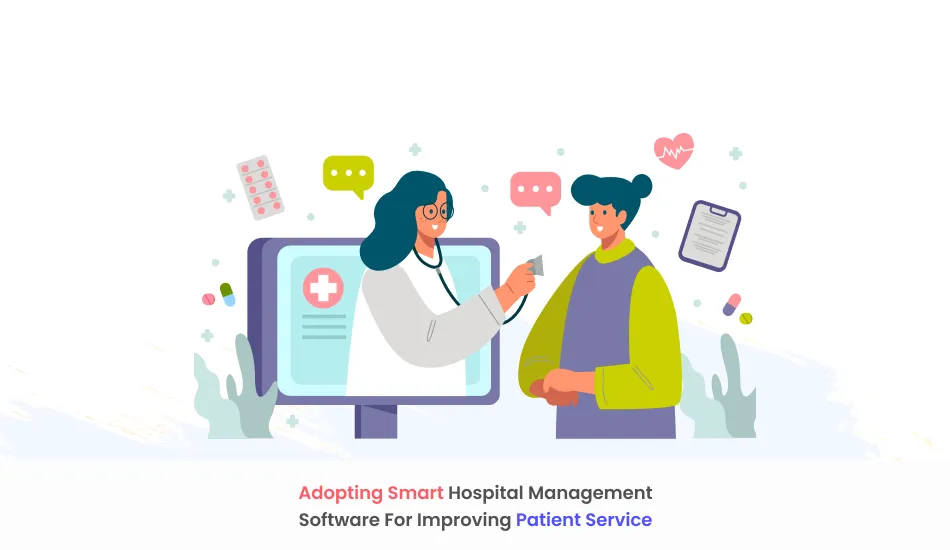
Running a hospital is not an easy job. Between managing records, managing staff, and paying bills, along with ensuring everything is running on time, the stress on hospital administrators is very real indeed. And that is precisely where hospital management software comes in – to simplify everything, avoid costly mistakes, and most importantly, enhance the quality of care patients receive every single day. In this blog, we’ll walk you through how it works and why it matters for your hospital right now.
Introduction
Are you a hospital administrator or the actual owner of the hospital? If yes, then you are well aware of the fact that everything can fall apart very easily if the right kind of system is not in place. Between staff burnout, lost records, incorrect billing, and increased waiting times, the list goes on and on. However, the problem is only getting worse, especially with the rise in healthcare costs and the expectations that accompany them.
Fortunately, hospital management software is changing how hospitals operate from the ground up. It brings every department – from reception to radiology – onto one connected platform. As a result, your team spends less time on paperwork and more time on what truly matters: patient care. According to a 2023 report by HIMSS Digital Health Report, hospitals that adopted digital management systems saw up to a 30% reduction in administrative workload, giving clinical staff more time for direct patient interaction.
But the question is, what is the actual impact of this system on the quality of the service being delivered to the patients? So, let’s take a look.
How Hospital Management Software Strengthens Patient Data Management
One of the biggest challenges hospital administrators face is the proper management of patient information. Physical files get lost, and manual inputs are prone to error. Departments may use different and possibly incorrect patient records. This is not just a minor problem but can result in incorrect diagnoses and treatment delays.
The hospital management system eliminates this problem by maintaining a digital record of all patient information in a single location. All hospital staff can access the same accurate and updated records at any time. For example, a doctor in the emergency department can access a patient’s entire medical record within seconds of entering the patient’s name into the system. This is true even if the patient last received treatment in a different department several months ago.
Furthermore, electronic health records within the software categorize data clearly – from medical history and lab results to prescriptions and radiology reports. No more hunting through filing cabinets or waiting for another department to send records manually. Everything stays connected, organized, and accessible in real time.
 NOTE
NOTE
Imagine a hospital with 300 beds and over 400 patients a day to care for. Finding a patient’s previous lab records can take up to 20 minutes without a hospital system. This is 20 minutes a doctor could be with the next patient in line.
According to HealthIT, smart hospitals using electronic health records systems experience significantly fewer medication errors and improved interprofessional collaboration between caregivers. This translates into improved patient care and a boost in patient satisfaction ratings.
Automating Routine Tasks to Reduce Staff Burden
They have a tremendous amount of repetitive tasks to perform every day, such as scheduling, updating records, preparing bills, sending reminders, and handling insurance claims. When your team does all this manually, errors creep in, and time? Time just slips away unnoticed.
Here, the automated features of a hospital management software come into play and prove to be a blessing for your team. Your administrative team does not have to spend time doing repetitive tasks, and they can focus on more important tasks. For example, appointment scheduling becomes effortless. It sends automatic reminders, cuts down no-shows, and updates slot availability in real time. Similarly, billing processes run smoothly because the software auto-generates invoices based on treatment records, reducing the chance of billing errors significantly.
 PRO TIP
We’ve seen hospitals reduce overtime hours for their administrative team by a huge margin just by automating their appointment management process!
Additionally, inventory management benefits from automation too. The software tracks medical supplies, flags low stock levels, and even records purchase history and maintenance schedules for equipment. As a result, your hospital always has the right supplies available when patients need them most – without the chaos of manual stock-checking.
How Hospital Management Software Improves Financial Management
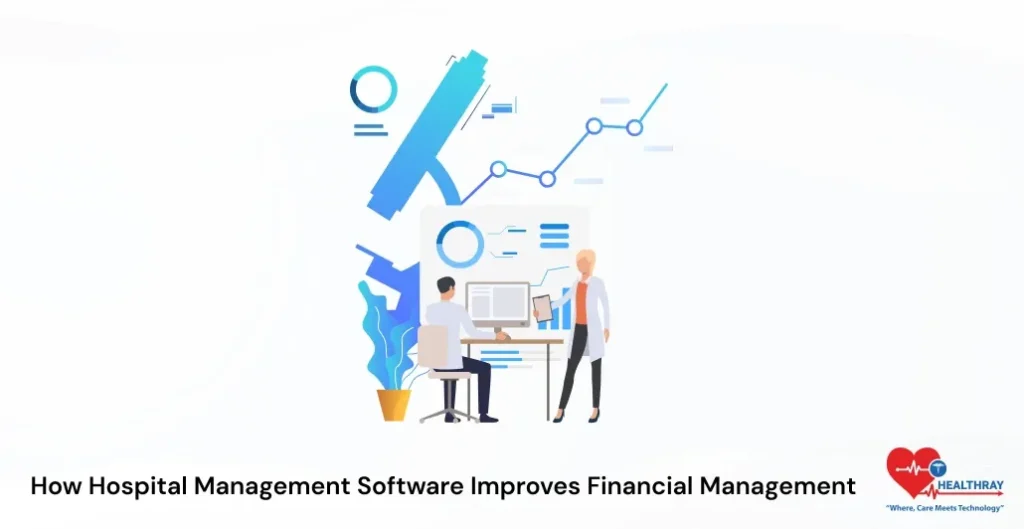
Financial management in a hospital is a complex process. You are dealing with payments received from patients and insurance companies at the same time, payments to vendors and salaries to staff, and the costs of maintaining the hospital equipment – simultaneously! Try handling this without a proper system in place – the chances of mistakes are extremely high.
With hospital software, you can now keep all aspects of financial management in one place. This is especially true with regard to the revenue cycle process. This process is much more streamlined when billing and payments are integrated into the system. This way, you can free up more of your finance team’s time to focus on accuracy rather than chasing payments.
Insurance claim management is another area where the hospital software can help a lot. This process is streamlined with the help of the software as it tracks the entire process of claim submission and approval and automatically flags the claims that are rejected and ensures timely resubmission of these claims. According to a study published by the Medical Group Management Association, with the use of automated revenue cycle systems, hospitals are now able to collect payments up to 40% faster than those using manual systems.
Now, you don’t have to stress yourself out with the task of making sense of the financial reports of the hospital either. This is now taken care of with the help of the software as administrators can now get a clear view of the hospital’s finance situation with the help of the financial dashboards provided by the system. This is the clarity you need as a hospital administrator!
Preventing Clinical Errors with Hospital Management Software
Here’s something that most administrators don’t think about until it’s too late: clinical errors aren’t necessarily caused by poor doctors. They’re caused by poor systems. One of the biggest concerns facing a hospital today is clinical errors. The chances of mistakes, which can have a direct effect on patient care, are heightened when staff are too busy, appointments run back-to-back, and procedures are labor-intensive. In fact, according to a study done by the World Health Organization, unsafe patient care ranks in the top 10 causes of death and disability around the world. These aren’t just words; this’s a reality that every hospital administrator needs to be concerned about.
The hospital management software system tackles this issue head-on. It streamlines critical clinical procedures, ensuring safety checks along every step of the way. For example, it checks for incorrect dosages, alerts doctors about drug interactions, and ensures that the proper treatment follows the proper diagnosis. These aren’t minor features; these are lifesaving features built into your day-to-day operations.
Additionally, when doctors and other medical staff have access to accurate patient information, they’ll be able to make better decisions more quickly. There’s no guessing, no waiting, and no chance of working with out-of-date information. All the information that’s required will be displayed on one screen, in real-time. So your hospital doesn’t just reduce errors but also builds a culture of precision and accountability that patients genuinely notice and appreciate.
Radiology and Digital Reporting Made Simple
Previously, the process of managing radiology images would involve printing the images, storing them, and retrieving them manually whenever required. It was an expensive, time-consuming, and, to be honest, a messy affair. Moreover, sharing those images between departments or with external specialists added another layer of difficulty altogether.
This software is a revelation when it comes to radiology images. The images are captured, stored, and shared digitally within a matter of seconds. The quality of these images is also significantly better, as digital formats are far more capable of retaining image detail compared to physical films. Moreover, radiologists and physicians can also examine these images simultaneously, no matter where they are, and this speeds up diagnosis and reduces patient waiting time considerably.
Beyond radiology, the software generates a full range of digital reports – lab results, consultation notes, prescription summaries, and discharge reports – all available instantly. Given that quick access to accurate reports directly influences treatment decisions, this capability alone makes a strong case for adoption. And that’s not a small thing. Coupled with automated report generation, your clinical team saves hours every week that they can redirect toward patient care.
Digital Payments and Insurance Claims – Faster and Cleaner
Payment collection has traditionally been a friction-heavy process in hospitals. Patients have to wait in long queues at billing counters, and the staff has to deal with a lot of paperwork, while insurance claims have been taking a long time to process. And all this? It creates unnecessary stress for all parties involved and slows down your hospital’s cash flow significantly.
With modern technologies embedded in the software, digital payment options simplify the entire process. Patients pay online, through mobile apps, or at digital kiosks – reducing queues and improving their overall experience. Meanwhile, your finance team gets automatic payment confirmations and real-time transaction records without any manual entry.
Similarly, insurance claims will be made much easier through this process. The software will be able to handle insurance claims electronically, making things much easier. In contrast to manual claim processing, which can take weeks, automated systems wrap up claims in a fraction of the time. As a result, your hospital maintains a healthier cash flow and patients don’t get hit with billing surprises.
The Patient Portal – Putting Patients in Control
One of the things with hospital management software that hospital administrators sometimes forget is the patient portal. This is a safe and simple online environment where patients are in charge of their own health care journey. They can schedule appointments, check lab results, review prescriptions, complete forms online, and receive reminders – without ever needing to phone the hospital or visit in person.
From the hospital administrator’s viewpoint, And that’s a big advantage – don’t underestimate it. When patients handle routine tasks themselves through the portal, your front desk staff handle fewer calls and walk-ins. This can save a lot of hassle and make the whole experience more streamlined and satisfying for everyone. What’s more, patients who are in the driver’s seat of their health care are more likely to attend scheduled appointments, comply with treatment plans, and ctually trust the healthcare provider more.
As you can see, the above points and more explain why the patient portal is not just a ‘nice-to-have’ feature of hospital management software – it’s a genuine opportunity to boost patient engagement and satisfaction and ultimately win more loyalty to your hospital. Honestly, the hospitals that use a patient portal see the benefits within months – not years.
Why Hospital Administrators Should Adopt HMS Software Now
Running a hospital with traditional systems in an environment like this? Honestly? It’s like running an uphill battle. Increasing costs, increasing expectations, and increasing regulations all at once? Human processes simply can’t handle all this at once.
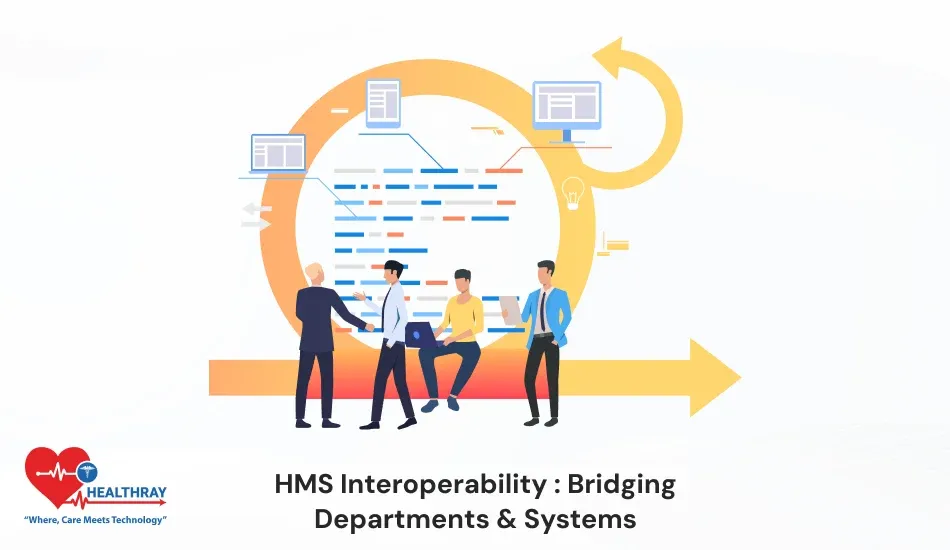
HMS Software can provide hospital administrators with a competitive advantage. Its software can manage all hospital operations – clinical, administrative, and financial – all under one intelligent roof. Your hospital can run more efficiently, your staff can work more effectively, your patients can receive better care, and you can make more informed decisions based on data and reports generated by the software.
For example, Healthray is software developed specifically for hospital administrators. It can manage all aspects of hospital operations under one roof. From OPD operations and billing to radiology and inventory, hospital administrators can manage it all with this software. Hospitals using this software have reported increased patient turnaround, fewer billing errors, and increased patient satisfaction.
To put it simply, the question is no longer whether your hospital needs management software. The question is, how long can you afford to wait? Take the case of two hospitals in the same city – same size, same patient volume. One runs on traditional systems, the other on HMS. Within a year, the HMS hospital reduced billing errors by 40%, cut patient waiting time, and saw staff overtime drop noticeably. The other? Still chasing paperwork.
| WITHOUT HMS | WITH HMS |
| Manual billing errors | Auto-generated accurate invoices |
| Long patient waiting times | Automated scheduling & reminders |
| Physical radiology films | Instant digital image access |
| Slow insurance claim processing | Automated claim tracking & submission |
| Disconnected departments | One unified platform for all teams |
Conclusion
Let’s face it, hospital management software is no longer a luxury, it’s a necessity for your hospital if you want to offer quality patient care. From automating tasks and managing finances to preventing clinical errors and engaging your patients with digital portals, the advantages of hospital management software affect all aspects of your hospital’s operations. Additionally, with all studies pointing to increased productivity, profitability, and patient satisfaction, there’s no better time than now to make the switch. Start for free with Healthray, if you want your hospital to be competitive, profitable, and offer quality patient care, now’s the time.
Learn more: Must-Know Features of the HMS Software